The 30th anniversary of the establishment of EUROMARFOR (European Maritime Force), founded in 1995 by France, Italy, Portugal, and Spain, was celebrated on 15 May 2025 in the port of Civitavecchia.
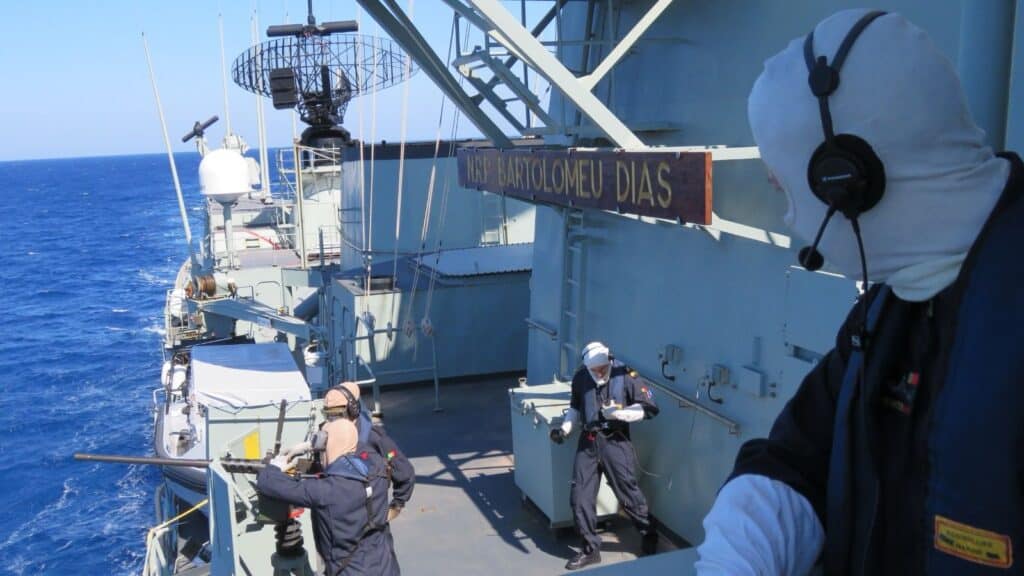
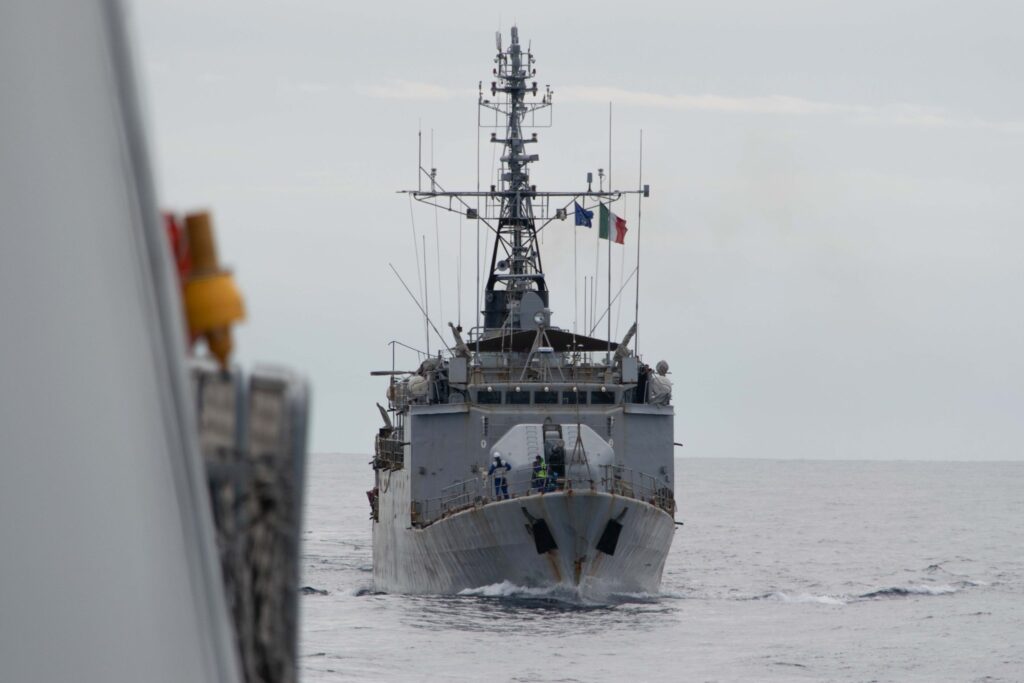
The event was attended by the fleet commanders of the four nations, representatives from governmental and maritime organizations, and former commanders of the force, all aboard the Italian Navy’s Carlo Margottini, a Bergamini-class FREMM frigate. The Carlo Margottini was joined by the French Navy’s Commandant Birot patrol vessel, as well as the frigates of the Portuguese and Spanish Navies, Bartolomeu Dias and Santa Maria.
“Today we are not only celebrating the milestones achieved in the past thirty years, but we are also looking to the future, to the challenges and opportunities that lie ahead. The legacy of EUROMARFOR is not just a memory of the past, but a promise for tomorrow: our shared commitment to ensuring that the seas remain safe, open and free – today and for future generations. Together, we will continue to sail towards a future as open and promising as the seas we protect,” said Vice Admiral Aurelio De Carolis, the Italian Navy Fleet Commander (CINCNAV, Comandante in Capo della Squadra Navale) and current Commander of the EUROMARFOR, to Naval News.
Established with the Treaty of Lisbon and inspired by the principles of the 1992 Petersberg Declaration, EUROMARFOR was born from a strategic vision shared by the four founding Navies: to promote stability, security and cooperation in the international maritime context, through a joint, credible and effective naval presence.
“Over the course of three decades of activity, EUROMARFOR has consolidated its role as a flexible operational tool at the service of European maritime security, adapting promptly to the evolution of international scenarios. Its modular structure, the biennial rotation of command and the shared direction through the Interministerial Committee (CIMIN) guarantee its operational continuity, interoperability between the participating Navies and full adherence to the strategic needs of the international context,” said Vice Admiral De Carolis.

The Force is currently under the operational command of the Italian Navy, while the presidency of the CIMIN Secretariat is entrusted to Portugal, which will be succeeded by Italy in July. Rotation leadership is not only a guarantee of balance between members, but also a clear example of mutual trust and shared responsibility.
“Over the past two years, EUROMARFOR has significantly intensified its operational activity, both in the Mediterranean and in highly unstable maritime areas…. with the Force always ready to refine its strategic direction in order to keep pace with new challenges……. As I speak, four EUROMARFOR Groups are actively operating, from the Indian Ocean to the Gulf of Guinea, all the way through to the Mediterranean Sea (namely Indian Ocean Task Group supporting the Op. EUNAVFOR ATALANTA, Task Group Mediterranean, Mine Counter Measures Task Group participating in the Spanish MINEX 25, Gulf of Guinea Task Group),” said Vice Admiral De Carolis, who is at the helm of the Force since September 2023 and will hand over command to Portugal in September 2025.
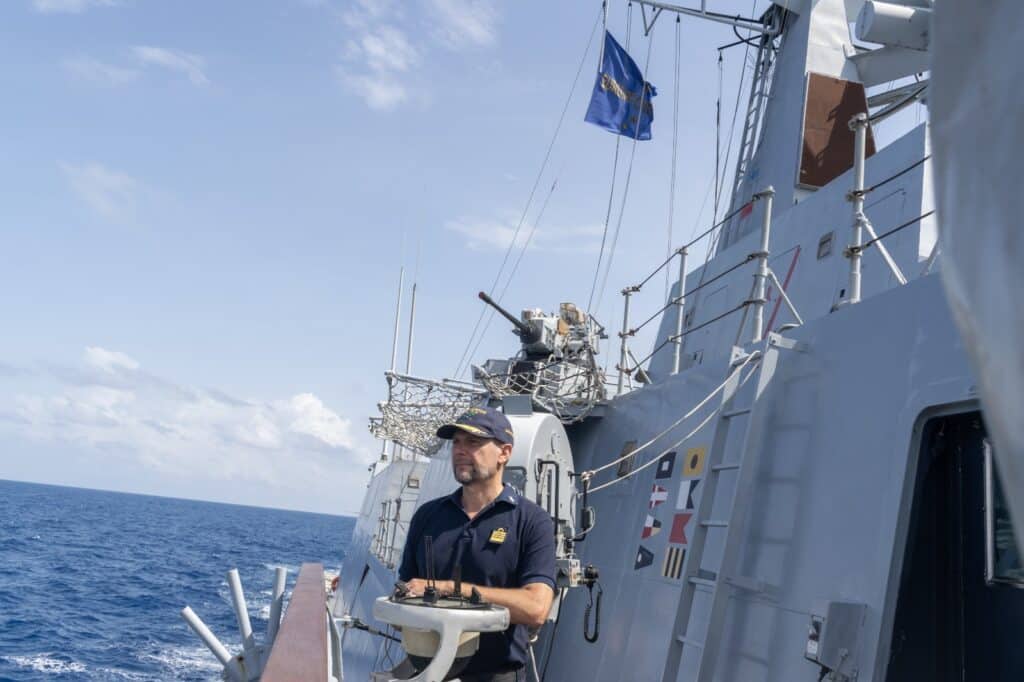
“Walking in the footsteps of my predecessor, Vice Admiral Diaz del Rio, the Spanish Fleet Commander, and with the guidance of all my three colleagues (the fleet commanders of France, Portugal and Spain), along with my team—the Permanent Cell of EUROMARFOR, composed of personnel from the four contributing navies and hosted at the Italian Fleet Headquarters—we continue to work towards making EUROMARFOR more agile, responsive, and capable of addressing today’s complex security environment. The operational tempo of EUROMARFOR has also been invigorated, thanks to the invaluable support of the four contributing countries. By working as a highly cohesive team, we have demonstrated our capacity to swiftly and effectively contribute to maritime security, both within and outside the Mediterranean Sea,” highlighted Vice Admiral De Carolis.
Over the last two years, EMF has been activated 25 times, involving more than 50 ships and aircraft, 6 diving units, and over 5,000 EMF personnel. Also noteworthy is the first EUROMARFOR Carrier Task Group in 30 years, featuring the Italian Navy’s aircraft carrier Cavour (also serving as the flagship), along with three escorts: the French Navy’s Aconit, the Italian Navy’s Alpino, and the Spanish Navy’s Numancia frigates. Under the tactical command of Rear Admiral (ITN) Giancarlo Ciappina, the EMF Carrier Task Group performed multiple training activities, cooperating with allied and partner navies to enhance maritime security in the Central and Eastern Mediterranean.

To enhance the Force’s readiness and interoperability, EUROMARFOR participates in major multinational maritime exercises, such as the Italian Navy’s MARE APERTO, the French Navy’s POLARIS, the Spanish Navy’s FLOTEX and Mine Countermeasure training events (e.g., the MINEX series, Olives Noires, etc.). To better test and improve both staff and individual skills, thereby maximizing synergy and operational readiness, EUROMARFOR frequently activates multiple Task Groups. A recent example includes the Escort and Mine Countermeasure units that participated in MARE APERTO 25 and the Italian and Spanish MINEX events.
“A significant milestone in EUROMARFOR’s recent operational history was marked by the activation of the EUROMARFOR Task Group on February 4, 2025,” said Captain Marco Stocco (Italian Navy), Director of the EUROMARFOR Permanent Cell and currently the Commander of the Task Group in the Gulf of Guinea, to Naval News. “This event signed the beginning of a new phase for the Force, signalling a renewed commitment—after a prolonged period of absence—to addressing maritime security challenges through participation in Real-World Operations (RWO), such as the NATO-led NOBLE SHIELD in the Mediterranean and EUNAVFOR ATALANTA in the Indian Ocean.”
“EUROMARFOR’s commitment to NATO has a long history, dating back to its first Real-World Operation, Coherent Behaviour, in 2002, where it supported the NATO-led Active Endeavour” Capt. Stocco continued. “This marks a return to active involvement in key regional security responsibilities, demonstrating EUROMARFOR’s adaptability and readiness to contribute to the broader collective defence posture in the region”.
Recently, EUROMARFOR has further strengthened its ties with the European Union through new agreements that align its operations with the EU’s broader security strategy. A significant step in this direction was the signing of a Letter of Intent at CINCNAV HQ in Santa Rosa on January 16, 2025, between COMEUROMARFOR Vice Admiral Aurelio De Carolis and the Director General of the European Union Military Staff, Lt. Gen. Michiel Van Der Laan.
“This agreement aims to enhance cooperation and coordination in the maritime domain, fostering a more integrated and effective approach to maritime security” Capt. Stocco highlighted. “One of the first tangible outcomes of this strengthened partnership is indeed EUROMARFOR’s participation (78th EMF activation) in Operation EUNAVFOR ATALANTA, which began on 20 February 2025. The Italian and Spanish frigates, Luigi Rizzo (flagship) and Reina Sofia, are operating under the tactical command of Rear Admiral Davide Da Pozzo. This marks EUROMARFOR’s return to the Indian Ocean after a nine-year absence, with its presence expected to continue for the foreseeable future.”
EUROMARFOR places significant emphasis on enhancing partnerships with regional navies, recognizing the importance of regional alliances in ensuring the security of the Mediterranean and its adjacent waters. This focus is reflected in its active presence and surveillance posture in key regions such as the Gulf of Guinea, which has seen an increase in maritime threats, including piracy and armed robbery, thereby impacting the stability of both regional and global trade routes. “The Task Group under my tactical command, is currently deployed in the region with three offshore patrol vessels (OPVs) from Italian, French, and Spanish navies – Comandante Bettica (flagship), Ducuing, and Relampago – contributing to Maritime Domain Awareness and enhancing mutual understanding and interoperability among EUROMARFOR personnel and regional navies. This collaboration reached a peak with the recent multi-cooperative exercises conducted with the Senegalese Navy (November 2024) and the Côte d’Ivoire Navy (May 22-26, 2025), where personnel conducted joint training activities both in port and at sea. These exercises allowed for the exchange of tactics, techniques, and procedures, significantly enhancing operational interoperability for more secure maritime environment”, said Captain Stocco.
In fact, the importance of cooperation with regional and partner navies cannot be overstated. These partnerships are integral to the successful implementation of maritime security strategies, as they bring local expertise, knowledge of the regional maritime environment, and the ability to respond rapidly to crises. Through joint exercises, information-sharing, and collaborative operations, EUROMARFOR and partner navies build trust and reinforce mutual understanding. This operational cohesion is essential in addressing challenges such as the protection of critical maritime infrastructure and illegal trafficking—issues that require coordinated efforts across national boundaries.
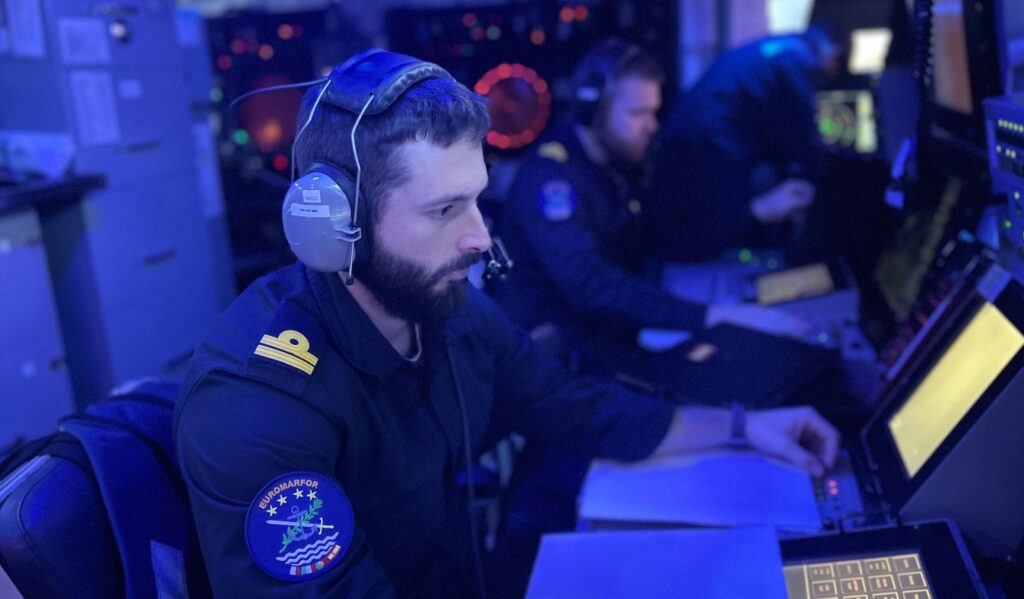
EUROMARFOR also embodies resilience and innovation, as demonstrated by its testing and use of new technologies, such as the unmanned underwater vehicles (UUVs), along with dedicated training events held in Italian and Portuguese waters (e.g., MARSEC EU 25 – La Spezia, July 1–2; REPMUS 25, September 8–26). “These exercises, in addition to testing new technologies, contribute to seabed surveillance, which has become increasingly vital for protecting critical undersea infrastructure, especially following the incidents in the Baltic since September 2022,” highlighted Stocco.
In an era of rapid geopolitical change and emerging security challenges, “EUROMARFOR stands as a testament to the resilience and efficacy of multinational cooperation. Its dynamic operational posture, adaptability, and unwavering commitment to maritime security make it an indispensable asset in the Mediterranean and beyond. By seamlessly integrating with international organizations such as the EU, NATO, and the UN, EUROMARFOR exemplifies the principles of collective defence and shared responsibility,” added Stocco.
“By aligning and complementing its efforts with NATO and the EU, EUROMARFOR strengthens its strategic importance and enhances its ability to address both regional and global maritime security challenges. As it continues to evolve and expand its operational capabilities, it reinforces the commitment of its member nations to protect the maritime commons, maintain international order, and promote a cooperative, peaceful global environment for future generations. In this framework, EUROMARFOR represents one of the most effective examples of structured and enduring cooperation within the EU, fully aligned with the PESCO concept,” concluded Vice Admiral De Carolis.