The Joint Staff Office (JSO) of the Japan Self-Defense Forces announced on October 4, 2025, that Japan Maritime Self-Defense Force (JMSDF) vessels had conducted various tactical training exercises, including mine-laying operations, in waters to the southwest of Japan.
According to the release, two JMSDF ships participated in the exercise — the destroyer Sawagiri and the minesweeper tender Uraga. The training was conducted in the sea area south of the Sakishima Islands, including Yonaguni Island, Japan’s westernmost territory. Although detailed information on the training content was not disclosed, the JSO explicitly confirmed that mine-laying exercises were carried out.
This training was unusual in several aspects. Typically, JMSDF mine-laying exercises are conducted annually in designated areas such as Mutsu Bay in Aomori Prefecture (northern Japan) and the Hyūga-nada Sea off Miyazaki Prefecture (southern Japan). However, this exercise did not form part of those routine training programs. Furthermore, in standard mine warfare training, the stated purpose is usually to “enhance the JMSDF’s mine warfare capabilities.” In contrast, the purpose statement in this press release was notably different:
“In light of Japan’s increasingly severe security environment, the Self-Defense Forces conducted tactical training to demonstrate our nation’s strong determination not to allow any unilateral changes to the status quo by force, while aiming to strengthen regional deterrence and to maintain and improve mission execution capabilities.”
In other words, this exercise was not merely intended to improve the SDF’s operational proficiency but was conducted as a deliberate expression of Japan’s national will. Finally, unlike ordinary JMSDF training events that are announced by the Maritime Staff Office (MSO), this release was issued by the Joint Staff Office — the command authority responsible for the integrated operational control of all SDF branches.
Taken together, these factors suggest that the exercise carried a significant strategic message and was intended as a high-level demonstration of Japan’s resolve and deterrence posture.
Possibility that the exercise conveyed a message about China’s maritime advance
So, what message might this exercise have been intended to send? A useful hint is the area where the training was conducted. Although the exact coordinates are unclear, the JSO’s press release states the exercise took place in the seas south of the Sakishima Islands — which, when checked on a map, appears to be near the Bashi Channel, located between Taiwan and the Philippines. The Bashi Channel has attracted growing attention among Japan’s defense community in recent years because it serves as one of the routes by which Chinese military aircraft and surface ships transit from the South China Sea toward the Pacific. A recent example is the task group centered on the PLA Navy aircraft carrier Fujian, which passed through the area in June of this year while deploying from the South China Sea into the Pacific for exercises.
There are several routes by which Chinese aircraft and ships can move out into the Pacific. A prominent one is the Miyako Strait, between Okinawa Island and Miyakojima in Japan’s southwestern island chain; Chinese surface combatants, intelligence-collection ships, long-range bombers, and unmanned systems are known to transit that passage regularly. In addition, activity by Chinese forces has also intensified in the waters between Japan’s westernmost Yonaguni Island and Taiwan.
A major difference between the Bashi Channel and areas such as the Miyako Strait is the posture of Japan’s defensive forces. In the Miyako Strait region, the JGSDF deploys shore-based anti-ship missile units armed with the Type 12 anti-ship missile (with a range of roughly 200 km or more) and surface-to-air missile units equipped with the Type 03 surface-to-air guided missile (with a range of roughly 60 km or more). Yonaguni Island itself hosts a JGSDF garrison, and some 120 km to east, Ishigaki Island also hosts anti-ship and air-defense missile units. In other words, in a contingency these deployed forces can impose a degree of constraint on Chinese military activities.
By contrast, there are no Japanese islands positioned to establish an equivalent defensive posture across the Bashi Channel, and one cannot rule out the possibility that Chinese ships and aircraft would transit there to approach Japan’s archipelagic islands. Against that background, it can be inferred that this exercise — and, in particular, the emphasis on mine-laying — may have been intended to showcase mines as a means to defend what is effectively a “defensive gap” in the Bashi Channel.
JMSDF Mine-laying Capability

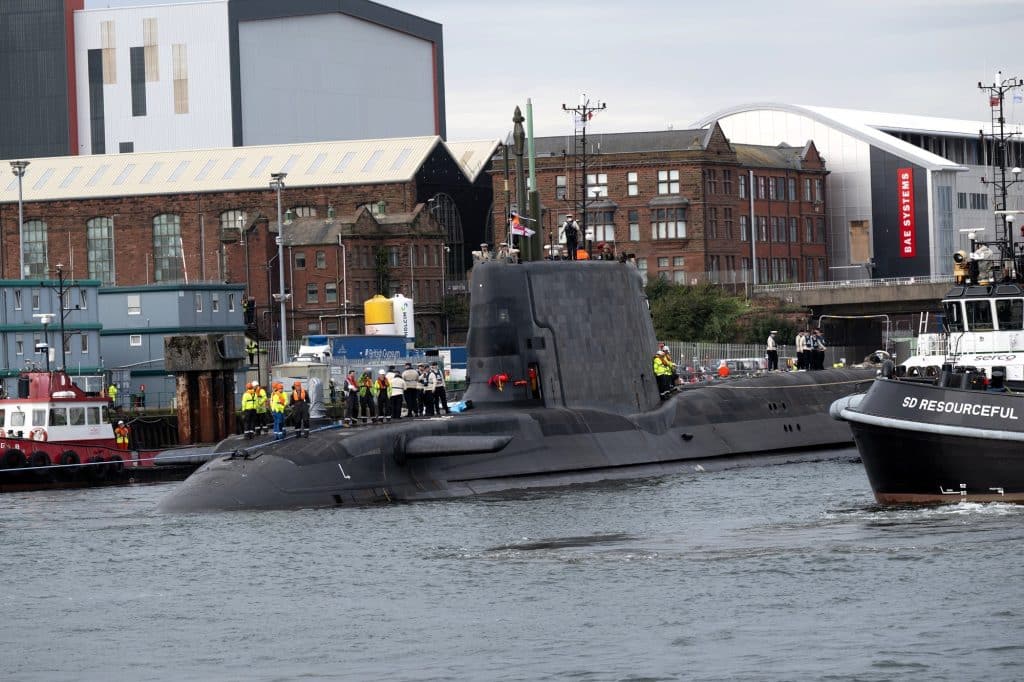
Currently, the Japan Maritime Self-Defense Force (JMSDF) has equipped both the Uraga-class Minesweeper Tender and the Mogami-class multi-mission frigates (FFM) with mine-laying capabilities. The Uraga-class is capable of deploying naval mines from four stern-facing mine-laying doors, while the Mogami-class utilizes a simplified mine-laying system that can be installed on its aft flight deck to enable mine deployment. Mines can also be delivered from maritime patrol aircraft such as the P-3C.
The JMSDF fields a variety of mine types, including U.S.-made bottom (seabed) mines and moored mines, but it also employs numerous domestically produced mines. For example, the Type 91 mine—classified as a rising mine—consists of a seabed-anchored mooring device, a buoyant warhead, and a mooring cable (wire) that connects the two. When a target is detected, the mooring cable is released and the warhead ascends by buoyancy, tracking the target and striking it while rising. To enable effectiveness against very quiet submarines, the Type 91 uses a multi-sensor influence fuse that combines passive sonar sensing with magnetic detection and an active, range-measuring sonar—i.e., a composite sensing system. It is also reported to be capable of employment in very deep waters.
The Type 15 mine, developed to meet new JMSDF requirements while leveraging existing mine technologies, has improved characteristics—though full performance details remain undisclosed—including better peacetime maintainability and enhanced munition safety (Insensitive Munitions). Development also began in FY2023 on a “new mine” (often referred to as a small-size mine). This system is smaller than legacy mines and is intended for carriage and laying not only from minesweeper tenders and FFM but, in the future, potentially from aircraft as well. In addition to these, the JMSDF possesses numerous other mines known only by designation; many of their capabilities are highly classified.
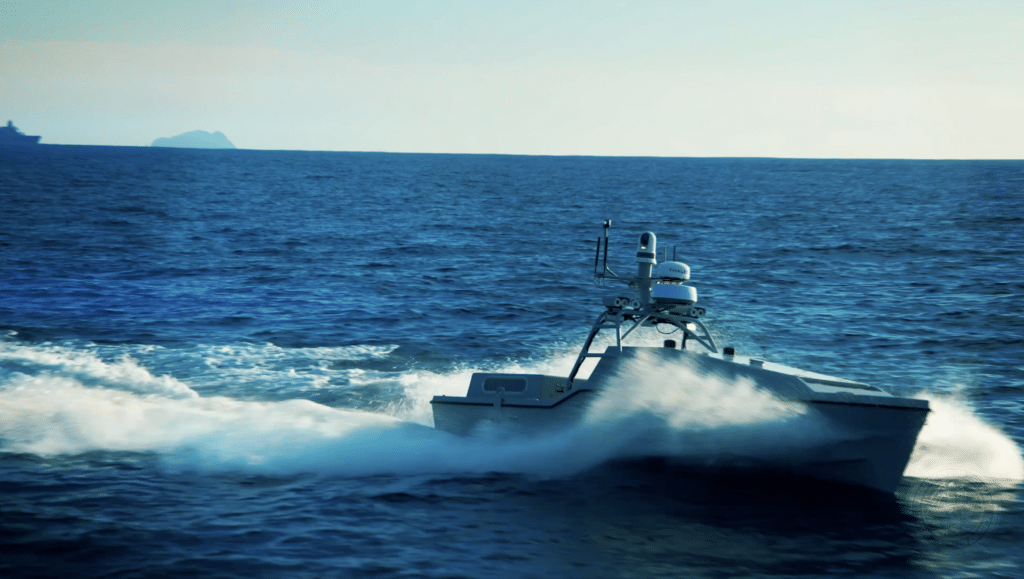
The JMSDF is also considering employment of unmanned underwater vehicles (UUVs). For example, the Acquisition, Technology & Logistics Agency (ATLA) has been conducting tests and technology development for a future long-endurance UUV that uses a modular hull design, allowing mission modules with various functions to be fitted as required. One such module under development is an “underwater equipment emplacement module,” and mounting mines in this module is a plausible option. Looking ahead, the JMSDF plans to begin operating offshore patrol vessels (OPVs) for maritime surveillance around Japan from FY2027, with a total of 12 hulls planned. These OPVs are designed primarily for peacetime roles and are lightly armed—generally only with a gun—so their combat capability in high-intensity contingencies is minimal. However, the plan calls for integrating containerized mission modules to amplify their capabilities. While anti-ship missile container modules are currently envisaged, containerized mine-laying modules may also be considered for future implementation.