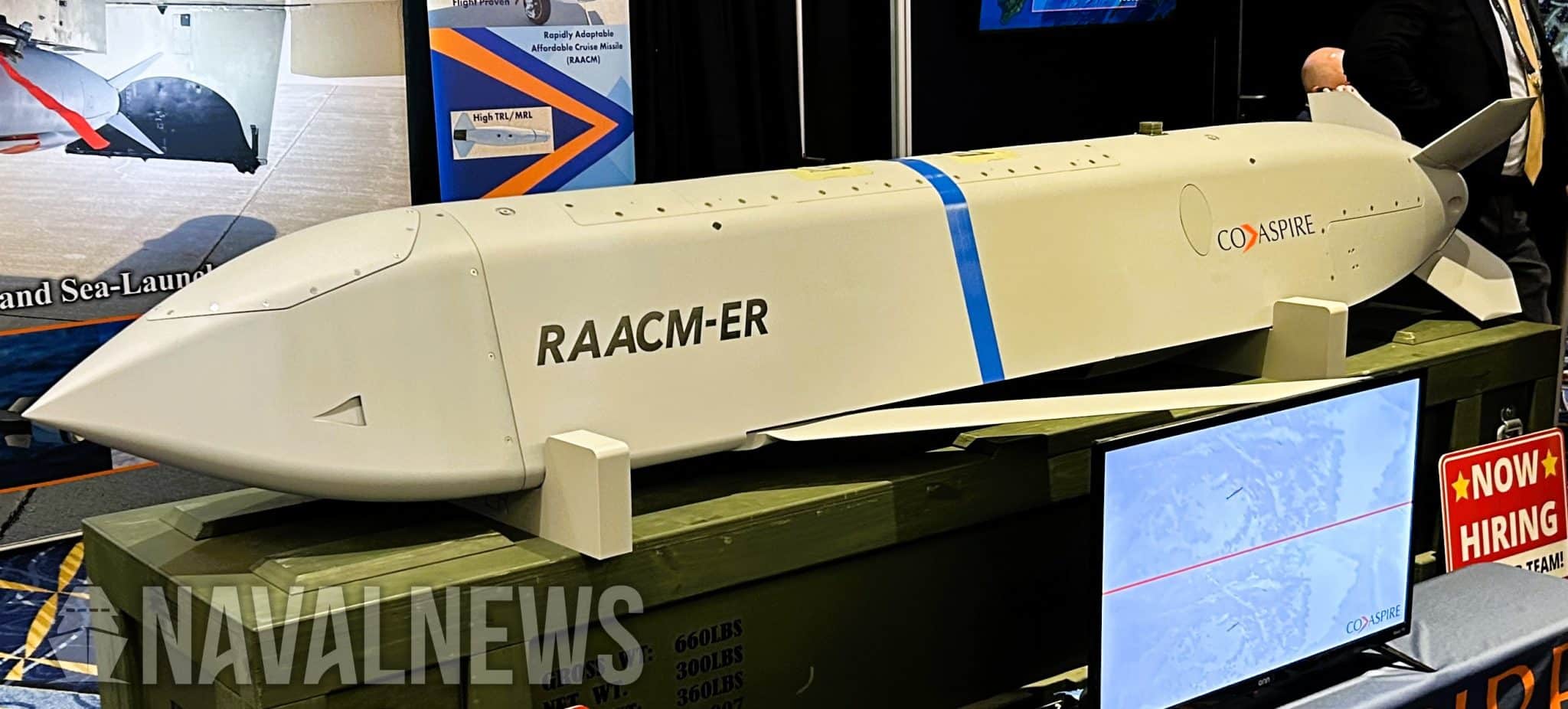
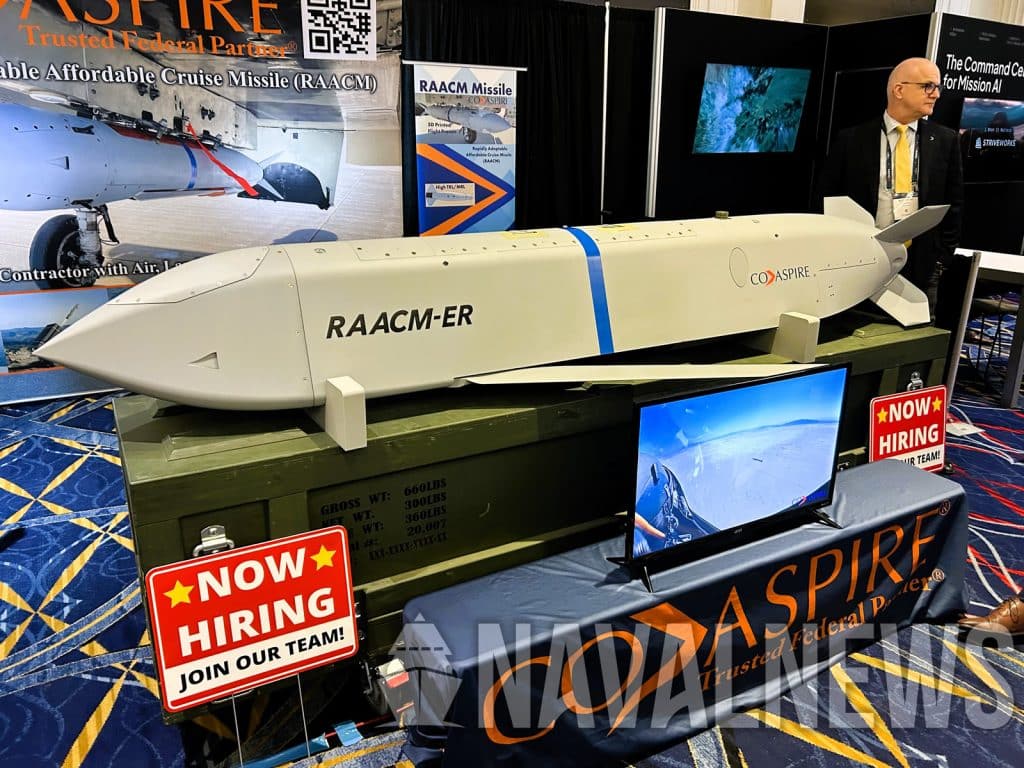
NATIONAL HARBOR, Md. — CoAspire revealed a new low cost and easy to produce extended-range missile with the potential to be launched from surface, air and submarine in maritime strike applications.
Naval News caught up with CoAspire CEO Doug Denneny on the showfloor of the Navy League’s Sea-Air-Space 2026 conference to review the company’s latest offering, which expands on previous work done for the Air Force’s Rapidly Adaptable Affordable Cruise Missile (RAACM). The company previously showcased this missile to Naval News at last year’s Sea-Air-Space, which can be read here.
Dubbed the RAACM Extended-Range (ER), Denneny explained that the missile brought expanded launch options and a significant striking capability boost to CoAspire’s offerings. Denney explained that RAACM-ER’s design will double the range and provide the ability to fire the missile via surface-launched methods, including from warships and containerized payloads.
“The Chief of Naval Operations (CNO), just last month, publicly said that he is very interested in the U.S. Navy, having containerized everything. It included electronics. It included missiles. So if you think about us, we listen to what the CNO says. We are very interested in providing this for a containerized solution for the Navy, as well as other opportunities that require either air-launch or surface-launched or even submarine-launched in the future,”
CoAspire CEO Doug Denneny
Compared to the fleet’s legacy munition deployment method via carrier-based aircraft and warship vertical launching system cells, recent calls for dispersed fires in support of the service’s distributed maritime operations concepts have seen numerous defense firms pitch containerized missile and loitering drone systems that could be used ashore or aboard warships. Containers with these payloads have been seen on Littoral Combat Ships and unmanned surface vessels. The U.S. Navy’s next frigate also plans to use containers on its quarter deck to bring much needed capabilities to the otherwise under-armed design.
Submarine-launched RAACM-ER
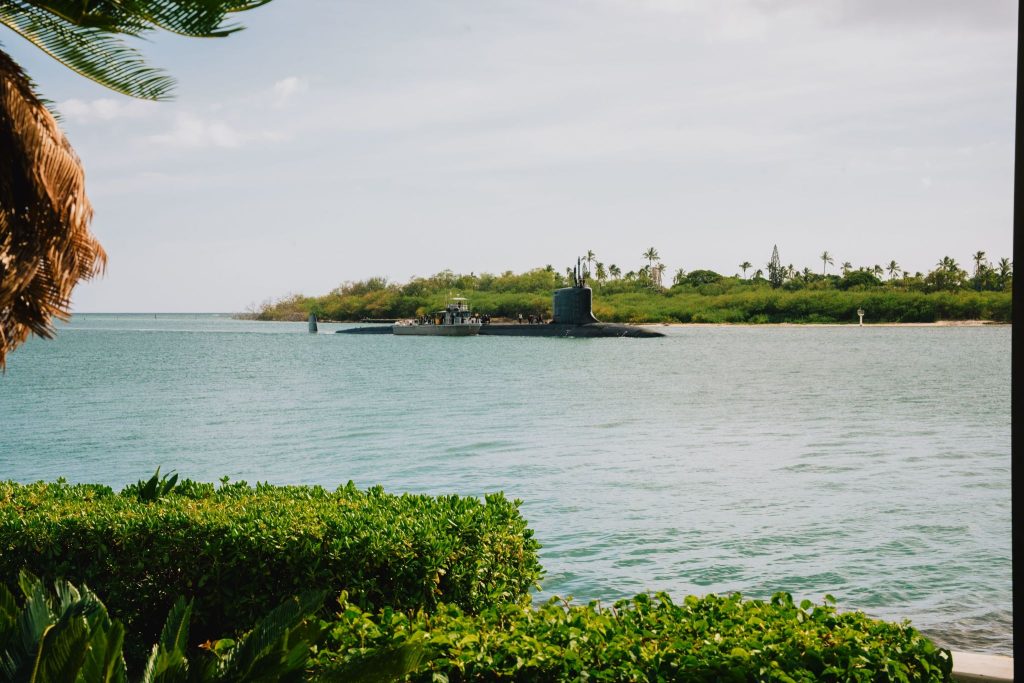
Denneny’s interest for potential opportunities in providing a subsurface-launched RAACM-ER could provide the American attack submarine fleet with another method of long-range strike, supplementing the service’s recently degraded Tomahawk cruise missile stock in the aftermath of Operation Epic Fury. A subsurface-launched munition could have the potential to be carried on future extra-large unmanned underwater vessels that the fleet – or allied nations – may procure under future drone initiatives.
While CoAspire could not specify the ranges of these missiles, the Air Force’s Extended Range Attack Munition – a program that the company is involved according to a Defense Security Cooperation Agency release – required a missile capable of striking targets up to 450 kilometers away. Denneny stated that compared to its precursor, the RAACM-ER “translates in excess twice the range,” potentially putting the new missile at around 900-1000 kilometers.
For maritime strike applications, CoAspire confirmed to Naval News that sensors capable of “going after stationary and moving targets in demanding (Electronic Warfare) environments” were being examined for RAACM-ER.
CoAspire Pushes Allied, Forward-Deployed Missile Production

Aside from affordable mass, CoAspire’s design and production philosophy for the missile envisions forward-based production with U.S. allies and American installations directly supporting combat operations in the event of a conflict.
“It’s an additively manufactured fuselage. And that additive manufacturing allows for us to do modifications very quickly with it. Additive brings not only less touch labor due to minimal tooling, but it also allows us to put these production facilities anywhere in the world because we can actually additive manufacture the parts, put them together close to a frontline, and not be locked into just having a CoAspire production facility in the United States,” Denneny said.
“It’s capability for Allied partners as well to build them, or you could build them on a naval base forward-deployed and get them to the fleet even quicker.”
Denneny also noted CoAspire’s continued discussions with the U.S. Army and Navy, as well as American allies and partners, for opportunities with RAACM and RAACM-ER.
“CoAspire’s goal is to disrupt the cruise missile business. The cruise missile business is ripe for disruption. It is currently dominated by major primes that provide very exceptional products. But with that exceptionality comes a very high price. CoAspire focuses on affordable mass cruise missiles,” said Denneny.