LAOAG, Philippines — The U.S. Army’s multi-domain forces and watercraft units want to island hop missile launchers across Indo-Pacific in a move that the service claims will extend their reach “towards the South China Sea” and strengthen regional deterrence.
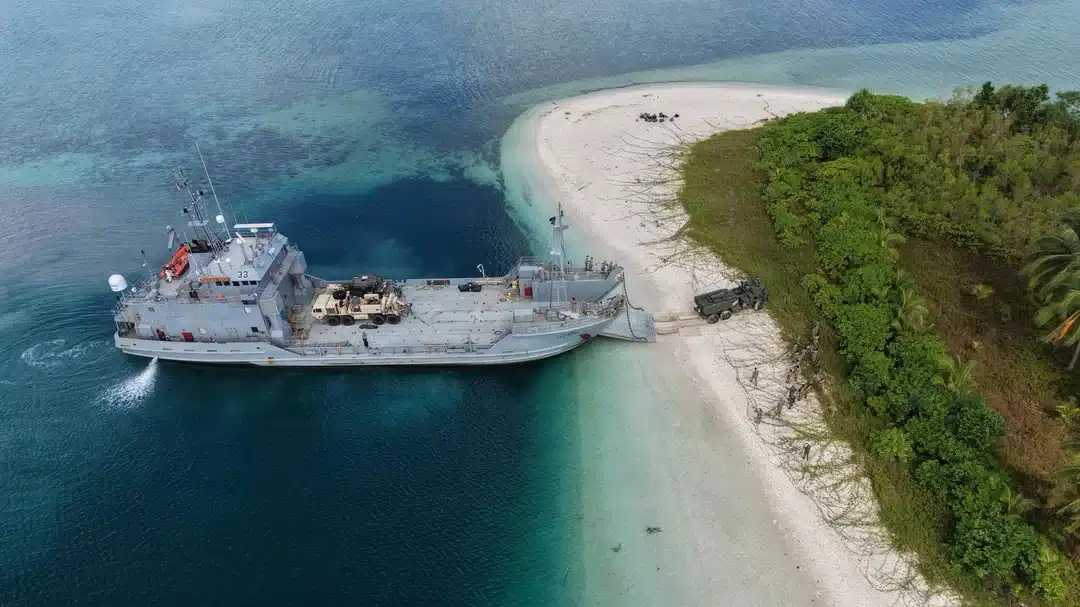
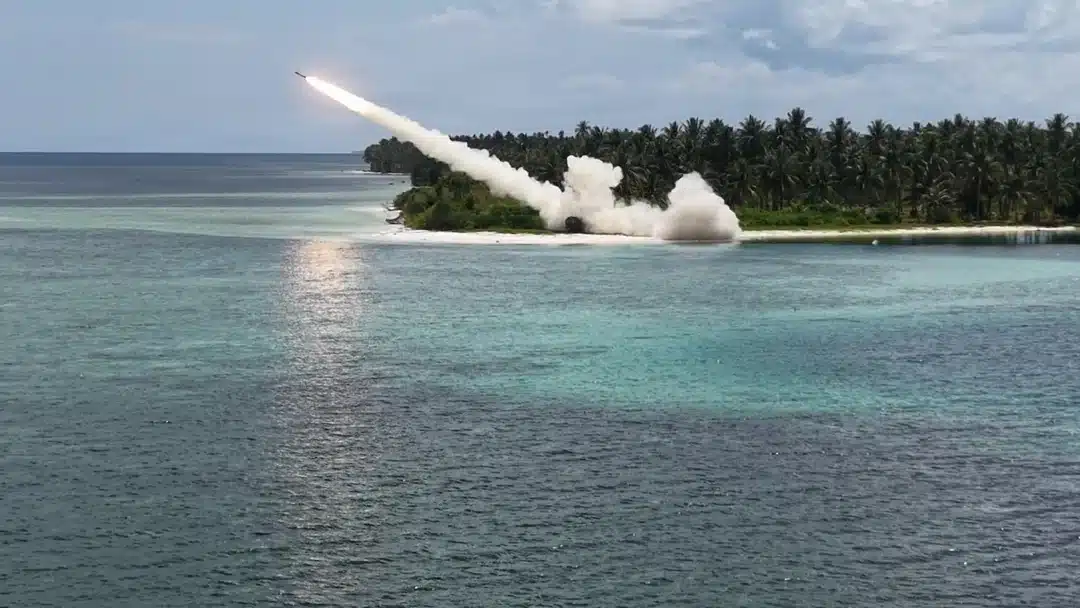
M142 High Mobility Rocket Artillery Systems (HIMARS) from the 7th Infantry Division, also known as Multi-Domain Command Pacific, were offloaded on the beaches of the southwestern Philippine island of Balabac during Balikatan 2026. Designated as one of nine sites that American forces could access under the Enhanced Defense Cooperation Agreement, Balabac has can host Washington’s long-range strike capabilities on the South China Sea to threaten Beijing’s previously established artificial island bases. Munitions that can be supported by HIMARS include the Precision Strike Missile and its future extended-range maritime strike variants.
This is the first time American forces fired HIMARS on the southwestern Philippine island. U.S. Army Secretary Dan Driscoll highlighted the launch as a demonstration of strengthening Washington’s regional deterrence and securing the Balabac Strait, one of several maritime chokepoints that can be used to transit in and out of the first island chain.
“In a multi-domain operations environment, speed and unpredictability are key. U.S. Army Pacific watercraft allow the joint force to ‘island hop,’ creating a distributed and lethal network across the U.S. Indo-Pacific Command,” a statement from the 8th Theater Sustain Command (TSC), the formation responsible for the service’s watercraft operations in the region, read.
Balikatan’s Massed Missile Deployments
Hawaii-based Army units have been experimenting with maneuvering its missile launchers, as well as the Marine Corps unmanned anti-ship vehicles, on watercraft before the beginning of this year’s Balikatan drills. For decades since the end of the Pacific War, the service doctrinally placed its fleet of ship-to-shore connector vessels within joint logistics to the shore operations. A renewed littoral maneuver mission has crept its way into the TSC’s overstretched fleet of water amid Washington’s efforts to posture against an increasingly assertive China.
The live-fire and transport of HIMARS to Balabac is one of several locations where high-end American missile systems appeared in recent weeks throughout the Philippines. Launchers assigned to Army’s Multi-Domain Command Pacific and the 25th Infantry Division deployed to Western Palawan, Northern Luzon and the Batanes Islands Group near Taiwan for Balikatan. Their deployments completed additional activities from the 1st Multi-Domain Task Force’s Mid-Range Capability (MRC) and the3rd Marine Littoral Regiment’s Navy-Marine Expeditionary Ship Interdiction System.
Washington’s positioning and live-fire drills during Balikatan 2026 represents the most explicit demonstration of American long-range strike and sea denial capabilities in the Western Pacific to date. Manila frequently highlights the training opportunities and deterrence effects that these activities bring to the Southeast Asian archipelago. In recent years, Manila has struggled with Beijing in the South China Sea and worries over how a potential cross-strait conflict may impact its northern territories.