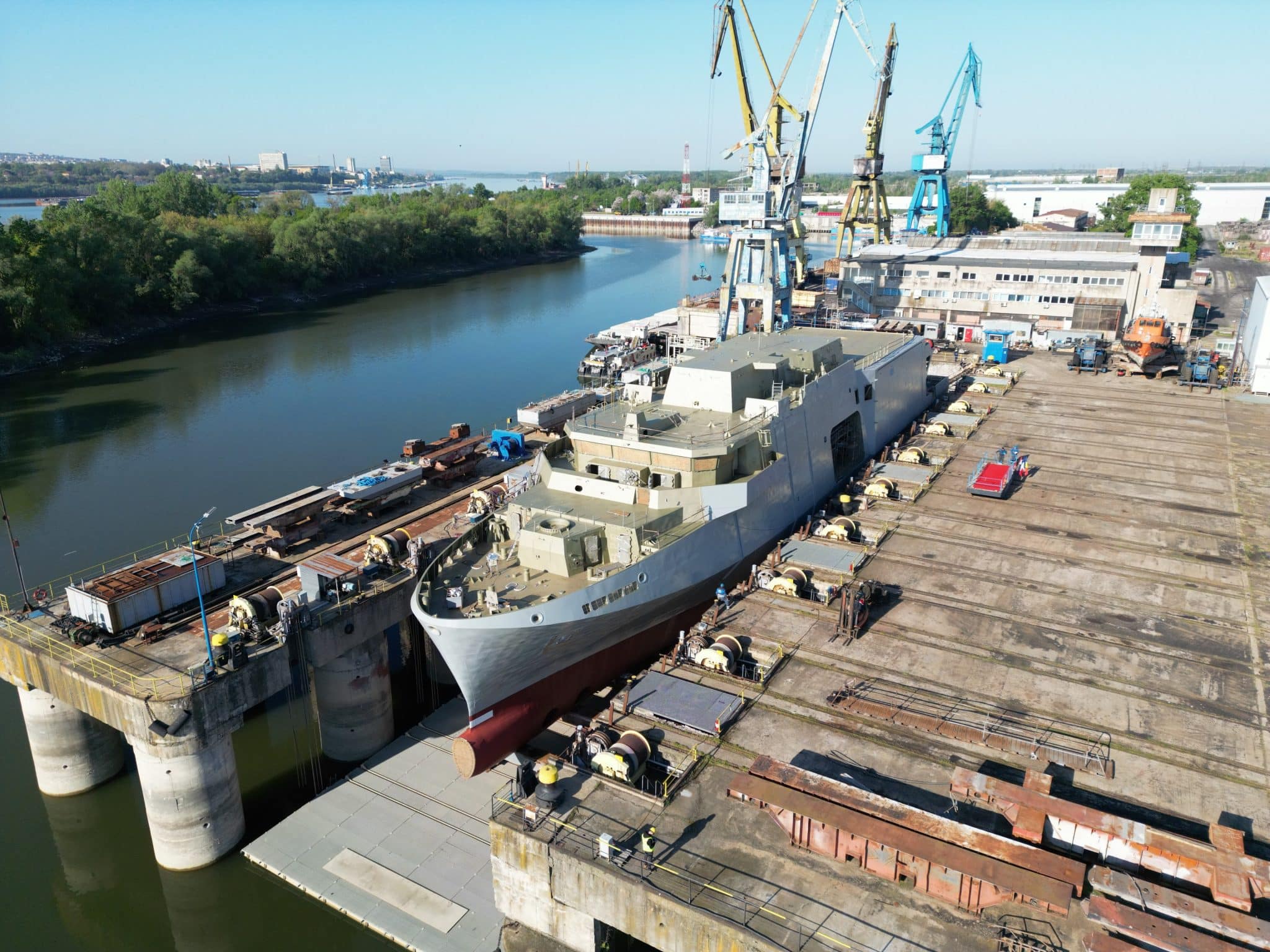
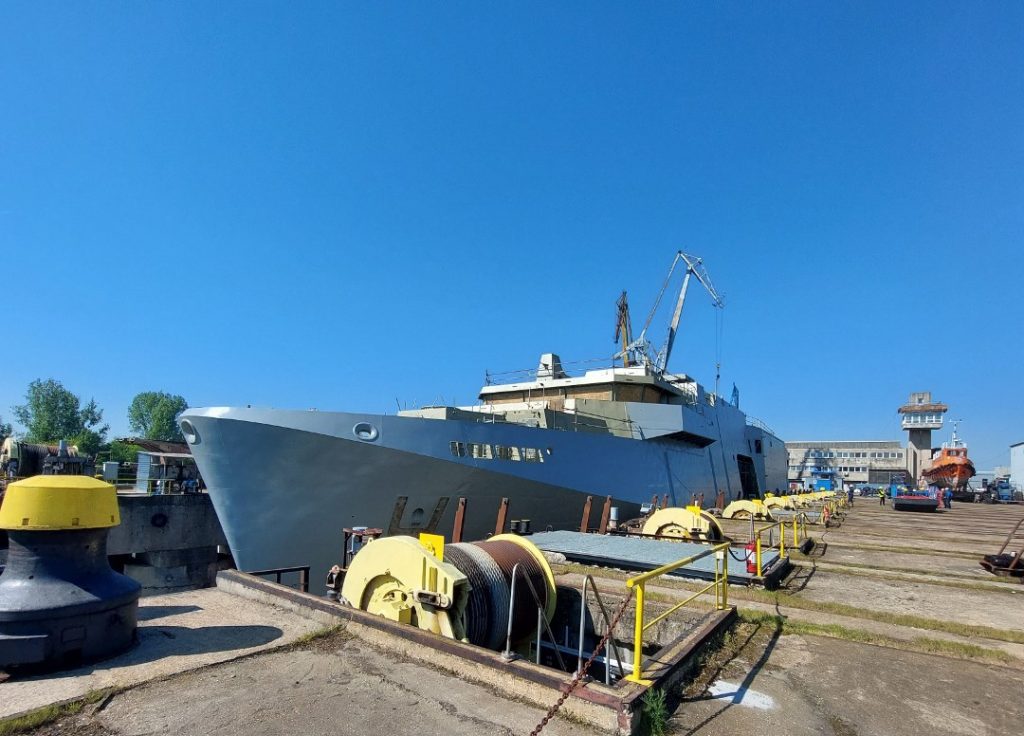
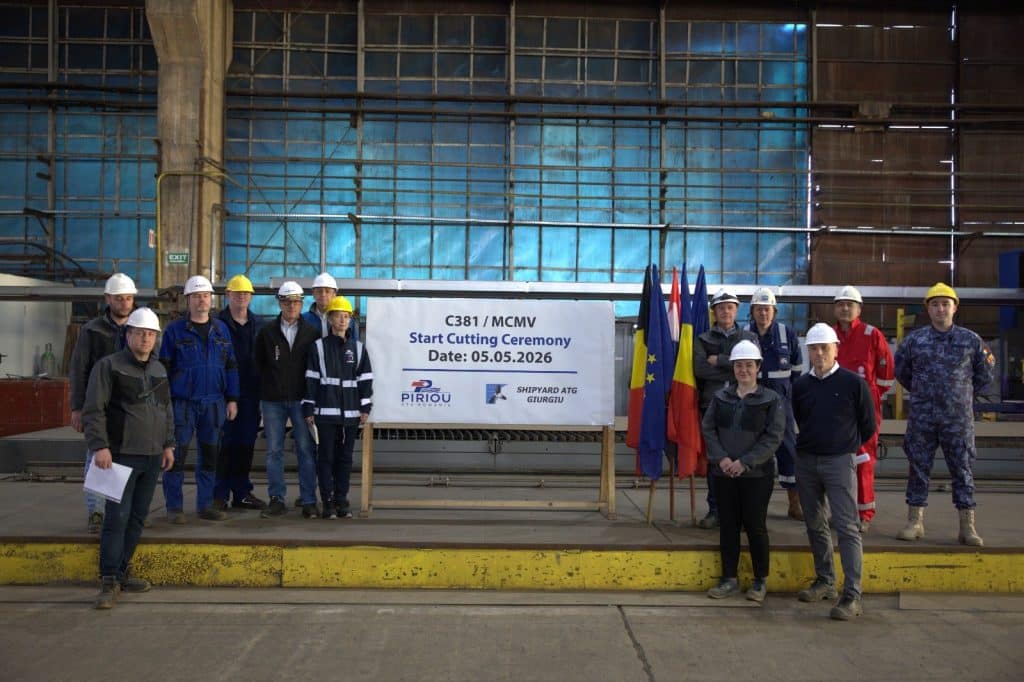
The M943 Liège, the fourth Belgian mine countermeasures vessel within the Belgian-Dutch replacement Mine Counter Measures (rMCM) program, was successfully launched on May 5. This launch marks the end of the ship’s structural construction phase and the transition to the next industrial phase: outfitting, system integration, and testing. Simultaneously with this launch, the first steel cut of the M945 Rochefort was performed. This officially marks the start of construction of the final Belgian rMCM platform.
Belgian MoD press release – Translated by Naval News
The launching of the M943 Liège marks the completion of the hull structure, main layout, and load-bearing parts of the vessel line. From this moment on, the vessel can be completed while afloat, and the integration of mechanical, electrical, and marine systems can commence. Simultaneously, the stability, watertightness, and structural behavior characteristics of the platform are validated under real-world conditions.
The first steel cut of the M945 Rochefort, on the other hand, marks the formal start of the construction of a new ship. During this phase, the first steel plates are cut, which will later be assembled into sections and hull blocks. With this, the project evolves from the design phase to the actual structural construction.
Of the six Belgian ships, all platforms are currently under construction, with the exception of the Ostend, which was delivered in November 2025.
Phased approach
The structural work on the M943 Liège took place in Romania, following the industrial construction model of the rMCM program. After launching, the vessel will be transferred to Concarneau (France), where Naval Group will be responsible for the further finishing and integration of the platform.
The simultaneous launch of a more advanced vessel and the start of construction of a subsequent vessel illustrates the continuous and overlapping production flow within the rMCM program. This allows industrial capacity to be utilized optimally and ensures continuity within the production line.
Preparation for testing and system integration
Following the completion of the M943 Liège, the Harbour Acceptance Trials (HAT) and Sea Acceptance Trials (SAT) will follow , in which the ship’s basic maritime performance is tested. These test phases take place before the full integration of the rMCM system and the deployment of unmanned assets.
Only after the completion of these tests will the integration of the mine countermeasures system begin. This system consists of a modular toolbox of unmanned surface, underwater, and aerial systems for the detection, identification, and neutralization of sea mines. Each ship builds upon the experience of its predecessors, allowing optimizations in the construction process, planning, and integration to be implemented step-by-step.
An industrial and technological renewal program
The M943 Liège and the M945 Rochefort are part of the rMCM programme, which replaces the ageing mine countermeasures vessels of Belgium and the Netherlands. These new ships are designed as mothership platforms operating according to the stand-off principle , whereby autonomous systems are deployed without the need for manned vessels to enter the risk area.
The rMCM program is implemented by Belgium Naval & Robotics, a consortium of Naval Group and Exail. By 2030, all twelve vessels will have been delivered and will be responsible for the protection of maritime routes, ports, and essential economic interests.
– End –