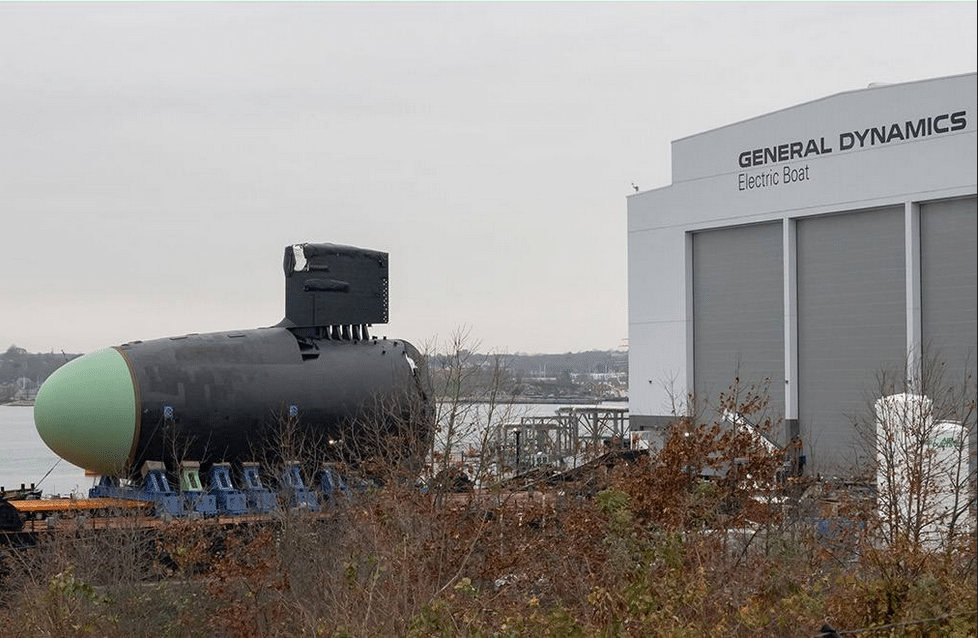
The U.S. Navy’s Future Years Defense Program (FYDP) regarding shipbuilding for fiscal years 2027-2031 contains massive investments into the U.S. Navy’s submarine force, with new details provided around what the U.S. subsurface fleet could look like in the future.
Earmarked funding for submarines totals out to $124.9 billion dollars for FY 27-31, presenting a massive leap in investment in the U.S.’s stated submarine plans. The FYDP doles out $62 billion dollars for the procurement of 5 Columbia-class (SSBN-826) Nuclear Ballistic Submarines (SSBNs), with one hull procured every fiscal year. Subsequently, the remaining $62.9 billion for the 5 year period will go towards procuring another 10 Virginia-class Nuclear Attack Submarines (SSNs).
The per year funding for the SSBN-826 program is as follows; $15.203 billion in FY 2027, $11.472 billion in FY 2028, $10.974 billion in FY 2029, $12.09 billion in FY 2030, and $12.02 billion in 2031. Comparatively, the breakdown for the Virginia SSNs stipulates; $13.986 billion in FY 2027, $12.634 billion in FY 2028, $13.578 billion in FY 2029, $11.597 billion in FY 2030, and $11.115 billion in 2031.
The Submarine industrial base will receive a further $6.2 billion across the FYDP, designated towards growing production capacity to at least one Columbia and 2 Virginias every year via supply chain stabilization and workforce growth. An additional $7.2 billion allotted to Nuclear Shipbuilder productivity enhancement in the same period could also help to achieve desired rates.
Under the FYDP, the Columbia-class hulls numbered 4-8 are to be procured and will be delivered to the Navy in 2032 through 2036 following the first 3 hull deliveries in 2029, 2030, and 2031 respectively. Supplementing the Columbias, 6 of the Virgnias are Block VI standard boats and the remaining four representing the first of the Block VIIs procured.
The U.S. Navy will also procure two Boeing ORCA XLUUVs in FY 2027 for a total cost of $135.8 million dollars, followed by an additional 14 vehicles across the FYDP for an overall total of $1.13 billion dollars across the XLUUV fleet. The Navy states that these unmanned vessels serve to bring mass and additional sensor points at a lower cost than procuring additional manned submarines.
Ensuring Continuity
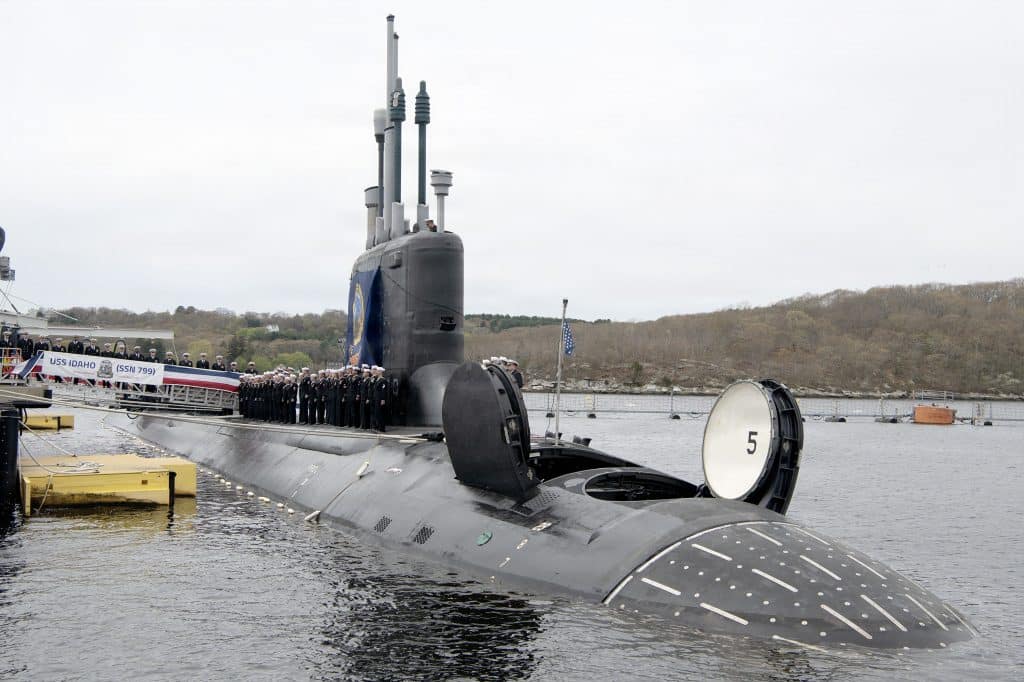
The Navy’s reasoning towards continued support of the Columbia-class has remained largely unchanged, centering around a need to keep the sea-based leg of the Nuclear Triad functional during the decommissioning of the Ohio-class SSBNs. Correspondingly, the Navy also needs the Columbias due to several qualitative enhancements such as the electronic propulsion and control systems, and 50 years of quieting technology evolution since the induction of the Ohios.
“Our sea-based strategic deterrent—the SSBN force and its associated NC3—are the bedrock of our national security and provide the most survivable leg of the Nuclear Triad, ensuring the President has strategic options to deter aggression and maintain peace.”
– ADM Rich Correll,
U.S. Strategic Command
Conversely, the Navy states the need for the continued procurement of the Virginias is based partly on preserving the submarine production base, ensured through the Block VI multi-year procurement contract providing stable demand and production output whilst also providing means of upgraded forms of undersea dominance. Additionally, the Navy states that this contract will allow for growth in the submarine industrial base through worker retention alongside investments into modernizing facilities and advanced procurement helping to reduce potential delays.
SSN(X)

The Navy’s support of the SSN(X) program support falls largely into the same lines of reasoning behind the procurement of Block VI and Block VII Virginia-class SSNs, with an emphasis on continued undersea dominance and the prevention of submarine industrial base atrophy. SSN(X)’s service entry in the 2040s will mark the induction of a completely new class of SSN into the U.S. Navy in roughly 3 and half decades, with the new boats tasked with supplementing the inventory of the Virginias in service by then.
SSN(X) will also present a leap in integration as the class is meant to be highly interoperable with unmanned systems from the outset of design work. The FYDP also points towards SSN(X) carrying an increased payload volume, likely in regards to the carriage of said unmanned systems, allowing for innate sea-bed warfare capabilities. With a delivery date in the 2040s, the U.S. Navy has determined SSN(X) will be able to capitalize off of the current round of revitalization efforts in the industrial base, allowing for an easier production cycle.
Future Force Constitution
Alongside a 2 SSN per fiscal year procurement plan, the Navy also expects that deliveries will also hover around 2 SSNs per year, with periodic jumps in deliveries throughout the next decade and a half. Some years will experience comparatively high delivery numbers, with the delivery of 4 SSNs projected in 2035 and 2038, followed by a peak output at 5 submarines delivered in 2039 alone.
The rate of new SSNs delivered over the next decade projects the outpacing of the expected rate of SSN retirement, increasing the total number of SSNs from 47 in FY 2027 to 56 by FY 2040, following a lull deliveries causing the total number of attack submarines in service to drop to 45 in 2030 and 2031.
12-13 SSBNs in active service will be the baseline total throughout the next several decades as the Ohios steadily leave service and the Columbias eventually come online. The Columbia-class of boats will be the only SSBNs in service following the estimated decommissioning of the last Ohio 2042, ending a nearly 63 service life for America’s strategic backbone.
Amongst the retirements listed in the program document is the first Seawolf-class SSN to be decommissioned, as the USS Connecticut is scheduled to leave service sometime in 2031. Connecticut will thus become the first in her class to leave service, just 5 years post service re-entry following a collision with an underground mountain in 2021. Furthermore, the U.S. Navy will find itself without Nuclear Powered Guided Missile submarines in 2029 and until the 2040 following the decommissioning of the USS Florida.