The commander of the U.S. Navy’s Pacific Fleet reviewed the missiles, munitions and systems coming to naval aviation at the service’s premier weapons development base.
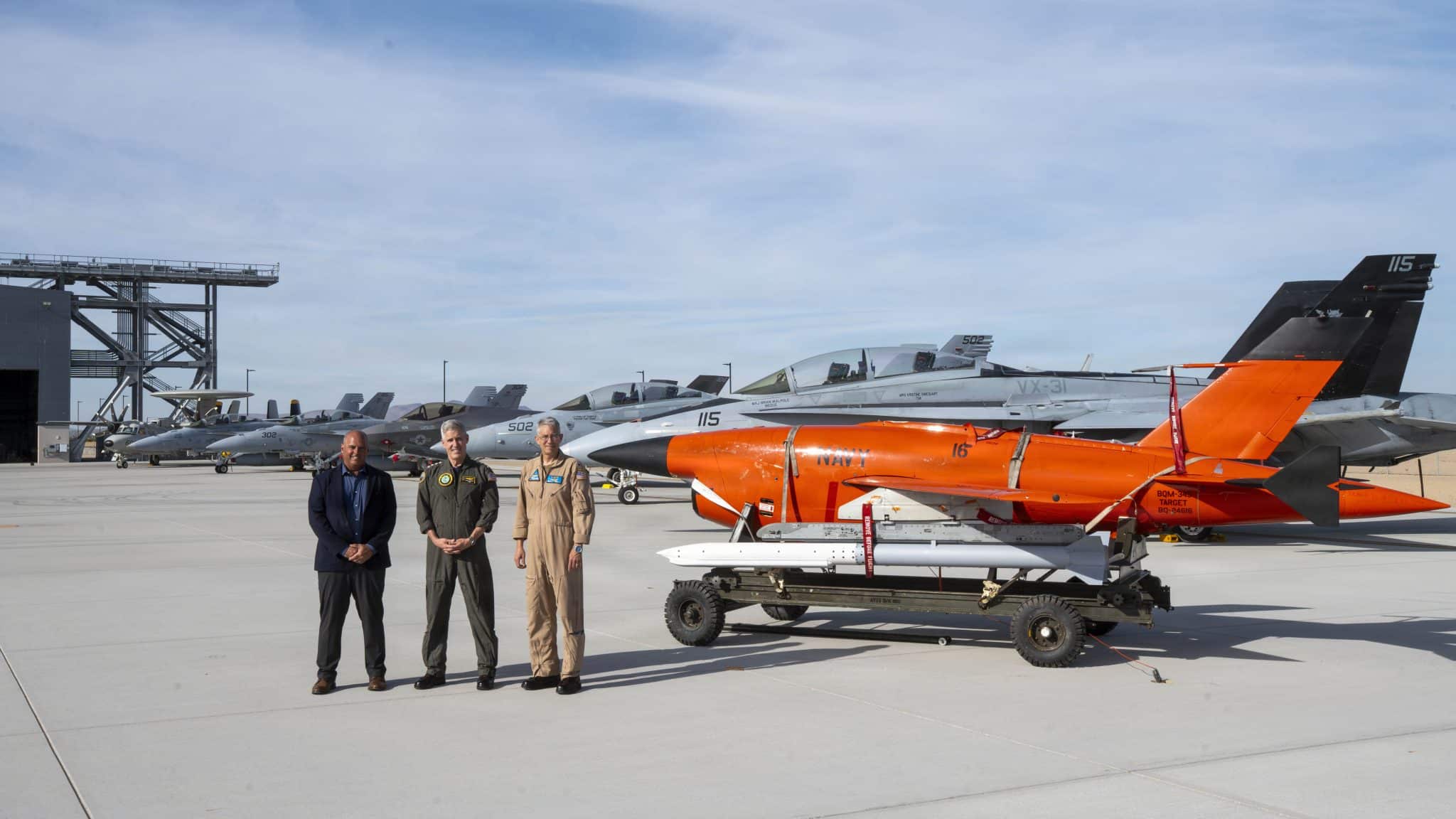
Adm. Steve Koehler, commander of the U.S. Pacific Fleet, visit to Naval Air Weapons Station China Lake was captured by Defense Department photos last week. A line-up of F/A-18E/F Super Hornets from Air Test and Evaluation Squadron (VX) 31 were equipped with some of the Navy’s newest tech and missiles during the visit. The squadron’s fighters regularly preview the service’s upcoming systems.
In a potential conflict with China, Koehler’s carrier air wings would be hard pressed to counter Beijing’s modernized naval and air forces. While the fleet’s Super Hornets could afford to field legacy systems in their operations in the Middle East and other Global War on Terror-related conflicts, new peer threats that have not been seen since the Cold War require new capabilities.
According to a Pacific Fleet release, the visit involved briefings on “next-generation maritime weapons systems” and “advanced capabilities necessary to support the air wing of the near future.”
Several initiatives designed to boost the capabilities of American naval aviation in Indo-Pacific Command were highlighted at China Lake.
Long-Range Air-to-Air, Advanced Jamming and Infrared Sensing Coming to Naval Aviation
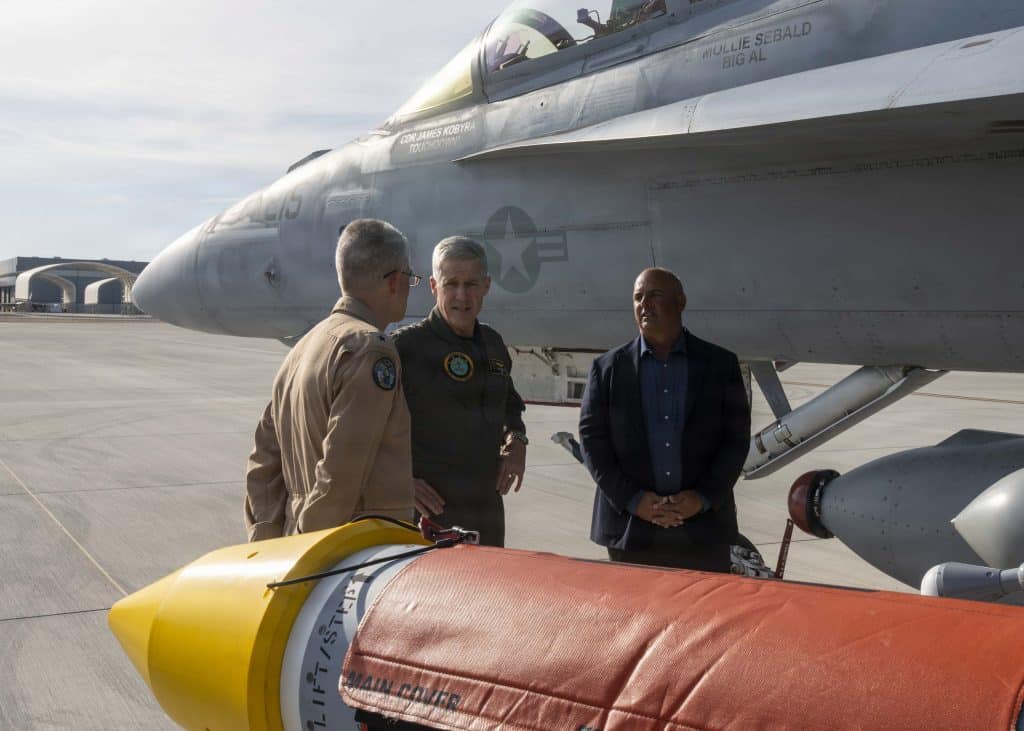
Among the more identifiable missiles reviewed was the AIM-174B “Gunslinger” long-range air-to-air missile. In a Naval Institute Proceedings article, Commander, Naval Air Forces Pacific Fleet, VAdm. Dan Undra Cheever, claimed that the air-launched Standard Missile 6 gave carrier aviation “the ability to ‘out-stick’ adversary fighters and operate inside the weapons engagement zone.”
Gunslinger has been fielded to the Japan-based Carrier Air Wing Five, which operates off the USS George Washington (CVN-73). As the service’s only forward-deployed aircraft carrier, the Nimitz-class and its naval aviation is tasked with contending with contingencies across the Western Pacific. A complement of Gunslingers greatly reinforces the air wing’s offensive and defensive capabilities against Chinese air and missile threats.
The Super Hornet carrying the massive air-to-air missile also equipped the Angry Kitten offensive electronic warfare pod. Originally derived from a threat simulator used during exercises, the Naval Air Warfare Center Weapons Division transformed the system into an operational capability that American airmen have since used to protect their fighters. Angry Kitten pods recently saw action in the U.S.-Iran War.
Completing the two recently fielded systems was an IRST21 pod mounted on the Super Hornet’s centerline. The Pentagon states that this system will “support the guidance of beyond visual-range air-to-air missiles,” such as the Gunslinger mounted on the VX-31 fighter.
Unspecified Capabilities: Drone-mounted Ramjet Missile
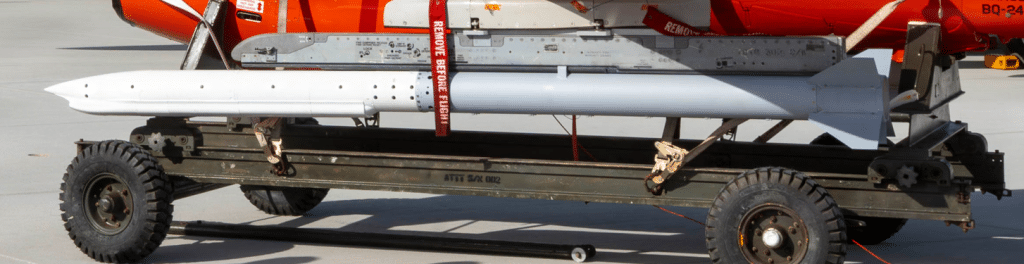
A unique missile sporting ramjet-like features was seen mounted on a BQM-34 unmanned aerial target. While the missile’s design and purpose remains unclear, it was previously spotted during Defense Secretary’s Pete Hegseth visit to Naval Air Station Point Mugu last winter.
China Lake previously worked with Norway to develop an Advanced Solid Fuel Ramjet. Norwegian defense firm Nammo has also showcased its work on a ramjet munition that shares attributes of the missile seen at China Lake.
Fire Bee drones conducted ramjet tests off Point Mugu last year. According to a Navy release, lessons from those trials were used to inform “development of a next-generation missile prototype aimed at enhancing speed, range and operational flexibility for future Navy strike capabilities.”