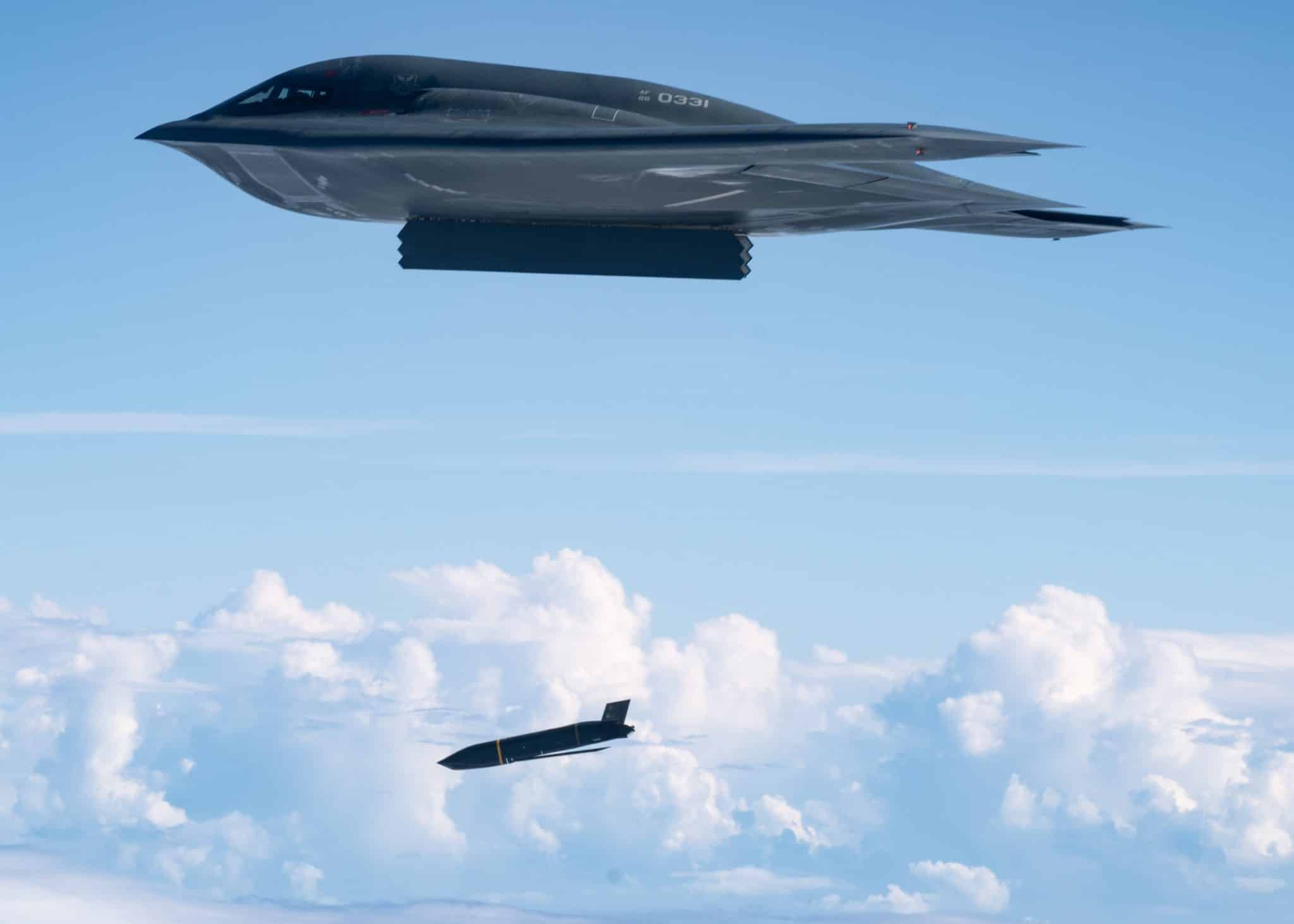
The U.S. Air Force demonstrated a new long-range and stealthy maritime strike capability from the service’s B-2 bombers employing AGM-158C Long-Range Anti-Ship Missiles (LRASM) during a recent sinking exercise in the Pacific that could prove crucial in a potential conflict with China.
“By prioritizing counter-maritime strike operations, we can maintain a decisive edge over adversaries, protect our national interests and ensure the free and open Pacific that underpin our global security,” Gen. Kevin B. Schneider, Commander, Pacific Air Forces, said in a news release on the LRASM deployment on the Spirit.
Through the B-2, Washington could project global maritime strike capabilities from the U.S. homeland aboard long-range stealth bombers. The reach of the Spirit has been recently showcased in the U.S.-Iran War. Experiments off Norway last year with Quicksink, a modified guided-bomb kit designed to destroy the hulls of vessels, also highlighted the Air Force’s intentions of bringing the Spirit fleet into the maritime strike mission.
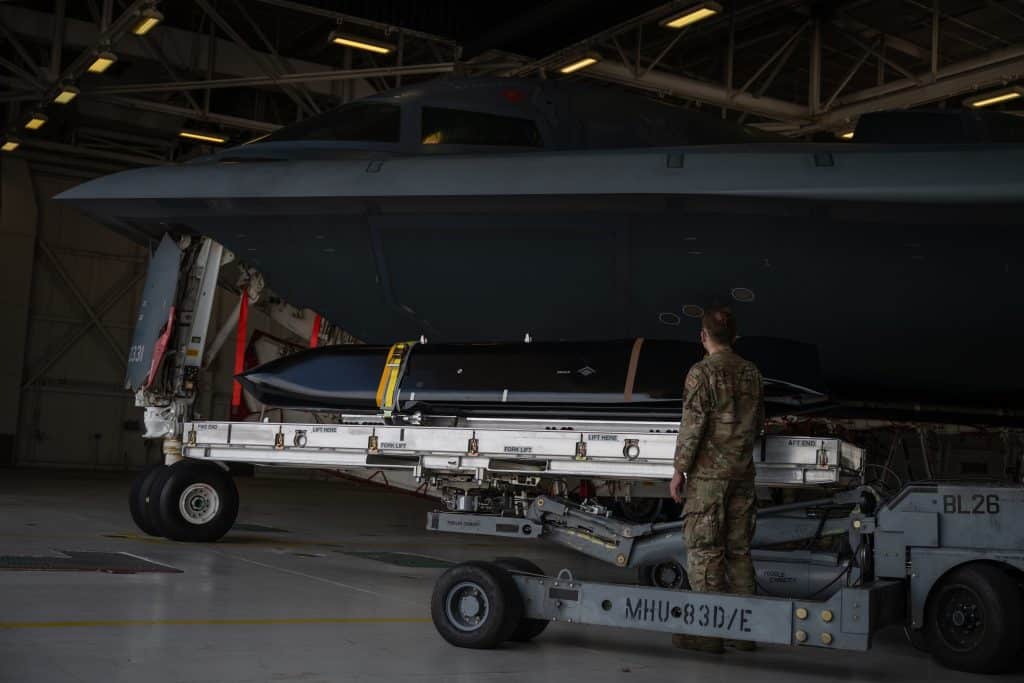
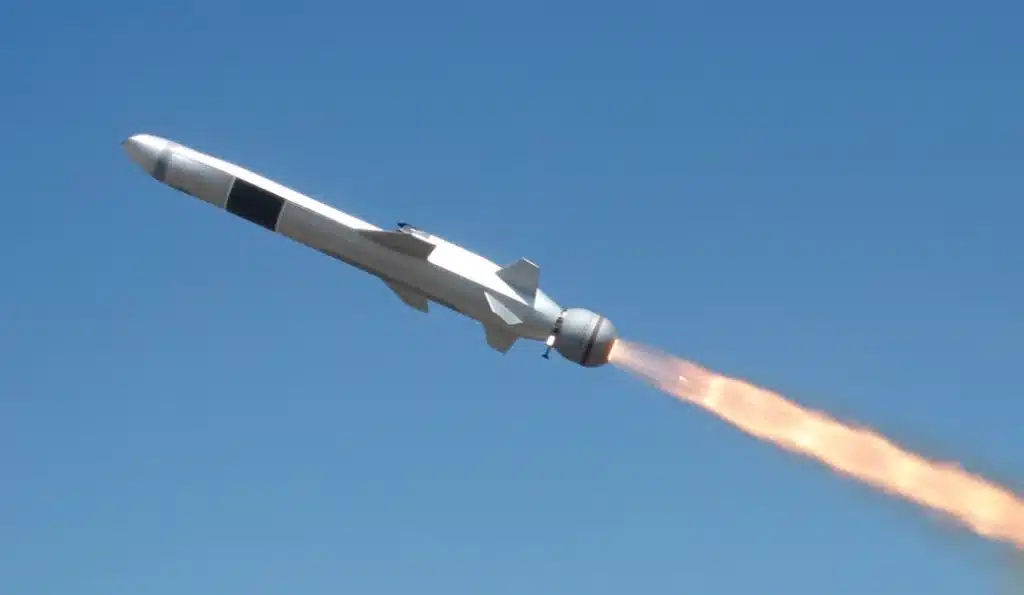
LRASM, originally conceived under a broader program to active a variety of maritime strike missiles over a decade ago, has become the most capable air-launched ship-sinking capability known to be deployed by American forces. With a range of over 200 nautical miles and a warhead of 1000 pounds, the Lockheed Martin missile is derived from the stealthy Joint Air-to-Surface Standoff Missile. Its low-observable capabilities and use of modern technologies represents a marked leap from the Cold War-era Harpoon missiles.
The carrier air wing’s F/A-18E/F Super Hornets and Air Force’s B-1B bomber can carry LRASM. Work to integrate LRASM with P-8 maritime patrol aircraft, F-35 5th-generation fighter variants and the F-15EX are underway.
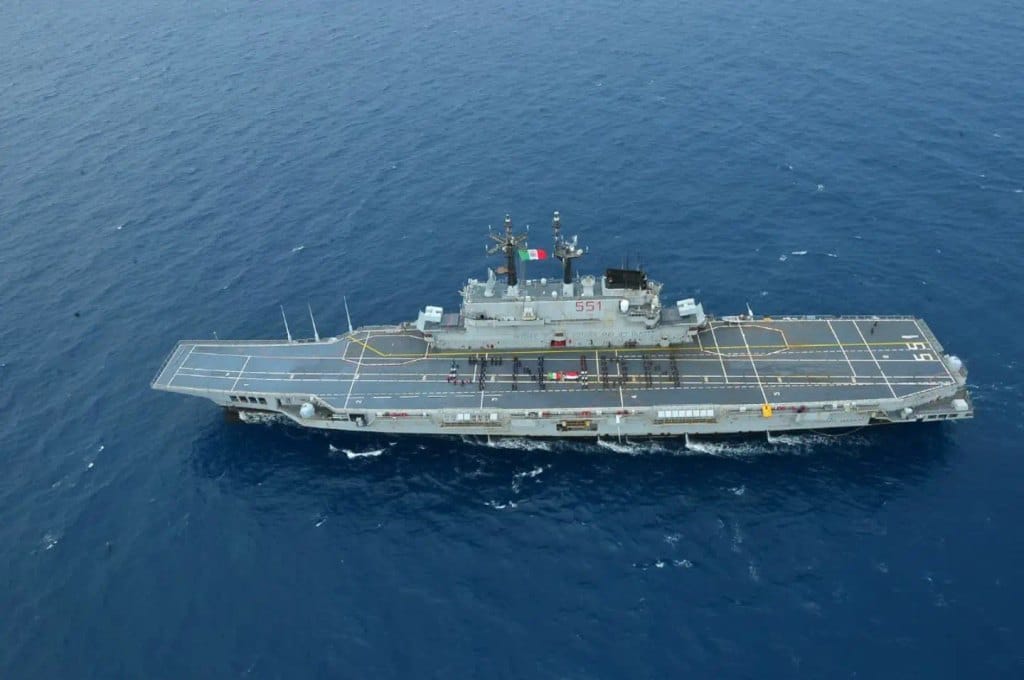
With the modernization and expansion of the People’s Liberation Army Navy, Air Force planners have been looking to integrate new capabilities to sink Chinese fleets in a potential conflict. With the prospect of facing a peer adversary with long-range air defense systems, guided-missile destroyers and an advanced Air Force, the service’s legacy Cold War-era systems may prove insufficient. In recent years, fighters and bombers have experimented with specialized bombs designed to crack the hulls of ships, mining operations over extended distances and maritime-focused operations.
Last week, the service announced its search for a family of next-generation missiles that could strike ground, air and naval targets out to 1,000 nautical miles. These requirements were influenced by the Air Force’s “Long-Range Kill Chain” concept, which plans to train, gear and equip aircrews for a fight against a peer adversary.