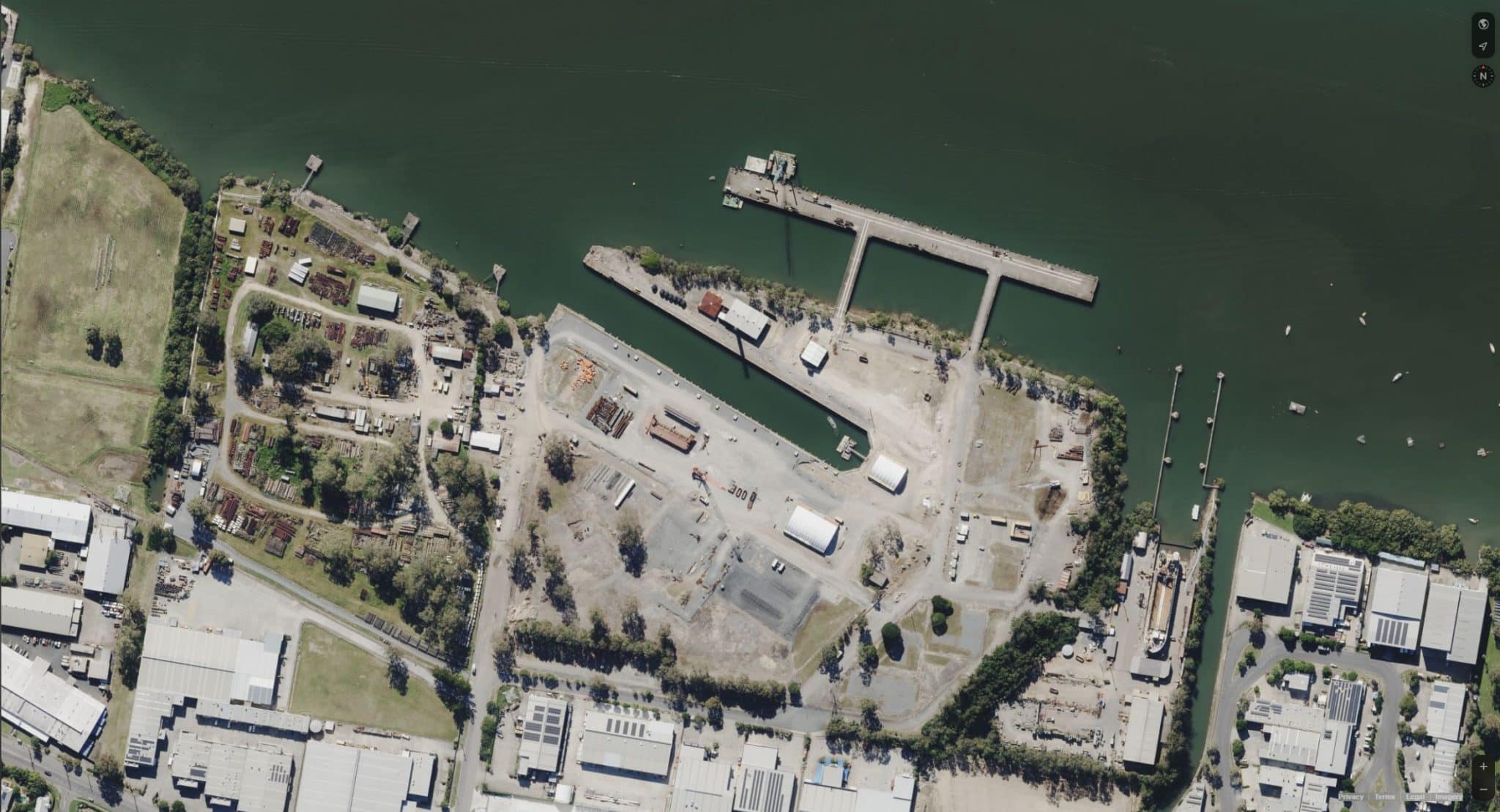
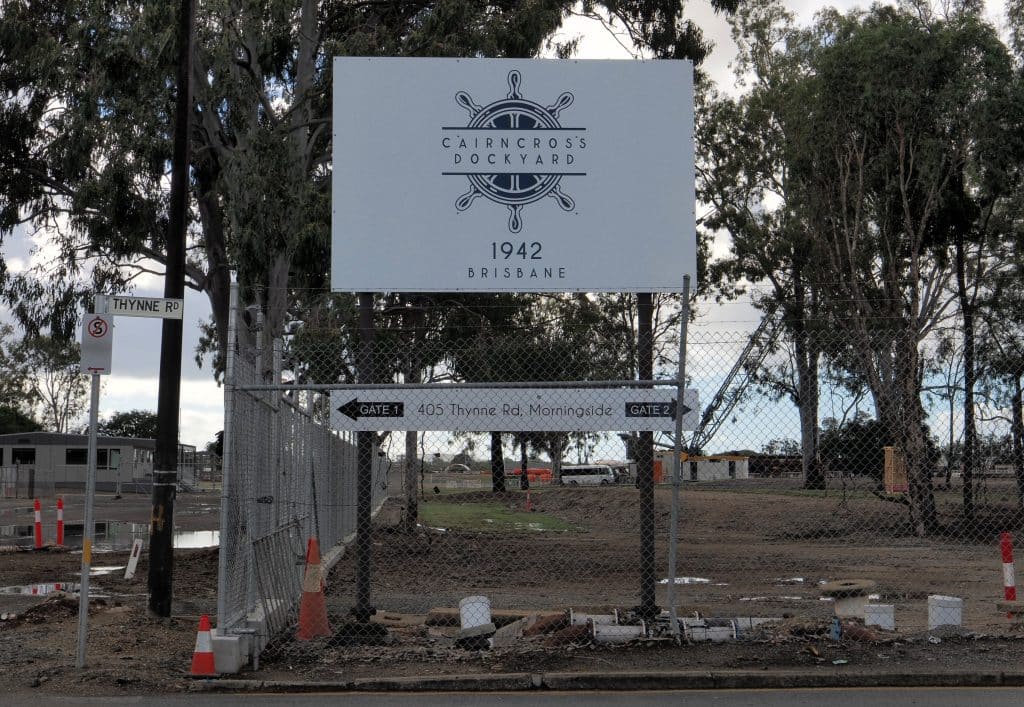
The Queensland state government of Premier David Crisafulli established the Cairncross Dockyard Brisbane Project in November 2025 a prescribed project. The intention of this effort is the resurrection of a working shipyard in the Brisbane suburb of Morningside, with a privately funded investment worth A$ 2.5 billion. Naval News provides an overview on background, basic characteristics of the site in question, and an overall assessment from a perspective of naval and defence requirements.
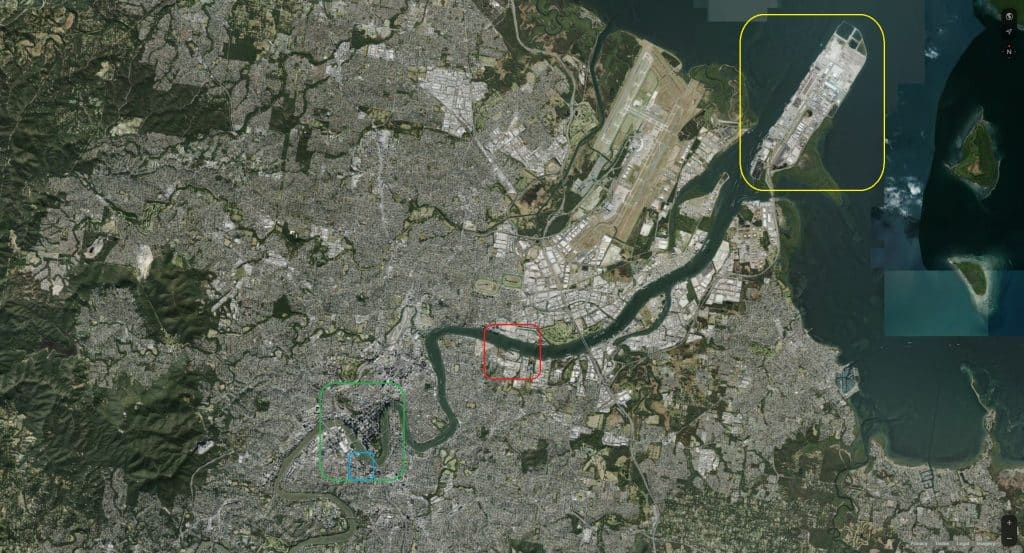
The Queensland government announcement on 20 November 2025 emphasised a “fresh start” for the Cairncross Dockyard-effort, touching on a long winded history with significant ups and downs for what constitutes the second largest graving dock in Australia. The Crisafulli-administration expects the project to provide 1,000 jobs directly at the shipyard, and several thousand more through associated industries. Aside from civilian industry considerations the Queensland government explicitly emphasised the merits for the Australian Defence Force and allied countries.
“The project positions Queensland to better meet the needs of the Australian Defence Force, allied partners, and commercial operators, sending a clear message that our State is open for business and ready to deliver for the defence industry and national security.
Jarrod Bleije, QLD Deputy Premier, Minister for State Development, Infrastructure and Planning and Minister for Industrial Relations.
Historical background of the Cairncross graving dock
Despite an abundance of expansive natural harbours Australia historically possessed only a marginal footprint in naval infrastructure, including drydocks for the support of the Royal Australian Navy and international partners. The primary reason for this is the friction between vast geographical distances of the Australian continent and a modest national population. The majority of this population also remains heavily concentrated in the southeastern part of the country roughly delineated by Adelaide in South Australia and Brisbane in Queensland on the east coast.
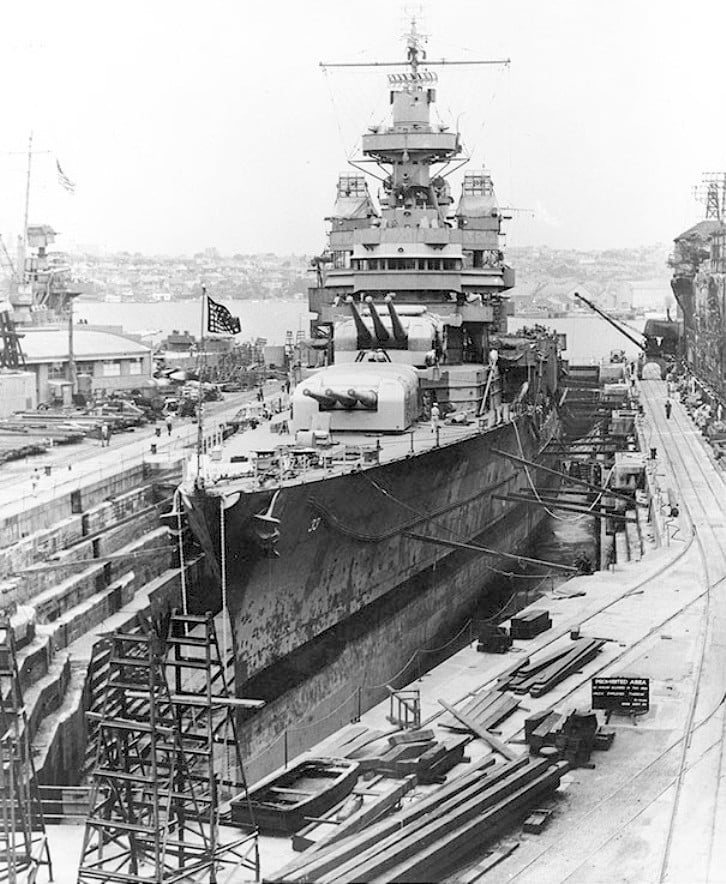
Until World War 2 the primary naval facilties in Australia remained concentrated in Sydney and some supporting infrastructure in Melbourne. Cockatoo Island in Sydney Harbour included the then largest graving dock in Australia, the Sutherland Dock, established in 1890. This graving dock formed the centrepiece of the Commonwealth Naval Dockyard on Cockatoo Island from 1913, capable of accommodating warships up to the size of the Indefatigable-class battlecruisers.
Pacific War and the rush for capacity
By 1942 the escalating Pacific War, in particular the Fall of Singapore, underscored the need for additional naval infrastructure supporting American and allied forces confronting the Imperial Japanese Navy. The Australian government had previously assessed existing infrastructure as inadequate. In response, construction of the new Captain Cook Graving Dock on Garden Island near the Sydney Harbour Bridge had been underway from 1941.
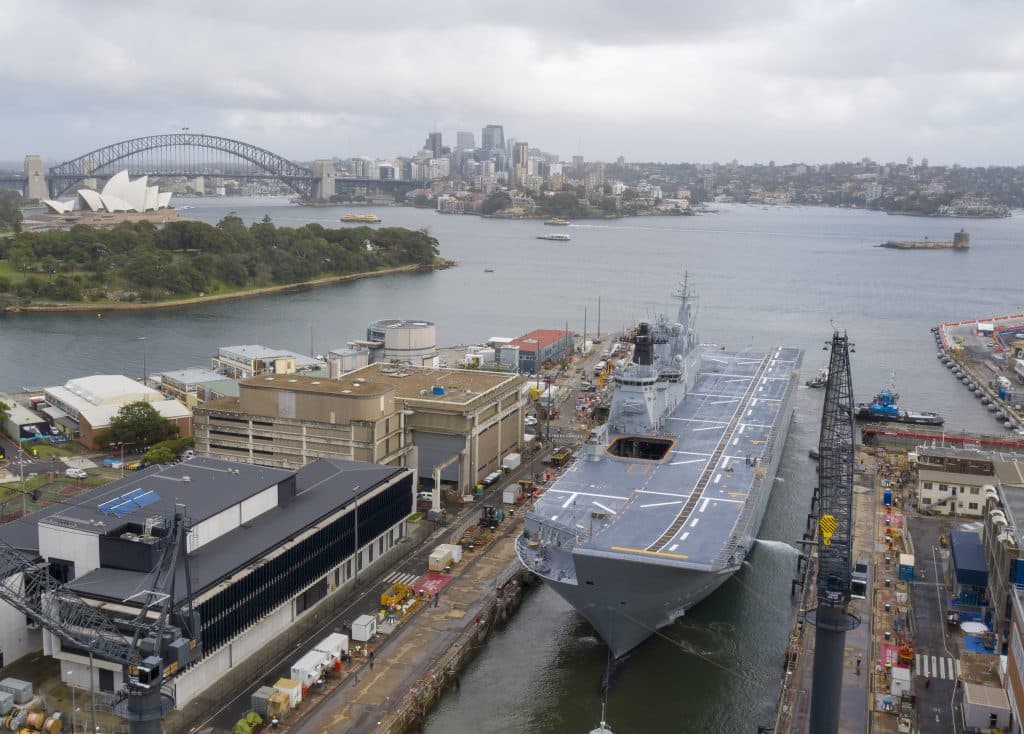
The Cairncross graving dock started construction in 1942 as a secondary facility in the Queensland state capital of Brisbane, approximately 1,000 km north of Sydney. While the Captain Cook Graving Dock remains the largest such facility in Australia, with an overall length of 350 metres and width of 45 metres, the Cairncross facility became the second-largest drydock on the continent. Dimensions as constructed include an overall length of 244 metres, a width at sill level of 33.5 metres and a depth of 14.3 metres. Brisbane’s previous most notable dry dock was the South Brisbane Dry Dock, constructed between 1876 and 1881. Despite an extension in 1887 this facility only provided a total length of 130 metres and depth at the entrance sill of 5.79 metres, rendering it obsolete for naval purposes by the early 20th century.
Vanishing demand after 1945 and false re-starts
Original requirements envisioned drydocking of vessels up to the size of ocean liners such as Cunard Line’s RMS Mauretania, at a length of approximately 240 metres and displacement exceeding 40,000 tons. In practice Cairncross primarily docked smaller warships up to the size of escort carriers, and a large proportion of auxiliary vessels, once the facility became operational in June 1944. After the end of the war the drydock became increasingly unprofitable, leading to its eventual closure in 1987. Over the next two decades Cairncross changed ownership several times, re-opening in 1995 and closing once again in 2014.
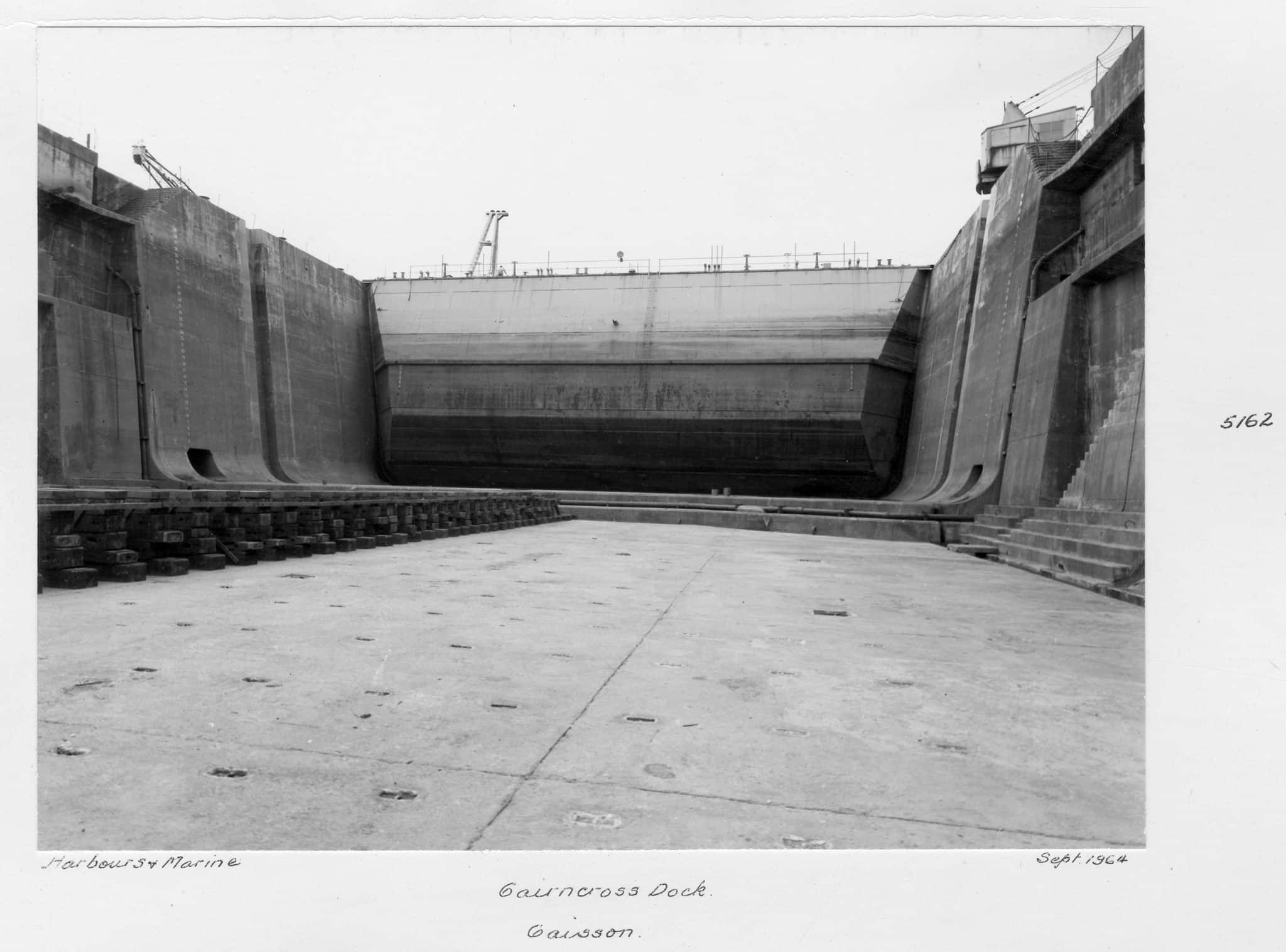
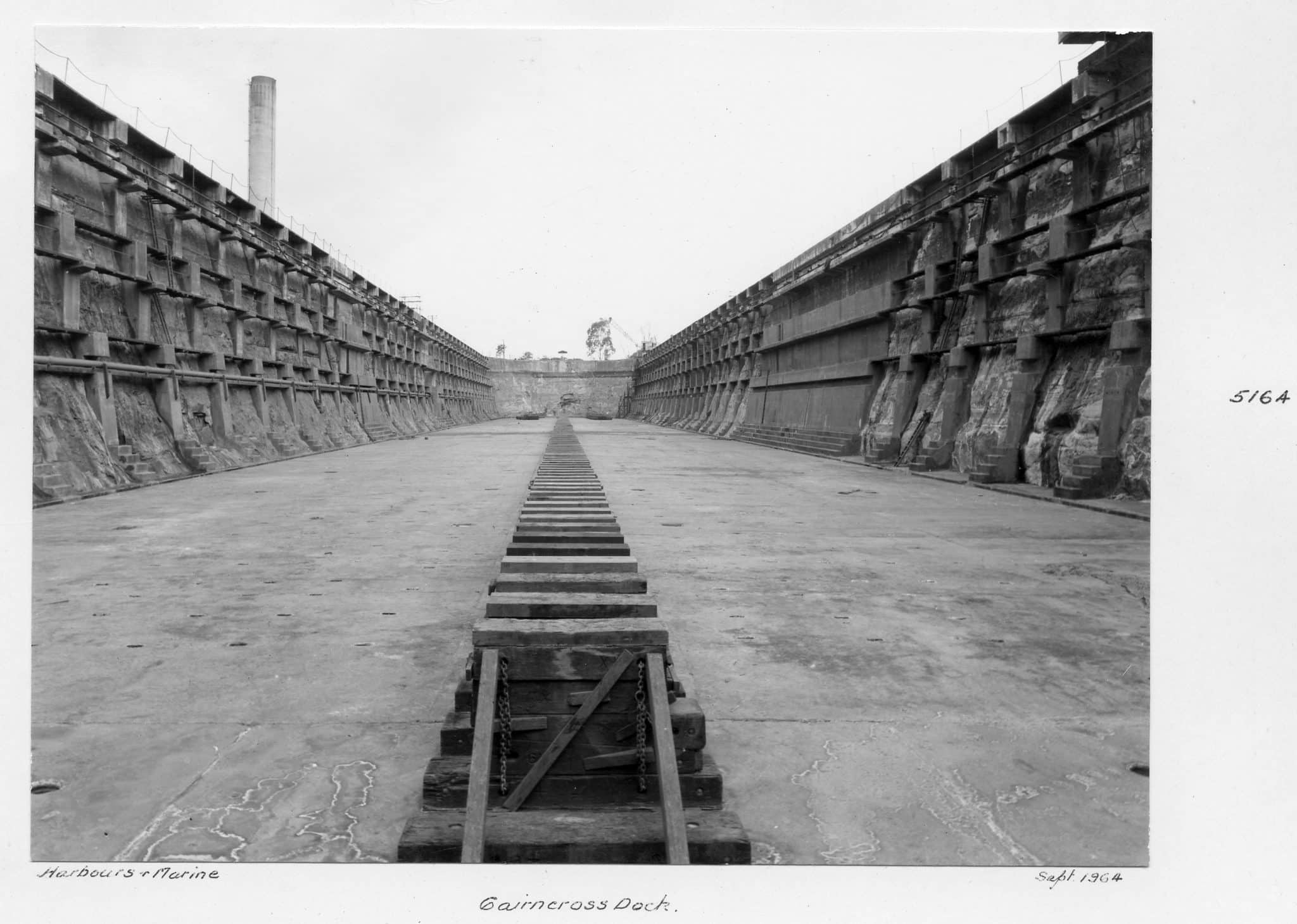
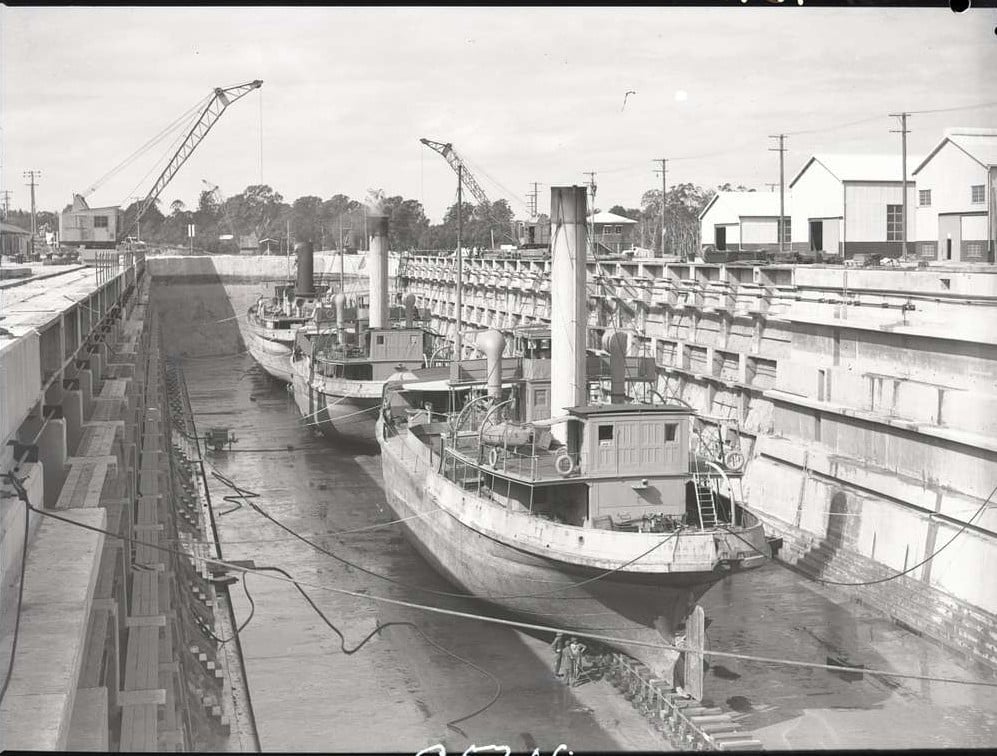
In the early 2000s the Queensland government considered establishment of a Common User Facility (CUF), similarly to the Australian Marine Complex in Henderson, WA. As part of this plan the Cairncross dock could have served as location for the assembly of superblocks in support of construction of the Canberra-class LHDs. The Queensland government also suggested construction of modules in support of the Hobart-class air warfare destroyers taking place at the Brisbane-based CUF.
Before the most recent announcement to reestablish the facility, the previous private owner considered redeveloping the site for construction of residential housing.
New push for naval infrastructure with AUKUS
Australia presently only operates a single drydock, the Captain Cook Graving Dock on Garden Island. Similarly to dynamics before WW2 local and federal governments over the past few years have displayed a renewed interest in increasing redundancy and capacity of Australian naval support facilities. The most visible example is the establishment of the Henderson Defence Precinct as part of the AMC near Perth in Western Australia. Work at Henderson also includes the establishment of several graving docks, primarily in support of maintenance on conventional and nuclear powered submarines.
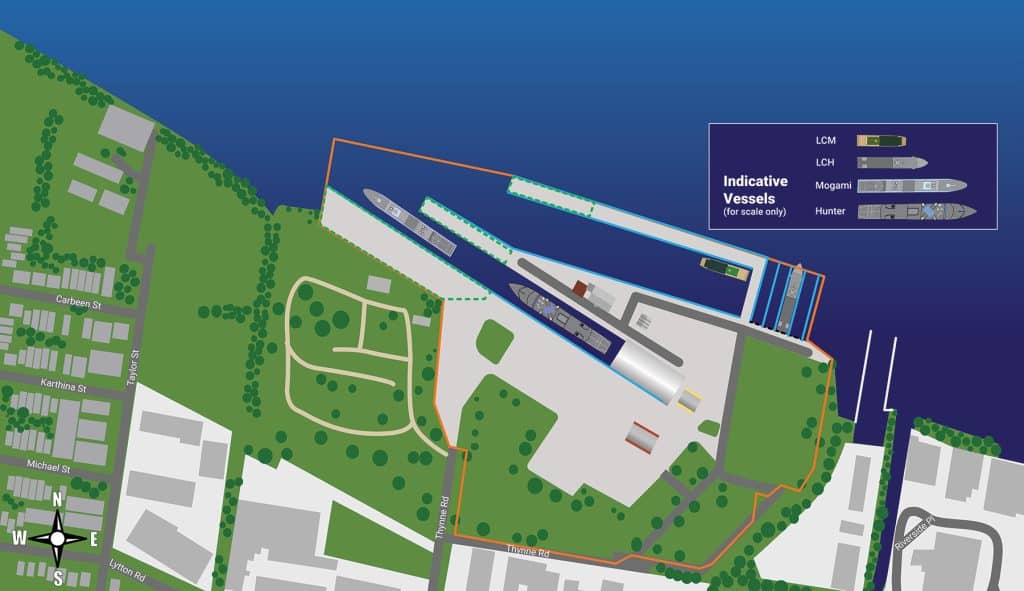
As part of the AUKUS-effort the Australian government is also planning the establishment of a new naval base for nuclear powered submarines on the east coast. According to Australian media reports the three candidate sites shortlisted for this requirement are Port Kembla and Newcastle in New South Wales, and Brisbane in Queensland. The preferred site reportedly is Port Kembla near Wollongong, about 85 km south of Sydney.
However, government officials have also indicated that a final decision on a new east coast naval base would not be made before 2030. Aside from the Australian political position on the effort Naval News also understands there is no significant concern and pressure from British and American AUKUS-partners pushing for a quicker decision. Instead, the present focus firmly remains on realisation of work underway at Henderson and HMAS Stirling as the primary facility supporting submarine and wider naval operations.
Rising naval activity meets constraints at established facilities
The timing of decision-making on the Australian federal level therefore appears to work against a firm committment allocating required services to renewed naval support capacity at Cairncross. Nevertheless, the Royal Australian Navy based on present investment is set to induct a notable number of new and larger combatants. This dynamic includes the six Arafura-class OPVs presently joining the fleet, and up to 11 new general purpose frigates arriving from 2030.
The Australian government in February 2026 announced investment upgrading HMAS Cairns in Far North Queensland. Arafura-class patrol vessels will directly operate from Cairns. Additionally, the facilities aim to support other RAN-vessels in the region, such as Supply-class fleet replenishment ships and the future Hunter-class frigates. Recent events within the wider South Pacific, notably including expanding operations by the Chinese Navy (PLAN) will likely compel a further intensifying naval presence by Australia and its partners.
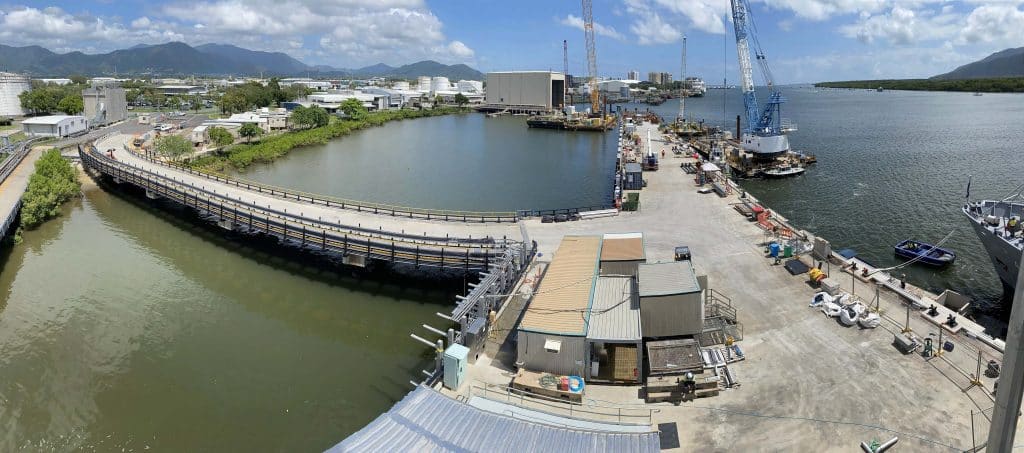
An increasing need of local maintenance facilities on the Australian east coast is a plausible consequence of present dynamics. Existing infrastructure centered on Fleet Base East in Sydney is likely going to face increasing pressure with such demand. Additionally, the highly congested urban area around Port Jackson, or Sydney Harbour, supporting a city surpassing a population of six million people by 2040 is already placing restrictions on further growth of defence infrastructure.
Existing defence footprint and favourable geographic position in Brisbane
From a purely geographic perspective an increasing naval infrastructure footprint in Brisbane, including the Cairncross dock, would appear to be an attractive option for the Royal Australian Navy. The city is centrally located, very roughly halfway between Fleet Base East in Sydney, and facilities at HMAS Cairns. Brisbane, with a population now approaching three million people, is also the heart of a wider metropolitan region already housing major facilities for the Australian Army and the Royal Australian Air Force. Most recently the ADF has announced the formation of a new Littoral Manoeuvre Group, represented by the headquarters and the 1st Landing Craft Battailon based in the city.
The navigational approach to Brisbane is reasonably close to the contintental shelf at the southern end of the Coral Sea, before shallow waters expand drastically as part of the Great Barrier Reef beginning north of Fraser Island, about 270 km from Brisbane. As such Brisbane-based facilities could flexibly cater to a wider spectrum of naval vessels, such as larger amphibious ships and nuclear powered submarines, in addition to supporting smaller hulls operating across shallower littorals of the Coral Sea.
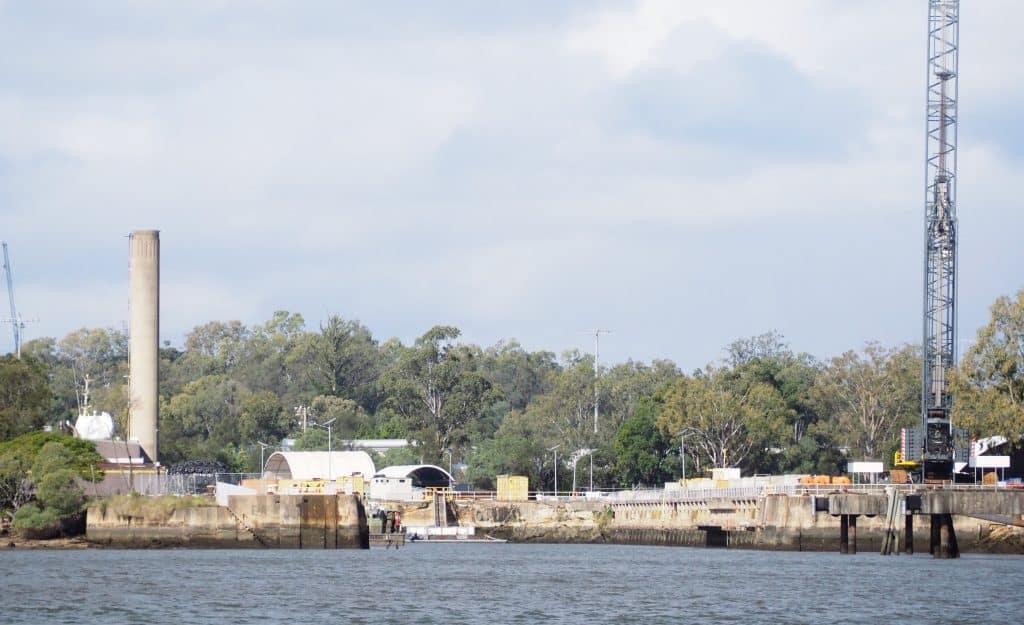
As detailed in the 2025 announcement, the QLD government plan for Cairncross will include installation of a new 6,000 tonne vertical ship lift, a 1,200 tonne crawler crane and expanded wharves supporting on water- and out of water-maintenance of naval vessels. The “prescribed project”-status aims at expediting assessment and approval processes for required development. Work already started at the facility included removal of the old dry dock gate weighing in excess of 300 tonnes by March 2025.
Uncertain perspective despite industrial and political appeal
Announcements made so far however have not included any targeted schedule for completing all required work at Cairncross.The Australian Defence Department will also need to clarify their intentions and requirements for such a facility in south Queensland, whether as part of a new base on the east coast, or separate from such plans.
Continued reliance on a single operational graving dock at Garden Island would seem to represent a weakness in the Australian strategic posture. Significant time required to establish new facilities, such as presently at Henderson, and a rapidly changing geostrategic environment in Australia’s region also seem to demand additional capacity available within a short timeframe. Nevertheless, whether the various political, economical and military interests will truly align to revitalise Cairncross as a national defence asset appears uncertain for now.