Rear Adm. Guillaume Pinget says France viewed the missile test as a demonstration of nuclear deterrence while reaffirming its status as a resident Pacific power.
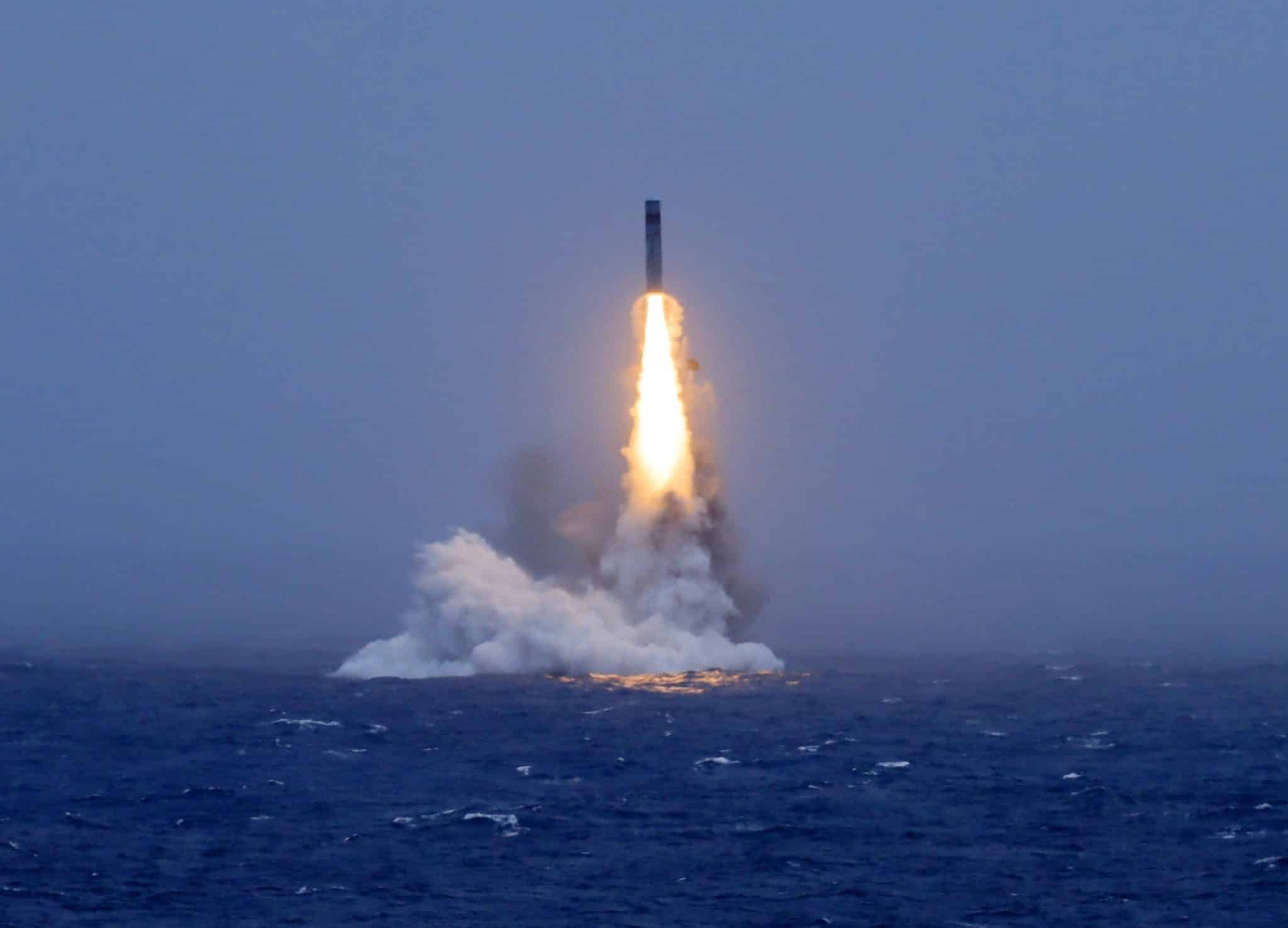
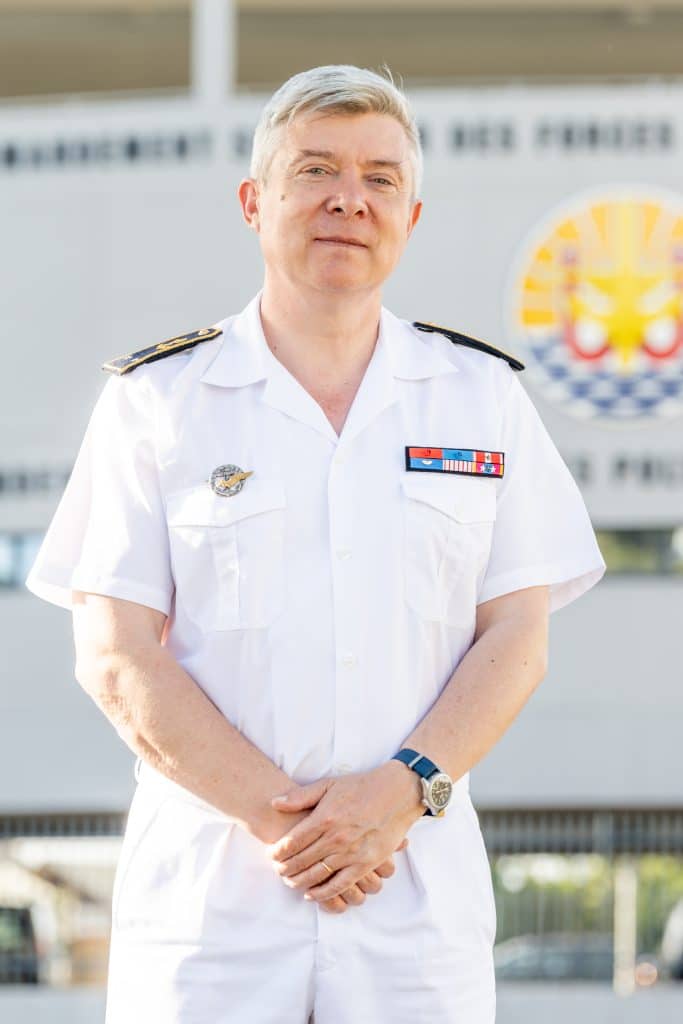
France had advance notice of China’s recent submarine-launched ballistic missile (SLBM) launch into the South Pacific and viewed the test as a demonstration of the credibility of nuclear deterrence, Rear Adm. Guillaume Pinget, Commander, French Pacific Command (CPP), said in an exclusive interview with Naval News on July 10. Pinget is due to relinquish command later this summer.
As Commander of the French Pacific Command, whose area of responsibility extends from the Panama Canal to the Strait of Malacca, Pinget oversees French military operations across one of the world’s largest maritime regions. Speaking only days after Beijing publicly acknowledged the launch of an SLBM carrying what it described as a dummy warhead, Pinget said France closely follows such developments because it is not merely an observer of Indo-Pacific security, but a sovereign Pacific nation with overseas territories, citizens and permanent military forces in the region.
France’s overseas territories in the region are home to around 1.8 million French citizens and account for more than 90 percent of the country’s Exclusive Economic Zone (EEZ), the world’s second largest.
“France is a sovereign nation of the Pacific with French territories and French citizens,” Pinget said. “Therefore, she is fully committed to securing and protecting population, territories and its interests in the region.”
France Had Advance Notice
Asked how France assessed China’s launch, Pinget stressed that Paris maintains its own independent assessment of the regional security environment while coordinating closely with allies and partners.
“France is a resident nation in the Indo-Pacific, and the only European country to have permanent military forces stationed in the region. Therefore, we have our own autonomous assessment of the situation. In coordination with our allies and partners, we monitor very closely these activities.”
Rear Adm. Guillaume Pinget
Asked whether France had been informed beforehand of the launch, Pinget confirmed that it had.
“France had been advised of the imminence of the launch.”
Without elaborating on intelligence sources or operational details, Pinget said France placed the test in the context of nuclear deterrence signaling.
“As a nuclear power, we see those kinds of testing as a way of demonstrating the credibility of nuclear deterrence forces.”
Asked whether the launch raised concerns under the Treaty of Rarotonga, which established the South Pacific Nuclear Free Zone and whose three protocols France signed and ratified in 1996, Pinget declined to offer a legal interpretation.
“I’m not a diplomat. I think you should keep this question to diplomats about treaties,” he said, adding, “I’m just a military officer running operations.”
France Reinforces Its Indo-Pacific Presence
Pinget said France continues to strengthen its military posture in the Indo-Pacific despite commitments elsewhere. France maintains permanent joint forces in New Caledonia and French Polynesia, both of which are being modernized with upgraded infrastructure, new offshore patrol vessels and enhanced surveillance capabilities.
Since January 1, Pinget has headed the newly established French Pacific Command (CPP), created to strengthen command and coordination across France’s Pacific forces. He said the frequently cited figure of around 7,000 French military personnel covers France’s broader Indo-Pacific posture, including more than 1,300 personnel in French Polynesia, more than 1,800 in New Caledonia and more than 4,000 on La Réunion in the southwestern Indian Ocean.
These permanent forces are reinforced by regular deployments from metropolitan France, including carrier strike groups and the French Air and Space Force’s Pégase missions.
“France has global interests, and we have to balance the military effort between different regions of the world,” Pinget said. “Because we have French territories, French citizens and global interests here, we will continue to remain active in this region.”
Taiwan Strait Transits Will Continue
Pinget also addressed China’s expanding naval activities from the East and South China seas into the wider Pacific. Rather than framing France’s approach as a confrontation with Beijing, he emphasized adherence to international law.
“Our concern as the French military is the respect of international law, the rules-based international order, multilateralism and the respect of every sovereignty.”
He reaffirmed that French naval vessels will continue transiting the Taiwan Strait when operationally appropriate.
“We transit the Taiwan Strait. We don’t consider it as a big deal. It is simply international law.”
Asked whether France would continue such operations, Pinget replied:
“We will continue when required, when needed.”
Growing Concern Over Russia-North Korea Cooperation
Pinget also expressed concern over growing military cooperation among Russia, China and North Korea, particularly North Korea’s support for Russia’s war against Ukraine.
“France is very concerned about DPRK support to Russian aggression against Ukraine.”
He noted reports of Russian oil deliveries to North Korea and the possibility that Moscow could assist Pyongyang’s ballistic missile program, describing such developments as a concern for France as a permanent member of the UN Security Council.
France, he said, will continue contributing to multinational efforts to monitor sanctions evasion by North Korea.
“We will continue these activities. I will deploy assets later this year around the Korean Peninsula to monitor this traffic.”

Future Charles de Gaulle Port Call Remains an Open Question
The interview also touched on whether the French Navy’s nuclear-powered aircraft carrier Charles de Gaulle could eventually make its first port call in Japan. The carrier has never visited a Japanese port. During Operation Clemenceau 25, its first deployment to the Indo-Pacific in 2025, Charles de Gaulle called at Indonesia, the Philippines and Singapore, but not Japan.
Any future visit would be politically sensitive because the carrier forms part of France’s nuclear deterrent posture while Japan continues to debate the future of its Three Non-Nuclear Principles. The carrier’s embarked Rafale M fighters are capable of carrying the ASMP-A, a nuclear-armed air-launched cruise missile forming part of France’s airborne nuclear deterrent.
France does not publicly confirm or deny whether nuclear weapons are present aboard its strategic platforms. Maintaining uncertainty in the mind of a potential adversary is itself an element of nuclear deterrence because it preserves doubt over France’s ability to conduct a nuclear retaliatory strike.
Japan, by contrast, adheres to its Three Non-Nuclear Principles of not possessing, producing or permitting the introduction of nuclear weapons into its territory. Any future port call would therefore involve more than operational scheduling or diplomatic protocol. It would also require France’s policy of deliberate nuclear ambiguity to coexist with Japan’s long-standing non-nuclear principles.
Asked whether Japan’s legal framework represented an obstacle, Pinget emphasized that France fully respects Japan’s laws and regulations.
“France respects Japan’s laws, understands and respects Japan’s laws and regulations.”
He added that Paris does not view Japan’s legal framework as limiting the broader bilateral defense relationship.
“We don’t see Japan’s laws or restrictions as a limitation in our partnership, our exceptional partnership.”
However, Pinget stopped short of predicting whether Charles de Gaulle would eventually visit Japan.
“If Japan invites France to come, we will see.”
He added that any future port call would also depend on operational requirements.
France and Japan Expand Defense Cooperation
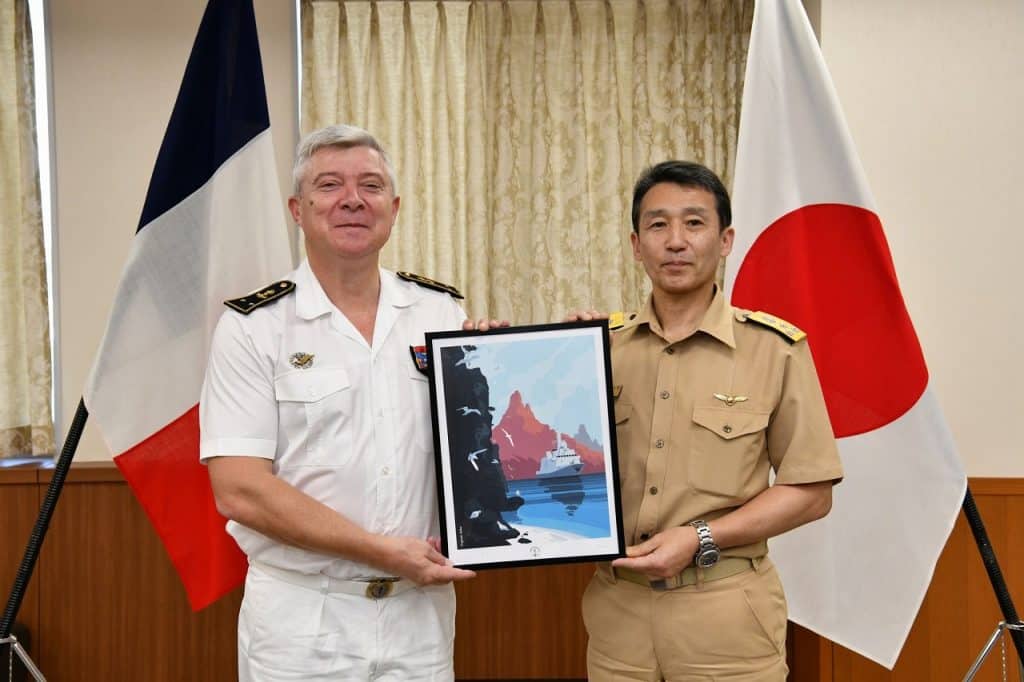
Beyond maritime operations, Pinget said France and Japan are steadily broadening defense cooperation across multiple domains, including naval, air, land, cyber and space. Upcoming activities include the Brunet-Takamori bilateral army exercise, another Pégase deployment by the French Air and Space Force and, for the first time, the participation of a French Navy vessel in the U.S.-Japan Keen Sword exercise later this year.
France will also continue participating in international efforts to monitor illegal ship-to-ship transfers linked to North Korea.
“The French Armed Forces will remain active, present and committed in the Pacific in support of security and stability of the region, and the respect of every sovereignty.”