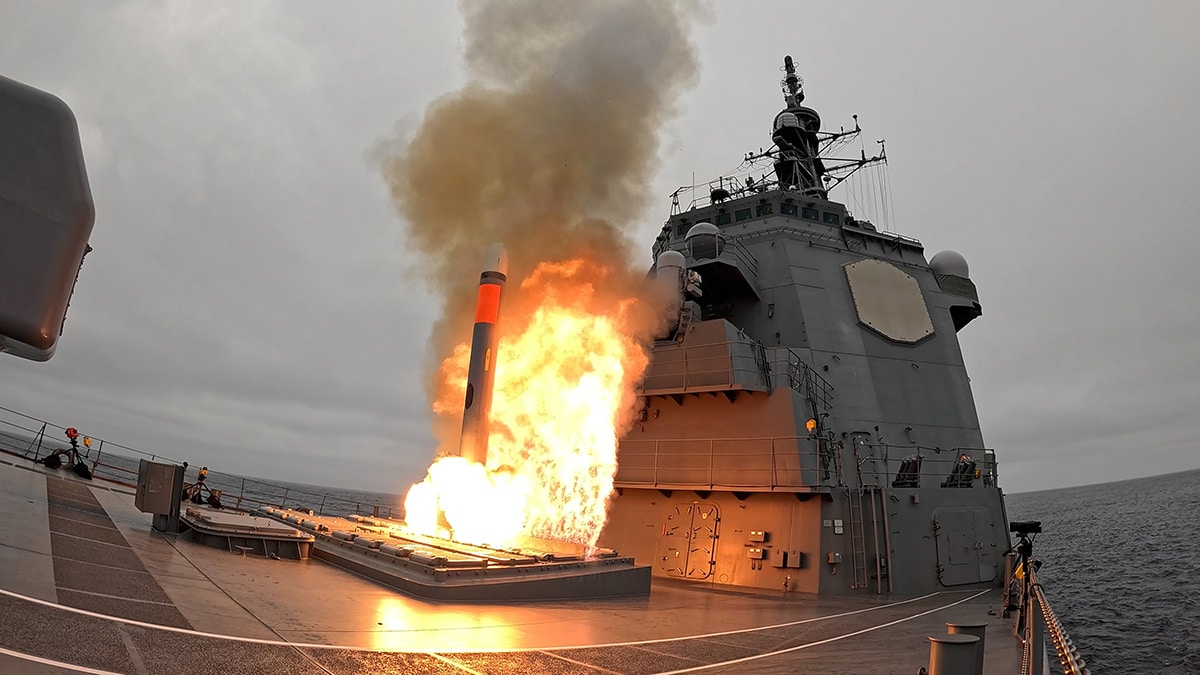
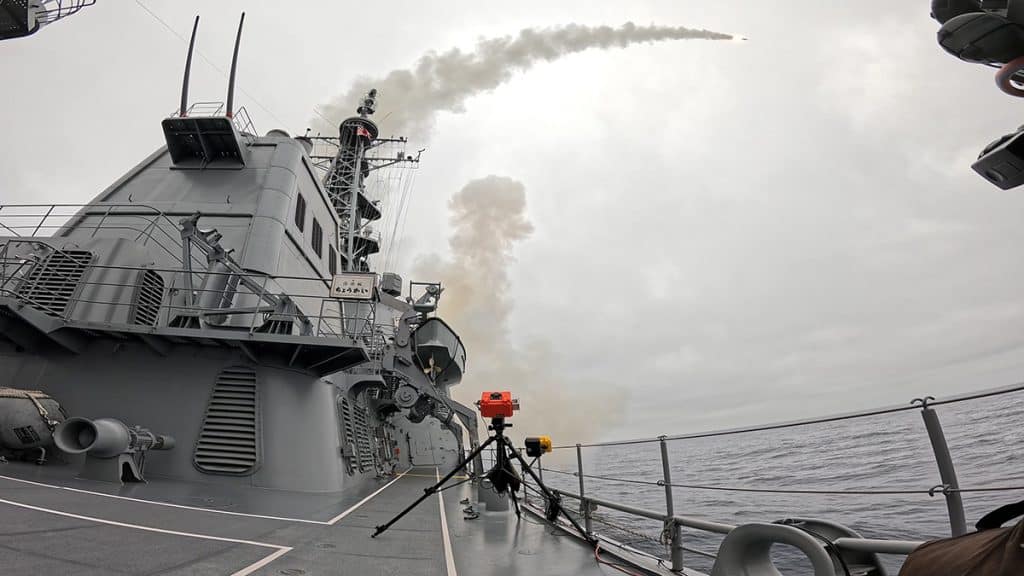
Japan’s Ministry of Defense announced on July 30 that the Japan Maritime Self-Defense Force (JMSDF) had conducted its first live-fire test of a Tomahawk cruise missile aboard the Aegis guided-missile destroyer JS Chokai (DDG-176).
The test was carried out in the Pacific Ocean on July 29, Japan time, while Chokai was deployed to the United States as part of Japan’s Tomahawk acquisition program, with support from the U.S. Navy. The launch made Japan the third country outside the United States, after Australia and the Netherlands, to fire a Tomahawk from a surface combatant, and the fourth outside the United States overall, following the United Kingdom, which has fired the missile only from submarines.
Officials from Japan’s Acquisition, Technology & Logistics Agency (ATLA) said the test confirmed that the ship and its crew could successfully carry out the launch sequence, including required crew procedures. They added that the test also verified the missile’s flight to its intended target.
ATLA declined to disclose several operational details, citing coordination with the U.S. Navy and the need to protect Japan’s defense capabilities. Withheld details included the precise test location beyond the Pacific Ocean, the target type, flight range, guidance procedures, the number of missiles fired, and whether a Block IV or Block V Tomahawk was used.
Four Months of Preparation
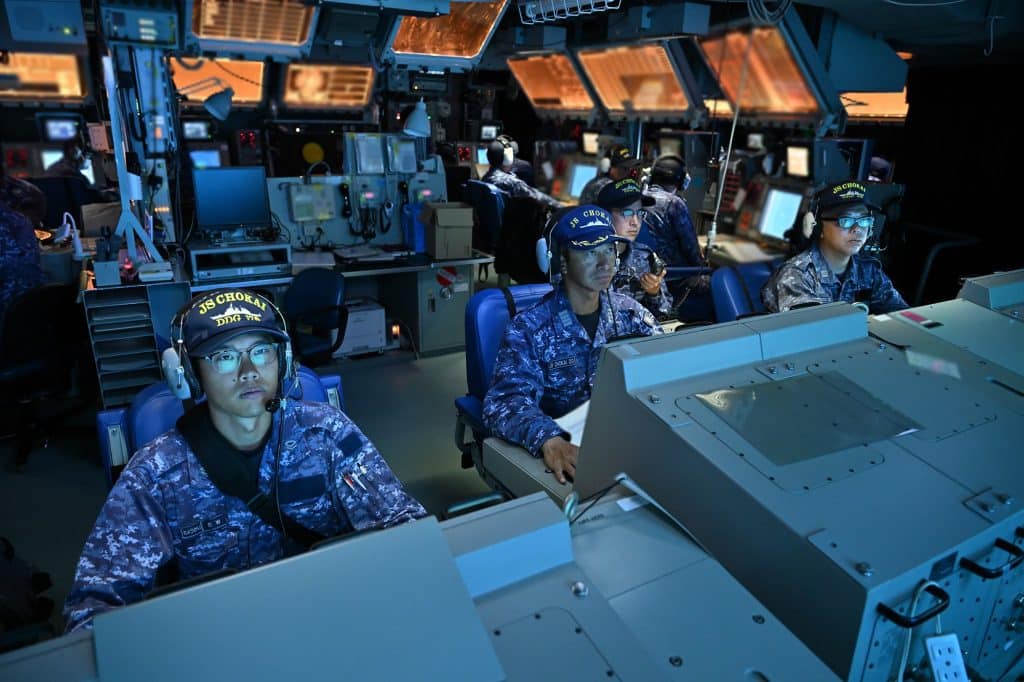
The Ministry of Defense announced in March that Chokai had acquired Tomahawk launch capability. Asked why the live-fire test took place several months later, officials said the intervening period was used to verify newly installed equipment and train the crew in launch procedures.
Chokai is expected to return to Japan around September 2026, with Sasebo identified as its homeport. Officials declined to discuss when the Tomahawk capability would enter operational service, saying such information could reveal Japan’s defense readiness.
Officials said the U.S. Navy provided the test range, monitored the surrounding sea and airspace, and supported test planning. They emphasized, however, that the launch itself was carried out by the Japanese crew.
No Further Live-Fire Tests Planned
ATLA officials said Japan currently has no plans to conduct similar live-fire tests aboard other JMSDF Aegis ships being modified to operate Tomahawks.
Officials said further shipboard live-fire tests are not considered necessary because the Mk 41 Vertical Launching System and Tomahawk launch equipment already have extensive operational records with the U.S. Navy. They added that the Chokai test confirmed integration between the Tomahawk system and Japan’s combat system.
Funding approved through fiscal year 2026 includes about 113.6 billion yen(about $694 million) for adding Tomahawk launch capability to five JMSDF Aegis destroyers: Chokai, Kirishima, Haguro, Myoko, and Atago.
Modification work on Haguro and Kirishima began during fiscal year 2025. For Atago and Myoko, contracts for the required equipment have already been awarded, with modification work scheduled to begin during fiscal year 2026. Funding for the remaining three Aegis destroyers will be considered from fiscal year 2027 onward, and officials said it is too early to estimate costs.
Separately, Japan is also building two new Aegis System Equipped Vessels (ASEVs), scheduled to enter service in fiscal years 2027 and 2028, respectively. Although the ships are intended to operate Tomahawk missiles in the future, ministry officials said they are not expected to have Tomahawk launch capability when they enter service.
Status of Tomahawk procurement by Japan
Japan plans to acquire up to 400 Tomahawk missiles through the U.S. Foreign Military Sales (FMS) program at a total cost of about 169.4 billion yen(about $1.03 billion).
The acquisition schedule remains unchanged: up to 200 Block IV missiles are scheduled for delivery between fiscal years 2025 and 2027, followed by up to 200 Block V missiles between fiscal years 2026 and 2027.
Deliveries began during fiscal year 2025. Officials declined to disclose the number of missiles already delivered or the delivery schedule, citing operational security, but emphasized the program remains on schedule.
ATLA officials also said Japan has no plans to procure additional Tomahawk missiles beyond the 400 already approved. Future expansion of Japan’s stand-off strike capability is expected to rely primarily on domestically developed long-range missiles currently under development.
Officials said the ministry announced the successful test as part of its policy of informing taxpayers about progress in major defense programs funded with public money. Once the current modification program is completed, five of the JMSDF’s eight Aegis destroyers will have Tomahawk launch capability, with the remaining three expected to be upgraded under future budgets.