The Indonesian Navy (TNI AL) deployed a one-way attack (kamikaze/suicide) unmanned surface vessel (USV) for the first time during a major inter-service exercise in Dabo Singkep, Riau Islands, on 5 August. The exercise also saw the navy launching a loitering munition from a warship and firing two C-705 anti-ship missiles.
The USV features an angular grey hull with a raised section at the rear. A mast-mounted optronic sensor sits above the raised section, likely providing electro-optical imagery for remote navigation, target identification, and/or terminal guidance. The two openings in the upper rear section appear consistent with engine exhaust outlets, suggesting the USV uses an internal combustion engine.

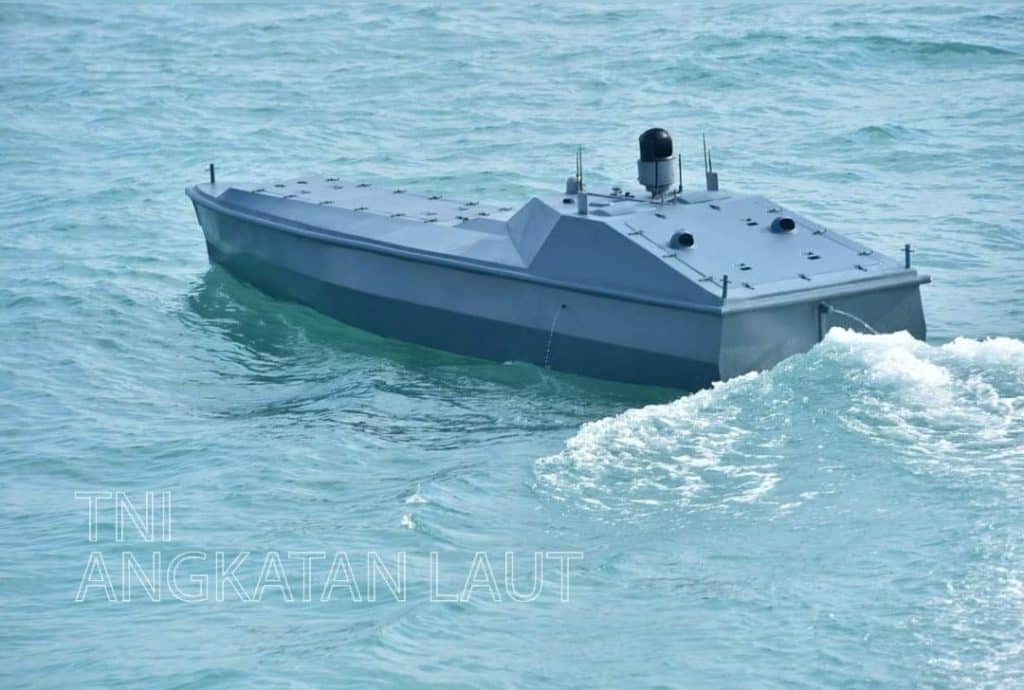
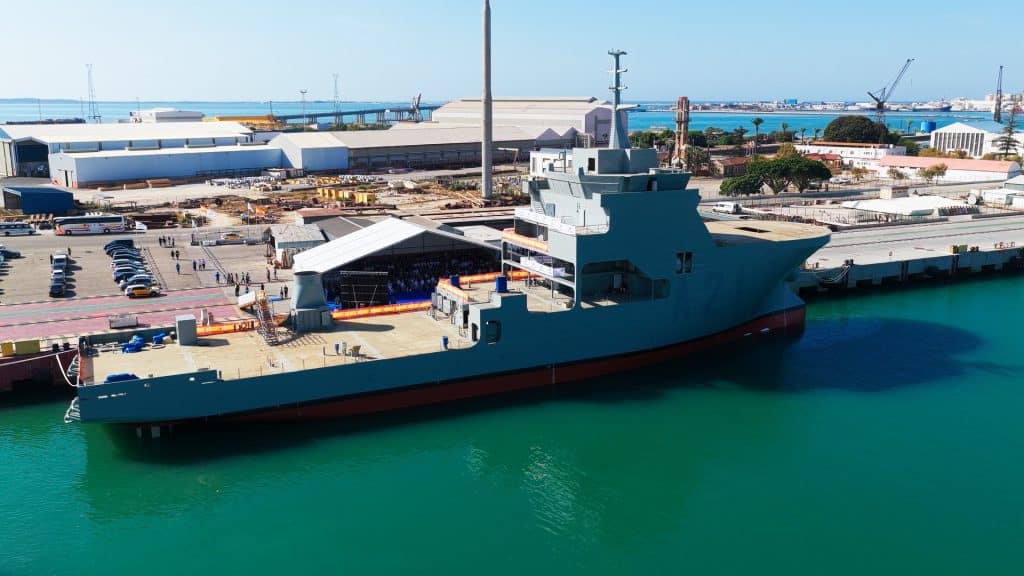
Official press releases and footage published by the Indonesian navy showed the USV being launched from the well deck of the hospital ship KRI dr. Soeharso (991).
The unmanned vessel then moved towards a mock target positioned near the beach and struck it. However, official images show that the USV remained intact after impact, suggesting the exercise demonstrated the concept without a live explosive payload.
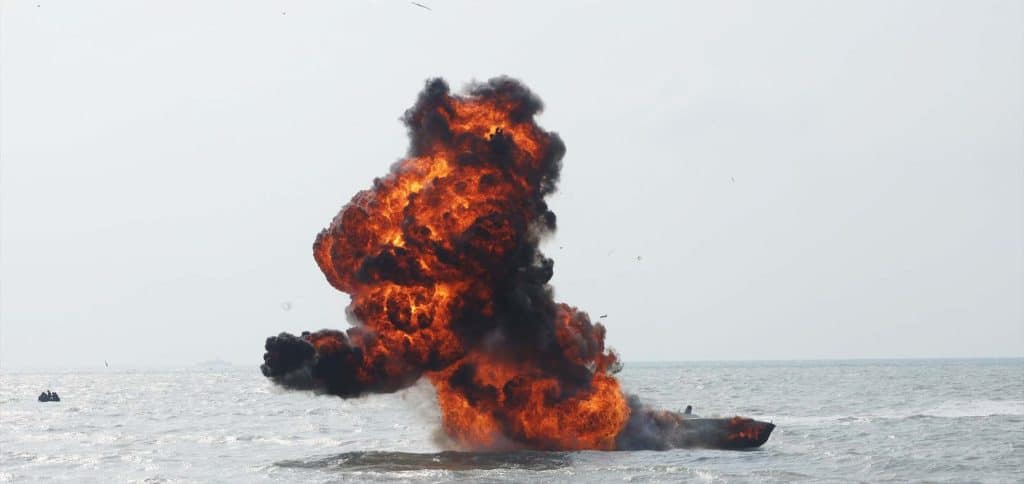
At the time of writing, official statements had not identified the USV’s manufacturer, nor its technical details. Yet, a local Naval News source confirmed that state-owned shipbuilder PT PAL Indonesia built the USV.
This could indicate that the USV uses the same or a similar command and control system as the autonomous submarine, known domestically as the Kapal Selam Otonom (KSOT), that PT PAL is currently developing.
Kamikaze Drone and Anti-Ship Missiles
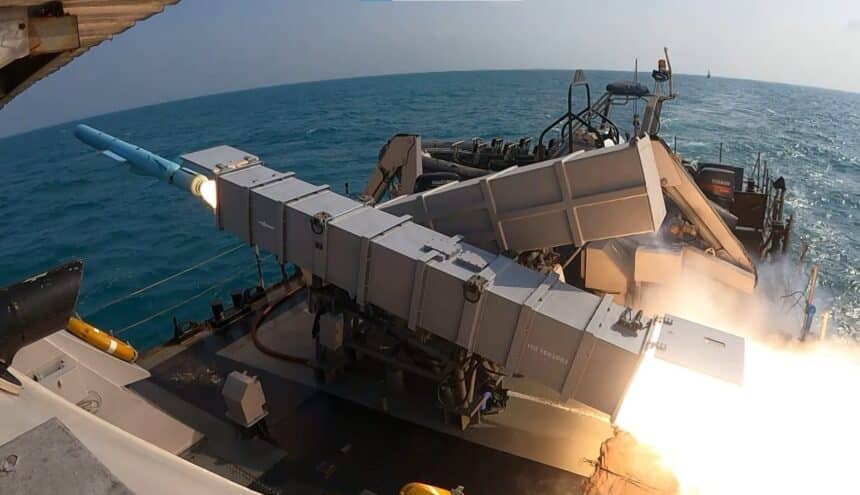
During the exercise, the Indonesian navy also launched at least one domestically produced ‘KI-50’ loitering munition from the helicopter deck of a warship.
Meanwhile, the PT PAL-built 60-metre fast attack missile craft KRI Sampari (628) fired two Chinese-made C-705 anti-ship missiles against one or more land targets. This marked the Indonesian navy’s second live anti-ship missile firing of the year. The first took place in April, when the service also fired a C-705 missile against a land target.
Update: PT PAL Reveals New Details
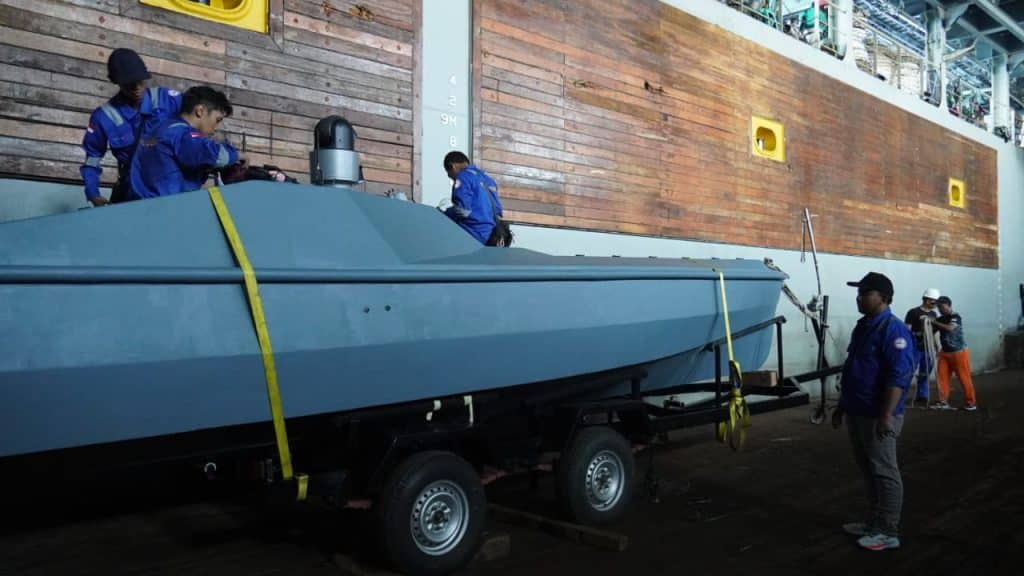
A day after the exercise, PT PAL issued a press release confirming that it built the USV. According to the company, the platform is still in the development phase, with the initial configuration targeted to reach a speed of more than 55 knots and carry a 150 kg warhead.
The company also said the USV uses the same control system as its autonomous submarine/KSOT, as Naval News‘ earlier assessment. Operators can control the vessel from a distant control center or through a portable console, or input a pre-planned route in fully autonomous mode.
PT PAL also plans to install an artificial intelligence system that would enable the USV to independently identify friendly and hostile targets.