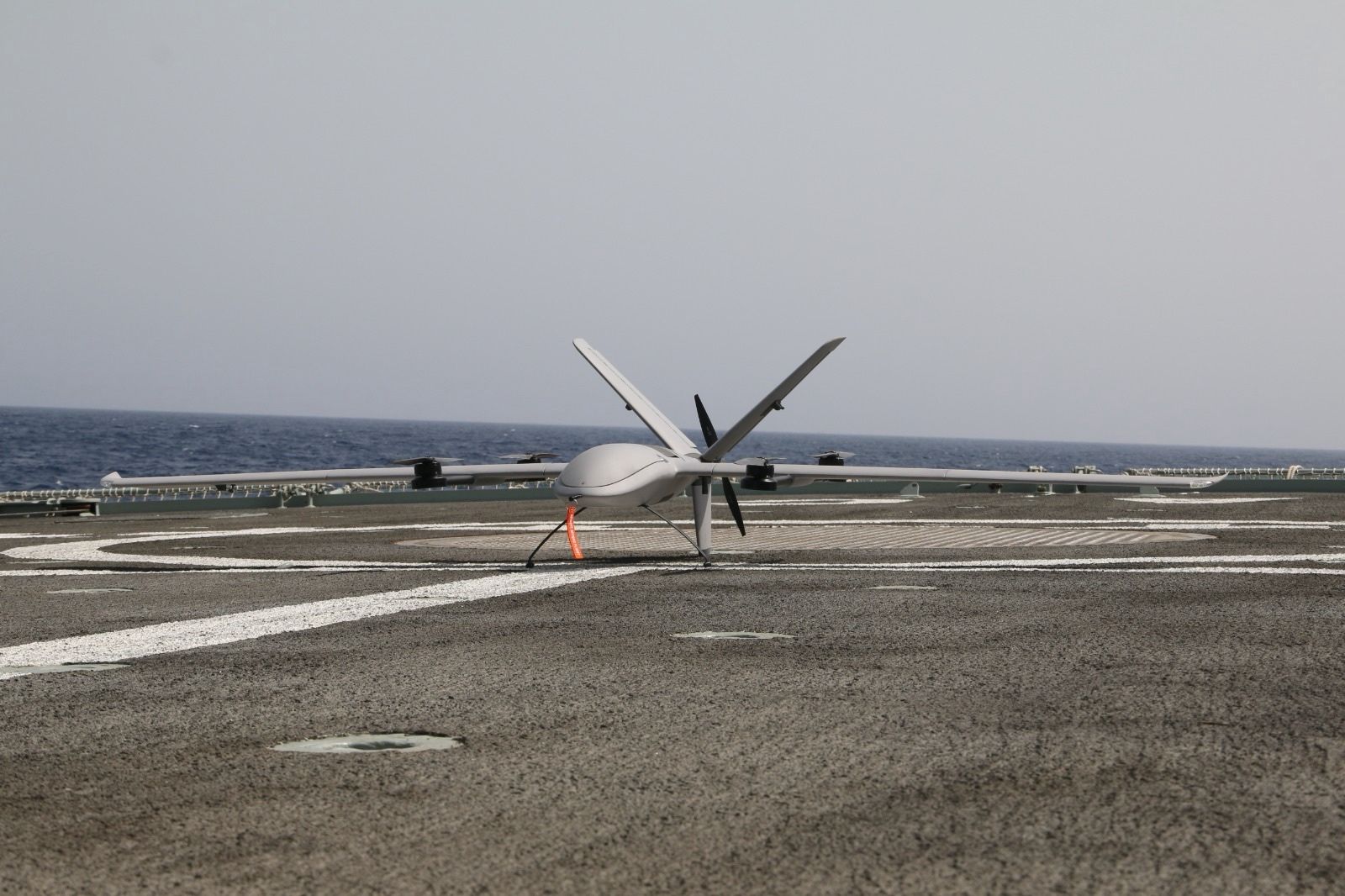
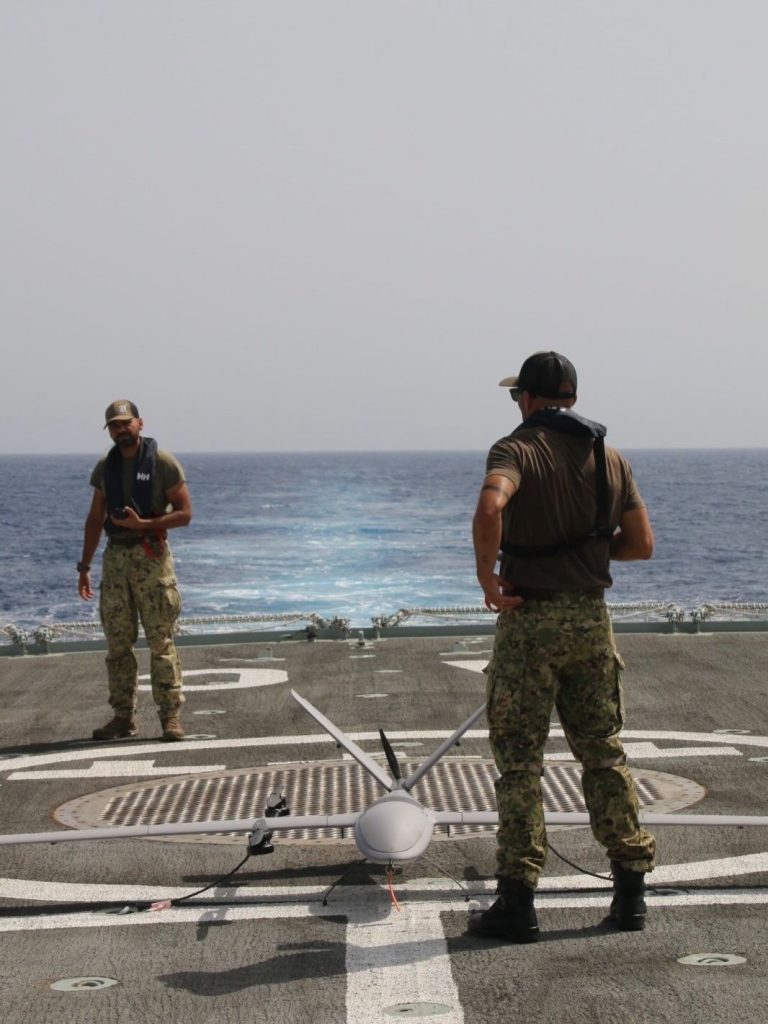
The Portuguese Navy has conducted shipborne flight trials of unmanned systems from the Vasco da Gama-class frigate NRP Álvares Cabral (F331).
The activity was carried out by X31, the service’s specialist unit for unmanned systems, during the frigate’s deployment on the Iniciativa Mar Aberto 2026 mission. According to the Portuguese Armed Forces General Staff, the trials were intended to validate operating procedures, safety arrangements and interoperability in demanding naval conditions.
Operating an uncrewed aircraft from a warship involves substantially more than flying the vehicle. The crew and operators must coordinate launch and recovery, deck safety, airspace management, communications, command-and-control links and the flow of information to the ship’s command team. Trials aboard Álvares Cabral therefore offer an opportunity to turn an emerging capability into repeatable operational practice, while identifying constraints before unmanned systems are employed on longer patrols or multinational missions.
X31 has an important role in that process. The unit is responsible for operational readiness, training and the preparation of unmanned-system operators, and has been associated with the Portuguese Navy’s wider development of aerial, surface and underwater uncrewed systems. This multidomain approach reflects the Navy’s interest in using drones not as isolated technical assets, but as tools that can support maritime awareness, surveillance and other mission requirements alongside conventional ships and crews.
Álvares Cabral’s deployment provides a relevant setting for the tests. The Iniciativa Mar Aberto 2026 mission is focused on maritime security, cooperation and engagement with partners in the Atlantic and West African region. In such environments, ship-launched unmanned aircraft could potentially extend a frigate’s observation range and help crews investigate contacts without immediately committing a helicopter or boarding team.
Naval News comments
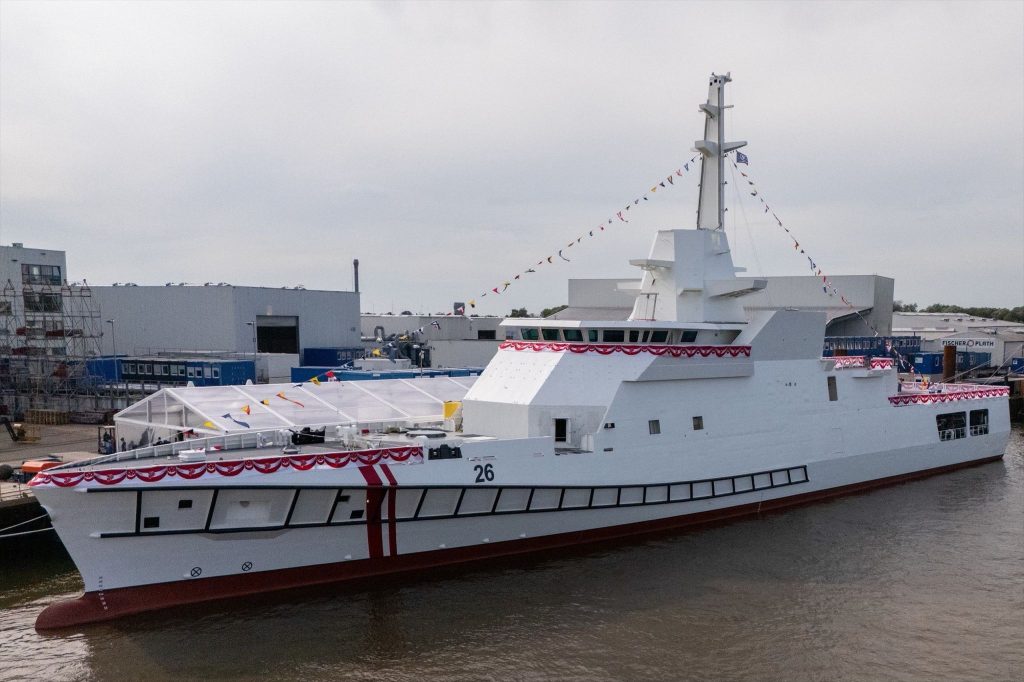
The trials also form part of a broader Portuguese naval modernization effort centered on the forthcoming NRP D. João II, a purpose-built Multifunctional Naval Platform ordered from Damen. Unlike Álvares Cabral, which is a conventional frigate adapting its existing aviation facilities for trials, D. João II has been designed to operate manned and unmanned aircraft as well as uncrewed surface and underwater vehicles. The ship features a large flight deck, a hangar and arrangements for deploying maritime drones, alongside roles in surveillance, scientific support, emergency response and amphibious or logistic operations.
D. João II was launched in April 2026 and is expected to undergo sea trials before delivery to Portugal. Its eventual entry into service would give X31 and the wider fleet a dedicated platform for developing concepts of operation across several uncrewed domains. That makes the work aboard Álvares Cabral particularly significant: lessons learned from a frontline frigate can help shape procedures for the new platform, while ensuring unmanned systems are integrated with—not separated from—the operational requirements of the fleet.

For Portugal, the immediate outcome is not the overnight creation of a drone carrier capability, but the methodical validation of people, procedures, and technology at sea. X31’s latest shipboard activity demonstrates that this process is already moving from experimentation toward operational integration.
You can watch our interview with the Portuguese Navy Chief on the drone carrier at DIMDEX 2024.