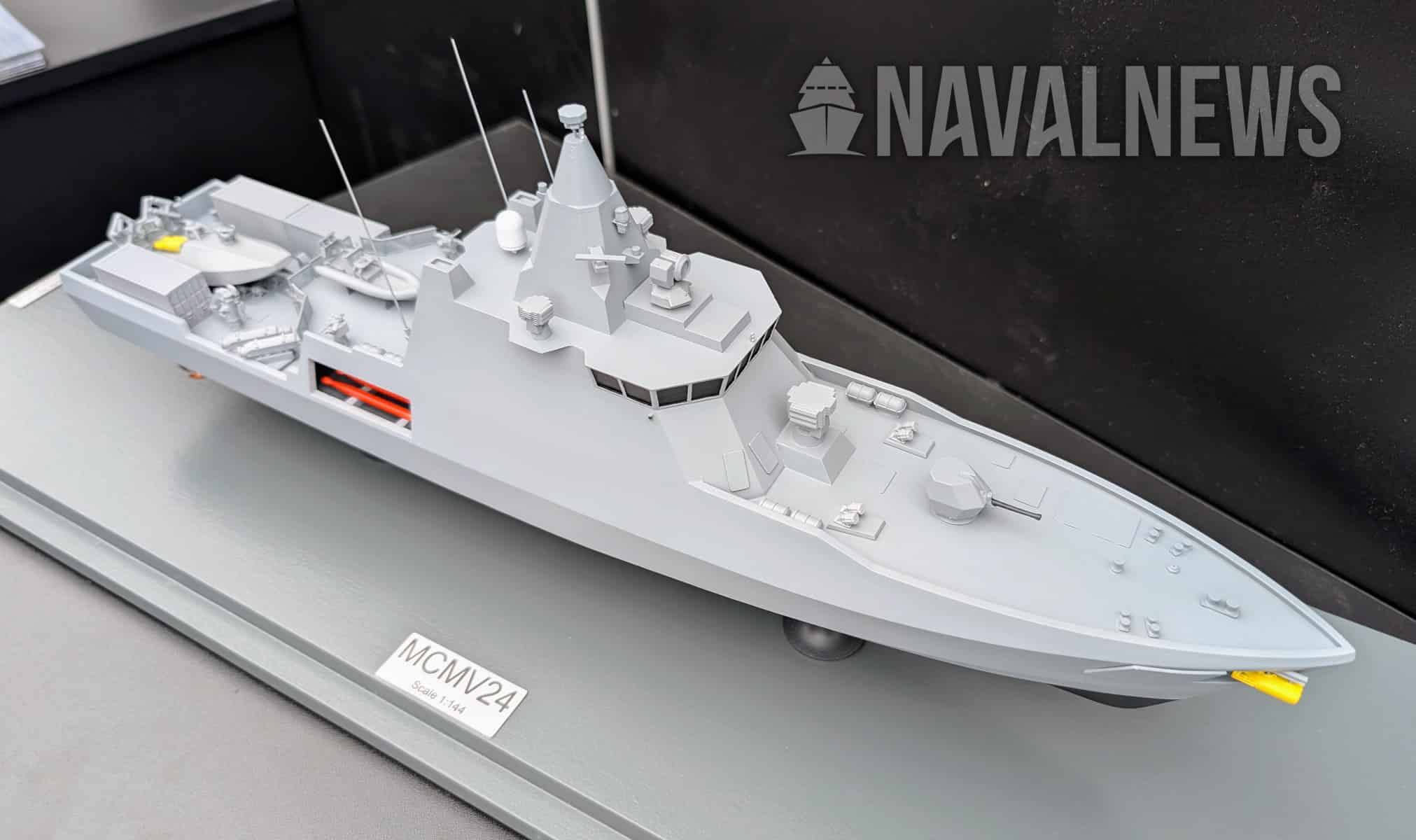
Saab launched its new mine countermeasures vessel concept, the MCMV 24, at DALO Industry Days in Denmark. While the vessel might look rather conventional at first glance, a closer inspection reveals a number of design decisions that set it apart from the competition.
The vessel is designed for the Baltic Sea or comparable littoral theaters where the mine threat is not limited to specific areas, but extends from hostile shores across open waters and right into friendly ports. This includes a varied set of threats ranging from conventional mining to air-dropped and, in the near future, USV-deployed mines. Because a pure standoff approach is more difficult to implement in this environment, Saab opted for a smaller, 66-meter-long vessel able to operate directly inside the mine-threat area. As such, the vessel features a traditional suite of signature-reduction technologies, chief among which is a composite GRP hull—a core strength of Saab’s Kockums shipyard. Compared to the current Swedish Koster-class, the vessel trades Voith Schneider propulsors for traditional propellers, sacrificing a degree of maneuverability and signature reduction in exchange for higher top speed.
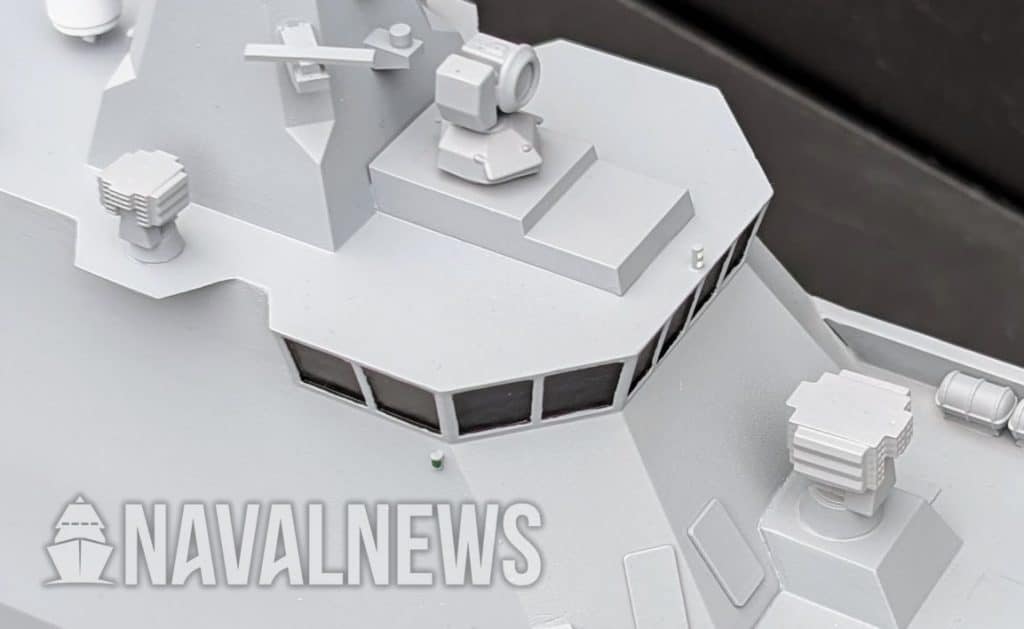
A top speed of 22 knots is seen as a key enabler for greater operational flexibility than traditional mine countermeasures vessels allow. Coupled with a more capable sensor suite—including the Saab Giraffe 1X radar and CEROS fire-control and electro-optical sensor system—and an armament options list featuring the Bofors 40 mm deck gun, Saab Lightweight Torpedo (TP 47 in Swedish service), and Saab Nimbrix C-UAS missiles the vessel can carry out patrol missions while retaining self-defense capabilities against traditional threats as well as surface and aerial drones. For the navies of Estonia, Latvia, and Lithuania, which have historically focused on mine countermeasures in the Baltic Sea but now face growing demand for offshore patrol capabilities, the concept represents a natural fit. Saab is also offering the platform in dedicated patrol vessel or coast guard configurations, enabling operational and maintenance synergies for navies seeking a common hull for multiple mission profiles.

Mine countermeasure operations are carried out using a range of remotely operated and autonomous underwater systems. An interesting design feature is the dedicated bow door for launching and recovering ROVs such as Saab’s Double Eagle, complemented by ample aft deck space for mission modules and additional unmanned system deployments.

In addition to Sweden—where the concept is eyed as a potential replacement for the Koster-class (originally built as the Landsort-class in the 1980s)—Saab confirmed early discussions with other nations, including Denmark and Germany, which share similar requirements.