US and German navies conducted exercise minelaying operations aboard Portuguese patrol vessel NRP Figueira da Foz during NATO exercise REPMUS 26.
As part of the ongoing NATO exercise REPMUS 26 (Robotic Experimentation and Prototyping with Maritime Unmanned Systems), naval forces from the United States and Germany successfully executed exercise minelaying operations from September 3 to 7, using the Portuguese Navy’s Viana do Castelo-class ocean patrol vessel NRP Figueira da Foz (P361).
According to the Portuguese Navy, the joint activities formed a critical component of operational testing and demonstrations designed to validate tactical procedures, improve interoperability among Allied forces, and refine capabilities in complex maritime environments.
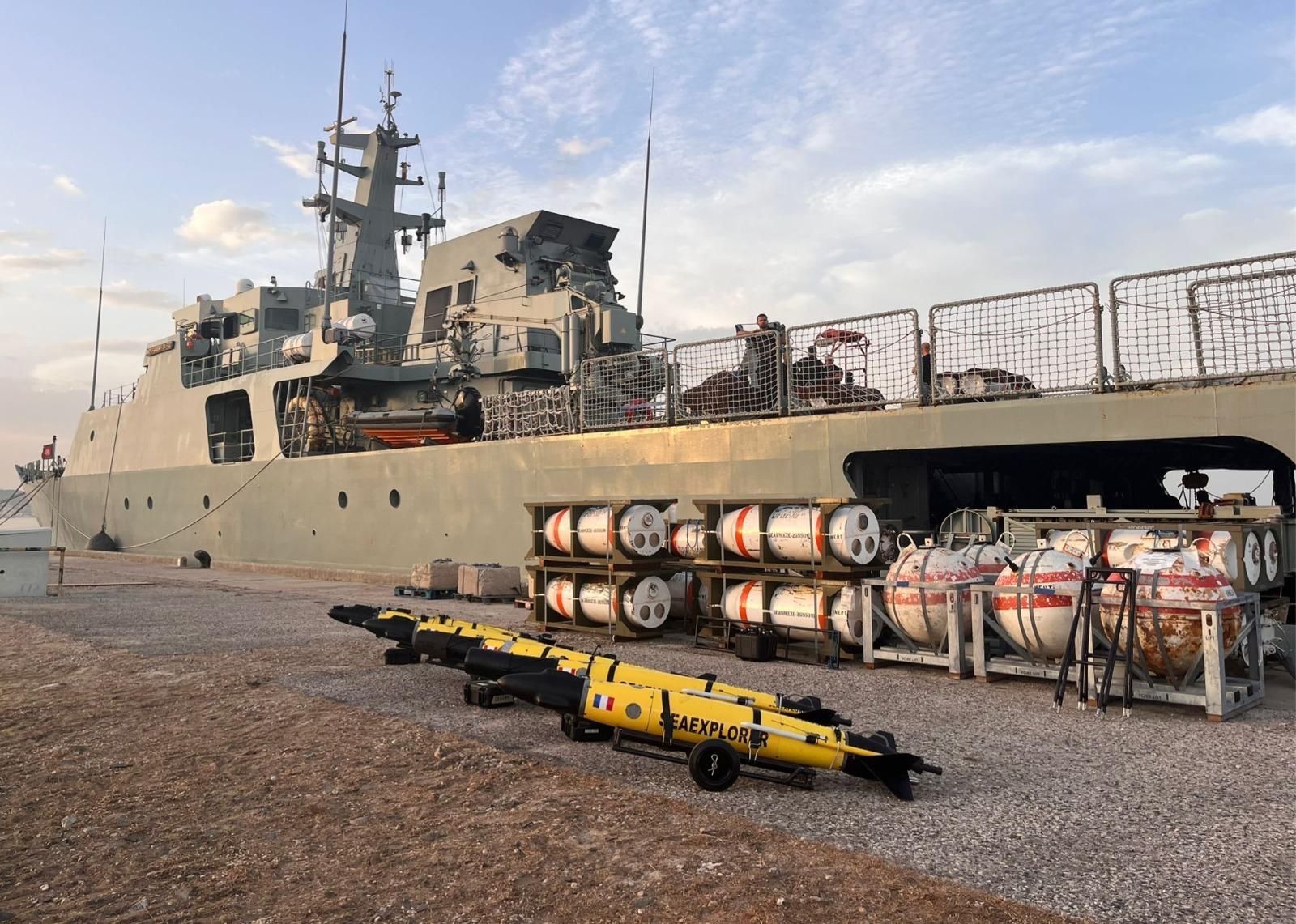
Imagery released by the Portuguese Navy alongside the announcement showed the flight deck of NRP Figueira da Foz serving as a multi-domain testbed. The deck was loaded with various types of exercise sea mines, several Alseamar SeaExplorer underwater gliders, and a Portuguese Navy Beyond Vision BVT516 Unmanned Aerial Vehicle (UAV). The configuration highlights the exercise’s focus on bridging traditional naval operations—such as mine warfare—with modern, multi-domain autonomous technology.
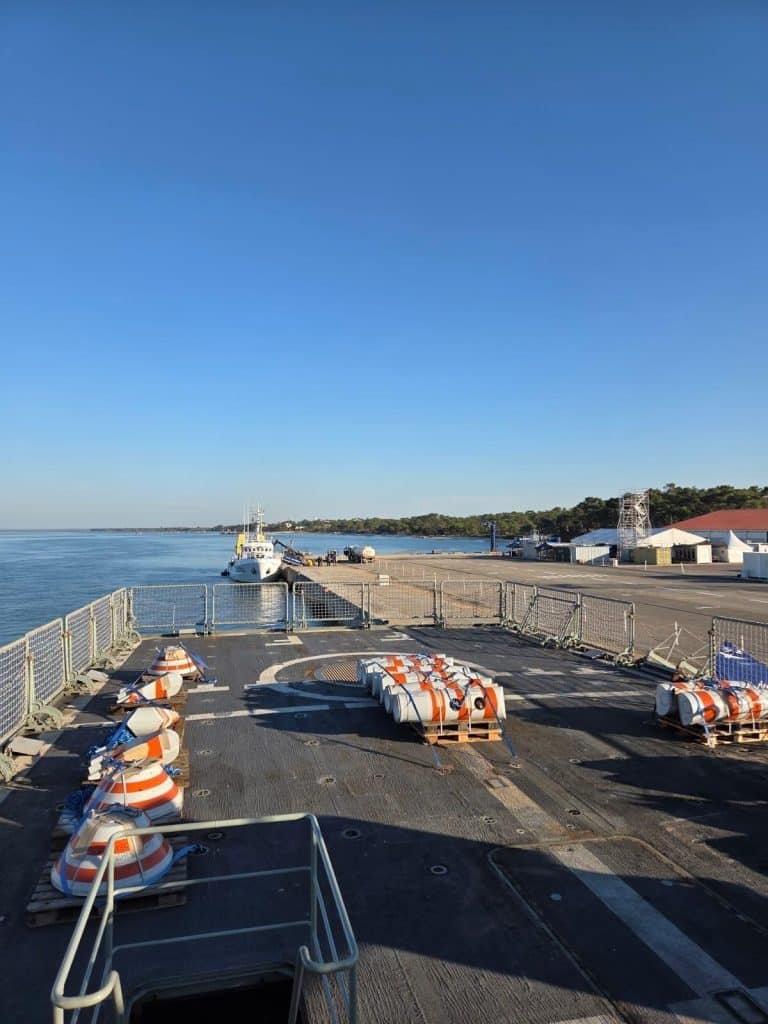
Based on the pictures, three types of exercise sea mines were deployed:
Cylindrical bottom-laid exercise sea mines: These cylindrical units are designed to rest on the seafloor (ground mines) and are typically fitted with multi-influence target sensors (magnetic, acoustic, and pressure).
Spherical moored mines: Classic spherical casing design attached to an anchor base via a tether wire. When deployed, the anchor sinks to the seabed while the spherical mine body floats submerged at a predetermined depth to target surface vessels or submarines.
Conical / Shallow-water moored mines: Featuring a distinctive truncated cone/bell shape, these are specialized shallow-water or coastal moored exercise mine shapes, complete with built-in tie-down channels and lifting eyes.
While not sea mines, the yellow Alseamar SeaExplorer gliders are deployed alongside the exercise minelaying operations for Rapid Environmental Assessment (REA)—mapping water column profiles, currents, bathymetry, and salinity to support mine warfare and counter-mine sensing.

About REPMUS
REPMUS (Robotic Experimentation and Prototyping using Maritime Uncrewed Systems) is the world’s largest operational experimentation exercise focused on unmanned and autonomous maritime platforms. Co-organized annually by the Portuguese Navy, NATO, the University of Porto, and the European Defence Agency (EDA), the exercise takes place primarily off the coast of Tróia and Sesimbra.
REPMUS serves as a critical bridge between military operators, defense industry leaders, and academic researchers. It provides a realistic environment to test, evaluate, and integrate emerging capabilities across air, surface, and subsurface domains—including underwater gliders like the Alseamar SeaExplorer for Rapid Environmental Assessment (REA) and autonomous systems for Naval Mine Warfare (NMW).