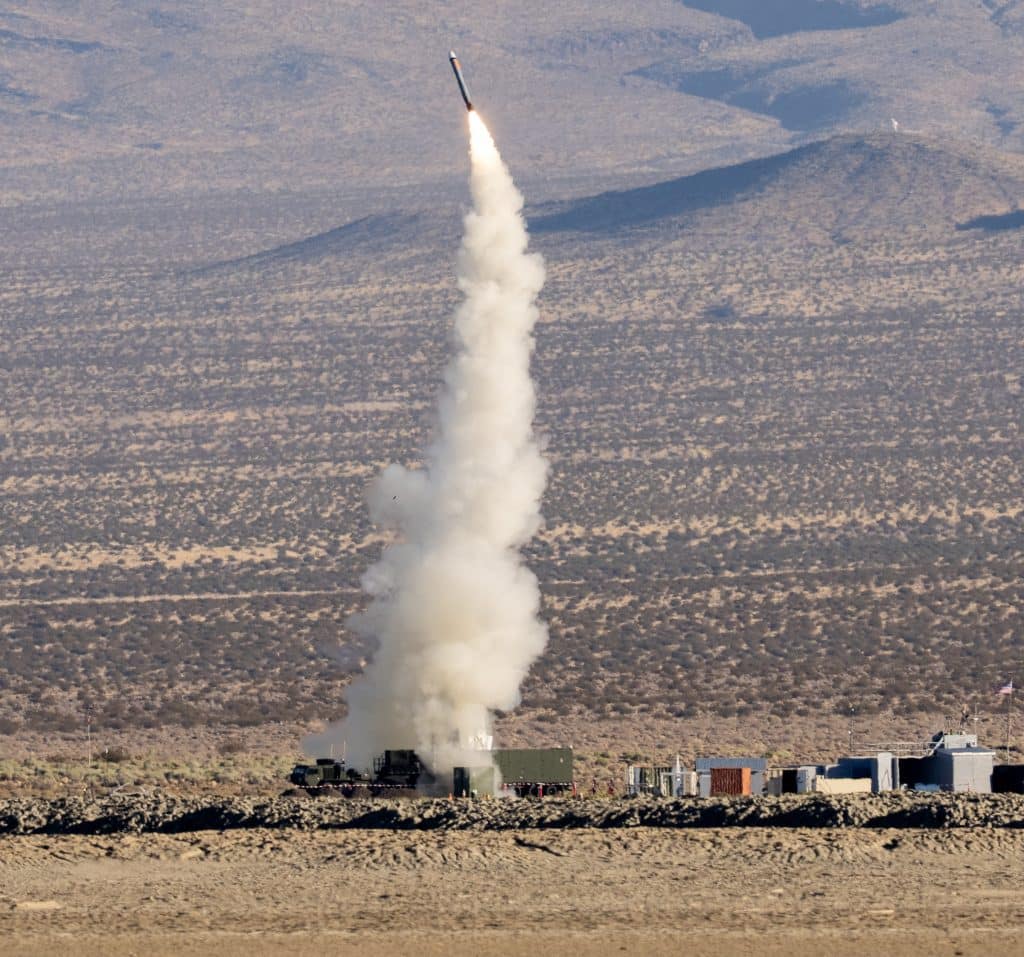
India’s Ministry of Defence (MoD) signed a ₹661.5 crore ($68 million) contract with BrahMos Aerospace for the procurement of BrahMos Fire Control Systems (FCS) and Launchers to upgrade the Indian Navy’s ageing Kashin-class destroyers and Tarantul-class derived corvettes.
A tweet by the MoD stated that the project will have over 68% indigenous content. While no additional details were provided in the press release, an image from the signing ceremony revealed that the contract covers “02 Veer and 02 Ranvir class ships.”
Rajput / Ranvir-class Upgrades
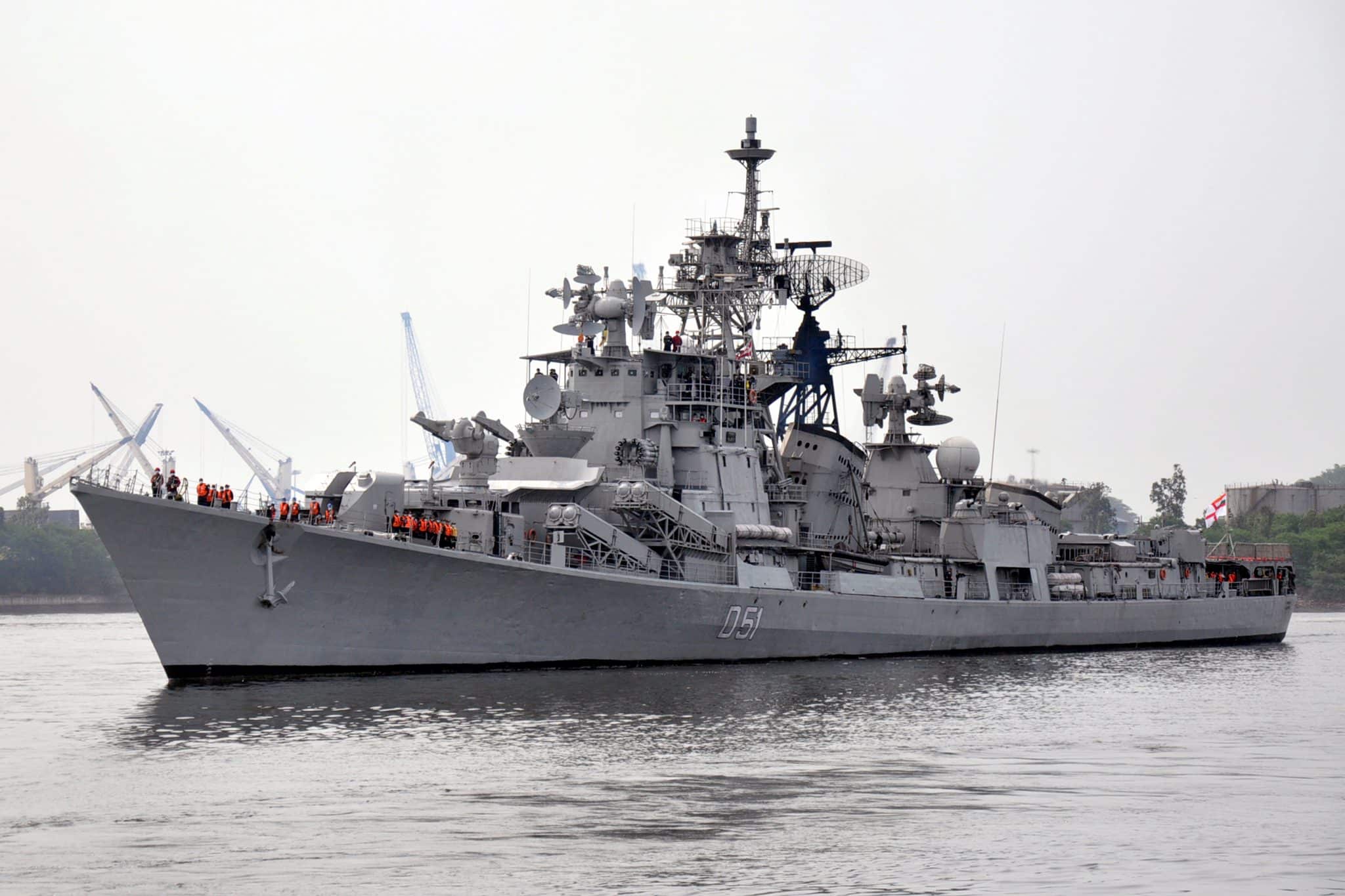
The Indian Navy imported five Kashin-class destroyers from the USSR, inducting them between 1980 and 1987. Three Rajput-class vessels remain in active service: INS Rana (1982), INS Ranvir (1986), and INS Ranvijay (1987).
INS Ranvir and Ranvijay were among the first Indian Navy vessels to be equipped with the BrahMos missile, featuring an eight-cell Vertical Launch System (VLS) at the stern. However, they also retain four inclined Styx missile launchers at the bow.
INS Rana was previously equipped with inclined launchers for four Styx missiles, but these were removed during a visit to Sri Lanka in 2025. Over the past few years, Rana has served as the test platform for the DRDO VLSRSAM missile system, utilizing an eight-cell VLS at the stern (where the two sister ships house BrahMos) and is fitted with the associated BEL-made MFR radar..

The current contract specifies two ships of this class and is expected to cover inclined launchers exclusively. Given INS Rana‘s age and its dedicated role as a VLSRSAM testbed, it is highly probable that the contract is for equipping Ranvir and Ranvijay with new BrahMos launchers. INS Rajput featured four twin-cell inclined launchers (eight missiles total). If this configuration is followed, Ranvir and Ranvijay will carry 16 BrahMos missiles, matching the loadout of the modern Kolkata and Visakapatanam class destroyers.

Veer-class Integration
The Veer-class (Project 1241 RE) is a customized Indian variant of the Soviet Tarantul-class corvettes. The Navy initially imported five of these sub-500-ton vessels between 1987 and 1990. Mazagon Docks and Goa Shipyard later built eight more under license, inducting them between 1990 and 2002. Seven of the Indian-built boats, featuring COGAG propulsion, remain in service.
Out of these seven, INS Vidyut was seen equipped with two twin tube inclined BrahMos launchers, retrofitted from the decommissioned INS Rajput, during Navy Day events in December 2025. Vidyut was inducted in 1995 and four existing vessels were inducted even earlier. One of these vessels, INS Vipul, was sailing alongside Vidyut in December 2025 and continued to feature Styx missiles. INS Rajput had four twin tube BrahMos launchers, of which Vidyut received two, and it is probable that the next vessel INS Nashak (inducted in 1994) is scheduled to get the remaining two launchers.

The two youngest ships of the Veer-class are INS Prabal and INS Pralaya. Both were inducted in 2002 and are the only ships of the class equipped with 16 Kh-35E missiles in four quad launchers. These two vessels are likely recipients of the FCS and launchers covered by the current contract. Given the massive size of the BrahMos missiles and the small size of the corvettes, it is likely that only four missiles will be equipped. Four BrahMos missiles will also be the loadout on the six Next Generation Missile Corvettes (NGMV) class under construction.
The Indian Navy will thus have multiple Veer class corvettes with BrahMos missiles, making it the lightest vessel to be equipped with the 3 ton missile. The weapon system is capable of targeting land and sea targets from extended ranges with pinpoint accuracy at supersonic speed. The Navy has been equipping older vessels such as the Delhi class with BrahMos during their midlife upgrade. However, the Veer and Ranvir classes are nearing the end of their service and the effort to equip such vessels with BrahMos is noteworthy.
BrahMos Export Success
The system has seen significant recent export success in Southeast Asia. Alongside the finalized $370 million contract with the Philippines , major agreements were secured in 2026, including an approximately $630 million contract with Vietnam and a landmark $450–$630 million agreement with Indonesia. Further procurements from these nations are anticipated.
Additional Varunastra HWT Procurement
In a separate development on October 15, the MoD signed a ₹1,543 crore ($160 million) contract with Bharat Dynamics Limited for DRDO Varunastra ship-launched anti-submarine heavyweight torpedoes. This follows an initial July 2016 order for 73 torpedoes. The current $160 million order is expected to cover approximately 40 additional units. DRDO has also developed newer EHWT torpedoes for submarine applications, intended for integration with the Kalvari-class (Scorpene) submarines.