Around the world, governments are reassessing fleet requirements against a more uncertain security environment. At the same time, the pressures facing naval procurement have broadened. Performance remains fundamental, but increasingly it is only part of the equation. Navies also need to know who can build at scale, who can deliver when promised, who can sustain a fleet over its lifetime, and how a program can strengthen domestic industry rather than simply deliver a ship.
Sponsored by
This changing environment is opening new opportunities for naval shipbuilders beyond the industry’s traditionally established players. Among them is South Korea’s Hanwha Ocean. In some international naval markets, the company may be less familiar than household European names, but the shipbuilding experience behind Hanwha Ocean is anything but new.
Four decades alongside Korea’s naval transformation
Hanwha Ocean’s naval history stretches back more than 40 years, alongside the Republic of Korea’s transformation from reliance on overseas technology to the development and construction of advanced warships and submarines at home. During this time, Hanwha Ocean progressed from ship construction toward indigenous design, systems integration and advanced engineering.
On the surface side, the progression can be traced through successive generations of Korean destroyers. Hanwha Ocean built Korea’s first indigenous destroyer, the approximately 3,200-ton KDX-I Gwanggaeto the Great-class, and subsequently participated across the 4,500-ton KDX-II destroyer and the 7,600-ton KDX-III Aegis-equipped destroyer programs. In 2026, Hanwha Ocean won the competitive selection for the detailed design and construction of the lead ship for Korea’s next-generation destroyer program, KDDX, placing the company at the center of one of the ROK Navy’s most important future surface-combatant programs.
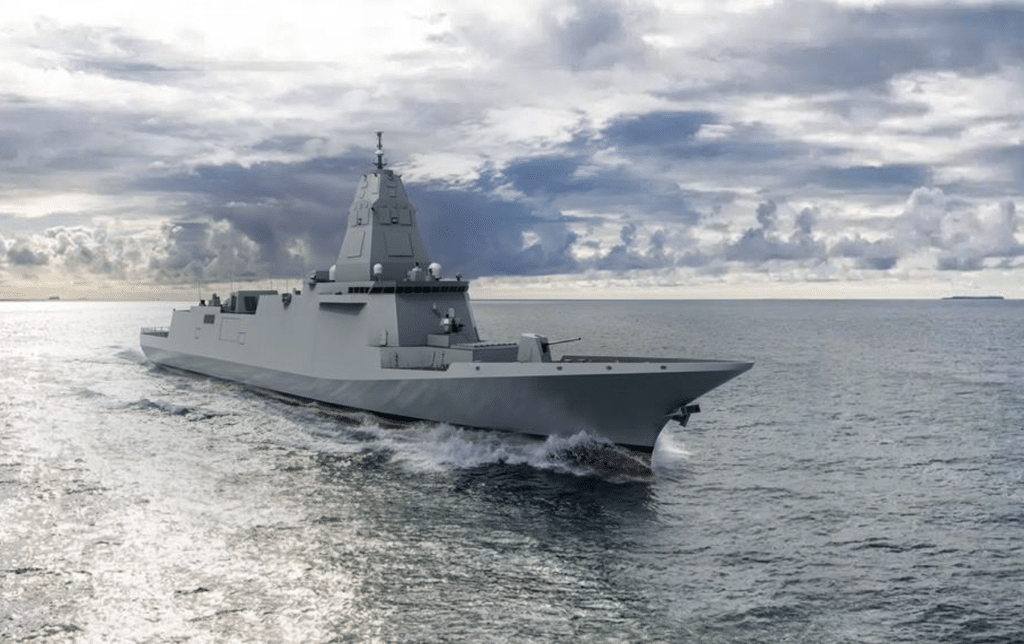
The approximately 7,000-ton-class KDDX represents the next stage of Korea’s indigenous surface-combatant capability, bringing together technologies including integrated electric propulsion, advanced automation and reduced-manning concepts. Designed as Korea’s first domestically developed Aegis-type destroyer, KDDX will incorporate indigenous radar and combat systems capable of detecting and tracking ballistic missiles, alongside domestically developed air-defense weapons intended to provide interception capabilities.
Beyond conventional warships, Hanwha Ocean is also advancing next-generation naval concepts that integrate unmanned surface vessels (USVs) and unmanned underwater vehicles (UUVs), enabling coordinated operations between crewed and unscrewed platforms.
For Hanwha Ocean, its role in the KDDX program is also a measure of how far its own capabilities have developed. The company that participated in Korea’s early move toward indigenous destroyer construction is now designing and building the lead ship for its next generation.
And below the surface, that progression becomes even clearer.
Submarine: proven beyond the shipyard
Submarines place some of the greatest demands on naval engineering. Space is unforgiving. Propulsion, electrical power, sensors, combat systems, weapons and safety systems all have to function together inside a highly constrained environment, while acoustic performance and reliability leave little room for compromise. Even modest changes to equipment can have cascading implications for weight, space, power and other systems.
Hanwha Ocean has accumulated that experience across successive generations of the ROK Navy’s submarine program. The company has built or been contracted to build 17 of the 24 submarines ordered by the ROK Navy, spanning the 1,200-ton KSS-I, the 1,800-ton KSS-II and today’s 3,000-ton-class KSS-III. Its submarine experience also includes three vessels delivered to Indonesia, establishing an export record alongside its domestic programs.
The KSS-III generation brings together technologies including air-independent propulsion, highly automated platform-management systems and an indigenous integrated combat system. Its latest Batch-II evolution also introduces lithium-ion batteries. The combination of air-independent propulsion (AIP) and lithium-ion batteries enables the KSS-III Batch-II to remain submerged to recharge its batteries. By significantly extending underwater endurance and reducing exposure at the surface, these systems enhance the submarine’s stealth and operational flexibility. More important than any individual technology is the engineering expertise required to make these systems work together with the physical constraints of a submarine.
And KSS-III is not a submarine waiting for a launch customer. It is in service, in production and operating well beyond Korean waters. In 2026, ROK Dosan Ahn Changho completed a 161-day, approximately 28,000-kilometer deployment across the Pacific. Departing Korea in March, the submarine traveled through Guam and Hawaii to Canada before returning to Hawaii to participate in RIMPAC, one of the world’s largest multinational maritime exercises. Royal Canadian Navy submariners joined the Korean crew for part of the voyage, while the submarine subsequently operated in one of the world’s largest multinational maritime exercises.

For Hanwha Ocean, the deployment provided something a brochure cannot: an in-service submarine demonstrating endurance and interoperability thousands of kilometers from the shipyard where it was built. Meanwhile, KSS-III production continues at Hanwha Ocean’s Geoje shipyard, where the next generation of submarines is already under construction. This means the capabilities demonstrated at sea are supported by an active production base and the engineering expertise, workforce and infrastructure needed to continue developing the platform.
From proven platform to international business
Hanwha Ocean is not new to international naval business. Its track record extends across submarines, naval support vessels and surface combatants, with programs delivered to customers in Asia and Europe.
Indonesia provided one of the company’s earliest major submarine export experiences. Building on the submarine engineering and construction capabilities developed through Korea’s own KSS program, Hanwha Ocean established an international track record below the surface through the delivery of three submarines to the Indonesian Navy.
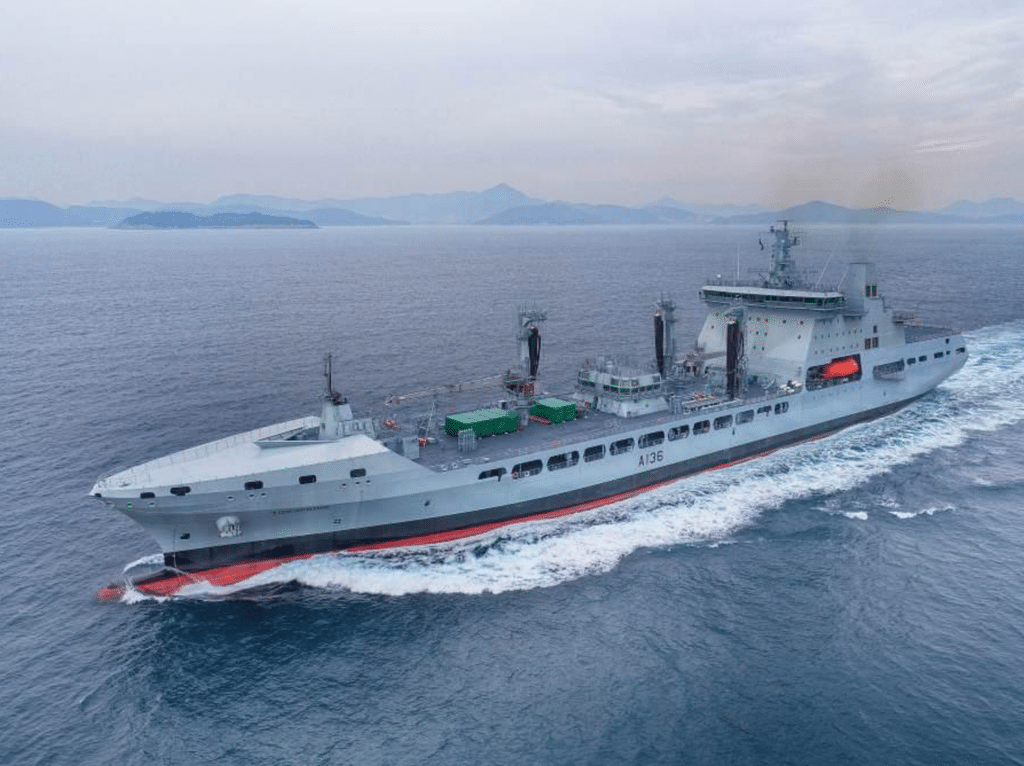
The company’s international experience has not been limited to submarines. In 2012, Hanwha Ocean (then Daewoo Shipbuilding & Marine Engineering) was selected through an international competition to build four Tide-class fleet tankers for the UK Ministry of Defence. Built in Korea for the Royal Fleet Auxiliary, the vessels were designed to sustain Royal Navy operations worldwide, including support for the Queen Elizabeth-class aircraft carriers. All four were subsequently delivered to the UK, demonstrating Hanwha Ocean’s ability to execute a major naval program for one of the world’s established maritime powers while working within an international industrial partnership.
Thailand represents the latest progression in that international business. Hanwha Ocean’s relationship with the Royal Thai Navy dates back to the frigate now serving as HTMS Bhumibol Adulyadej, delivered in 2018. In 2026, that relationship entered a new phase with Hanwha Ocean’s selection for the RTN’s next-generation frigate program.
The new frigate builds on an existing platform lineage while responding to a new set of operational and industrial requirements. The program places emphasis not only on the capabilities of the ship itself, but also on technology transfer, local industry participation and the development of Thailand’s own naval shipbuilding capabilities.

Taken across Bangladesh, Malaysia, Indonesia, the United Kingdom and Thailand, these programs show that Hanwha Ocean’s international naval experience is broader than a series of recent market entries. It has delivered different types of naval platforms for different customer requirements, while the Thailand program points to the next stage: adapting proven capabilities around a customer’s changing operational needs and broader industrial ambitions.
Building an industrial presence in the U.S.
The United States represent a different model for Hanwha’s international naval business. The acquisition of Philly Shipyard gave Hanwha Group a physical U.S. shipbuilding base, creating a foundation to connect engineering and production capabilities developed in Korea with American shipbuilding capacity.
Hanwha Ocean’s work with the U.S. Navy has also developed through maintenance, repair and overhaul. The company has completed MRO work on U.S. naval vessels including USNS Wally Schirra, USNS Yukon and USNS Charles Drew, as well as allied naval vessels such as the Royal Navy’s HMS Richmond and the Royal Canadian Navy’s HMCS Max Bernays and HMCS Regina, demonstrating its ability to support naval fleets across multiple countries.
Hanwha is also participating in the U.S. Navy’s Next Generation Logistics Ship concept design effort, bringing its engineering and production expertise into the early stage of a future naval platform. At Hanwha Philly Shipyard, meanwhile, the Missile Range Instrumentation Vessel program brings federal new construction into the yard.
Beyond individual projects, Hanwha has been developing partnerships around the wider capabilities needed to support U.S. shipbuilding, including design, workforce development and supply chains. That includes cooperation with U.S. naval engineering partners on adapting ship designs for the American market and exploring the joint development of small surface combatants for international customers, alongside initiatives aimed at strengthening workforce capability and the maritime industrial ecosystem around Philadelphia.
Together, these activities are establishing Hanwha as an active participant in the U.S. maritime industrial base, with a role spanning vessel design, construction and maintenance as well as workforce and supply chain development.
Partnership backed by industrial capability
Naval procurement increasingly involves much more than acquiring the vessel itself. Governments want industrial participation, sovereign capability, workforce development, technology cooperation and the ability to maintain and sustain vessels over decade. But those requirements are not identical from one country to another. There is no single export model.
Hanwha Ocean’s approach is to begin with proven engineering and adapt the partnership around the customer: local construction and industrial participation where appropriate, workforce training and participation by domestic supply chains. Korea’s own experience gives that proposition particular relevance.
Its naval industry was indeed built through a progression from overseas technology acquisition to domestic construction, indigenous design and ultimately exports. Hanwha Ocean has lived through that journey from inside the industry. It, therefore, understands both sides of the equation: what it takes to acquire advanced capability and over time, what it takes to develop the people, engineering expertise, production systems and supply chains needed to make that capability increasingly sovereign.
For countries seeking not only new ships but stronger maritime industries, Hanwha Ocean’s experience can provide a practical foundation for partnership.
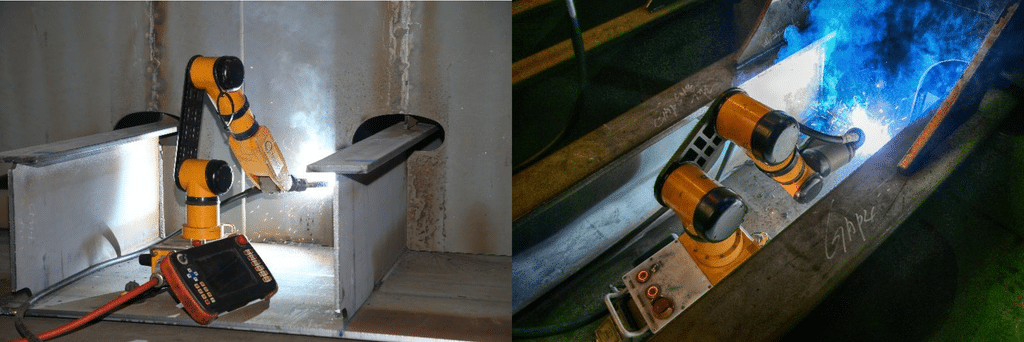
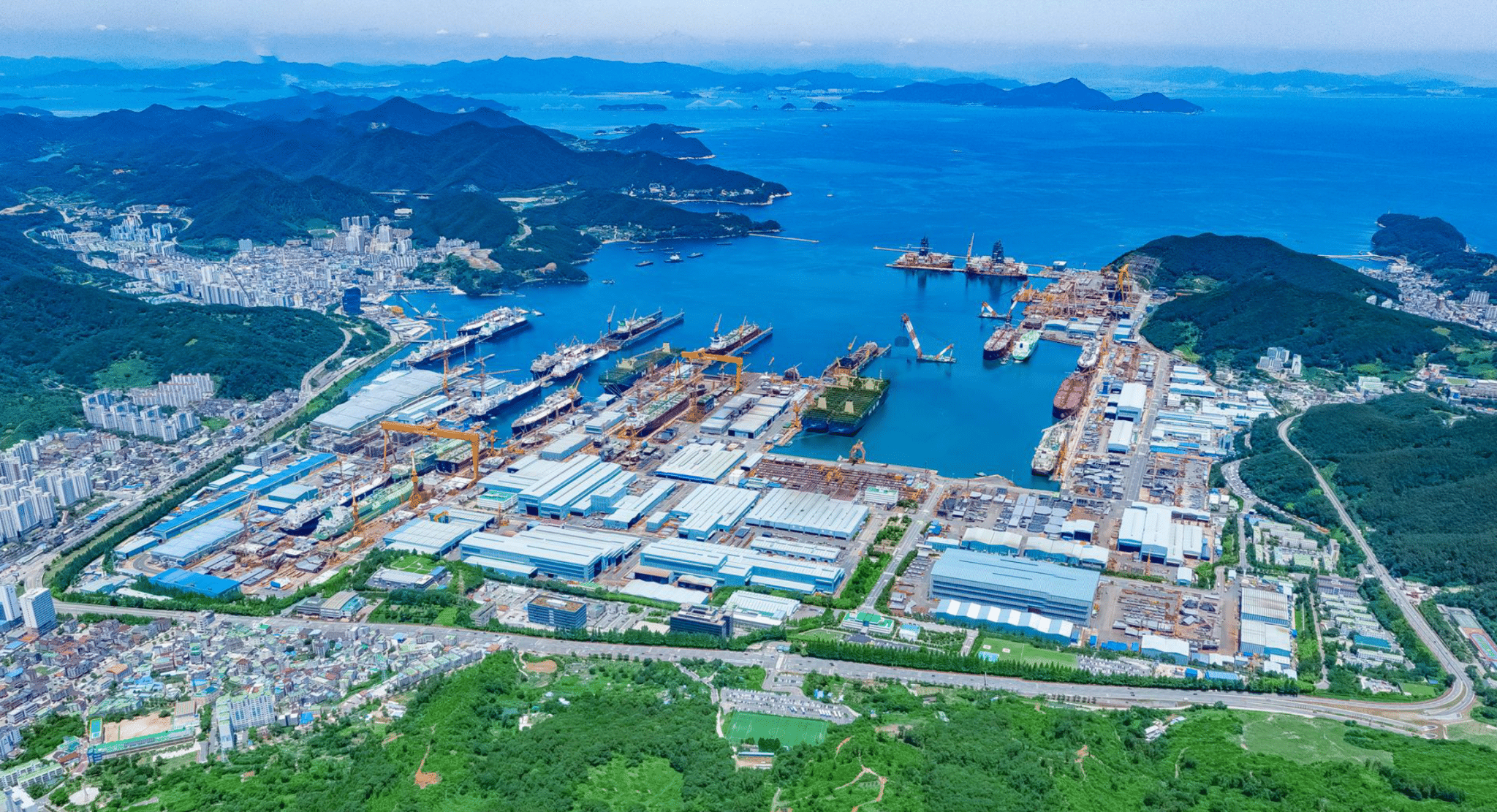
The company’s shipyard in Geoje brings commercial and naval construction together at a scale unusual in the defense sector. Decades of commercial shipbuilding have driven expertise in modular construction, production management, automation and complex supply chains. Naval programs add the demanding design, systems-integration and security requirements of sophisticated combat platforms. Those two worlds reinforce each other. In a naval market with growing attention to industrial capacity and delivery, that combination supports efficient shipbuilding at scale and on realistic schedules.
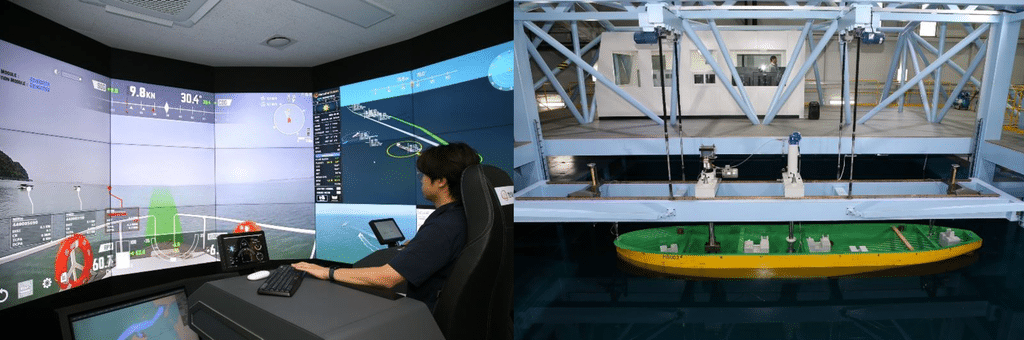
Supporting this industrial capability is Hanwha Ocean’s Central Research Institute, established in 1978, and its Siheung R&D Campus, equipped with advanced facilities for ship design and technology development. Its 300-meter towing tank and large-scale cavitation tunnel enable engineers to refine hull forms, optimize propulsion efficiency and reduce underwater radiated noise, particularly important for naval vessels and submarine. The campus also houses specialized acoustic testing facilities and land-based test sites for evaluating propulsion systems before installation aboard ships. Alongside these capabilities, research into autonomous navigation and digital ship technologies continues to advance the company’s engineering expertise. Together, these facilities enable Hanwha Ocean to translate research and testing into practical improvement in naval design, construction and operation performance.
The next chapter
Hanwha Ocean is now taking its experience into international markets, working with customers whose operational requirements, industrial priorities and strategic circumstances differ from Korea’s own. The task is not simply to bring Korean-built platforms to new markets, but to apply the engineering, production and partnership capabilities developed over decades to what each customer needs.
Its naval platforms are not concepts waiting to be proven. They come from active programs, an established production base and decades of building for the Republic of Korea Navy. At the same time, its commercial shipbuilding experience provides the scale and industrial discipline needed to turn complex designs into ships.
In some countries, Hanwha Ocean may still be a relatively new name, particularly alongside shipbuilders that have operated there for generations. But it enters those markets not as a newcomer to naval shipbuilding, but as an experienced shipbuilder bringing its capabilities to a wider international stage.
More than 40 years after beginning its naval journey in Korea, Hanwha Ocean is building the next phase of its international business, designing, building and supporting advanced platforms while developing the partnerships needed to sustain them for decades to come.