The Euronaval 2026 report on global naval shipbuilding reveals a 50% surge in global naval shipbuilding, with China now vastly outproducing the US. The report also details buildups in submarines and autonomous drones, and hypersonic arms races.
For nearly sixty years, Euronaval has been at the forefront of major naval defence developments and is nowadays the largest naval defense exhibition, worldwide. Held from November 3 to 6, 2026, at Paris Nord Villepinte, the 30th edition unfolds against an unprecedented backdrop of geostrategic upheavals, the resurgence of high-intensity conflicts, and rapid technological change. Driven by this global naval rearmament and industry vitality, the exhibition is set to cross the 700-exhibitor mark, representing a 45% increase compared to 2024.
Against a backdrop of profound strategic realignment and the return of high-intensity naval warfare, global military shipbuilding is experiencing an unprecedented boom. According to the newly released World Defense Shipbuilding 2026 study, unveiled ahead of the Euronaval 2026 tradeshow, the global market for military and paramilitary shipbuilding surged by 50% in the 2024-2025 period, reaching a staggering $122 billion. In terms of volume, global production jumped from nearly 1 million tonnes in the previous period to approximately 1.5 million tonnes.
China Outpaces U.S. Industrial Output
The most striking takeaway from the report is the rapidly widening production gap between the world’s two largest navies. Over the past two years, China has produced more than double the tonnage delivered by U.S. shipbuilders, churning out 636,208 tons compared to 270,509 tons for the United States.
This massive industrial output allowed the Chinese People’s Liberation Army Navy (PLAN) to take delivery of nine nuclear-powered attack submarines (SSNs) and ten destroyers in 2024-2025, compared to just three SSNs and four destroyers for the U.S. Navy. Additionally, the Chinese fleet commissioned its newest aircraft carrier—the 80,000-ton Fujian, equipped with electromagnetic catapults—and an amphibious assault ship during this period.

A Surge in Submarine Construction
The undersea domain remains a critical priority for major powers, driving a massive surge in submarine construction globally. Global production of nuclear-powered attack submarines (SSNs) nearly tripled, jumping from six units in 2022-2023 to 17 units in 2024-2025, representing a $27.3 billion investment. Conventional submarine deliveries also saw a significant increase, rising from 11 to 18 units globally.
The Drone Revolution and Asymmetric Warfare
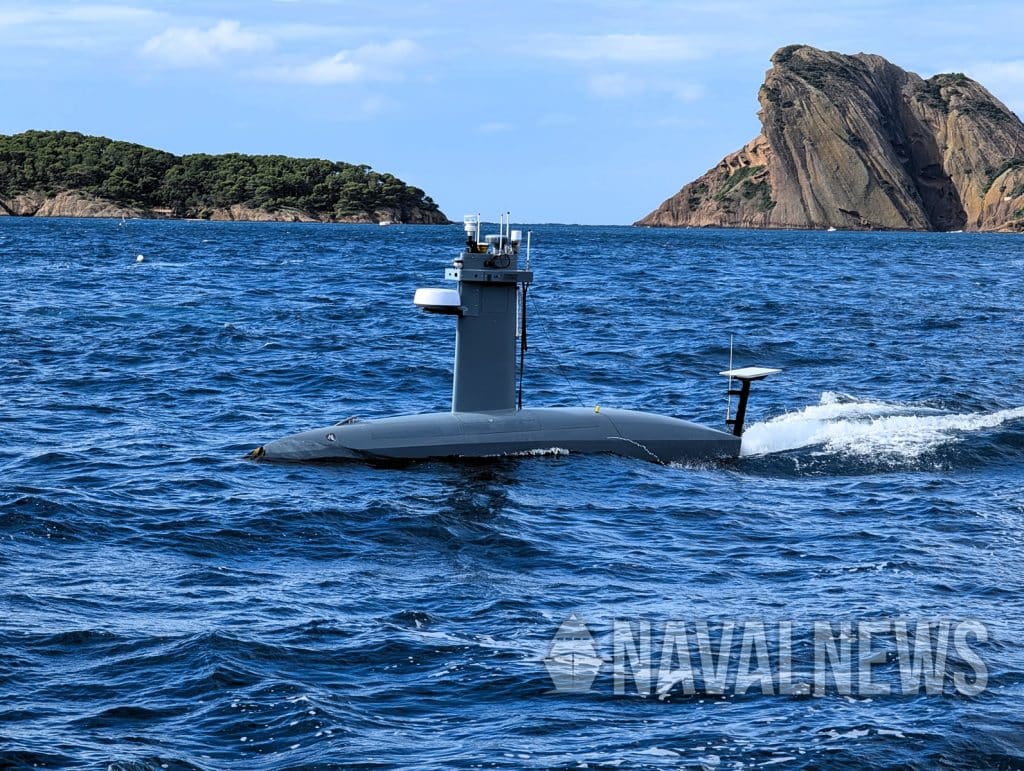
Beyond traditional blue-water platforms, the modern naval battlefield is being fundamentally reshaped by autonomous systems and asymmetric threats. Drawing direct lessons from the war in Ukraine—where low-cost, explosive-laden surface drones like the Magura V5 successfully sank several Russian warships—navies worldwide are rushing to integrate unmanned surface vehicles (USVs) and unmanned underwater vehicles (UUVs) into their fleets.
The Euronaval report highlights a broader doctrinal shift: navies are moving away from purely platform-centric approaches toward munitions-centric warfare. In response to the growing drone threat, advanced navies are being forced to rapidly develop and field complex, multi-layered counter-drone defenses, including interceptor drones, lasers, and rapid-fire gun systems.
Hypersonics and the Parallel Space Race
Traditional power projection platforms, such as U.S. carrier strike groups, are facing unprecedented vulnerabilities due to the proliferation of hypersonic anti-ship missiles. Russia’s Mach 9 Zircon missile and China’s extensive arsenal of hypersonic weapons—including the DF-17 and ship-launched YJ-21—are designed to neutralize traditional naval air defenses.
Because these extreme-speed weapons cannot be tracked reliably by traditional over-the-horizon radars alone, the naval arms race has sparked a parallel competition in space. Nations are heavily investing in low-earth orbit (LEO) satellite constellations dedicated to maritime surveillance, electromagnetic emission tracking, and early missile detection to protect their fleets.
As the global strategic environment continues to fracture, the 2026 shipbuilding data makes one reality abundantly clear: the era of expeditionary crisis management has ended, replaced by an urgent, high-stakes arms race to prepare for high-intensity, peer-to-peer maritime conflict.