Alseamar has launched Sonusia, a modular, distributed network of acoustic and non-acoustic sensors and associated data processing capacity designed to build persistent underwater surveillance, from surface to seabed, to enable maritime threat detection and environment monitoring.
Announcing the launch on 3 November 2026 at the Euronaval exposition in Paris, the French defence and commercial specialist underwater technology company said (in a statement) that “By combining data collection and onboard processing across multiple underwater platforms, Sonusia provides continuous maritime situational awareness in critical areas where persistent monitoring is required.”
This requirement, it continued, supports a range of maritime security mission needs including coastal waters and facilities protection, strategic maritime passage surveillance, and critical infrastructure security, and then integrating data drawn during these missions into a wider maritime surveillance framework.
The network is built around Alseamar’s own underwater systems, onboard data acquisition and processing, and associated information-sharing and command-and-control (C2) software and architectures.
Capability construct
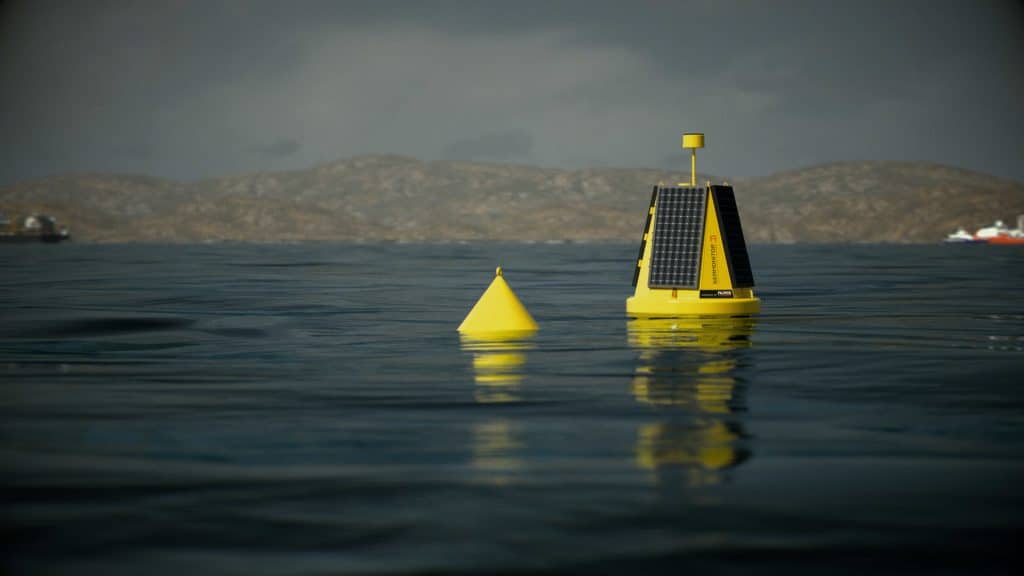
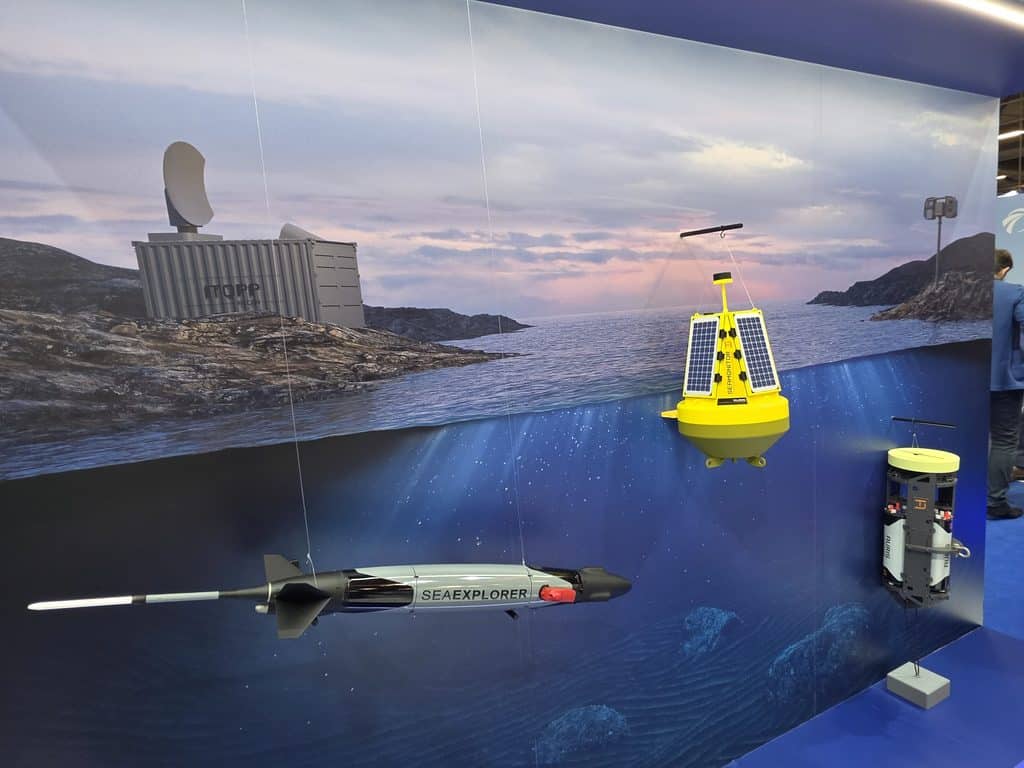
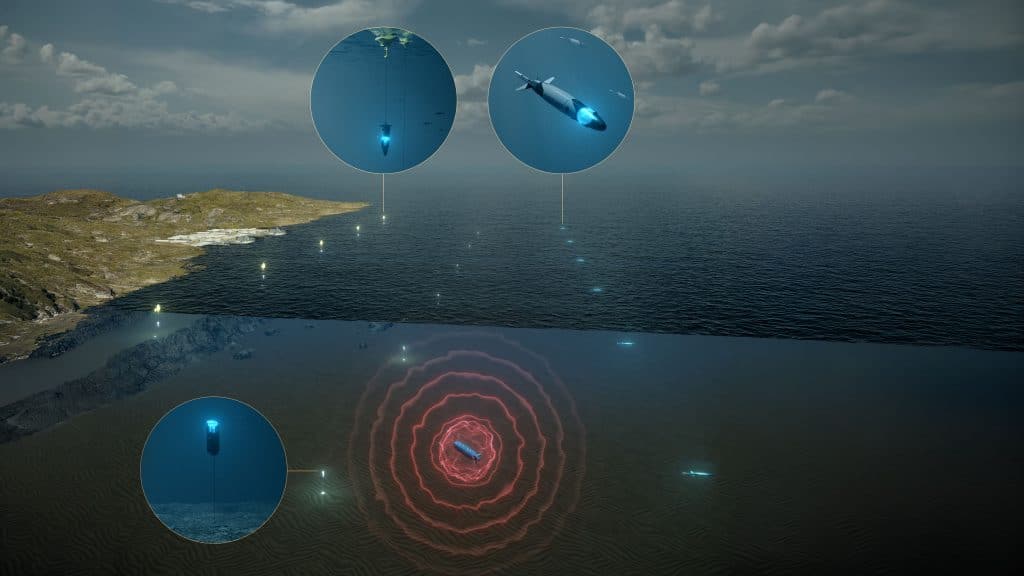
The company’s systems and capabilities that create the network include: the SeaMonitor surface buoy, which provides sensing capacity; the SeaExplorer underwater glider, which delivers water-column monitoring; the SeaNode autonomous seabed station, which is a fixed bottom node sensor; and – across all these systems – the Auris passive sonar, which brings threat detection, identification, and classification.
With SeaExplorer and Auris already sea-proven, both being operational with France’s armed forces, these connected capabilities are designed to provide long-endurance, low-signature maritime surveillance, Alseamar said.
The C2 connection is provided by the company’s Glimpse software product, which fuses data gathered and processes it as information for visualisation. Again operational with France’s armed forces, Glimpse is designed for interoperability with other C2 networks, enabling Sonusia to be integrated into broader underwater and multi-domain surveillance networks.
Layered approach
With Sonusia providing several sensing layers for critical undersea infrastructure (CUI) protection and wider maritime security surveillance, what Alseamar has built is an underwater network designed for persistence in threat detection and environmental monitoring, Morgane Ruiz, Alseamar’s Marketing and Communications Manager, told Naval News at Euronaval.
SeaMonitor, SeaExplorer, and SeaNode, all enhanced by Auris and all connected by Glimpse, generate “a scalable and open network, which implies modularity depending on the detection level that is required and the type of CUI that needs to be protected, whether it’s a port, a strait, a shipping lane, or cables and pipelines”, Ruiz said.
Regarding scalability, “We can choose to deploy all the assets, or a few of them,” Ruiz explained. “So, we can create custom layers with specific configuration – whether they are very near to each other because we want to emphasise surety of detection, or whether we want to give ourselves some advanced warning and deploy them far from the area to be protected.”
Ruiz highlighted four key aspects of Sonusia’s set-up and effect.
“The first is onboard data processing, with Auris distributed in all platforms,” she said. The processing handles acoustic and non-acoustic data, generated via re-configurable detection algorithms and then transmitted via the system’s open architecture.
Second is full water column coverage. With a surface buoy, glider, and seabed node that can be connected together, such coverage can be generated down to at least 1250 metres in depth, Ruiz explained. Such coverage has significant endurance, too, with SeaExplorer able to deploy for up to four months, and SeaMonitor and SeaNode in the water for three to six months.
Third is scalability. The scalable capability, plus open architecture connectivity, mean Sonusia’s outputs can be customised depending on the type of CUI to be secured and the detection objectives, Ruiz explained.
Fourth is data fusion and visualisation, including both real-time and near-real-time, enabled by Glimpse. The C2 system’s open-architecture interoperability enables integration with other networks’ surveillance and C2 systems, Ruiz explained. It also means other surveillance technologies can be added as they are developed, she added.
Sonusia’s various capabilities contribute to building the surveillance layers in various ways, creating a network of mobile and fixed sensors generating real-time and near-real-time data sharing, Ruiz explained.
SeaMonitor, on the surface, transmits in real-time data it collects from its sensing range reaching down to 200m.
Sub-surface, SeaExplorer drifts or moves across the water column with a low acoustic signature. Once its detection algorithm picks up an anomaly, it surfaces to send on the data in near-real-time.
SeaNode contributes to the surveillance output by collecting data at the seabed.
Naval News Comment
An interesting element of Alseamar’s CUI security and wider underwater surveillance capability is how it conducts mission planning and at-sea deployment of capabilities using its in-house operational analysis capacity.
With its own scientific services and studies team supported by the company’s own SeaExplorer fleet, Alseamar can provide bespoke recognition missions to characterise risks and requirements in a particular area, Ruiz explained. This can be in response to customer requests, too.
“We’ll offer an in-situ study to characterize the area: whether it’s a very narrow port or a very open one; what are the detection and operational needs; and what are the main threats and how are they characterized,” said Ruiz. “Based on this, we will build a custom network that can also be scalable and modular through time.”