



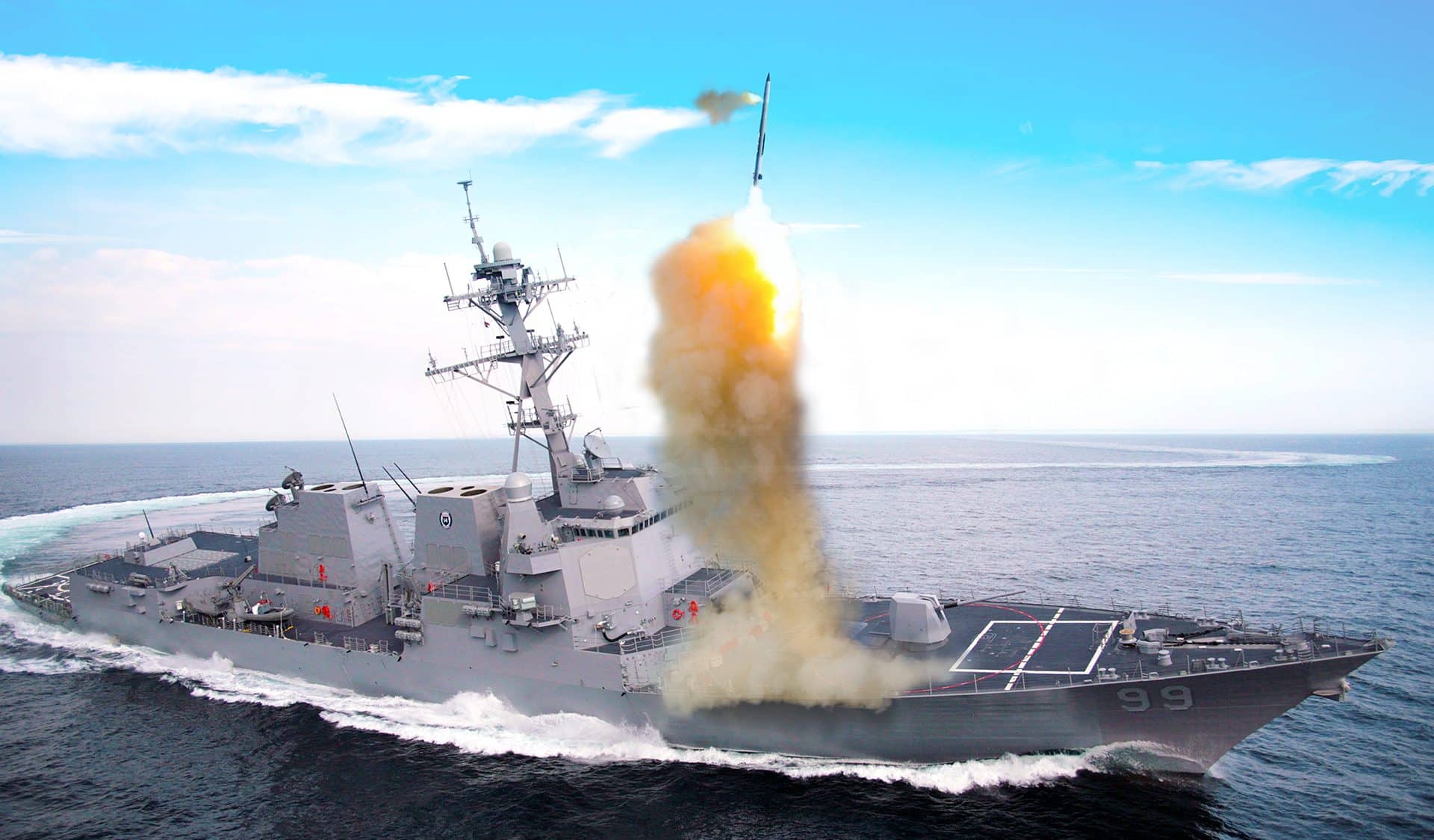
Naval News caught up with Lockheed Martin and their Aegis PAC-3 (Patriot Advanced Capability 3) MSE (Missile Segment Enhancement) integration at Sea Airspace 2023 (SAS 2023). This concept was publicly shown off for the first time by the company during January’s Surface Navy Association (SNA), which displayed a single PAC-3 MSE missile in a Mk.41 Vertical Launching System cell.
At SAS 2023, Naval News had the opportunity to receive a brief update on the program.
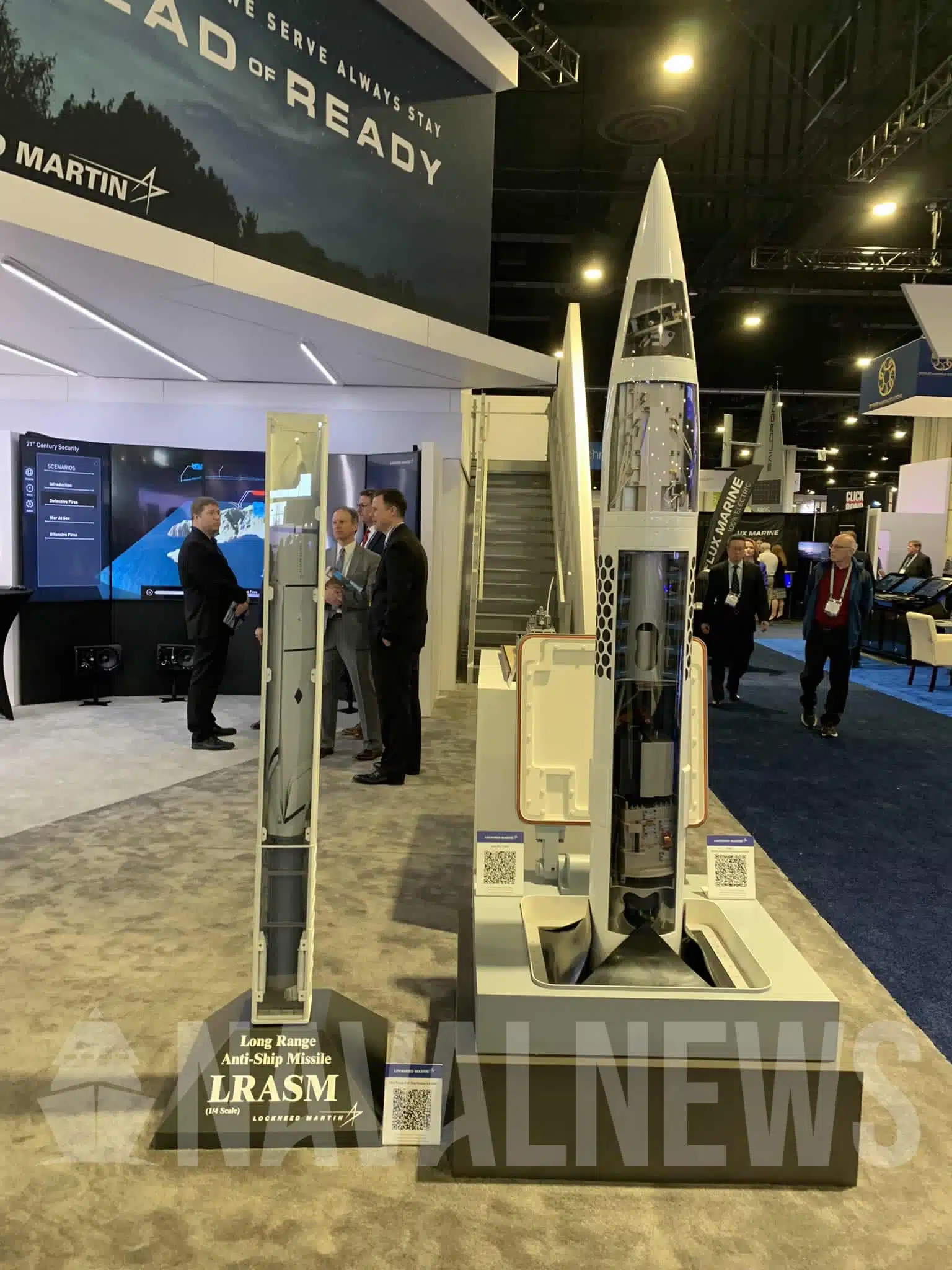
Thomas Copeman, VP of Naval Systems, Lockheed Martin Missiles and Fire Control, told Naval News that the concept had completed a Navy study.
“The only update I think that’s changed since SNA is that the Navy has this framework called Navy Integrated Fires on how they inform upon deliberations. So there’s a study called Navy Integrated Fires Terminal Defense that had started but had not completed, and it’s now completed.”
Copeman described the completion of this study as a “milestone” for the navalized PAC-3 MSE, but could not go into further detail.
“I can’t discuss the results, but that’s kind of a fairly big milestone for the Navy and finish up the analysis of it when this fits into the rest of the Navy architecture.”

Another Lockheed official highlighted the challenges that integrating PAC-3 MSE into the Aegis Weapons system, first with the Mk.41 VLS but also with the communication between Patriot and Aegis:
“The big thing that we’re working on is the communication uplink from the radar side, which will lead into the modification.”
Copeman added that this is the only major modification to the missile for it to integrate with Aegis. The Navy’s Aegis ships use S-band to communicate with the Standard Missile family, while the Patriot uses either X or C-band to communicate with PAC missiles. The modification consists of upgrading the existing uplink receiver antenna on the PAC-3 MSE from dual-band to tri-band to accommodate S-band.
Naval News also inquired about the first instance of Lockheed Martin’s PAC-3 MSE integration into VLS, which was seen during IDEX 2015. In an IHS Janes article, it was reported that with “a small amount of integration work” the missiles could be dual-packed into a single Mk.41 cell. However, at SAS 2023 and SNA 2023, the displays only showed one missile per VLS cell. While the Lockheed Martin representatives at SAS could not answer the 2015 comments, they did state why for this concept they went with only one missile per cell.
“I think there’s a lot of studies of what you can do. Our big thing is to keep the missile the way it is. So you have to get into things like folding things and other stuff if you wanted to try to increase the capacity within one cell. What we want to do is work and partner together. So one missile comes off the line and can go to the Army, the Navy and it’s not unique to that to that it’s just one way to go.”
Tom Cavanaugh of Lockheed Martin Missiles and Fire Control also commented on the decision for only one missile per cell, stating.
“Yeah, if you begin to modify the design of the missile into a missile gap, and that’s cost prohibitive at some point. We’d rather invest in the development of the capability we have today to support the Navy and the Army at the same time. So I think that’s the best approach from there rather than redesigning the missile.”


