GA-ASI press release
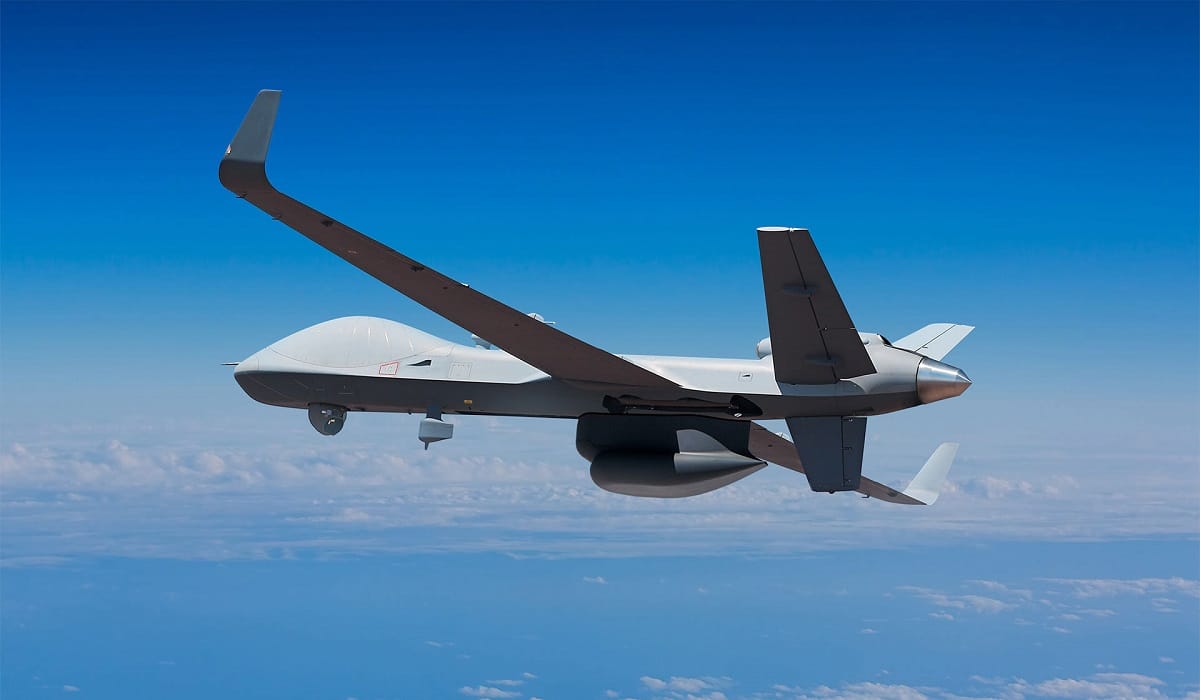
The purpose of the flights is to validate the wide-area maritime surveillance capabilities of RPAS for carrying out JCG’s missions, including search and rescue, disaster response, and maritime law enforcement. The flights are expected to run for approximately two months and will include support from the Japan Maritime Self Defense Force (JMSDF) at its Hachinohe base in Aomori Prefecture.
According to the JCG, the flight validation will be conducted in accordance with “The Policy on Strengthening the Maritime Security Systems,” using Unmanned Aerial Vehicles to perform maritime wide-area surveillance using new technology.
“We’re pleased to support the JCG’s goals of validating SeaGuardian’s maritime surveillance performance,” said Linden Blue, CEO, GA-ASI. “We know there is a need in Japan and worldwide for affordable, long-endurance airborne surveillance in the maritime domain.”

The SeaGuardian system will feature a multi-mode maritime surface-search radar with Inverse Synthetic Aperture Radar (ISAR) imaging mode, an Automatic Identification System (AIS) receiver, and High-Definition – Full-Motion Video sensor equipped with optical and infrared cameras. This sensor suite enables real-time detection and identification of surface vessels over thousands of square nautical miles.
The featured Raytheon SeaVue surface-search radar system provides automatic tracking of maritime targets and correlation of AIS transmitters with radar tracks.
SkyGuardian® and SeaGuardian are revolutionizing the long-endurance RPAS market by providing true all-weather capability and is built to achieve Type Certification based on STANAG (NATO standard) airworthiness compliance. This feature, along with its operationally-proven, collision-avoidance radar, enables flexible operations in civil airspace.