Raytheon press release
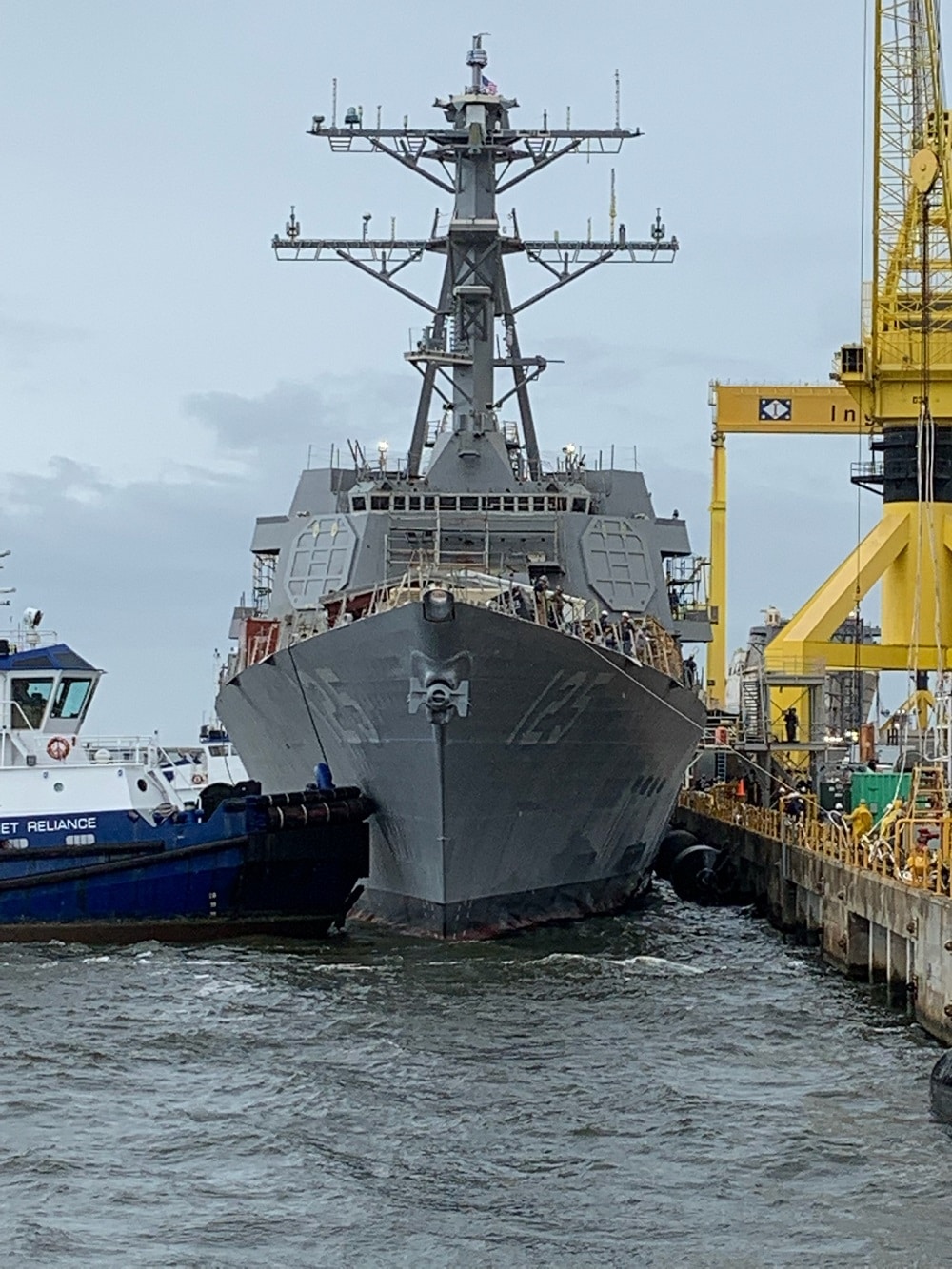
PASCAGOULA, Miss. (Dec. 20, 2021) — Raytheon Missiles & Defense’s SPY-6 Air and Missile Defense Radar attained another milestone when the future USS Jack H. Lucas achieved “light off” on its Aegis Combat System, marking the beginning of on-board system testing and crew training for the ship.
“This important milestone kicks off onboard testing and training with naval crews on the SPY-6 radars,” said Kim Ernzen, vice president of Naval Power at Raytheon Missiles & Defense. “SPY-6 is the world’s most advanced surface maritime radar, and our team is ready to provide training and support to the Navy through this phase and beyond.”
The AN/SPY-6(V) Family of Radars is the newest radar system for the U.S. Navy, performing air and missile defense on seven classes of ships. The SPY-6 family can defend against ballistic missiles, cruise missiles, hostile aircraft and surface ships simultaneously. When compared to legacy radars, SPY-6 will bring new capabilities to the surface fleet, such as advanced electronic warfare protection and enhanced detection abilities.
SPY-6 is scalable and modular to support production for the U.S. and partner nations across all variants. This commonality supports standardized logistics and training for those who work on the radars.