NAVSEA press release
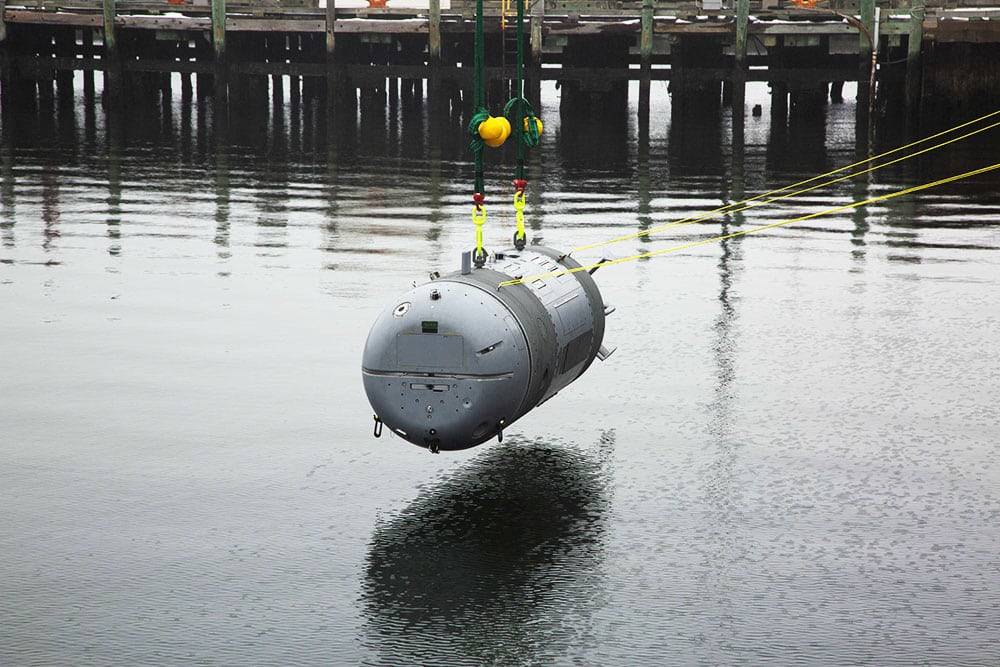
The Snakehead LDUUV conducted a long distance ingress, performed a sonar survey box, and then egressed back to the test facility, demonstrating a new milestone in total sortie endurance. The sortie, conducted with the Draper Laboratory-developed Maritime Open Architecture Autonomy, successfully collected sonar data utilizing technology from the Pennsylvania State University Applied Research Laboratory.
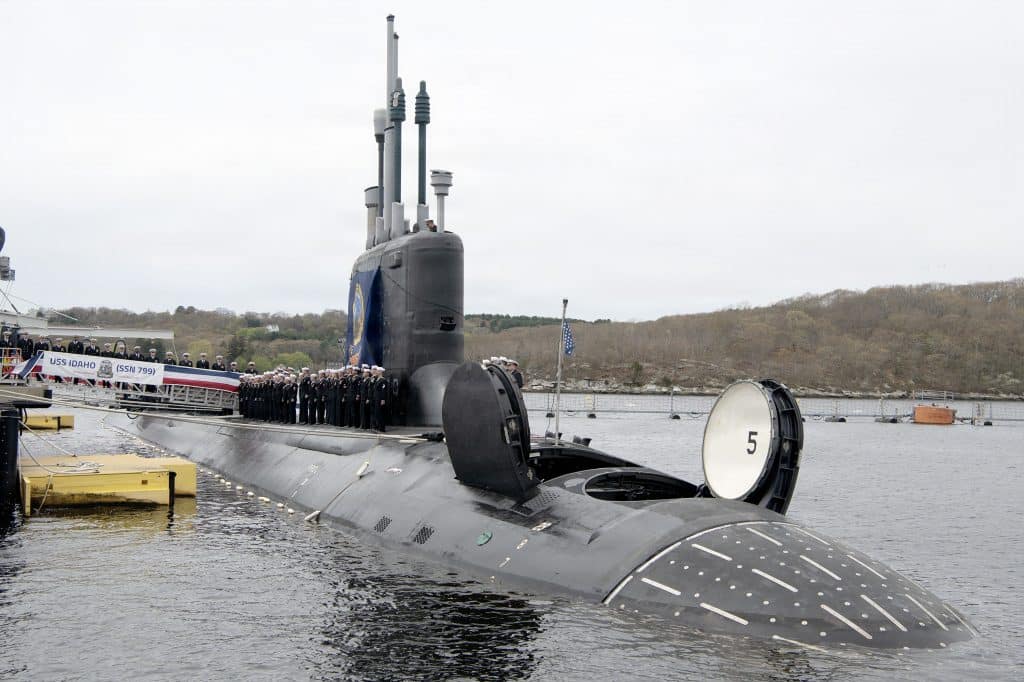
Snakehead, a modular, reconfigurable, multi-mission LDUUV deployable from submarines and surface ships, provides guidance and control, navigation, situational awareness, propulsion, maneuvering, and sensors in support of the IPOE mission. Snakehead is innovative in the areas of hull materials, lithium-ion battery certification, advanced sensors, and launch and recovery from both submarines and surface vessels.
The accomplishment of this mission in the system’s intended operational environment was a big step for the program to gain confidence in the vehicle software and hardware systems, as the team pushes toward extended endurance operations and layering additional system capability, said Chris DelMastro, head of the Undersea Warfare Platforms and Payload Integration Department.

The IPOE mission is a critical step toward understanding an area of interest and feeds into planning a relevant course of action to support the warfighter.
To date, Snakehead has conducted 155 in-water sorties and more than 78 hours of runtime utilizing a government-owned and controlled modular open system architecture to include vehicle controller software; autonomy software; and command, control, and communications software — TopsideC3 — for mission planning, operations and analysis.
Since last year, the team conducted up to 190 hours of simulations using full-up vehicle hardware-in-the-loop and software-in-the-loop simulation tools. These simulated missions ensure the software operates as intended and that mission parameters are set correctly and confirmed by the vehicle.
“The success of Snakehead testing is a direct result of the time and energy spent designing the vehicle. In-lab hardware and software simulations are major contributors to the success in water.”
Allison Philips, Division Newport’s test and evaluation lead for Snakehead.
“The testing to date has demonstrated a baseline capability. Future testing will provide additional capability, autonomy, and endurance to discover the system utility.”
Cheryl Mierzwa, Division Newport’s technical program manager for Snakehead
NUWC Newport is the oldest warfare center in the country, tracing its heritage to the Naval Torpedo Station established on Goat Island in Newport Harbor in 1869. Commanded by Capt. Chad Hennings, NUWC Newport maintains major detachments in West Palm Beach, Florida, and Andros Island in the Bahamas, as well as test facilities at Seneca Lake and Fisher’s Island, New York, Leesburg, Florida, and Dodge Pond, Connecticut.