The Danish government and the parties of the defence agreement have this week agreed on a plan for to strengthen the Danish Navy, both in the short and the long term. The plan forms part of the 2024-2033 defence agreement, and will be funded both through the defence agreement and through the previously described “acceleration fund”. This was announced during a press conference and a press release on 22 April 2025.
By Thomas Lauge Nielse / Hartpunkt.
The government and the parties to the agreement also used the opportunity to further highlight the need to urgently boost Danish defence capabilities, including the Danish Navy, considering the serious and complex security situation faced by Denmark, Europe and NATO. Danish Minister of Defence, Troels Lund Poulsen stated: “The threats we face at sea today are different, and far more serious, than just a few years ago. It is especially a threatening Russia that we need to react to while, at the same time, the technological development is extremely rapid”.
The naval expansion plan is also intended to take into account the expected increase in NATO force goals for Denmark, which will be assigned in the summer of 2025.
The plan is composed of two parts. Part 1 has been agreed upon and funded, as described above, and part 2 is an intent for future procurements, that have yet to be defined and funded.
Part 1 is composed of the following elements, for which a total of around 3,6 billion Danish Kroner (approx. 480 million Euro) have been committed:
Increased surveillance of critical undersea infrastructure
Surveillance and protection of critical undersea infrastructure is one of the key tasks of the Danish Navy. This includes communications and energy supply infrastructure, both of which are continuously being expanded, and which are vulnerable to disruption and sabotage, as demonstrated by the attacks on seabed natural gas lines.
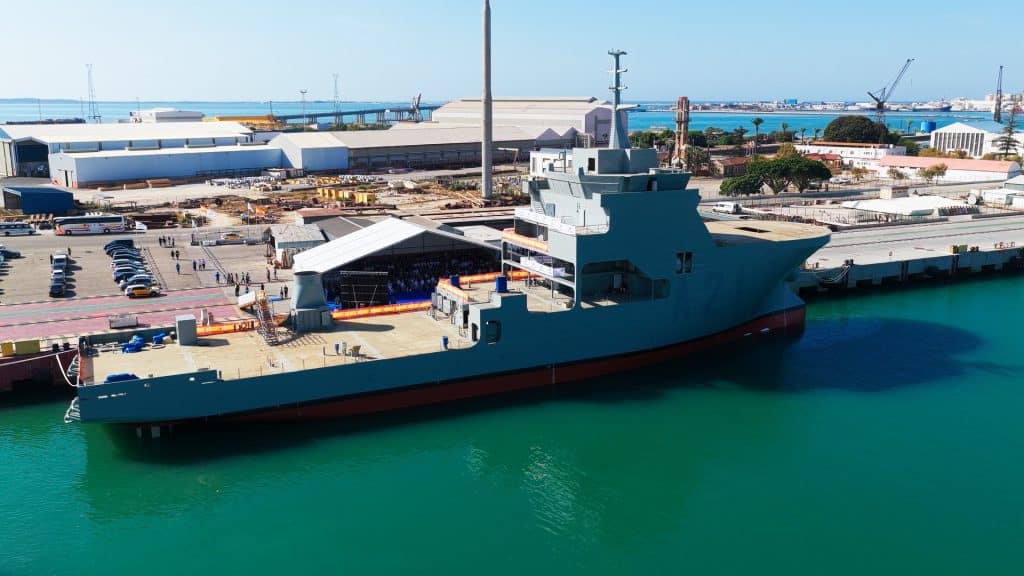
The naval expansion plan includes the procurement of a sea surveillance vessel, capable of hosting, launching and controlling undersea drones and other remotely operated vehicles and mobile sonar systems, for sea and seabed monitoring.
This type of vessel will constitute a new capability for the Danish Navy.
Development program for autonomous units
This part of the expansion plan is primarily a study program to “autonomous units” (drones and remote controlled vehicles) to conduct surveillance above and below the surface. Experiences from the war in Ukraine has highlighted the importance of drones in the battlespace, and the present element is intended to rectify the Danish Navy’s relatively limited experience in this regard. The intent is to procure and test various drones and remotely operated vehicles in order to investigate their capabilities in, and develop a doctrine for, reconnaissance and surveillance, including the potential to supplement or replace the Danish Navy’s ageing “Diana” class patrol vessels with uncrewed platforms.
The project will focus on involving Danish industry, to ensure a national industrial base to support a wider, future implementation.
Environmental and minelaying vessels
The plan includes funding for the procurement of four new “military environmental protection vessels”. These are primarily intended to strengthen the Danish Navy’s environmental response capabilities, through environmental surveillance and the ability to detect, contain and collect oil and chemical spills at sea. The vessels will also take part in the general surface and subsurface surveillance and sovereignty maintenance tasks of the navy, as well as acting as training vessels.
In addition to these, primarily peacetime, tasks, the vessels will also be capable of minelaying. The ability to quickly mine Danish waters, thereby restricting naval movement between the Baltic Sea and the North Atlantic, was a primary task of the Danish Navy during the Cold War, and it seems that the developments in the European security situation over the past 3-4 years have once again increased focus on this area.
It is the stated intent of the agreement that these vessels should be built in Denmark.
Additional vessels for the Naval Home Guard
The Home Guard is a volunteer organization that started as an outgrowth of the World War 2 resistance movement. The Guard are trained and equipped to assist the armed forces, as well as lend support to civilian authorities in case of emergencies. The naval element of the Home Guard is tasked with security at Danish Navy installations, patrol duties and Search and Rescue. They also supports scientific research, provides at-sea transport for police and customs, as well as support for exercises and training of other military units, and host nation support for visiting navy vessels.
The Danish naval expansion plan includes an additional 21 new, modern vessels for the Naval Home Guard, as a supplement and partial replacement for their current fleet. Especially the MHV 800 and MHV 850 class coastal patrol vessels are worn and technologically ageing, and in need of replacement.
The modern Naval Home Guard vessels would significantly boost the Danish Navy’s ability to conduct patrols and maintain sovereignty in coastal waters throughout the threat spectrum.
It is the stated intent of the agreement that these vessels should be built in Denmark.
Part 2 of the agreement is, for the moment, composed of the following:
During the first half of 2025, the Danish government and the parties to the Defence Agreement will formulate the second partial naval expansion agreement, in collaboration with the governments of Greenland and the Faroe Islands. The parties are in agreement that this second partial agreement will include investment in new frigates for the Danish Navy, starting with air defence frigates.
Since vessels of this type constitute large, complex and expensive systems, the parties to the agreement have agreed that the first step towards a procurement must be to fact-finding, to establish the necessary basis for further decisions, including military, industrial, scheduling and financial factors.
As such, the number of vessels to be procured, and their exact capabilities, have not been determined at this stage.
A further element in part 2 of the plan is an expansion of Denmark’s Arctic surveillance capabilities. This could include new arctic patrol vessels for the Navy, but could also involve maritime patrol aircraft for the Air Force, as well as unmanned capabilities.
As can be seen through the above, in addition to enhancing and increasing the capabilities of the Danish Navy, there is also an intent in the Danish government to use this plan to boost Danish defence industry, in order to increase and ensure a national capability to produce, maintain and support the new vessels and capabilities that are being procured. This is especially relevant since the Danish ability, or lack of same, to produce naval vessels has been the subject of much discussion in the government and in the press. The parties to the agreement have also, however, stated that they are open to the possibility of cooperation with other NATO nations. For a large, complex project such as the air defence frigate, such an approach would make sense. The government and the parties to the agreement have also acknowledged that, while domestic production of the new vessels is preferred, this should not be prioritized over capabilities and timely delivery.
And the above intent has not passed Danish industry by. According to a report by the Danish TV2 news service, four industrial consortia in the cities of Odense, Skagen, Frederikshavn and Esbjerg have already expressed an interest in building the new vessels.
There can be little doubt that the plan outlined above, provided it is carried through as agreed, will significantly increase Danish naval capabilities, both in terms of territorial defence, and as support to NATO and other operations. This is especially poignant for a nation like Denmark, with a long and proud naval history.
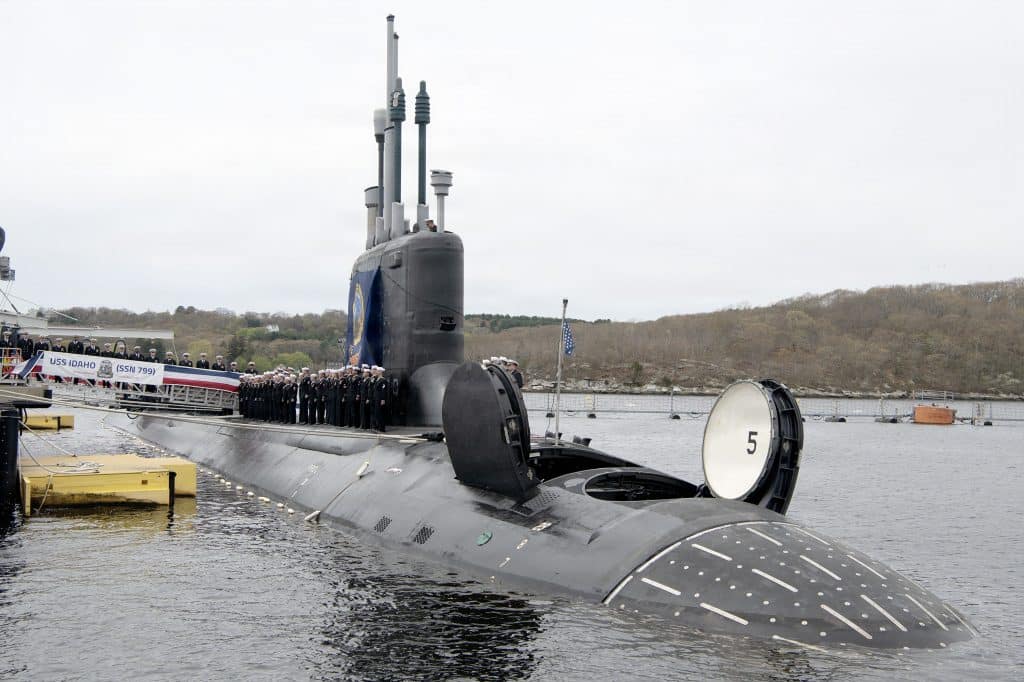
One thing that the author is surprised to not see mentioned in the plan is submarines. From 1909 to 2004, when the submarine program was terminated, submarines formed a central and important part of the Danish Navy. Additionally, compact diesel-electric submarines are almost perfect for operations in the relatively shallow and constricted Danish waters. In addition to patrol duties, submarines are also excellent at intelligence gathering and special forces support. But not, it would seem, this time around.
This article by Thomas Lauge Nielse was originally published in German language at Hartpunkt.de. It has been translated and republished with authorization.