Taiwan highlighted its efforts in developing area denial capabilities, including anti-ship missiles, attack drones and new coastal defense forces, to counter a potential Chinese invasion of the island in its 2025 National Defense Report.
With the build-up and increasing capability of the People’s Liberation Army (PLA), the Republic of China Armed Forces have doubled down on assets and strategies that can defeat enemy naval attacks and amphibious landings. Among the numerous modernization projects highlighted in the report, the Ministry of National Defense emphasized its investments in asymmetric capabilities.
Through the introduction of new amphibious assault ships, naval aviation and dedicated landing barges, Beijing’s capabilities to invade Taiwan have drastically increased in recent years. In response, Taipei has opted for a strategy designed to erode the enemy via the deployment and use of asymmetric warfare.
Mass Missile Production

Between 2022 and 2026, Taipei pursued the “Sea-Air Combat Power Improvement Plan.” Under this $8 billion four-year-long program, nine types of anti-ship missiles, cruise missiles and surface-to-air missiles were earmarked for mass production. The plan aimed to increase Taipei’s missile stocks for its ground, air and sea services. These systems include the supersonic Hsiung Feng III anti-ship missiles and upgraded Hsiung Feng IIE cruise missiles capable of reaching targets up to 1,200 kilometers away.
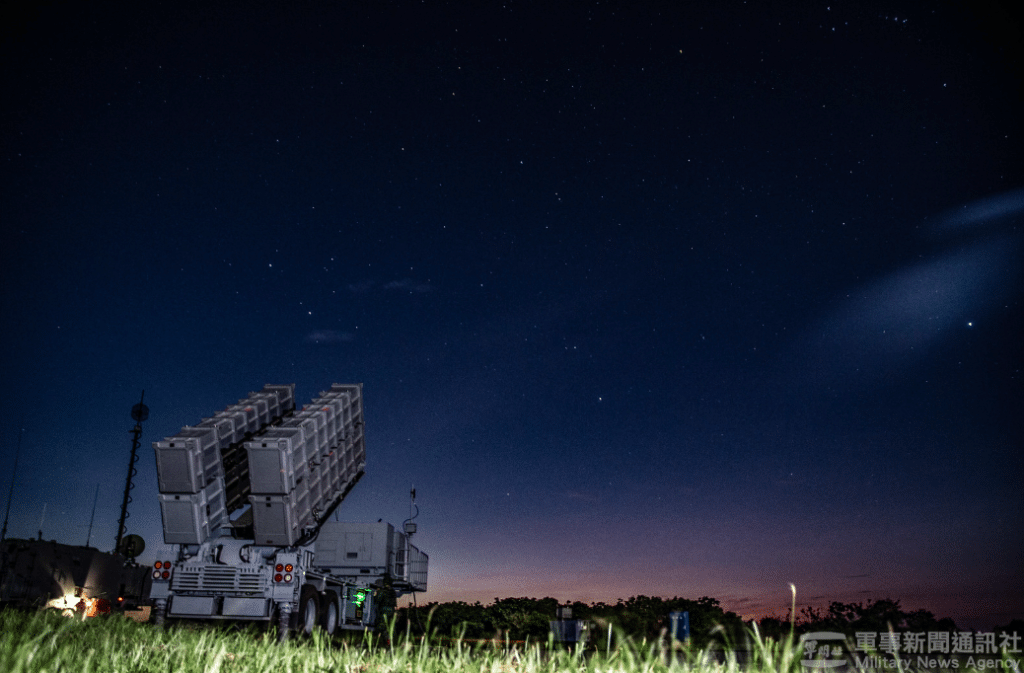
The HF series of missiles makes up the bulk of Taipei’s mobile ground-based missile forces, which are fielded under the Republic of China Navy’s (ROCN) Haifeng anti-ship missile brigades. They also equip the service’s surface combatants and growing missile corvette force. The Tuo Chiang-class corvette can carry a mix of 12 HF-II and HF-III anti-ship missiles. The fleet’s smaller Kuang Hua VI-class missile boats field four HF-IIs.
Anti-aircraft systems like the Sea Sword and Sky Bow were also prioritized in the mass production scheme. The report noted that the defense of “high value assets” such as the mobile HF-series anti-ship missile launchers would be provided by these systems.
Ben Lewis, founder of PLATracker, an organization dedicated to monitoring Chinese military activity and development, told Naval News that the mass production of surface-to-surface and surface-to-air significantly bolsters Taipei’s area denial capabilities to defeat an invasion
“Taiwan’s capacity to contest PLA command of the air and identify, target, and strike PLA Navy (PLAN) vessels could be the decisive measurement of their ability to defeat a blockade or invasion from the PRC,” Lewis said.
In the 2025 National Defense Report, the Ministry of National Defense looks to allocate an additional budget from 2026 for a follow-up program dubbed “Procurements for Strengthening Defense Resilience and Asymmetric Combat Capabilities Plans.”
“Taiwan needs mass. Plain and simple, we need to continue making strides so that Taiwan can increase production,” Jaime Ocon, a Research Fellow with Taiwan Security Monitor, told Naval News. “I think it goes back to the big three. Missiles, mines, and loitering munitions.”
Anti-Ship Missile Brigades and Coastal Defense Forces
Lewis and Ocon highlighted that these developments in Taiwanese area denial have also been matched by updates in force posture, particularly within the Marine Corps and a broader multi-service approach to unmanned systems that are set to elevate the country’s area denial capabilities.
Earlier this year, the Republic of China Marine Corps unveiled plans to transform its 66th Marine Brigade into a unit capable of supporting littoral strike operations. “The brigade’s organization was appropriately adjusted to a ‘drone battalion’ and ‘firepower battalion’ in response to the requirements of new missions,” read the 2025 National Defense Report. Ocon noted that Taiwanese Marines have also been stationed at strategic locations around Taipei to combat decapitation strikes that could occur in the capital during a Chinese invasion.
According to Ocon, 2026 will see the ROCN expand the number of Haifeng anti-ship missile units and task them alongside missile boats and additional maritime reconnaissance units to form the Littoral Combat Command. This new formation will also be supplemented by several 400 RGM-84L-4 Harpoon Block II batteries, which are set to become fully operational by 2029.
“New bases are already being constructed and their mission will be specifically to make sure the 24 nautical mile contiguous zone is kept secure in the event of a conflict. All of this will help Taiwan with coastal defense by being able to concentrate firepower in key areas and waterways that would further complicate Chinese planning,” Ocon said.
Unmanned Procurement
While this year’s defense report highlighted an objective of 5,000 drones composed of 13 variants across the Army, Navy and Air Force by 2028, as well as noting an existing amount of 1,600 systems, Taiwan recently announced plans to increase this amount ten-fold to 50,000.
Taiwanese companies have met this growing market with domestically designed unmanned aerial drones and surface vessels. Recent defense shows and demonstrations in Taiwan have placed local firm Thunder Tiger as one of the leading contenders for this massive procurement project. A Thunder Tiger representative told Naval News at the Association of the United States Army’s annual symposium that the company was ready to scale its production of the Sea Shark unmanned surface vessel.
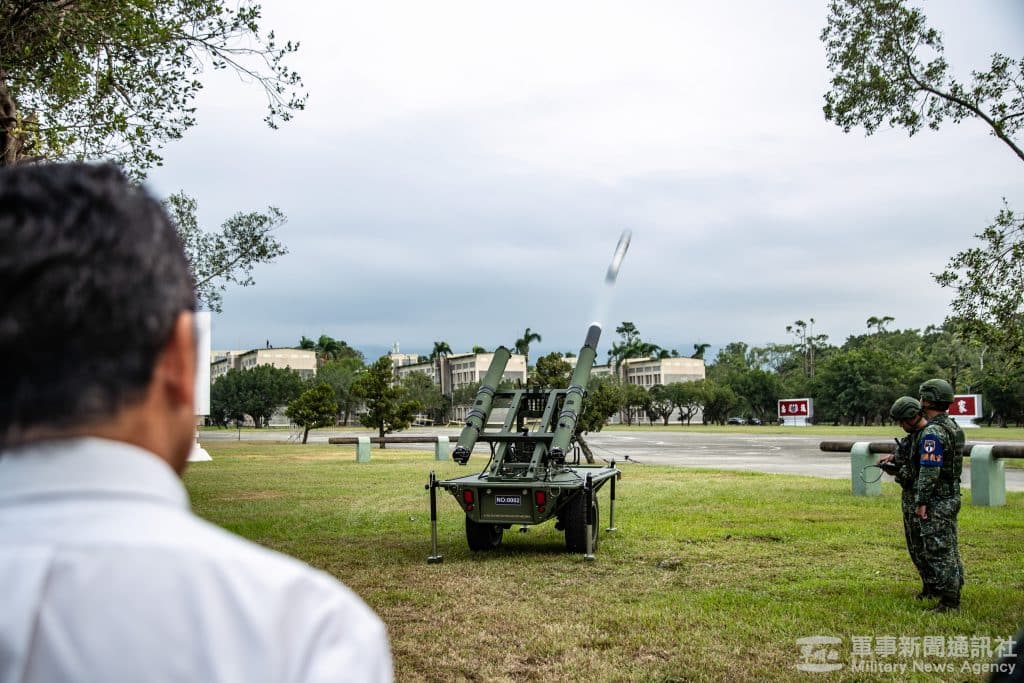
American firms are also selling their drones to the Taiwanese military. This week saw Taiwanese Defense Minister Wellington Koo observe the launch of an Anduril Altius-600M loitering munition at the Army’s unmanned training center. Taiwan will also field and co-produce Anduril’s Baraccuda-M, marketed as an “air-breathing autonomous air vehicle.”
“A significant investment is also being made in loitering munitions that can be fired via a mobile launch platform like a large truck or a Humvee. Hopefully taking some lessons from Ukraine with this “shoot and scoot” tactic that a lot of people are reporting on when it comes to artillery attacks. And that’s exactly what Taiwan should start to practice. Mock fires using these drones, and then moving back into terrain to conceal themselves,” Ocon said.
Based on lessons from Ukraine, Ocon also noted that Taiwan should drastically increase the drone fleet into the millions. “I will just say that 50,000 is a great step but we need to add some zeros to that, we need five million,” he said.
Lewis stated that the planned drone deployment and procurement “is the most important takeaway” within this year’s defense report. “The value of these systems cannot be understated,” Lewis said.
Together, these expanded missile stockpiles, dedicated coastal defense units and ambitious plans for a large drone force form Taipei’s area denial response to the naval and air build-up across the strait.