In the first instalment of this annual Naval News review for the Chinese Navy (PLAN) in 2025 we have looked at notable developments for the surface fleet, including carriers, amphibious vessels, destroyers and frigates. In this second part the outline will cover relevant events for submarines, fleet auxiliaries, infrastructure modernisation and, finally, experimental efforts.
Nuclear powered submarine-construction
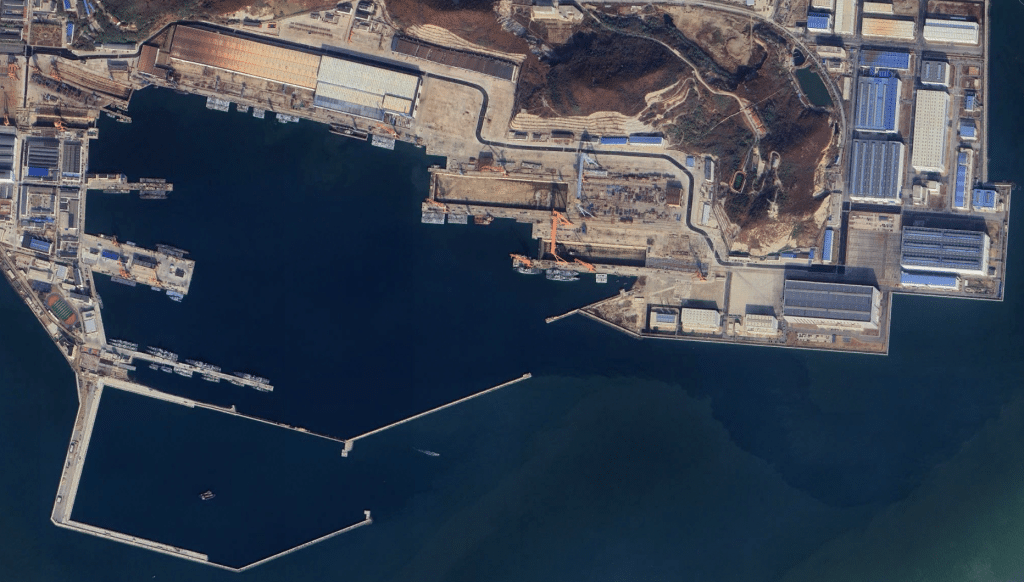
By far the most consequential submarine-related development for the Chinese Navy over the last decade is a re-balancing of capabilities from a large fleet of conventionally powered submarines to new and more capable nuclear powered designs. Naval News in recent years has already covered significant milestones. The most relevant case is the appearance of the Type 09IIIB guided missile nuclear powered submarine (SSGN). Closely related to this design is a dramatically expanded production capacity at shipbuilder Bohai in Huludao. Bohai is sole the builder of all Chinese nuclear powered submarines since its inception for this purpose under “Project 09” in 1954.


Significant hindrances remain in determining precise production figures for the expanded facilities at Bohai. The most obvious issue is the limited availability of relevant imagery in the public sphere. Virtually no on the ground-imagery of relevant facilities exists. This is due to the highly restricted nature of submarine production in China, and the nuclear powered fleet in particular. Naval News has only limited access to detailed satellite imagery. This assessment therefore is based on cursory observation of low resolution (10 m) imagery such as Sentinel and Landsat. Naval News for the purpose of this review also draws from discussions with observers accessing more detailed imagery.
The first public visual confirmation of Type 09IIIB construction at Bohai dates to 2022. Two separate informed observers agree with Naval News that an overall production figure of seven new SSGN by late 2025 is a reasonable estimate for the present construction pace. The American government-issued China Military Power Report (CMPR) in 2024 noted four 09IIIB launched between May 2022 and January 2023. This assessment supports a floor rate of two boats per year. The yard may have launched an eighth boat by the very beginning of 2026.
Major caveats remain on any particular observations. Bohai, based on overall construction capacity, appears capable of significantly higher output. Satellite imagery remains incomplete in the public realm, possibly missing a number of launches. On the other hand, not every observed activity at Bohai’s new launch facilities in fact relates to new construction. The facilities have repeatedly docked older boats, both Type 09III SSN and Type 09IV SSBN. The purpose would be maintenance and overhaul work supporting the operational fleet.
The CMPR in 2023 and 2024 also suggested that China may construct additional Type 09IV(A) SSBN. The reasoning points at possible delays in the next generation SSBN-program termed the Type 09VI. Imagery from 2025 does not appear to show such newly produced Type 09IV. Operational boats are regularly returning to Bohai for maintenance work. This is the prinicipal reason for Taiwan Strait-transits, due to all PLAN SSBNs being based with the STC at Hainan.
For now, a sensible estimate suggests an operational legacy fleet of six Type 09III/A-SSN and six Type 09IV/A-SSBN, as noted in several CMPR editions. Additionally, two or three Type 09IIIB SSN may be operational and commissioned with PLAN. More units are plausibly undergoing the pre-commissioning and fitting-out process. The remaining three Type 09I-SSN do not appear to be operational beyond moored training purposes. By 2030 the operational Type 09IIIB-fleet will plausibly surpass legacy PLAN SSN-numbers, assuming persistent production.
Conventionally powered submarines
Significant resources go towards construction of new SSN and, presumably, additional SSBN at Bohai. Meanwhile, construction of conventionally powered types appears to have slowed significantly. PLAN at present operates ten older Kilo-class submarines (Project 636/636M). Additionally, the service fields 13 Type 039 (ONI-designation SONG), 21 Type 039A/B (ONI: YUAN) and an undetermined, but small number of Type 039C submarines. PLAN previously also operated a few remaining Type 035G- and 035B (ONI: MING)-submarines. However, China had already transferred several Type 035G to other navies such as Bangladesh and Myanmar. The operational status of the slightly newer Type 035B is uncertain. Visual absence of any Type 035 variants at Yulin and Lushun suggests PLAN may have withdrawn the type.

Meanwhile, the now ageing Type 039-fleet may see additional utilisation for experimental or special missions-roles. The first of class-Type 039 appeared in related imagery in late 2025, showing a notional adaption for carrying external payloads.
The primary builder of conventional submarines is Wuchang Shipbuilding in Wuhan. Principal production at the yard in 2025 appears to have focused on fulfilling the export contract with Pakistan. The agreement covers four Hangor-class submarines, and component packages for local production in Karachi covering an additional four boats. The Hangor-class is an export adaption of the Type 039A/B-design. Wuchang had launched the first hull in late April 2024. In 2025 the yard launched the second boat on March 15 and the third on August 16. Launch of boat number 4 on December 18, concluded the first leg of the contract.

The pasty year has not revealed additional, verified information on a mysterious new submarine produced at Wuchang in 2024. American officials and the wider media refer to this design as “Type 041”, or “Zhou-class”. A flurry of media coverage in 2024 related to an apparent incident with the new submarine at the builder in Wuhan characterised the design as either nuclear powered or a hybrid conventional design using a nuclear battery or generator. The 2025 edition of the CMPR alluded to the incident in Wuchang in a single sentence. The report notionally tied the event to dysfunction resulting from corruption within the wider PLA.
Auxiliaries
A key event in 2025 for the PLAN auxiliary force was construction of more Type 903-variant replenishment oilers. The Type 903 is a fairly conventional midsized fleet replenishment ship displacing over 20,000 tons. These oilers have seen extensive use with PLAN. Deployments include operations in PRCs near abroad, and for extended cruises such as on the various anti-piracy patrols off Somalia. This use has likely exerted significant operational pressure on the nine ships presently in service across the Type 903/903A variants. First imagery of additional hulls under construction at both COMAC (formerly GSI) in Guangzhou and Wuhu Shipbuilding in the eponymous city on the Yangtze appeared in late 2024.
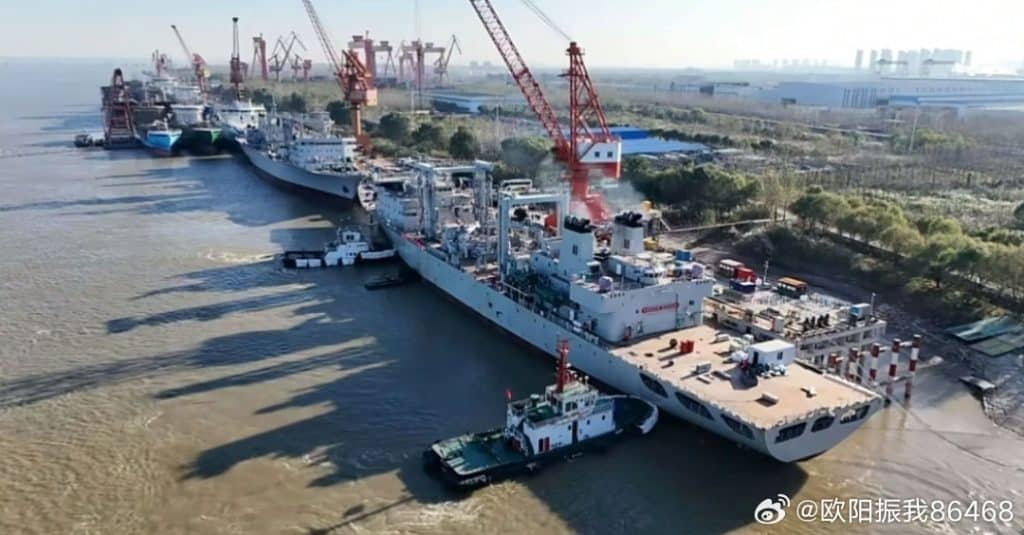
By June 2025 at least one new Type 903 AOR had started sea trials. A second unit appeared in imagery ferrying downstream the Yangtze, originating in Wuhu. Overall, the present estimate is that Wuhu has produced at least three new AORs. COMEC contributed at least another two units, representing a 50% increase in overall PLAN-capacity for this design.
One significant point of interest for 2026 may be consistent speculation over additional Type 901 AOEs starting construction. The Type 901 is a very large replenishment ship at over 40,000 tons. This design primarily intends to support Chinese carrier strike groups. Considering PLAN has now three carriers in service, with more hulls planned, and the amphibious fleet also growing, additional units beyond the two hulls in service would seem a sensible requirement. However, no visual evidence at present supports construction to be underway, notably at COMEC in Guangzhou.
Expansion of naval infrastructure
The need to support a rapidly growing surface and submarine fleet for the Chinese Navy also continues to include significant investment in expanded naval infrastructure. Of importance in this regard in 2025 were developments at PLANs naval bases around Sanya and in the Yellow Sea.


The Yulin naval base on Hainan and the Yuchi installation south of Qingdao have experienced profound expansion. Related work added expansive new berthing and maintenance infrastructure over the last year. These measures will support basing of multiple aircraft carriers and a large fleet of escorts at both bases in the near future. Limited modernisation & expansion also occurs at several other facilities. Examples include Bohai, the first nuclear submarine base at Zhianggezhuang and amphibious berthing facilities at the naval base in Zhanjiang.


Experimental programs
Several experimental and developmental efforts for the Chinese Navy have attracted global media attention in 2025. The most notable event in this regard was the appearance of multiple amphibious barges at the COMEC naval shipyard in Guangzhou in January 2025. Naval News has repeatedly covered this effort and outlined plausible operational applications for the Chinese Navy. Various observers suggested significant near term implications of this design. Applications focused particularly on a Taiwan-contingency, and relate to the often discussed notional 2027-timeline suggested particularly by American officials.
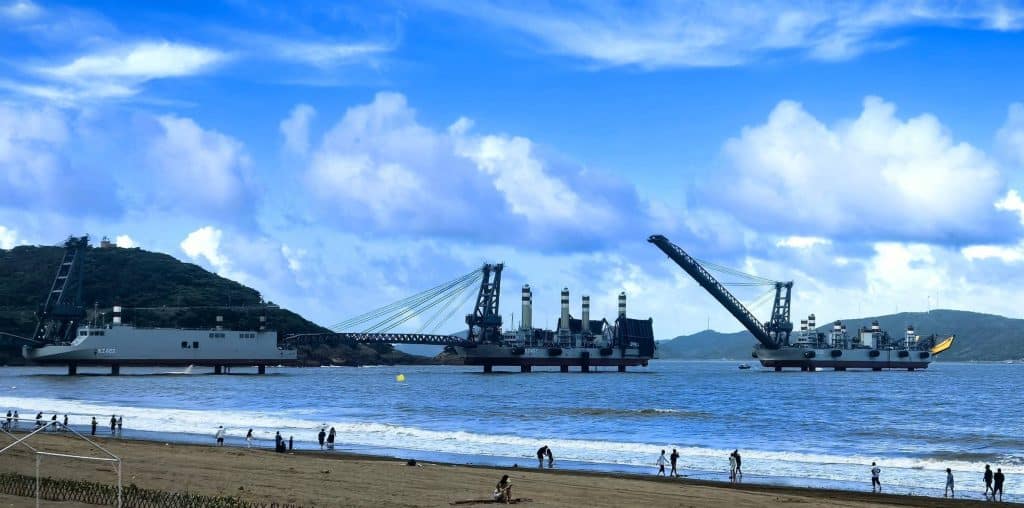
So far, testing of these barges appears to have proceeded at a relatively slow and cautious pace during the remainder of 2025. Their operational relevance remains to be determined, in particular as part of significantly larger scaled amphibious exercises that would seem to be a prerequisite for PLAN confidence in such a novel application.
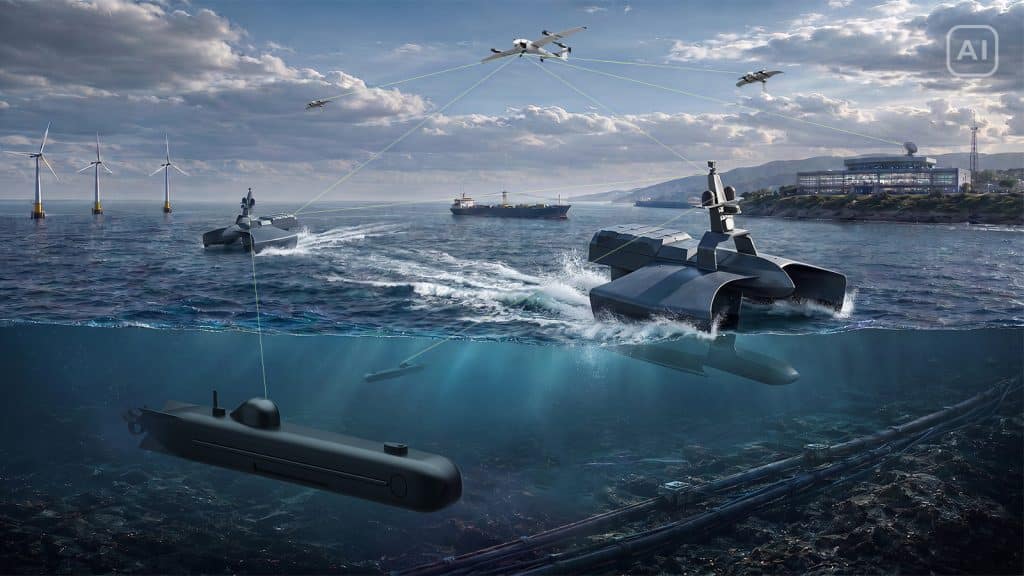
China is also proceeding with development and evaluation of several uncrewed systems, both for surface vessels (USV) and submersible designs (UUV). The military parade in September showcased multiple relevant capabilities, covering a spectrum of applications including in particular maritime surveillance and mine warfare.
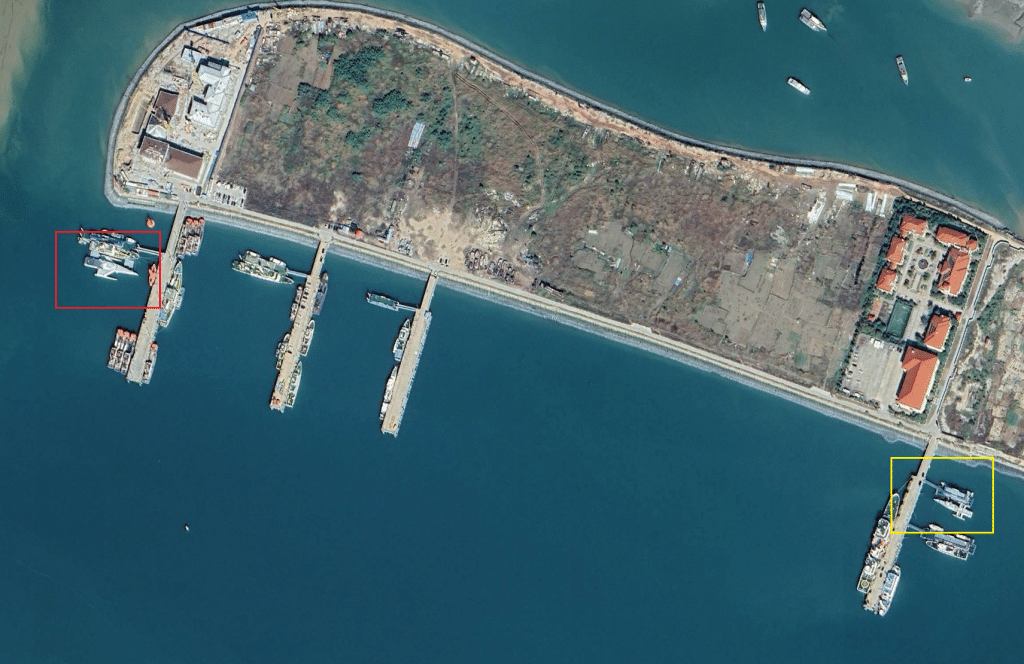
While PLAN and the wider military industrical complex in China continue to invest significant sums into both developing and evaluating uncrewed capabilities, it is important to also note so far there is no public indication of significant operational, ie in service-capability in this regard. Several evaluations have taken place in 2025, but related imagery remains scarce, often limited to satellite-based observations of related movements.
This phenomenon stands in contrast to more frequently observed activity inducting crewed, high cost-capabilities such as surface combatants or nuclear powered submarines. A high degree of secrecy around cutting edge-capabilities is one plausible element. However, a notional limited activity in this regard may also indicate PLAN operational preferences, with a conservative, measured approach evaluating novel solutions, while focusing on quantiative and qualitative improvement of “legacy” capabilities.

Finally, one important factor shaping the appearance of novel, often curious military applications is the continued evolution of the Chinese military-industrial complex as a whole. A significant influx of financing, and encouragement of innovative developments, similarly to military “start up” companies in Western countries, likely motivates a number of efforts, often with unusually high visibility in public imagery and social media. Such products may originate both with legacy military suppliers such as CSSC having produced a novel “drone/VTOL carrier”and the two Jari USV combatants.
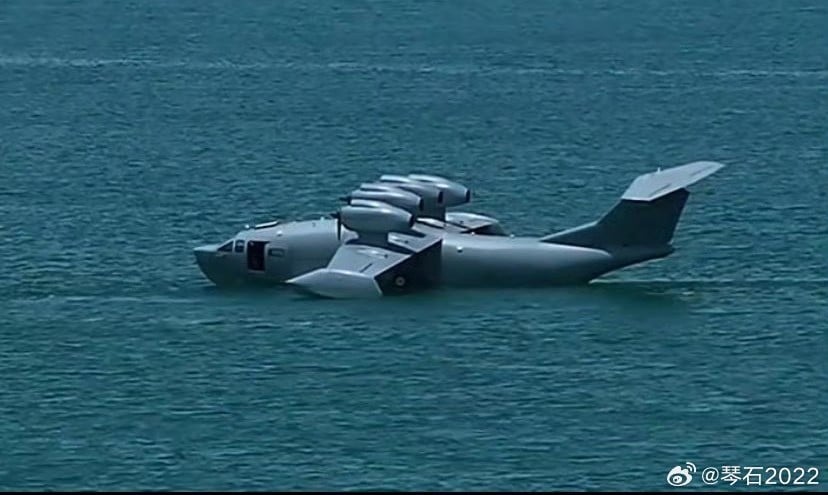
Additionally, more obscure companies may intent to attract government attention with proposals notionally aiming at requirements for PLAN and the wider civilian-military “hybrid” capability requirement of the PLA. A particular example here may be the appearance of a cargo ship carrying multiple containerised weapons and sensor systems based on commercial construction standards. Similarly to the barges mentioned above, observers particularly in Western media were quick to deduce fleshed out force posture requirements for PLAN, including weaponised cargo ships including in a covert capacity (Q-ships).


An alternative suggestion in line with how the Chinese corporate landscape has repeatedly adapted to emerging business opportunities is that we may presently observe a seemingly chaotic variety of company proposals trying to attract government financing, regardless of reliable and sustained military support for such proposals. If this view is accurate, then a myriad of new developments should be approached with caution in deducing longer term implications for Chinese military capabilities, including the Chinese Navy.
In summary, the year 2025 would suggest we will see increasing amounts of novel developments as a consequence of innovation gaining significant traction in the Chinese military industrial complex.However, the degree to which individual developments have relevance for the operational posture of PLAN, will likely vary widely.