The French Navy (Marine Nationale) has fitted new EO/IR systems to its Mistral-class LHDs in a push to improve the detection capabilities of these large deck amphibious ships against various threats, Naval News has learned.
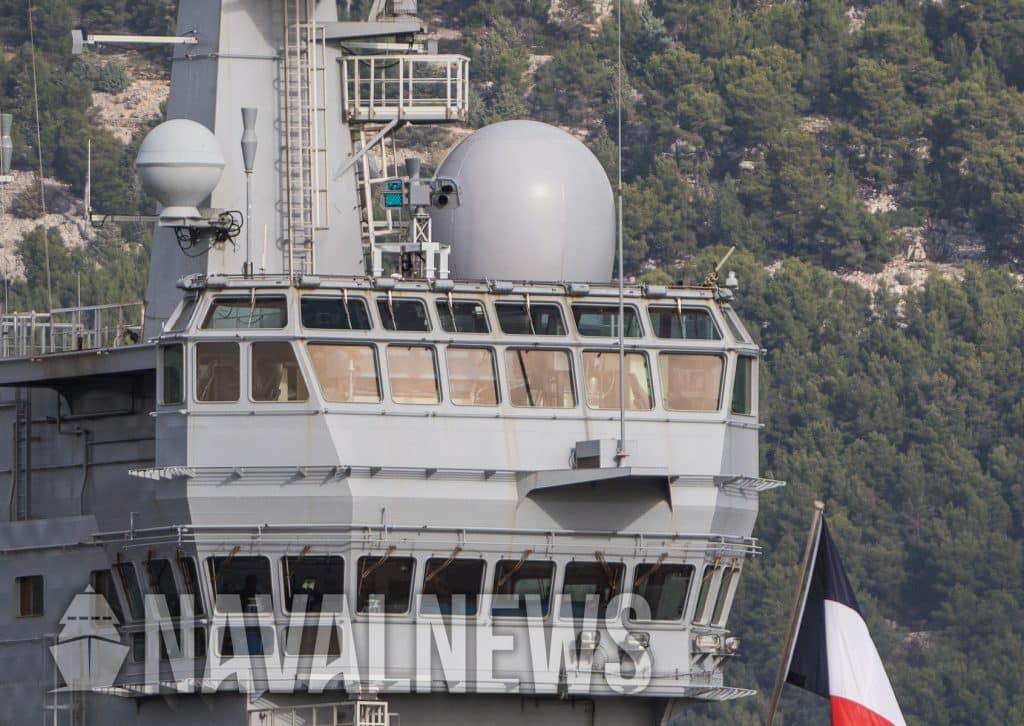
Recent pictures taken by Toulon-based photographer and regular contributor to Naval News, Hervé Dermoune, show two different systems fitted on two LHDs:
- A CAT EYE H20 by Lerity, fitted aboard first ship-in class Mistral (L9013)
- A TrakkaCam by TRAKKA Systems, fitted aboard Dixmude (L9015)
Contacted by Naval News, the French Navy explained this is an “experiment aimed at evaluating the capabilities of the CAT EYE H20 as an electro optic sensor”.
“This is a capability-building approach aimed at equipping the [Mistral-class] LHDs and [Floréal-class] Surveillance Frigates. The CAT EYE is among the potential systems that meet this need.” the French Navy added.
Naval News understands the French Navy is also assisting Lerity in “navalizing” its CAT EYE sensor. The system is already in use with the French Navy but based on land: Several CAT EYE systems are installed across several maritime surveillance posts (known as “Sémaphores”) in mainland France and in overseas territories. The experimentation marks the first time a CAT EYE is fitted on a vessel which needs stabilization.
“To go further, the same approach was initiated with a TRAKKA Systems sensor on the Dixmude LHD”, the French Navy added.
CAT EYE extra long range day/night surveillance system
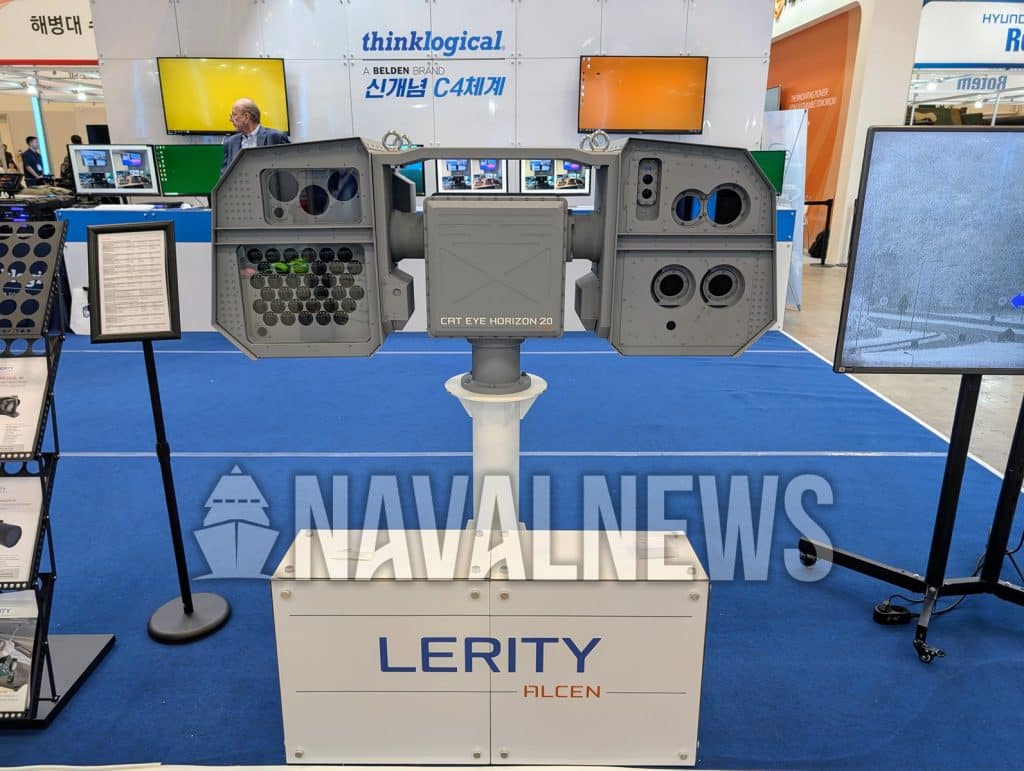
Unveiled at Euronaval 2024, the CAT EYE H20 is designed to detect and identify in conditions of degraded visibility or use in deep night. In order to deliver usable images in these conditions, the system integrate a Day and Night cameras synchronized with illumination devices.
Designed as a new-generation optronic system, CAT EYE H20 combines passive and active operating modes and incorporates advanced real-time image processing technologies. It offers panoramic observation capabilities in the visible and infrared spectrums, with proven effectiveness in very low light conditions and deep night.
The combination of day and night sensors, synchronized with active illumination devices, allows for continuous 24/7 operation, even in challenging environments. The integration of advanced features such as range gating further enhances performance in degraded conditions or harsh environments. The claimed ranges reach up to 20 km at night and approximately 40 km during the day from a high point, positioning the system among the market leaders in long-distance surveillance.
According to Lerity, CAT EYE H20 also stands out for its ability to simultaneously detect multiple threats, identify and track targets, and provide usable images even when visibility is severely reduced. The system’s architecture also allows for the integration of embedded artificial intelligence algorithms, paving the way for advanced automation of reconnaissance and tracking functions. Enhanced digital stabilization, specifically adapted for naval use, ensures consistent image quality in dynamic environments.
TrakkaCam by TRAKKA Systems
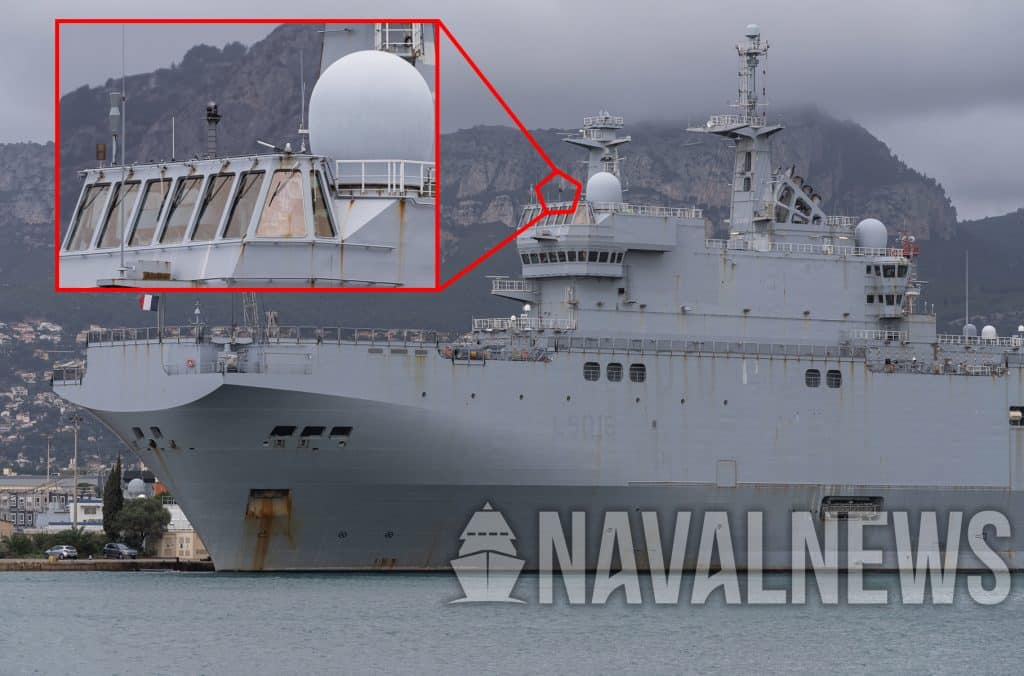
While the French Navy didn’t disclose the exact model supplied by TRAKKA Systems, Naval News believes it is likely the TrakkaCam TC-375M as this is the only navalized EO/IR system in their TrakkaCam, based on the company’s website.
According to TRAKKA Systems, the TC-375M sets new standards for full HD (1080p) multispectral imaging in a single-LRU configuration. Built to withstand the harsh and corrosive maritime operating conditions, it is environmentally tested for electromagnetic and mechanical durability. The TC-375M is ideally suited for long-range naval and coast guard missions including search and rescue, illegal immigration protection, drug interdiction, economic exclusion zone (EEZ) protection, anti-piracy, maritime patrol, naval C4ISR, and naval vessel force protection.
Feedback from experience in the Red Sea
As first reported by Naval News in 2024, the French Navy previously moved to fit Safran’s Paseo XLR advanced electro-optic infra red (EO/IR) system on all FREMM frigates and Horizon type Air Defense destroyers. The decision was taken as part of an “urgent operational requirement” in response to the escalating threat posed by kamikaze unmanned surface vehicles (USV) and unmanned air vehicles (UAV).

Naval News understands that all FREMM frigates and Horizon type Air Defense destroyers have now received the sensor upgrade. The PASEO XLR is part of the baseline configuration for the new FDI frigates and BRF supply vessels.
It is interesting and noteworthy that the French Navy continues to upgrade the EO/IR sensors and detection capabilities of its vessels across the fleet, even aboard non “first rank combatant” ships.