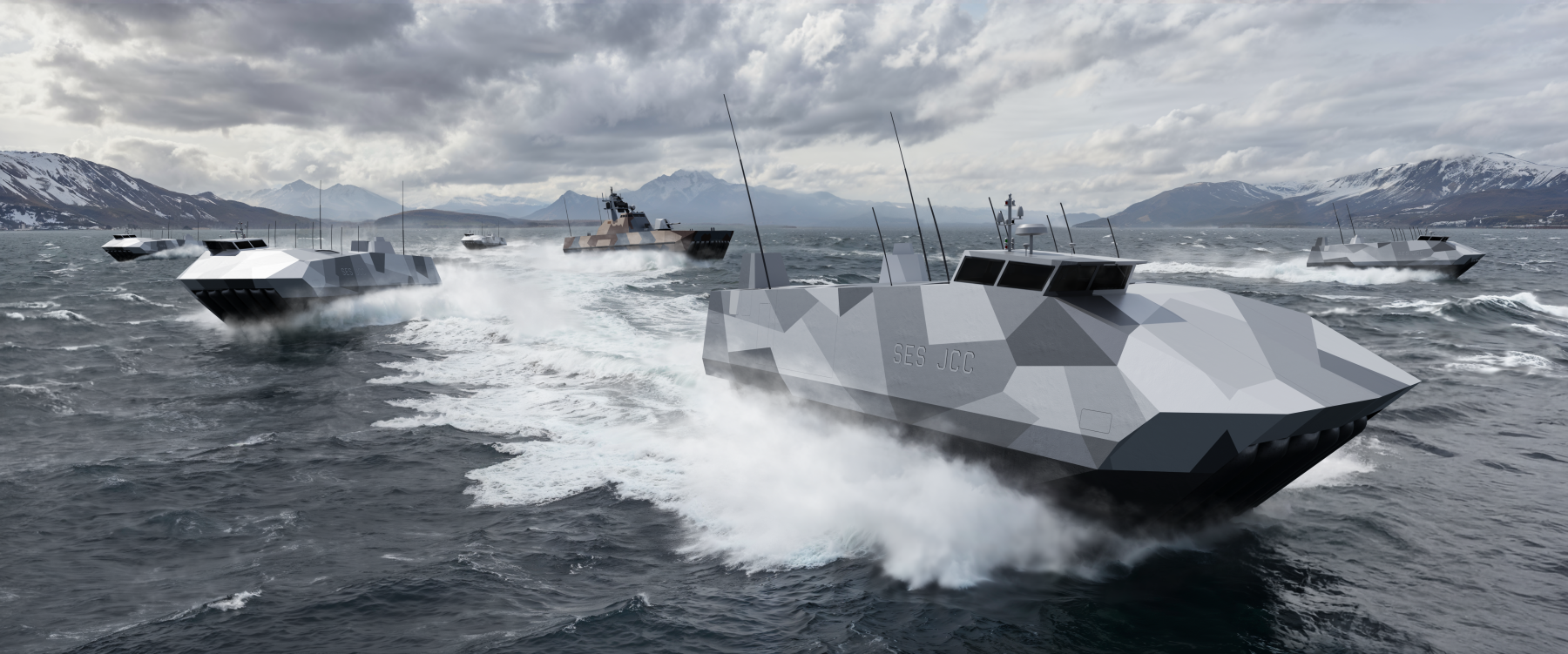
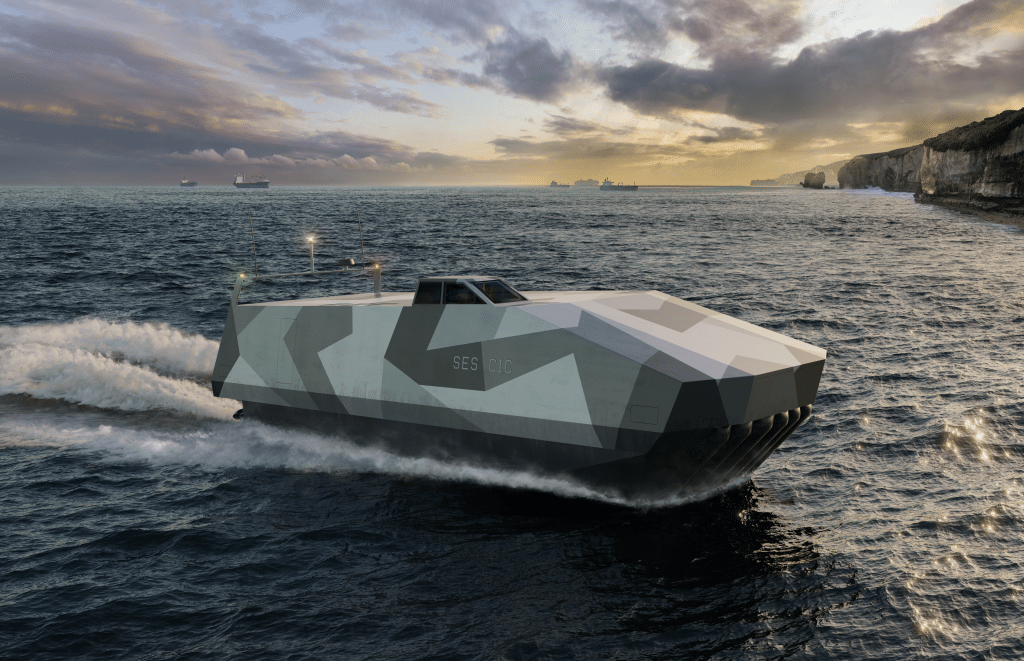
On May 25, 2026, ESNA unveiled Surface Effect Ship (SES) Technology for the UK-Norwegian Joint Commando Craft (JCC) Program, which aims to upgrade the Norwegian Coastal Ranger Commando’s (Kystjegerkommandoen) current vessel and provide the UK Commando Force with a new surface manoeuvre capability.
ESNA press release
Drawing on 40 years of Surface Effect Ship (SES) expertise, ESNA proposes a 22 m craft designed for littoral commando operations in harsh arctic conditions.
“We have designed a vessel that stands out with a maximum speed of 67 knots,” says Naval Architect and Co-founder of ESNA, Trygve Halvorsen Espeland. “The vessel further offers a comfortable air-cushioned service speed of 35-45 knots, and has unique beach landing capabilities utilizing the air cushion and an integrated bow ramp.”
The vessel is fully prepared for future warfighting, integrating features such as drones, embedded sensors, low signatures, high load carrying capacity, and rapid all-weather response capabilities, whether manned or fully unmanned.
The craft operates with a crew of 3 and offers a load carrying capacity of up to 14 tons, accommodating vehicles, drones, missile systems, and remote controlled weapons systems. It can deploy up to 24 fully equipped troops to remote beaches at speeds ranging from 45 to 67 knots, depending on loading and weather conditions. Advanced situation awareness and communications systems are also integrated.
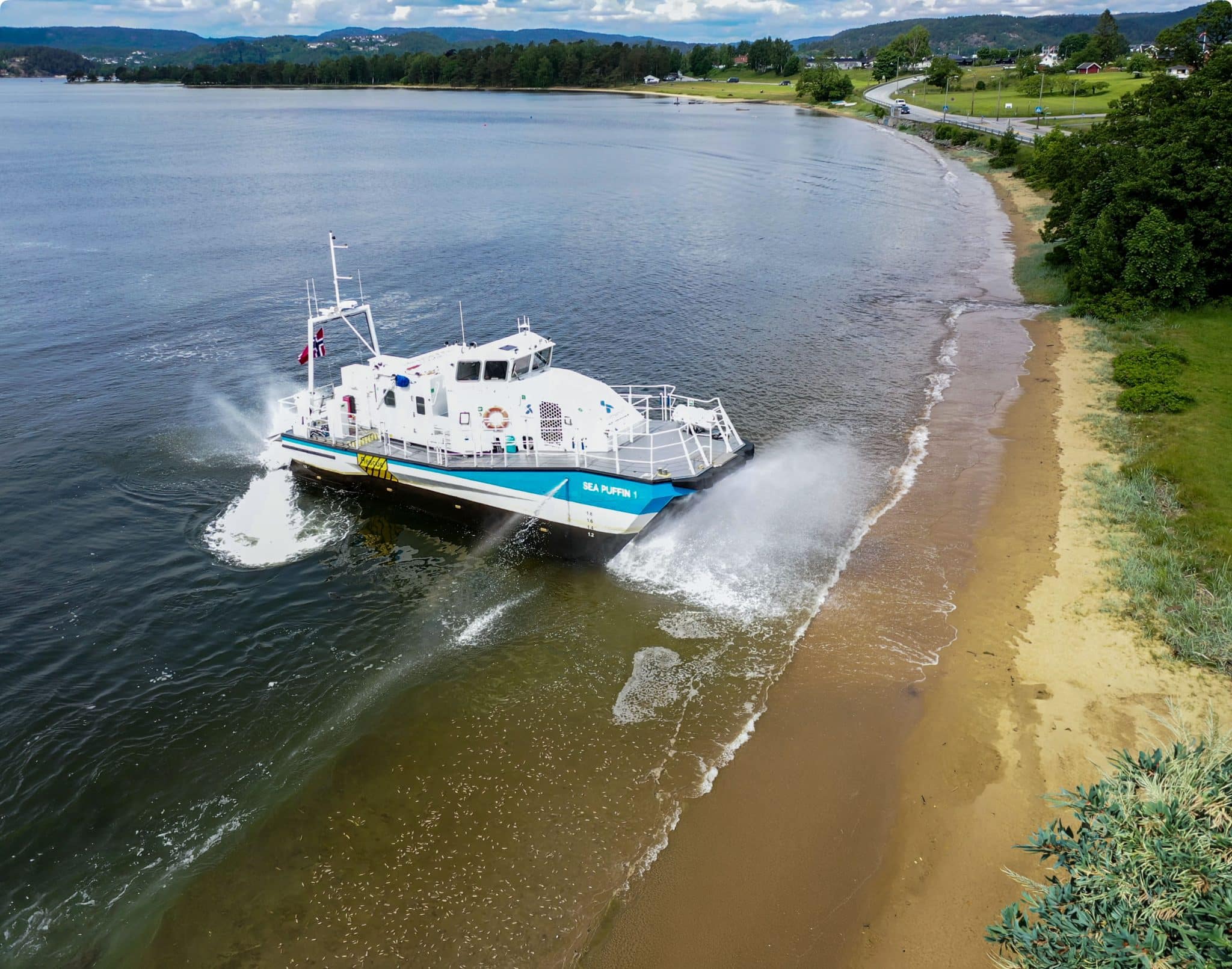
The active air cushioned motion damping system ensures troops arrive ready for action and well-rested. Personnel and mobility assets—including all-terrain vehicles and snowmobiles—exit the vessel via a large bow ramp. The air cushion provides unique beaching performance by lifting the vessel off the beach upon departure, allowing for very shallow beach landings.
ESNA has demonstrated the beach landing capabilities of an SES with the daughter craft Sea Puffin 1.
ESNA has presented this concept to UK/Norwegian special forces and will release the design for a broader public during an Industry Day hosted by the UK/Norwegian Navies in Bergen on May 27th.
Key Advantages of the ESNA SES JCC Concept:
● Extremely Low Resistance: Achieves max speeds up to 67 knots in calm water.
● Superior Seakeeping: Provides excellent air cushioned performance in waves and a low seasickness incidence ratio.
● Beaching: The air cushion provides unique outstanding beaching performance, by lifting the bow onto and off beach/sea bottom.
● Reduced Signatures: Features reduced radar, thermal, visual, acoustic, underwater noise, and magnetic signatures.
● Logistics & Deck Space: Offers high load carrying capacity and a large deck space with drive-through capability.
● Safety & Comfort: Includes active ride motion damping and reduced impact from high-speed slamming loads. Delivers personnel mission-ready with reduced fatigue from vessel transit.
● Compliance: Compliant to nearly all Annex A Shall and Should requirements (ref: JCC RFI).
● Common platform: The SES JCC platform meets all the JCC roles (“vessel type A, B and C”, as defined by the JCC RFI).
● Operational Heritage: SES vessels have been in operation for the Royal Norwegian Navy (RNoN) since 1992. ESNA has developed commercial SES from 2015, with new technologies that offer substantial operational improvements.
ESNA SES JCC main characteristics
– Length: 21.5 m
– Beam: 7.5 m
– Draught: 0.5 m on cushion
– Service speed: 35-45 knots
– Maximum speed: 67 knots
– Range at 0.5m Hs: > 600 nm at service speed
– Propulsion: 2 x Water jet
– Payload: 14 tons, multiple mission load configurations
– Cargo transfer: Bow and stern ramp, roll on/off and drive-through capabilities