Türkiye’s HÜRJET is already known as a new supersonic jet trainer and light attack aircraft. While the idea of a naval version has been discussed before, recent updates show it is now becoming a concrete project. The goal is to modify the land-based design so it can handle the unique conditions of the sea and operate from the deck of an aircraft carrier.
According to a May 15 report by TRT Haber, work has officially started on a shipborne HÜRJET variant. The report points to key areas such as stronger landing gear and structure, the addition of an arresting hook, and measures to protect the aircraft from salt, humidity, and corrosion.
These steps are essential for aircraft that are expected to operate at sea. Landing on a ship is more demanding than landing on a runway. Aircraft need to handle harder landings and shorter stopping distances. For this reason, strengthening the landing gear and parts of the airframe is an important part of the process.
The addition of an arresting hook also shows that recovery on deck is part of the concept. This system allows the aircraft to stop quickly after landing. It requires careful integration with the aircraft structure and systems, and usually involves a dedicated testing phase before it can be used in regular operations.
Another key aspect is “marinization.” This includes changes to protect the aircraft from the effects of salt air and moisture. These conditions can affect both the outer structure and internal systems over time. Addressing this early helps support long term reliability and easier maintenance.
Operational role on the MUGEM aircraft carrier

A naval version of HÜRJET would support training and operational roles. As an advanced jet trainer, it could help prepare pilots for more complex aircraft, including in a naval environment if required. In addition, the aircraft could take on attack or support missions in the operational environment. This kind of flexibility can be useful, especially when higher-end aircraft are not needed for every mission.
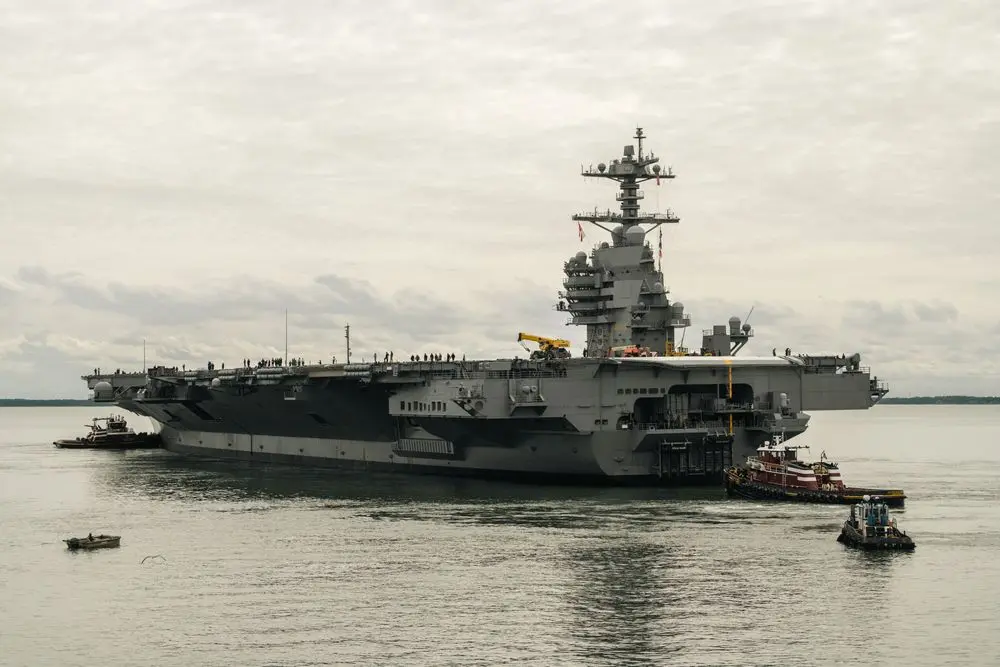
The development is clearly linked to Türkiye’s long-term plans for the MUGEM aircraft carrier project. While MUGEM is still at an early stage, efforts like a naval HÜRJET can be seen as part of a broader approach to building future naval aviation capability. According to current plans, the air wing of MUGEM is expected to include a naval version of HÜRJET, the KIZILELMA unmanned jet aircraft, and the TB-3 UCAV. In this structure, HÜRJET could support training and certain operational tasks as part of a wider air wing, working alongside unmanned systems.
HÜRJET and Spain
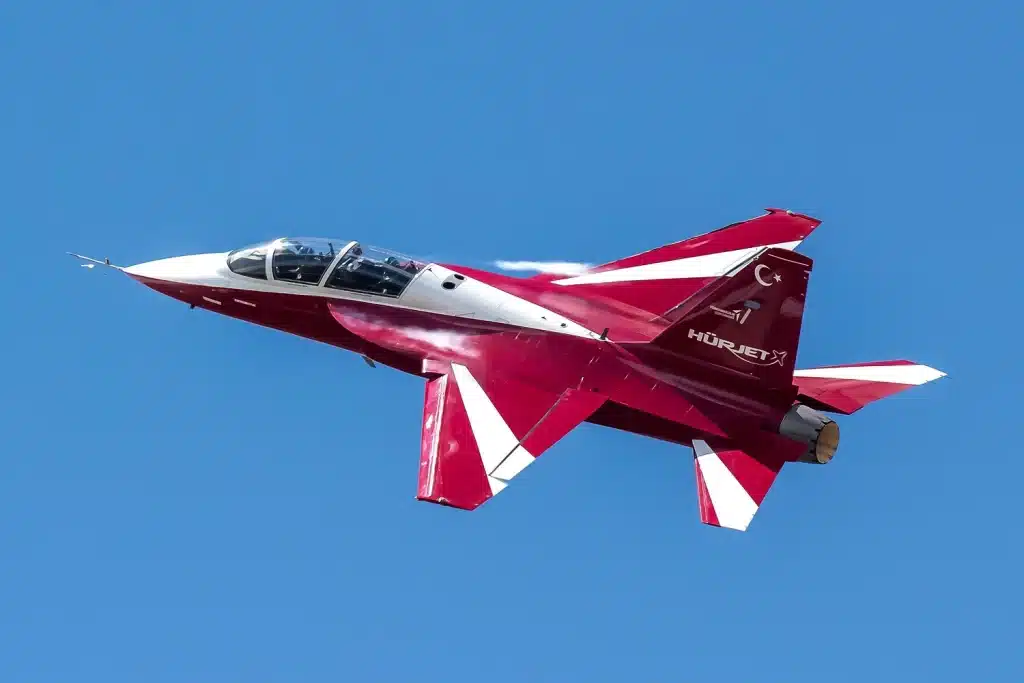
HÜRJET has recently attracted international interest. Spain has selected HÜRJET for its advanced jet trainer requirement, with a contract signed involving Airbus. Current plans indicate deliveries starting in 2028, with a total of 30 aircraft expected to be delivered in the following years.
Exporting HÜRJET to an EU/NATO country is considered a great success of the Turkish defence and aerospace industry, and a good potantial for future exports. This development supports the program’s progress and gives it a clearer production outlook. At the same time, work on a naval version would likely continue alongside the standard aircraft.