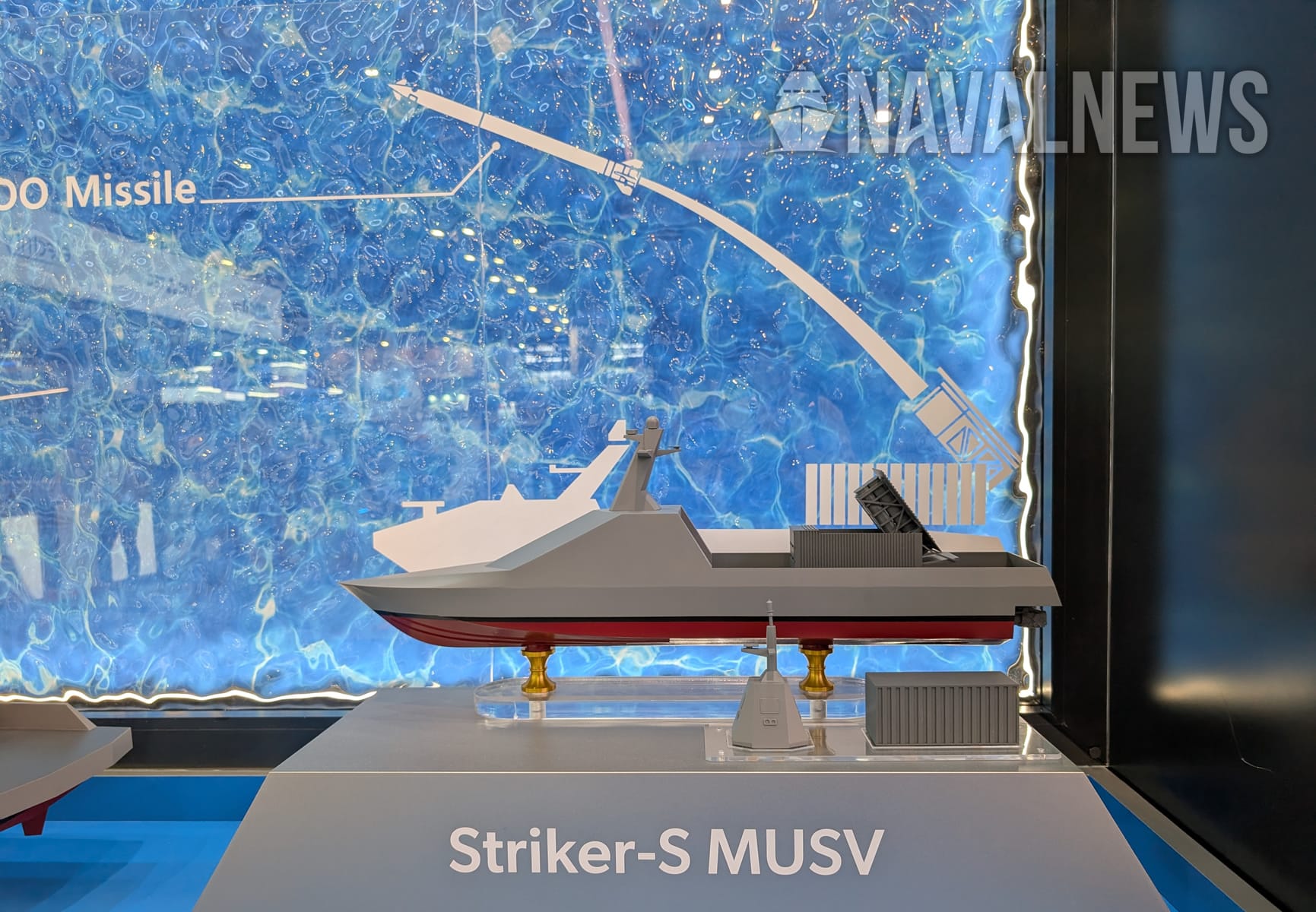
At Eurosatory 2026, Hanwha Systems’ new Striker Medium Uncrewed Surface Vessel (MUSV) stood out as one of the few concepts aimed at bringing missile firepower to an autonomous naval platform.
Tayfun Ozberk story, additional reporting by Xavier Vavasseur
Displayed at the company’s booth, the Striker-S represents a departure from the small explosive-laden surface drones. Instead, Hanwha presented a purpose-built missile vessel designed around modular payloads, autonomous navigation and network-enabled strike operations.
The vessel measures 35 meters in length with a beam of six meters and a displacement of approximately 250 tons. While considerably smaller than conventional missile combatants, it offers enough volume for fuel, sensors, communications equipment and mission modules. According to specifications displayed at Eurosatory, the platform can accommodate a containerized payload module with a capacity of up to 10 tons.
At first glance, the design follows a low-observable profile. The sharply angled hull and compact superstructure reduce radar cross-section, while the absence of crew accommodations allows more internal volume to be dedicated to mission systems.
Chunmoo missile launcher
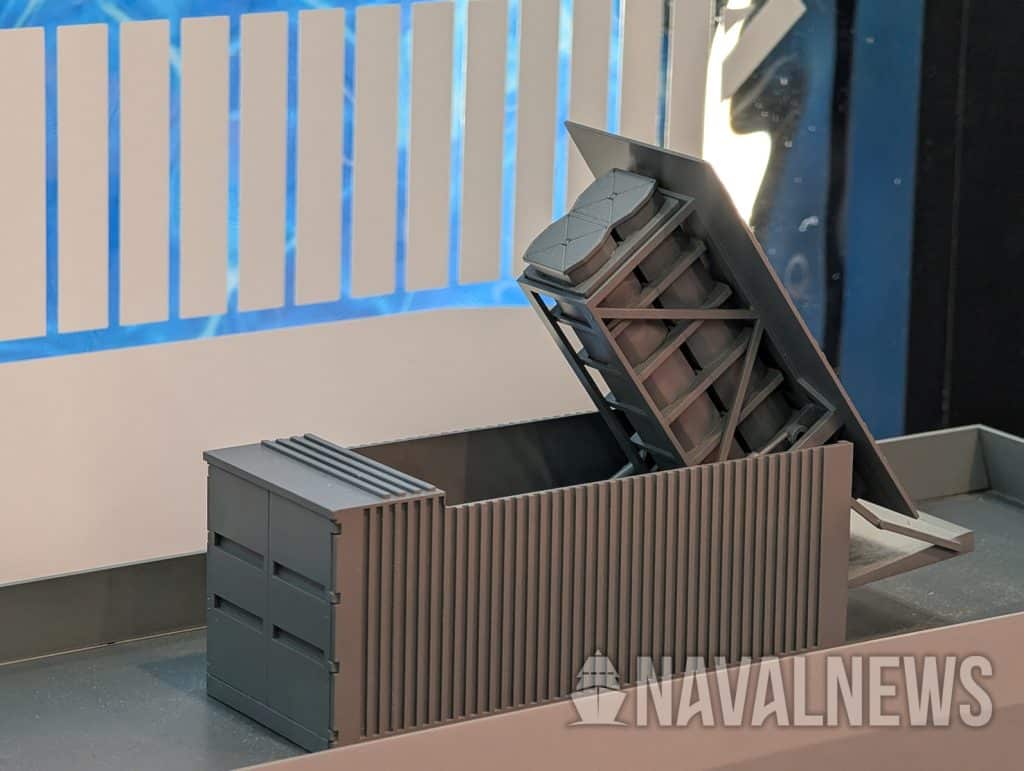
The most notable feature of the Striker-S is its integration with Hanwha’s Chunmoo missile family. A containerized launcher mounted on the mission deck can be embarked according to mission requirements, transforming the vessel from a surveillance platform into an autonomous strike asset. The launcher concept displayed in Paris showed a modular arrangement different to the Naval MRLS unveiled by the company last year at MADEX 2025 in Busan.
For naval targets engagement, Hanwha Aerospace is developing the CTM-ASBM (Chunmoo Tactical Missile – Anti-Ship Ballistic Missile) variant, which is a modified version of the CTM-MR (Medium Range). CTM-MR is reported to have a range of about 160 kilometers. CTM-ASBM shares the same 280 mm diameter and propulsion system but integrates an imaging infrared (IIR) seeker alongside its GPS/INS guidance to actively track and strike moving surface vessels.
Supporting the strike capability is an integrated sensor suite centered around an Active Electronically Scanned Array (AESA) radar. Information presented by Hanwha indicates an aerial target detection range of approximately 50 kilometers and a surface surveillance range of less than 30 kilometers. The radar is paired with a dedicated counter-unmanned aerial system capability.
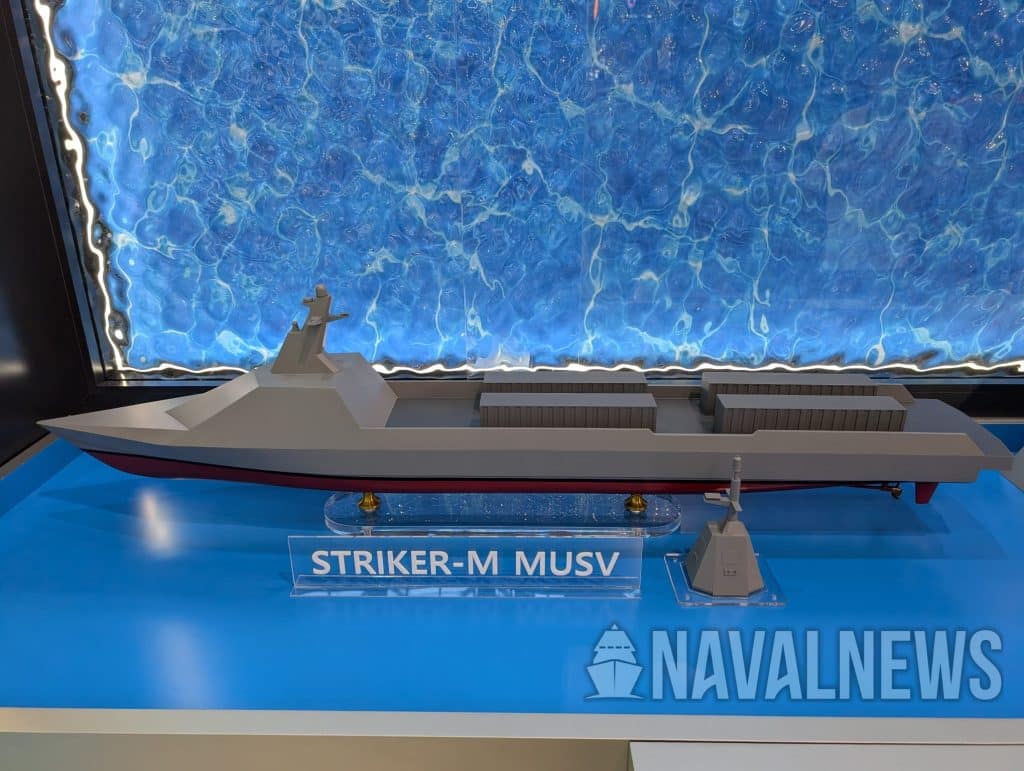
Hanwha positions the Striker-S within a broader family of unmanned surface vessels. Alongside the larger Striker-M MUSV displayed at Eurosatory, the smaller Striker-S appears optimized for missile strike missions while retaining the ability to conduct surveillance and autonomous maritime operations. Company materials highlighted autonomous swarm navigation, distributed engagement concepts and the ability to receive targeting information from external assets.
A mission concept presented at the exhibition illustrated how multiple MUSVs could operate in coordination with manned surface combatants, shore-based command centers and other sensors. In this construct, the vessel functions primarily as a remote missile carrier, extending the reach of a maritime task group while reducing the exposure of high-value crewed platforms.
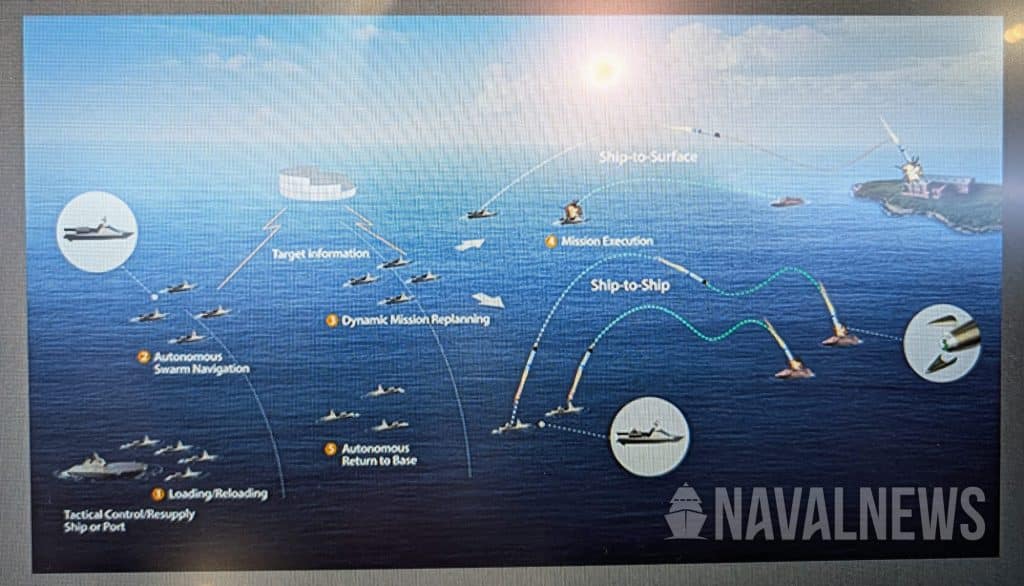
The unveiling comes as interest in medium-sized unmanned naval platforms continues to grow among Western and Asian navies. Rather than replacing conventional warships, systems such as the Striker-S are increasingly being viewed as force multipliers capable of carrying sensors, missiles or electronic warfare payloads in distributed formations.
A company representative told Naval News that the Striker family of MUSV is being developed for export and domestic market. However the ROK Navy’s “Navy Sea Ghost” concept doesn’t require, for the time being, offensive strike capability from USVs.