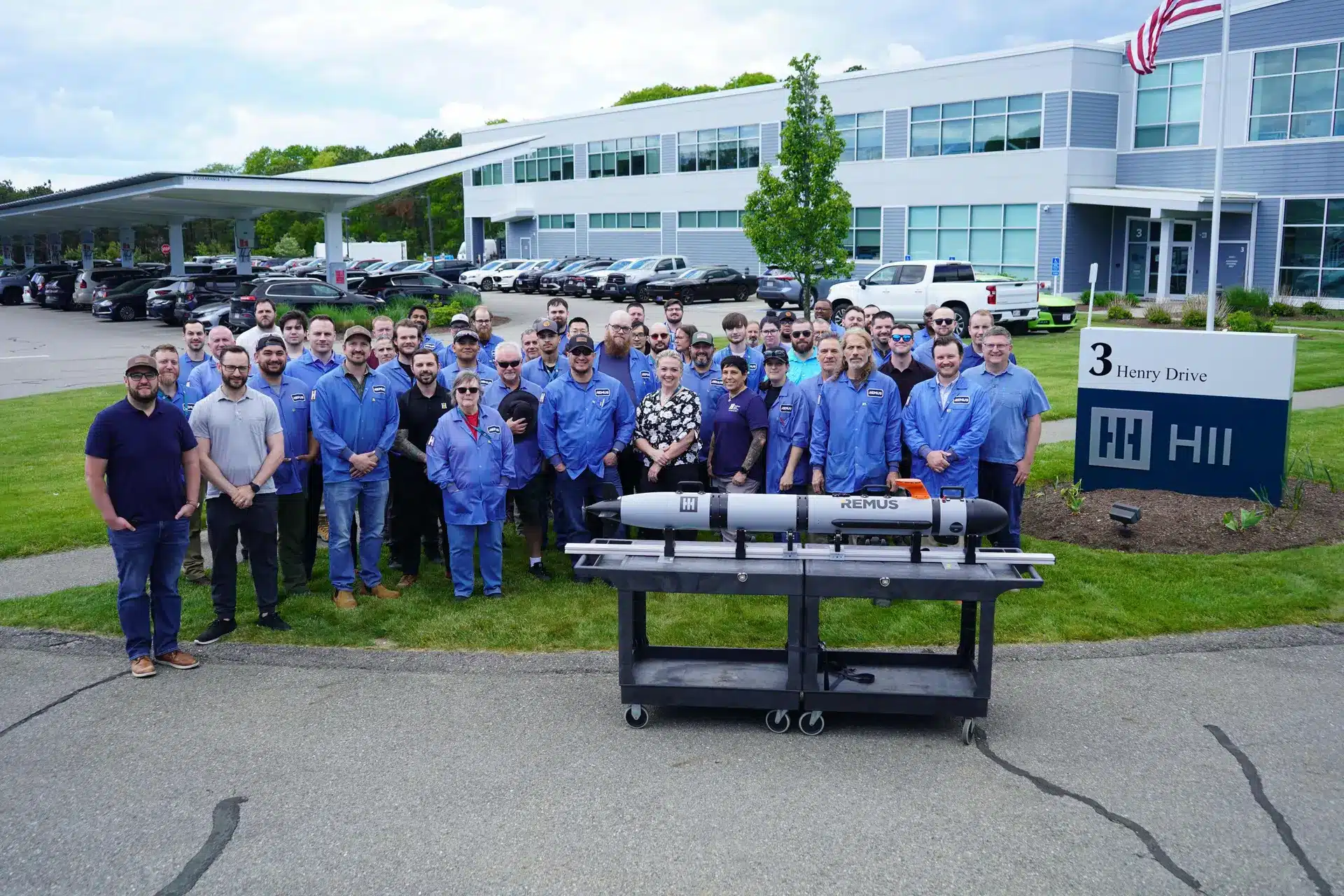
On June 16, 2026, Huntington Ingalls Industries announced the delivery of the first REMUS 130 unmanned underwater vehicle (UUV) to a U.S. ally, marking a major milestone for the next generation of the world’s most widely deployed autonomous underwater vehicle.
HII press release
Building on more than 25 years of operational success, REMUS 130 is the latest addition to the REMUS family, which is trusted by the U.S. Navy, allied naval forces, government agencies, research institutions and commercial operators worldwide for critical undersea missions.
As the third generation of the highly successful REMUS 100 series, REMUS 130 combines the reliability, simplicity and mission effectiveness that have defined the REMUS brand with modernized electronics, open-architecture interfaces and enhanced payload flexibility.
“The delivery of the first REMUS 130 represents an important step in the continued evolution of the REMUS family,” said Duane Fotheringham, president of the Unmanned Systems group in HII’s Mission Technologies division. “For decades, customers have relied on REMUS vehicles for their durability, ease of operation and proven performance. REMUS 130 builds on that legacy with a highly capable, modular platform that delivers greater flexibility, interoperability and value while leveraging common architecture across the REMUS fleet.”
Designed to meet growing demand for affordable and adaptable autonomous underwater systems, REMUS 130 features a compact, two-person-portable design, operates at depths of up to 100 meters and provides up to 10 hours of endurance. Field-swappable batteries further increase operational availability and mission readiness.
Built on the same technology foundation as the REMUS 300 and REMUS 620 platforms, REMUS 130 integrates HII’s proven Odyssey Autonomous Control System (ACS), advanced navigation, communications and processing capabilities, and modular interfaces that enable rapid integration of commercial, government and customer-developed payloads.
Odyssey ACS transforms underwater vehicles into intelligent robotic systems through an open-architecture design that supports evolving mission requirements while reducing lifecycle costs and technology risk. Currently deployed on REMUS platforms in more than 30 countries, Odyssey enables advanced capabilities including collaborative autonomy, sensor fusion and enhanced perception across a wide range of vehicles, sensors, payloads and mission profiles.
REMUS 130 is designed to support a broad spectrum of missions, including:
- Oceanographic research and data collection
- Offshore energy and infrastructure inspection
- Search and rescue operations
- Mine countermeasures
- Environmental monitoring and seabed mapping
This delivery further expands HII’s global portfolio of autonomous maritime systems, which includes more than 750 REMUS vehicles delivered worldwide. Today, REMUS systems are operated by 14 NATO navies and have earned a reputation for reliability, longevity and mission versatility across defense, commercial and scientific applications.
– End –