The Philippines has reached a broad agreement with Japan to acquire five soon-to-be-retired Abukuma-class destroyer escorts from the Japan Maritime Self-Defense Force (JMSDF), marking one of Japan’s largest planned transfers of retired naval combatants to a foreign navy and another milestone in Tokyo’s evolving defense equipment transfer policy.
Philippine Defense Secretary Gilberto Teodoro Jr. announced on July 7 in Manila that the two governments had essentially finalized the agreement, with only administrative arrangements remaining.
“Administrative details are being finalized, but it’s already a done deal,” Teodoro told reporters, according to the Philippine News Agency (PNA).
Teodoro described the transfer as a “sign of goodwill” from Japan, alongside earlier security cooperation that included air surveillance radar systems and other defense equipment. Deliveries of all five vessels are expected within two to three years.
The figure represents a significant increase from Manila’s earlier objective of acquiring at least three Abukuma-class ships.
Strengthening Philippine Naval Capability
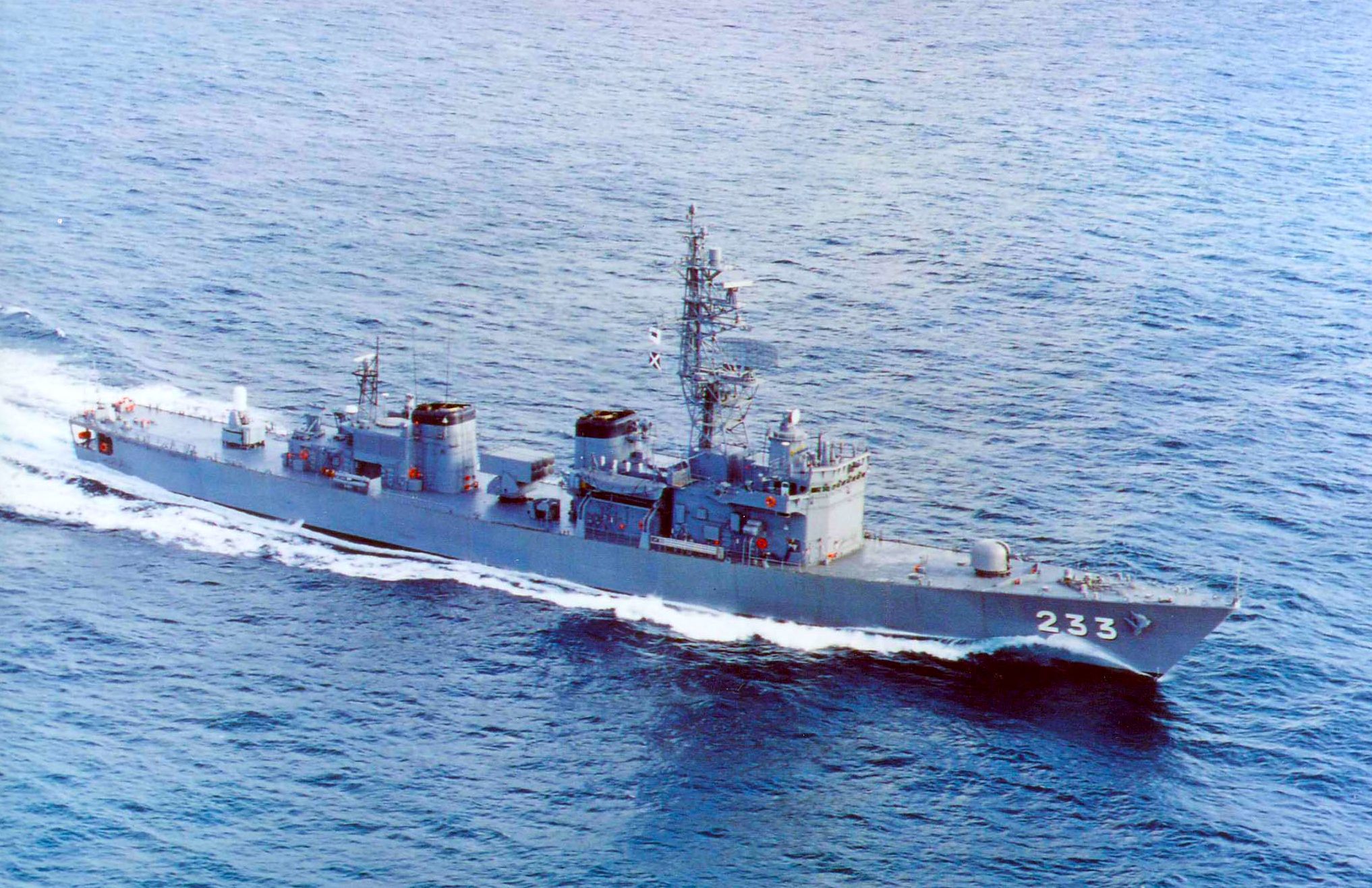
The Abukuma-class consists of six destroyer escorts commissioned between 1989 and 1993. Designed primarily for coastal defense and anti-submarine warfare, the ships have a standard displacement of around 2,000 tons, an overall length of 109 meters, and a top speed of about 27 knots.
Although they lack area air-defense missiles and helicopter hangars, the vessels remain well suited for littoral operations. Their weapons suite includes a 76 mm OTO Melara main gun, a Phalanx Close-In Weapon System (CIWS), Harpoon anti-ship missiles, an ASROC anti-submarine rocket launcher, and lightweight torpedoes.
For the Philippine Navy, the ships would provide an immediate increase in fleet size while complementing newer assets such as the South Korean-built José Rizal-class frigates and the recently introduced Miguel Malvar-class frigates.
Teodoro said the Philippine military will assess the condition of each vessel before determining how best to integrate it into the fleet. Manila is also considering the construction of additional berthing and docking facilities to support the incoming ships.
Culmination of Months of Negotiations
The agreement builds on a bilateral working group established in May following talks in Manila between Japanese Defense Minister Shinjiro Koizumi and Teodoro.
At that meeting, the two ministers agreed to accelerate consultations on transferring JMSDF platforms, including the Abukuma class and TC-90 training aircraft, with the aim of transferring the destroyer escorts soon after their retirement from JMSDF service, expected to begin around Japan’s fiscal year 2027.
If completed as planned, the transfer would become Japan’s first overseas transfer of retired JMSDF surface combatants under its increasingly flexible defense equipment transfer framework, reflecting Tokyo’s broader effort to strengthen the maritime capabilities of like-minded Indo-Pacific partners.
Japan has also expanded defense cooperation with the Philippines through its Official Security Assistance (OSA) program, including the provision of coastal surveillance radar systems, RHIBs, related radar equipment, and infrastructure support for the Philippine Navy.
Strategic Significance
The agreement comes as Japan and the Philippines deepen security cooperation in response to China’s growing maritime activities. The two countries have strengthened defense ties through the Reciprocal Access Agreement (RAA), expanded bilateral and multilateral exercises, and broader defense cooperation.
For Manila, the Abukuma-class ships offer a relatively rapid and cost-effective way to strengthen naval capabilities while additional new-build warships are delivered under the country’s Re-Horizon 3 modernization program. Integrating Japanese-built platforms will nevertheless require adjustments to maintenance infrastructure, logistics, spare parts support, and crew training, as the Philippine Navy’s recent acquisitions have largely centered on South Korean-built vessels.
For Japan, the transfer demonstrates how retired naval platforms can help strengthen the maritime capabilities of regional partners while reinforcing security cooperation in the Indo-Pacific. It also represents another important step in Tokyo’s gradual shift toward a more proactive defense equipment transfer policy.