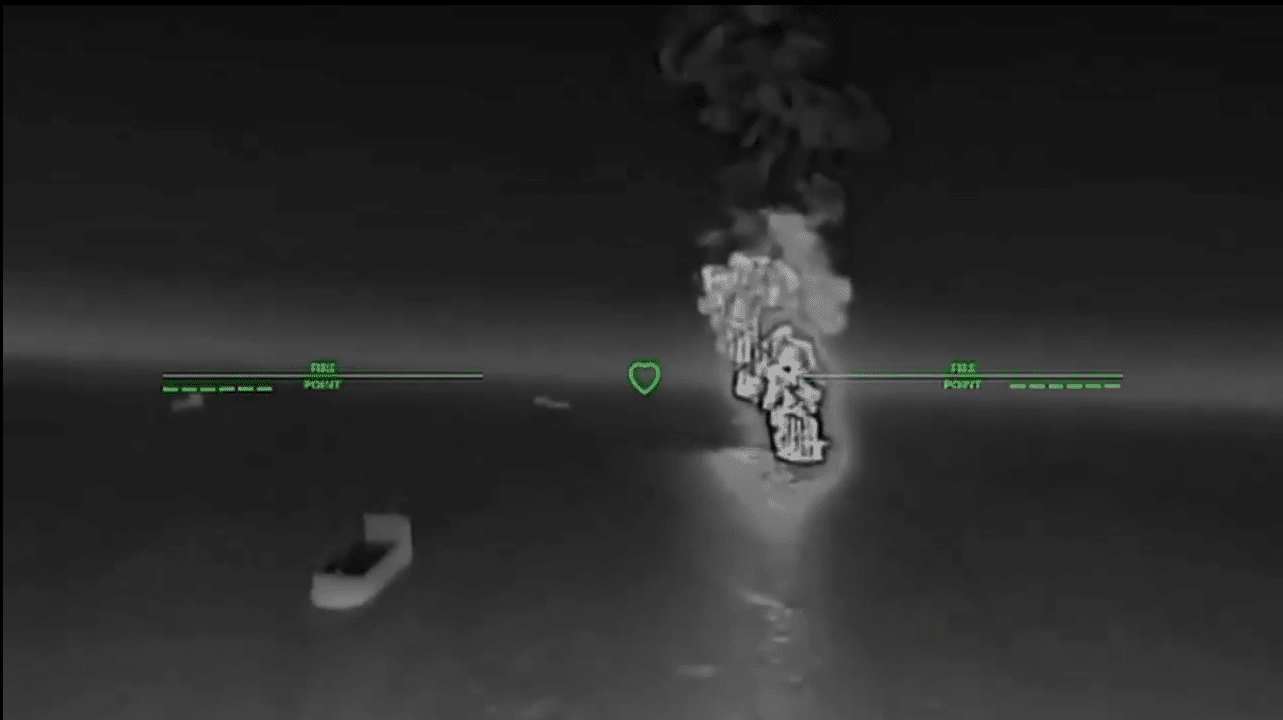
On the night of July 6th and into the early hours of July 7th, Ukrainian drone forces conducted a massive raid into the Sea of Azov and the Northern Black Sea. This raid aimed at crippling Russia’s logistics supplying occupied Crimea in the increasingly contested waters, striking a total of 10 ships, including eight vital oil tankers, one bulk cargo vessel, and one ferry.
The Kairos Battalion of the 414th Unmanned Strike Aviation Brigade (also known as “Magyar’s Birds) under the command of the Unmanned Systems Forces of the Armed Forces of Ukraine conducted the massive drone attack. This unit has an extensive history of participating in deep strikes targeting key Russian military targets and infrastructure well behind the front, including surface to air missiles systems, energy infrastructure, ballistic missile launchers, and now several ships operated by Russia.
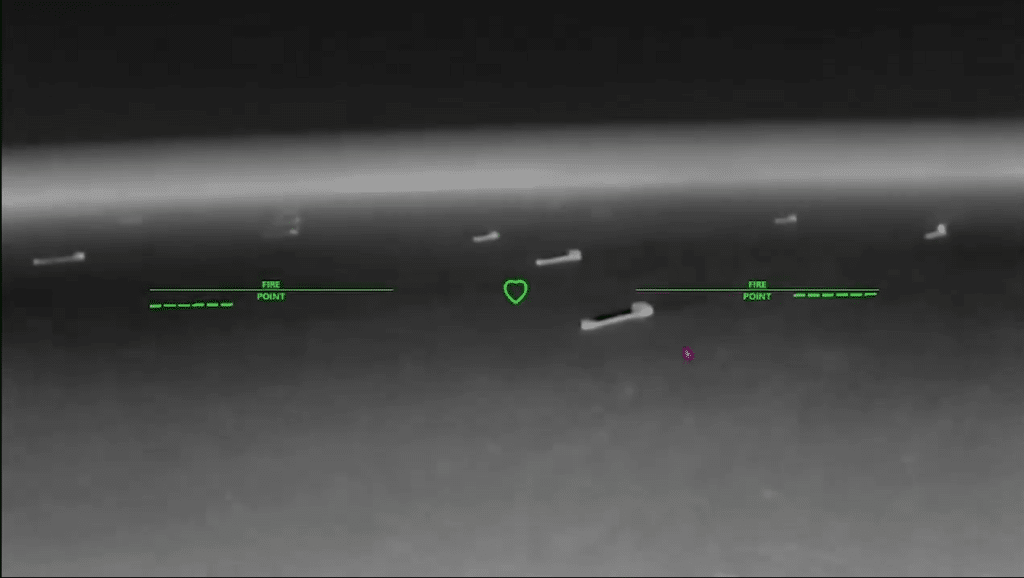
The 414th subsequently released a ~4 1/2 minute compilation of the raid, revealing the massive logistics formations of ships operating under Russian command in the Azov and Northern Black Sea. These ships have become increasingly critical for Russia, as they continue to ferry much needed fuel and supplies to and from the besieged Russian controlled Crimean Peninsula.
Robert “Magyar” Brovdi, the commander of the 414th, identified the ~7,000 ton dead weight carrying tankers in a post on his telegram channel, naming the tankers as the Sanar-1, Sanar-17, the Klimena, the Teti, the Aleksey Savrasov, and the Penelope, with one tanker, the cargo vessel, and the ferry unidentified. Transponder information places these vessels as last seen near the Sea of Azov and as apart of the Russian Shadow fleet, functioning as critical assets towards both dodging energy sanctions and now delivering fuel to Crimea.
A Nation with No Navy
Recent strikes in the Sea of Azov and in the Black Sea targeted towards Russian logistics and military vessels have been a sign that the Russian Navy has likely been beaten so severely they can no longer function without near certainty of receiving a strike, a proposition previously unthinkable. These strike also signifies the likelihood of Ukrainian drone-based fire control running Southwards and extending past the Ukrainian coastline, as an ongoing campaign targeting Russian air defenses have now left the region largely without sufficient protection from Ukrainian strike drones.
This long running strike campaign coalesced in the face of the fact that Ukraine has no standing Navy in the Black Sea, relying almost totally on unmanned systems to establish de-facto control in a domain once thought firmly in Russian hands. It was Ukrainian drones, similar to the Fire Point FP-1 variants used in this strike, that likely brought on the need to bring the oil tankers North to Crimea. These drones along with short ranged analogues have strained logistics and energy infrastructure in Crimea to the breaking point, resulting in a mass exodus from the peninsula.
Russian oil tankers have been the subject of their own Ukrainian strike campaign since late in 2025, with Naval News estimating a total of 14 Russian tankers either damaged or sunk since the start of the campaign. The March 2026 strike on the Tanker MV Arctic Metagaz in the Mediterranean Sea would bring the total to 15, although it’s not totally clear if Ukrainian strikes were responsible for totaling the vessel. Additionally, TWZ reports that the first Russian tanker struck in the Mediterranean had been the Qendil, occurring roughly 4 months before the strike on the Metagaz.