The Republic of Korea (ROK) Navy, in joint partnership with Hanwha Systems, conducted a live combat trial at Busan Naval Base evaluating an advanced AI-based uncrewed mine warfare system. The demonstration represents a major operational milestone for “Navy Sea GHOST,” South Korea’s overarching doctrine for Manned-Unmanned Teaming (MUM-T).
Navy Sea GHOST (Guardian Harmonized with Operating manned Systems and Technology based unmanned systems) envisions a networked fleet architecture where conventional crewed platforms—such as surface combatants and submarines—operate in tactical synergy with Unmanned Surface Vessels (USVs), Unmanned Underwater Vehicles (UUVs), Unmanned Aerial Vehicles (UAVs), and Autonomous Underwater Vehicles (AUVs).
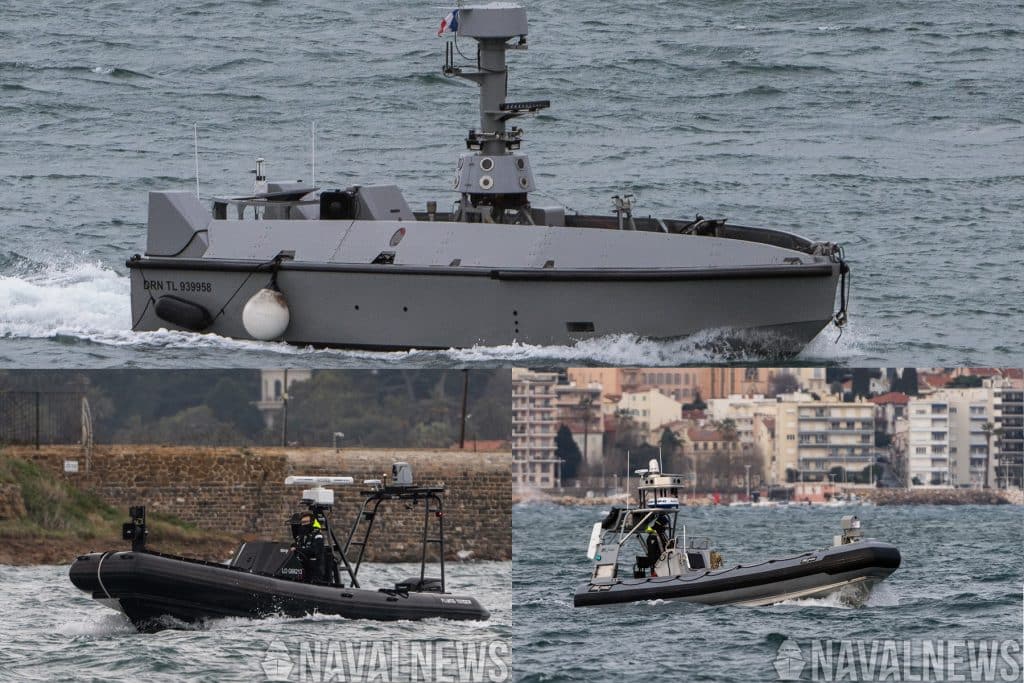
The exercise focused on validating the military utility of commercial AI technology in high-risk Mine Countermeasures (MCM) scenarios. To carry out the trial, the ROK Navy deployed a hybrid task group centered around the minehunter ROKS Ongjin. The crewed vessel operated alongside an aerial surveillance drone, two USVs, and an AUV tailored specifically for mine detection.
During the trial, the joint force sequentially tested and verified several critical operational phases:
- AI-assisted, automated mission planning and execution;
- Multi-domain uncrewed system tactical integration;
- Real-time underwater mine detection, image processing, and target analysis; and
- End-to-end mine countermeasure and neutralization procedures.

By shifting dangerous mine-hunting duties to autonomous platforms, the ROK Navy demonstrated how AI can dramatically accelerate decision-making cycles while keeping crewed combatants and personnel out of harm’s way.
Highlighting the strategic necessity of the trial, Vice Admiral Kwak Kwang-sub, Commander of ROK Fleet Command, emphasized the role of rapid commercial technology adoption.
“AI technologies and uncrewed systems will serve as core capabilities in future maritime battlefields,” VADM Kwak stated. “We must lead the future battlefield through the rapid military application of advanced technology. Moving forward, we will expand civil-government-military collaboration—leveraging Busan as an AI Transformation (AX) hub—to rapidly field AI capabilities and elevate our operational readiness through continuous combat experiments.”
Since the unveiling of Navy Sea GHOST during the ROK Navy’s 77th anniversary, South Korean industry leaders like Hanwha Systems and LIG Nex1 have accelerated key enabling technologies, including the Anti-Submarine Warfare UUV (ASWUUV), Haegum USV series, and robust cross-domain datalinks. The ROK Navy plans to host additional combat trials to systematically transition these uncrewed MCM capabilities from testing to active fleet operations.