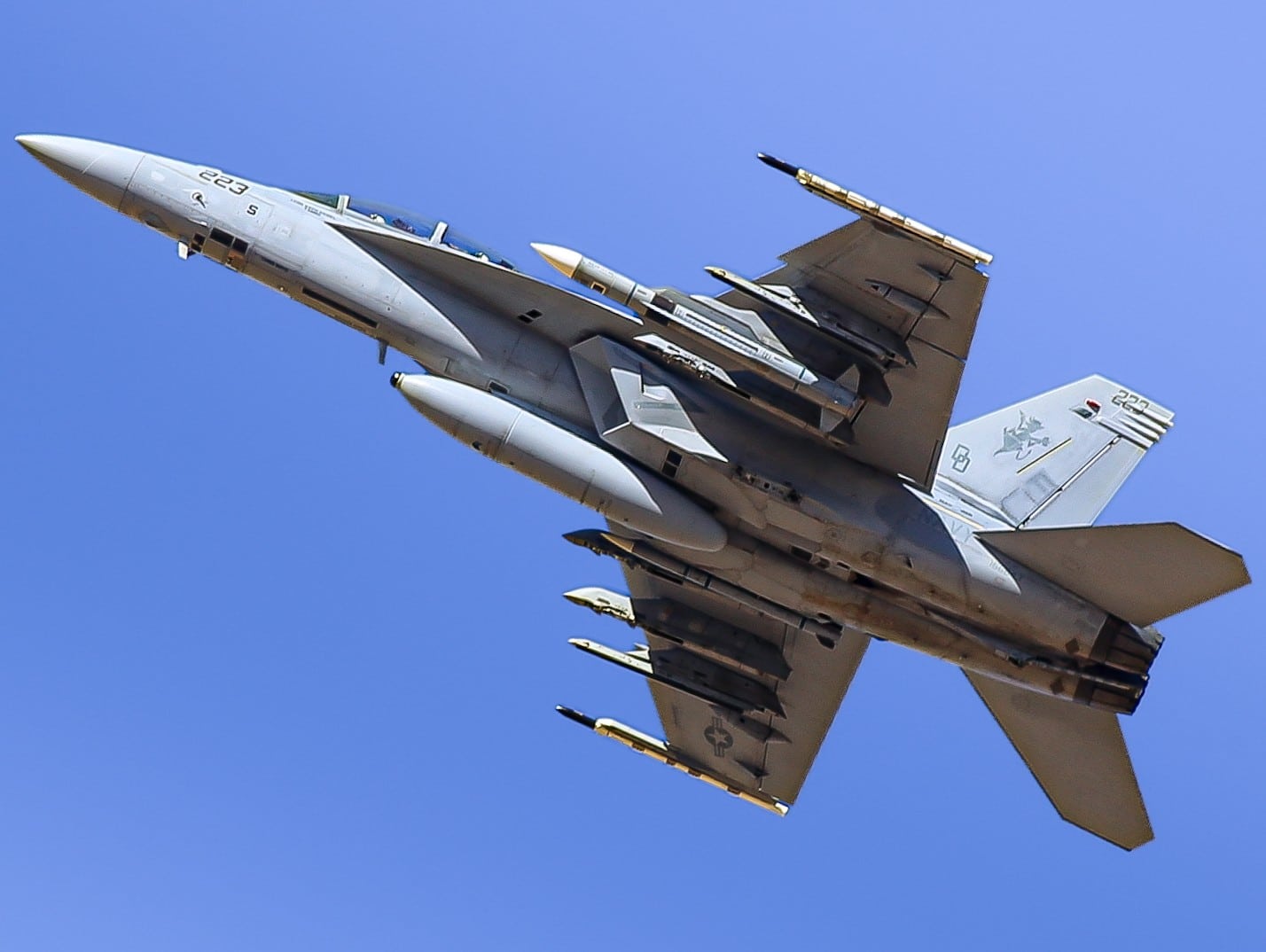
A U.S. Navy F/A-18 Super Hornet assigned to Air Test and Evaluation Squadron 31 (VX-31) was spotted last week carrying both the AIM-174B and AIM-260A Joint Advanced Tactical Missile (JATM) over southern California, marking what appears to be the first publicly documented instance of the two secretive air-to-air weapons aboard the same aircraft.
Aviation photographer @photosxlyss2 spotted the VX-31 jet over Ridgecrest, California, which also included a Lockheed Martin-developed IRST21 infrared search and track pod.
The new configuration highlights the Navy’s ongoing efforts to expand the reach and capabilities of its carrier-based fighter fleet, particularly as the service prepares for potential operations against increasingly capable adversary aircraft in the Indo-Pacific. The effort is part of the service’s Air Wing of the Future (AWOTF) initiative, which is rolling out to carrier air wings over the next decade. AWOTF includes new sensors, uncrewed aircraft, and weapons capable of extending the range of existing fighters while supplementing them with new, advanced capabilities to take on near-peer competitors — particularly China.
The AIM-174B is an air-launched derivative of the Navy’s ship-based Standard Missile-6 (SM-6), which Naval News has covered extensively. The missile provides the Super Hornet with a significantly longer-range air-to-air engagement capability against large targets like airborne early warning aircraft, bombers, and tankers.
The AIM-260A JATM, meanwhile, is a next-generation air-to-air missile developed to supplement and eventually replace the AIM-120 Advanced Medium Range Air-to-Air Missile (AMRAAM). Developed by Lockheed Martin, the missile is intended to provide improved range and performance against advanced aerial threats, including increasingly capable Chinese fighter aircraft. The JATM was first spotted on Navy fighters in May, though aerial testing dates back to March 2025 when the U.S. Navy confirmed testing to Naval News for the first time.
Complementary Capabilities
The appearance of both weapons aboard a single aircraft is particularly noteworthy given their different intended roles. The much larger AIM-174B provides an exceptionally long-range engagement capability, potentially allowing Navy fighters to threaten high-value airborne assets at extended distances. The smaller AIM-260A, meanwhile, is designed to provide a more conventional beyond-visual-range engagement capability without the significant size and weight penalties associated with the AIM-174B.
Enter the AIM-424 Malice
Both of the secretive missiles precede the even more advanced AIM-424 Malice, announced in August as a highly specialized air-to-air missile capable of engaging even agile targets like fighters at ranges approaching what the AIM-174B can achieve. U.S. officials familiar with the program offered scant details regarding the Malice, hinting at its advanced aerodynamics and highly capable sensors that define it as a next-generation weapon for the AWOTF that will revolutionize offensive air capabilities for deployed aircraft carriers.
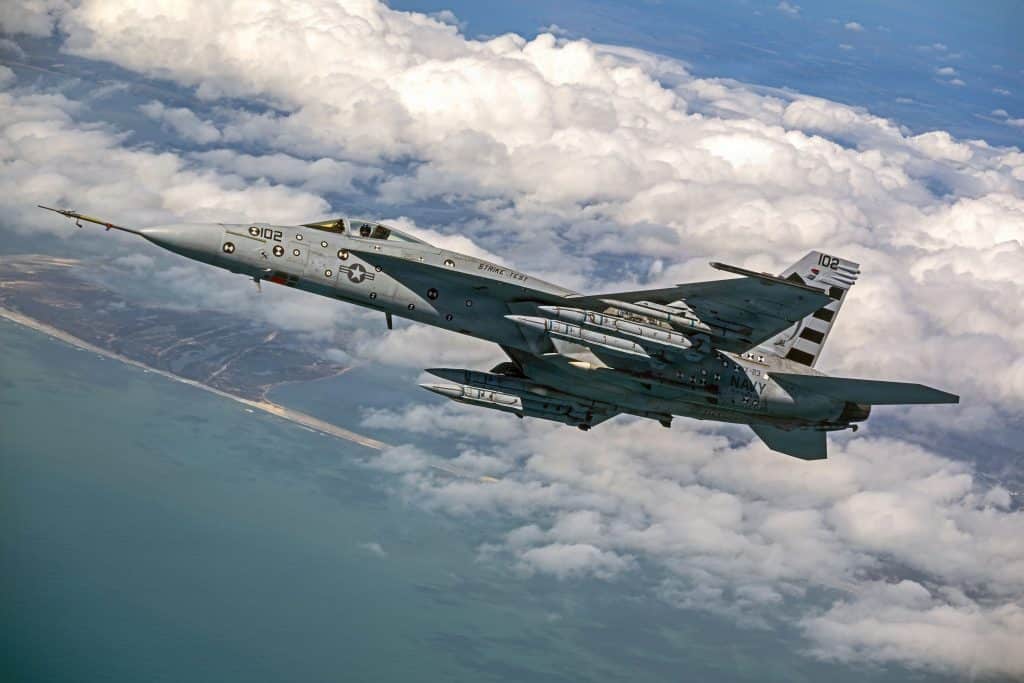
Malice has been in testing since the beginning of the year, with captive carry testing already underway. The U.S. Navy did not comment further on testing status.
Testing and Fielding Status
Both the AIM-174B and AIM-260A are nearer-term capabilities close to, or already being fielded, across several carrier air wings.
The AIM-260A completed over 26 hours of flight tests in 2024 under VX-31, according to a now-deleted VX-31 Facebook post highlighting awards delivered to personnel supporting last-minute Category C testing of the JATM. The ‘Category C’ label is given to tests which pose “a significant risk to personnel, equipment, or property even after all precautionary measures and corrective actions [are] taken”.
The AIM-174B has been deployed to several major exercises, including RIMPAC 2024 and Northern Edge 2025. The Office of the Director, Operational Test and Evaluation transitioned the weapon into Live Fire Test and Evaluation in 2025 after its developmental trials at RIMPAC, and the missile has since been deployed to forward-deployed Navy squadrons in Japan. The AIM-174B’s rollout is incremental across the fleet, and is designed to “balance today’s readiness with tomorrow’s capabilities” according to a U.S. Pacific Fleet spokesperson.
Note: Thanks to @photosxlyss2 for images of the captive carry VX-31 flight. More of her work can be found here.