The Hellenic Navy is currently testing a number of Corsair autonomous unmanned surface vessels (USVs) and has submitted a Letter of Request (LOR) to the United States for the procurement of at least 30 vessels to expand its unmanned maritime capabilities.
On Tuesday, October 13, 2026, Greek Minister of National Defence Nikos Dendias attended the inauguration of the Joint Unmanned and Autonomous Maritime Systems Training Centre at the Palaskas Training Centre (KEPAL), part of the Hellenic Navy’s Naval Training Command. The facility is located at the Kanellopoulos Naval Base in Skaramagas, west of Athens.
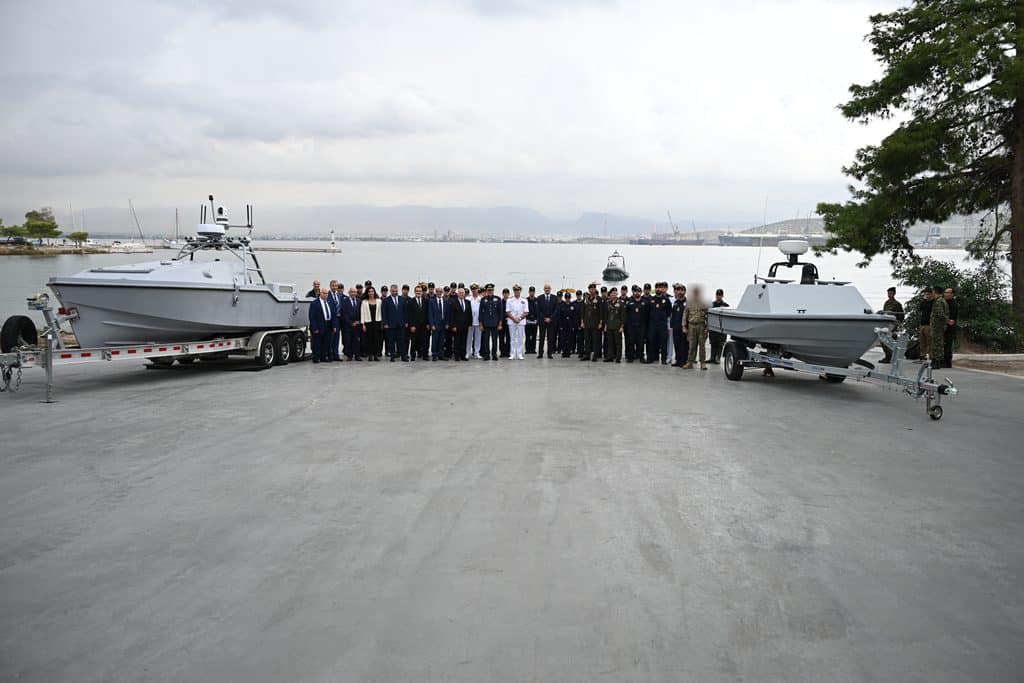
The event showcased several domestically developed systems that Greece is currently testing, supporting its ambition to become a European leader in autonomous platform development by 2030, as stated by the Minister of National Defence. However, the most notable highlight was a Corsair autonomous unmanned surface vehicle (USV) developed by US company Saronic.
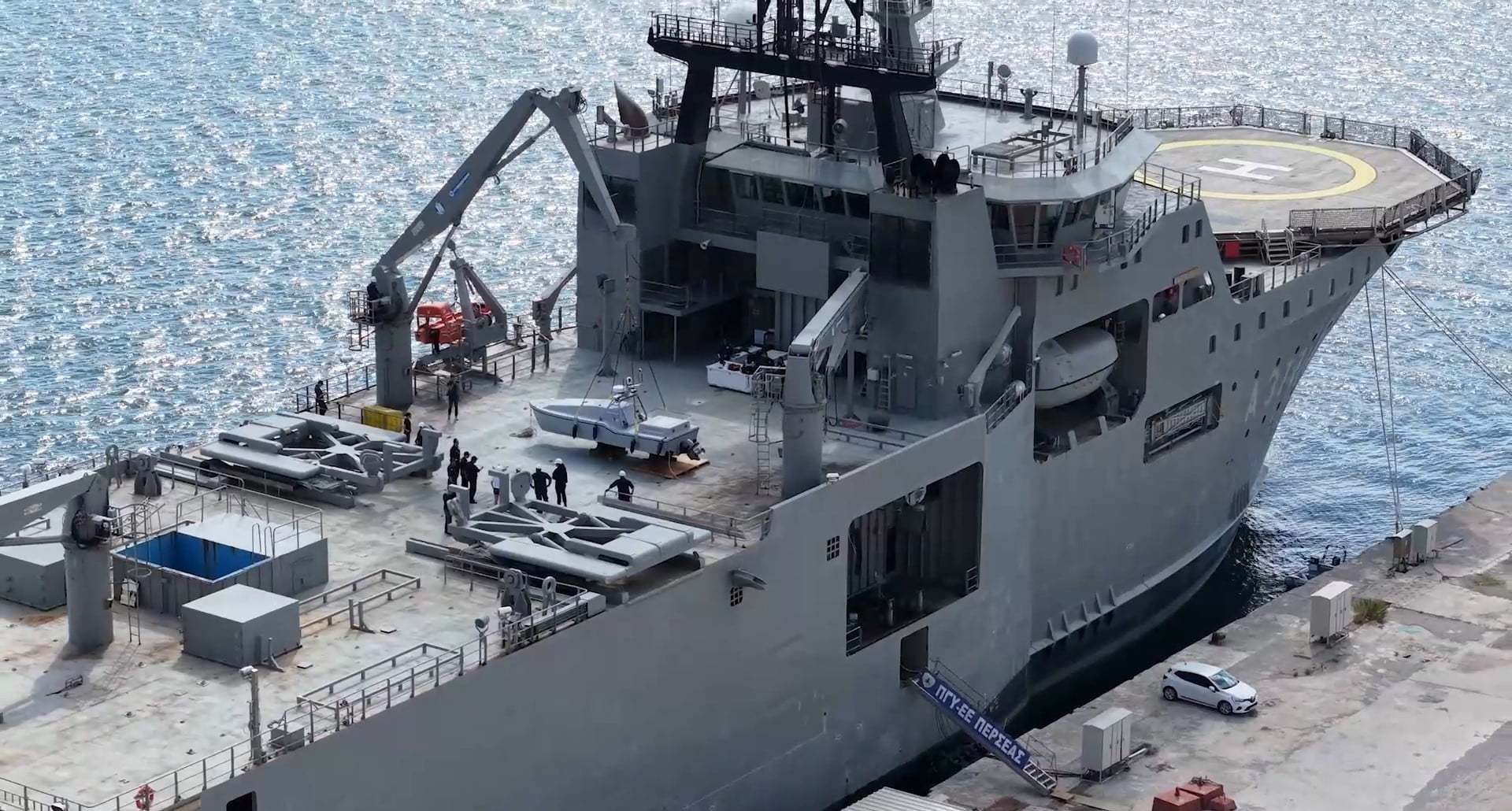
According to a video released by the Ministry of National Defence (screenshots below), at least two Corsair USVs are currently in Greece undergoing trials with the Hellenic Navy. The trials involved several Fleet units, with the fleet support ships HS Perseas (A377) and possibly HS Aias (A473) serving as motherships for transporting the unmanned vessels. The trials also demonstrated the vessel’s ability to cooperate tactically with several warships.
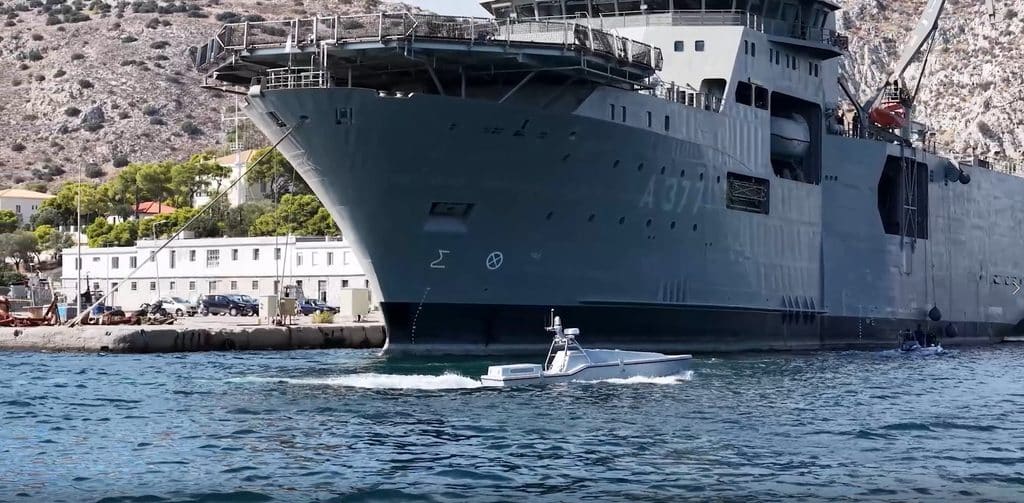
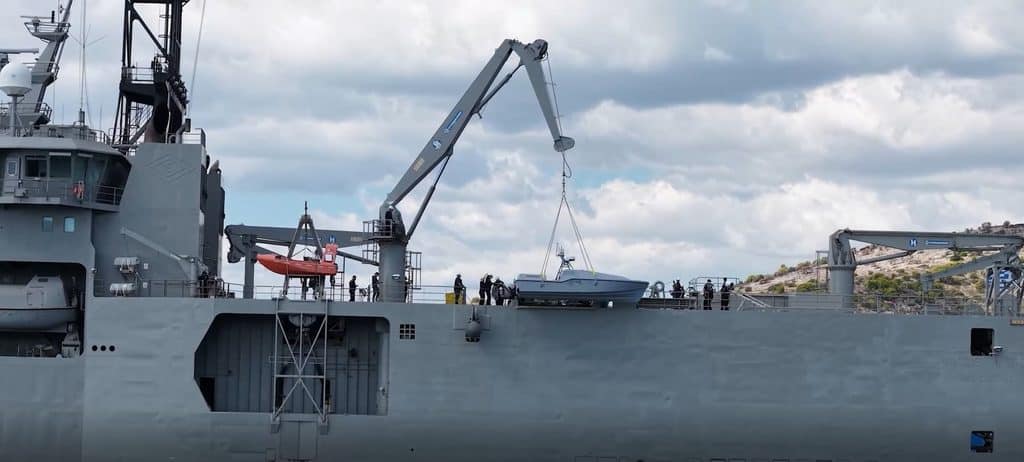
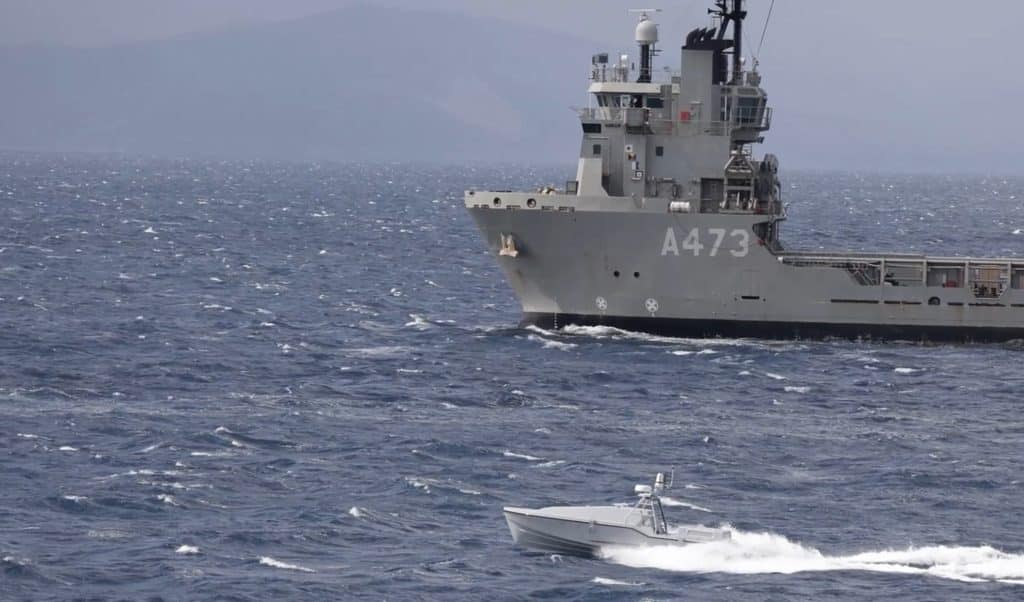
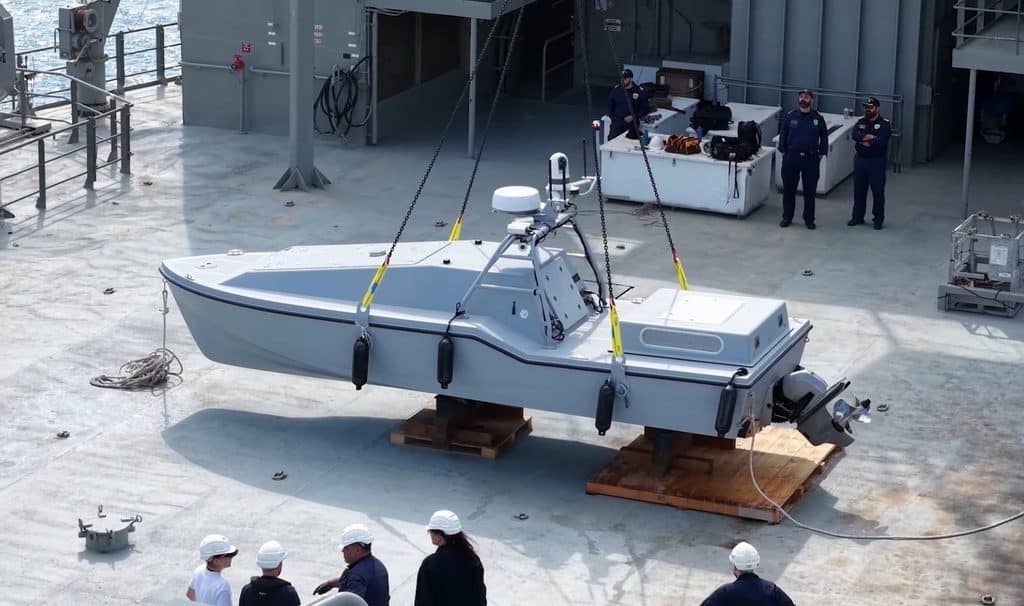
The Ministry of National Defence stated that the Corsair USVs had undergone extensive trials and had been successfully evaluated by the Hellenic Navy. A Letter of Request (LOR) has also been submitted to the United States for the procurement of an unspecified number of vessels through the government-to-government Foreign Military Sales (FMS) programme.
Separately, George Sideris of Hellas Journal reports that the Hellenic Navy plans to acquire at least 30 such vessels. The reported procurement would form part of Greece’s ambition to significantly expand its USV capabilities in the near future.
Corsair USV Specifications
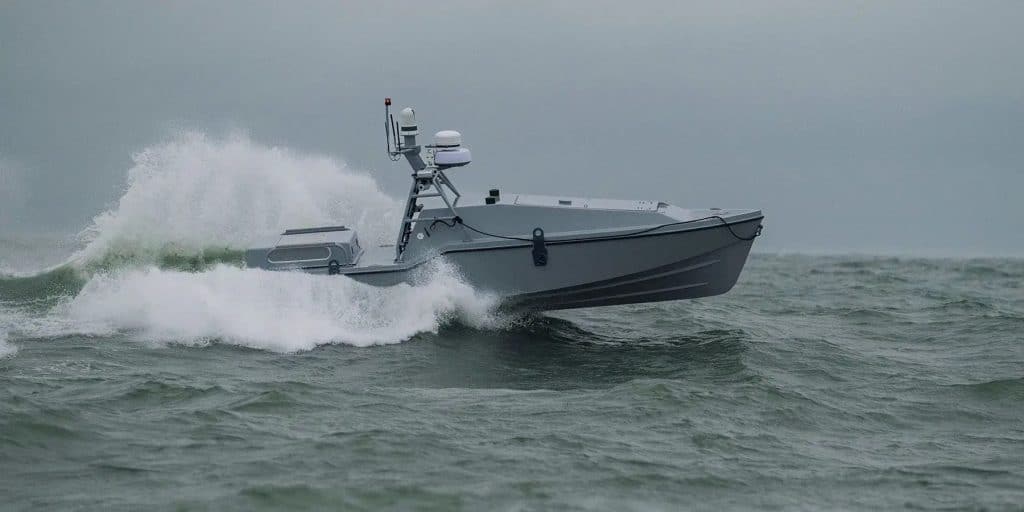
The Corsair is a 7-meter ASV capable of carrying payloads of up to 1,000 lbs (approximately 454 kg) over distances exceeding 1,000 nautical miles. Designed for rapid deployment and scalable operations worldwide, it offers a versatile platform for a broad range of missions.
The vessel carries electro-optical systems, advanced communications equipment, and a range of sensors tailored to each mission. A key capability is collaborative autonomous operation, or swarming, which enables multiple vessels to coordinate their actions and execute complex missions autonomously.
Corsair can perform a wide variety of missions, including Intelligence, Surveillance and Reconnaissance (ISR), Anti-Surface Warfare (ASuW), one-way attack (OWA) missions, including kamikaze-style attacks, and Search and Rescue (SAR). Its advanced artificial intelligence and open architecture enable further upgrades and integration of additional capabilities, expanding its operational versatility.
The US Navy has brought Corsair USVs into operational service and deployed them in real-world missions. Their operational use in the Persian Gulf region came to light in June 2026, when a Corsair USV reportedly played a key role in rescuing the two crew members of a downed AH-64E Apache attack helicopter. In July 2026, three Corsair USVs reportedly struck the port at Bandar Abbas Naval Base, marking the first use of US unmanned surface vessels in American combat operations.