The Pentagon and DIU launched a 120-day sprint to acquire and field new counter-UAS armed USVs to defend surface fleets against low-cost drone threats.
The Pentagon and Defense Innovation Unit (DIU) is searching for new uncrewed vessels capable of engaging a broad number of low-cost adversary aerial and maritime weapon systems that the unit says should be ready for operational fielding in the next four months, according to a new search announced Oct. 19.
The search, launched in partnership with the Pentagon’s Direct Reporting Portfolio Manager for Unmanned Systems (DRPM UxS), opens the door for rapid acquisition and fielding of new counter-air and counter-surface unmanned surface vessels (USVs) in the next 120 days for further forward deployment to combat theaters.
“The cost-exchange ratio for detecting and neutralizing asymmetric maritime and airborne threats in contested environments is heavily skewed in favor of the adversary,” the DIU says in its solicitation. “Low-cost, low-signature threats—including explosive Unmanned Surface Vessels (USVs), Group 1–3 Unmanned Aerial Systems (UAS), attack helicopters, go-fast vessels, and low-flying aerial vectors—directly threaten surface-fleet operations.”
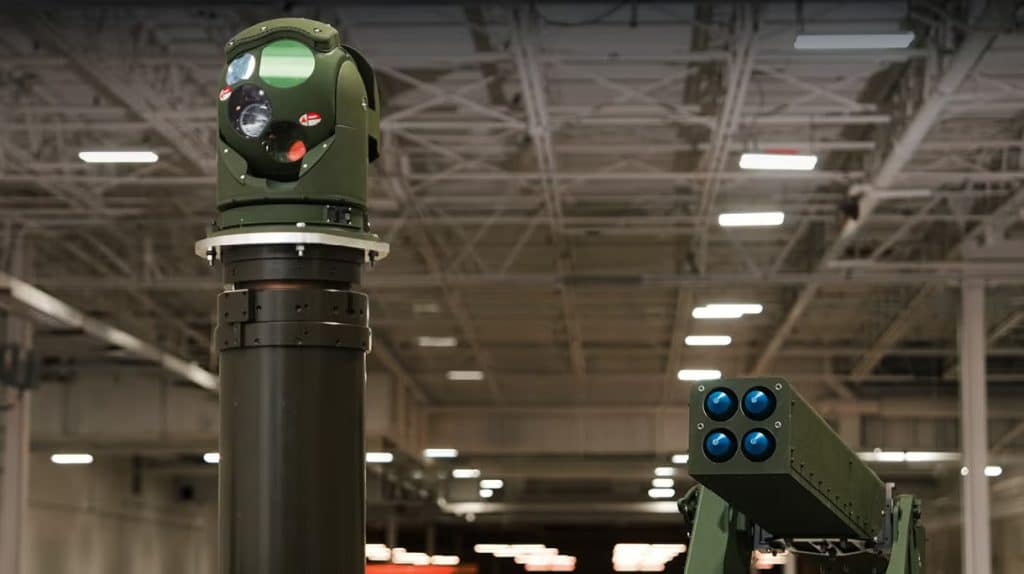
The solicitation seeks production-ready USVs capable of integrating existing counter-air weapons, including the AGM-114L Longbow Hellfire, AGM-179 Joint Air-to-Ground Missile (JAGM), Advanced Precision Kill Weapon System (APKWS) and Stinger missiles, to interdict those threats. The vessels would be tasked with detecting, tracking and engaging low-flying aerial threats, including Group 1-3 drones and helicopters, at ranges exceeding three nautical miles. The Pentagon is also interested in systems capable of engaging larger Group 5 aircraft, considering that capability as highly valuable for potential submissions.
Naval News previously covered the wide array of options for Hellfire, JAGM, and APKWS counter-drone initiatives at Sea Air Space 2026. Several USVs on display at the show featured Hellfire, APKWS, and JAGM launchers for counter-UAS and anti-ship operations.
Under the solicitation, proposed vessels must have a minimum operational range of 200 nautical miles and sustain a cruising speed of at least 10 knots. The systems must also support autonomous navigation, station-keeping and collision avoidance, while integrating onboard sensors capable of providing 360-degree detection and tracking of aerial and surface threats. Weapons employment would remain under human supervision, with the vessels expected to operate in environments where communications and satellite navigation are degraded or denied.
Overall, the new drones are expected to add another layer of loss-tolerant uncrewed ships capable of interdicting hostile airborne systems traveling toward their targets. During potential operations, the vessels could be rearmed and redeployed with minimal logistical support, with the solicitation stating that “rapid field rearming executable by a two-person crew with minimal support equipment in pier-side, austere, or shipboard environments is highly desired.”
The effort is part of a broader, three-phase, 12-month prize challenge offering up to $100 million in awards, including up to $40 million for the second phase focused on counter-air capabilities.
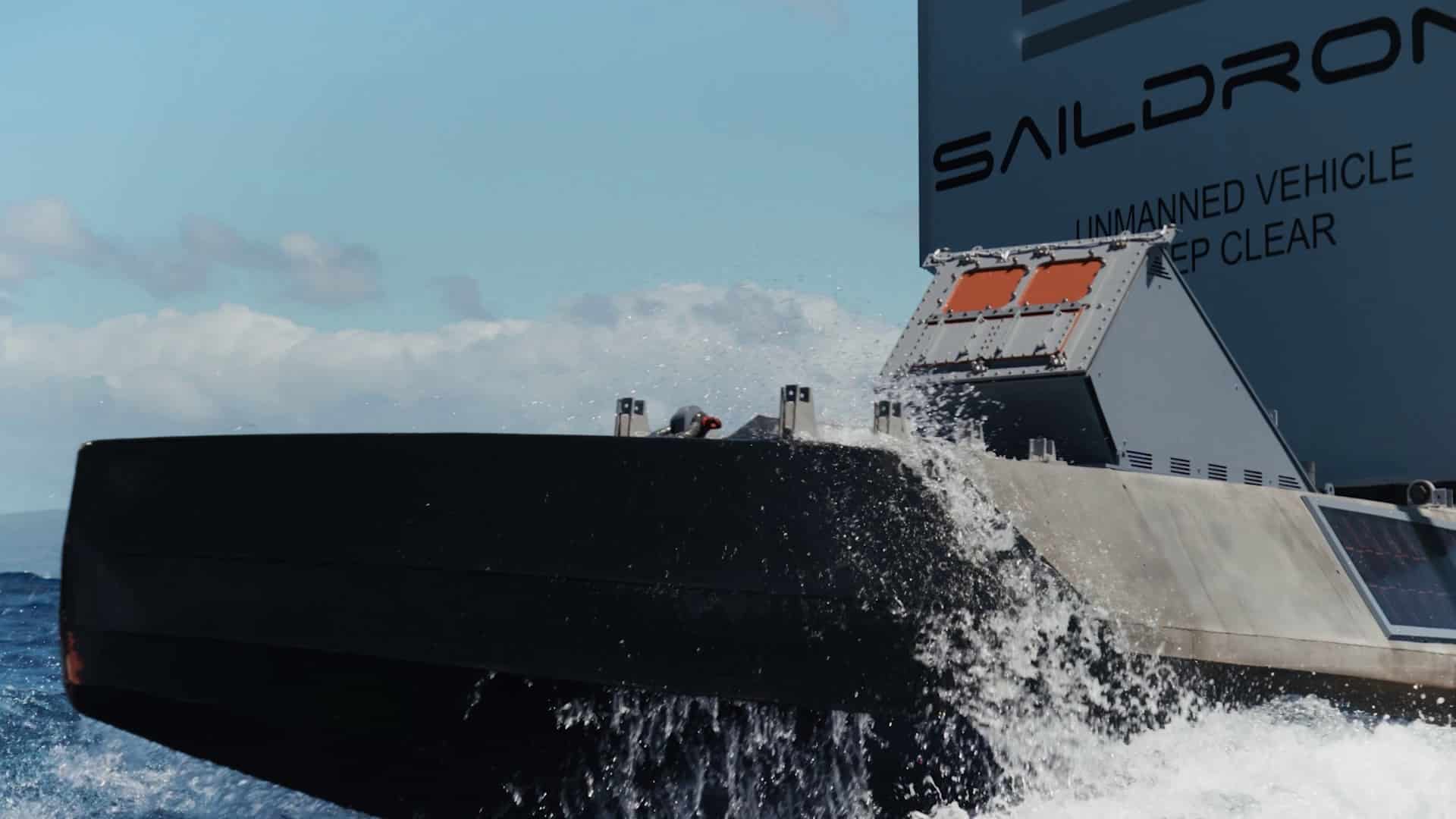
A number of U.S. firms have tested solutions to the DIU’s solicitation, including Saildrone which recently conducted a missile test using JAGM anti-air and anti-surface missiles at the U.S.-led Rim of the Pacific 2026 exercise off the coast of Hawaii. Saildrones have previously deployed to the Pacific and Middle East supporting intelligence collection. BlackSea Technologies has also demonstrated a number of capabilities that can fulfill the solicitation’s request using its Comet USV. L3Harris has also proven a number of integration opportunities with its VAMPIRE counter-UAS system that can be rapidly fitted to USVs to engage airborne and surface targets. Beyond U.S. manufacturers, Naval News recently reported that French firm Exail will supply a DriX H-9 USV to the Office of Naval Research (ONR) to serve as a testbed for an unspecified counter-drone system.
Companies will be required to demonstrate their integrated systems within 30 days of selection, with subsequent operational testing planned at Joint Expeditionary Base Little Creek in Virginia in early 2027. The Pentagon has also budgeted an additional $200 million for potential follow-on prototyping and production agreements.
Iran’s Shahed drone family has been proven extremely difficult to counter with existing counter-UAS capabilities aboard U.S. Navy guided missile destroyers. The USS Carl M. Levin (DDG 120), attached to the Theodore Roosevelt carrier strike group currently underway for a Middle East deployment to relieve the USS George Washington, has already been upgraded with counter-UAS capabilities, including a new Coyote missile launcher identified by Naval News in April. DDG 120 is currently operating in the Arabian Sea supporting the Pentagon’s blockade of Iran, and the Roosevelt is expected to transit to the U.S. Central Command (CENTCOM) area of operations to reinforce the destroyer after Exercise Keen Sword, underway in Japan, concludes in late October.