The Indian Navy has expressed interest in supporting the development of a Rotating Detonation Engine (RDE) – powered supersonic naval missile.
The problem statement was part of a compendium released during Swavlamban 2026, the Navy’s flagship exhibition meant to showcase defence innovation, held in October 2026. The full text of the problem statement is as follows:
This problem statement identifies a proposed indigenous supersonic naval missile programme associated with Rotating Detonation Engine (RDE) research. RDE research examines rotating detonation as a propulsion principle. The challenge is to establish whether it offers a credible, supportable capability pathway for the stated naval application. The assessment should distinguish scientific feasibility, component maturity, integrated demonstrator readiness and qualification for service use. Independent evidence is required to substantiate claimed advantages against established propulsion alternatives. The programme should maintain clear requirements, configuration control, specialist safety oversight and traceability of results throughout its evaluation. Domestic design ownership, manufacturing repeatability, environmental suitability and long-term support are central considerations. The expected outcome is an evidence-based assessment of feasibility and maturity, supported by authorised research and evaluation. Demonstrated progress in another aerospace application should not be treated as proof of readiness for a naval missile.
Traditional engines like gas turbines and ramjets generate thrust by subsonic combustion process, also known as deflagration. Detonation engines utilize the shockwaves generated due to sustained supersonic combustion, also known as detonation, to generate thrust. This means that for a similar size and weight class, detonation engines can not only provide greater thrust but also better efficiency compared to gas turbines or ramjets.
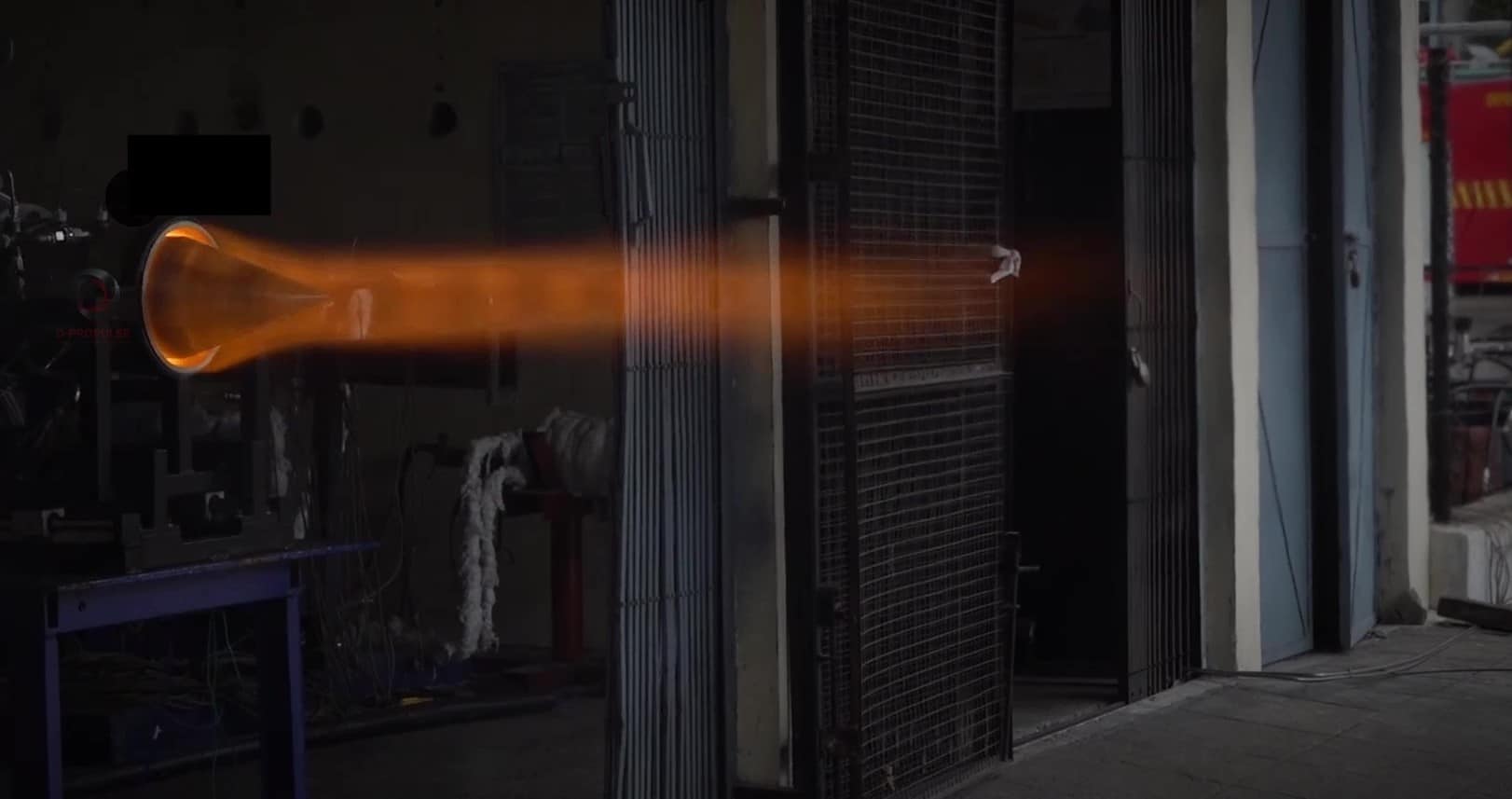
An Indian startup named D-Propulse Aerospace had tested an RDE prototype at a DRDO test facility in July 2026, conducting five static tests in 24 hours. D-Propulse subsequently unveiled plans to develop RDE powered air-breathing supersonic cruise missiles and rotating detonation rocket engine (RDRE) powered micro-SAMs for counter-UAS applications. Naval News reached out to founder and CEO Saurav Jha to inquire about the firm’s views regarding the Navy’s problem statement:
D-Propulse intends to leverage its air-breathing RDE technology to build supersonic cruise missiles that are much smaller and cheaper than legacy systems and yet reach operational ranges. This would allow carriage by platforms that hitherto could only carry much shorter ranged systems. The lower price point will enable true mass in precision for the Indian military. After all, supersonic cruise missiles have a much higher probability of arrival over target than other types of systems out there. So, having magazine depth for supersonic cruise missiles is a key requirement in today’s scenario and our target price point should enable that.
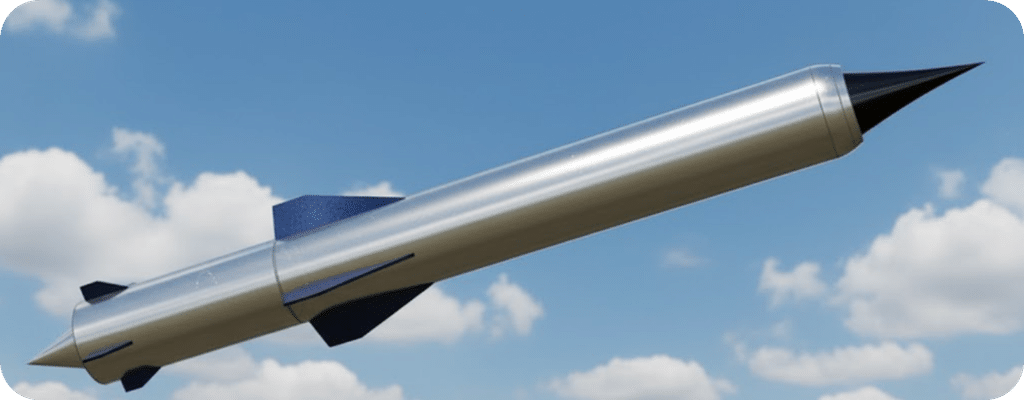
In response to a question regarding talks with the Navy for the RDE naval missile, Jha stated that D-Propulse has been in consultation with the relevant stakeholders for the system it is developing, including for support through established mechanisms.
The engine tested at Hyderabad was put on display at Swavlamban 2026 and is the proof motor of a flight-capable design. Naval News has learnt that based on that test data, new iterations will be fabricated and tested at the company’s newly constructed large connected-pipe Combustor Test Facility. D-Propulse aims to compress the developmental cycle significantly with this facility and has offered the facility to other small engine developers.
Naval News also requested comments from Jha regarding the rationale behind the planned development of the RDRE micro-SAM:
The idea behind the RDRE-powered micro SAM is to flip the economics of war in the favour of the defender. RDRE-powered micro-SAMs will be faster and more maneuverable than existing systems, allowing the user to address a wider range of incoming subsonic loitering munitions. Our studies show that RDRE technology can bring down the cost of effective systems greatly, perhaps even to the point of these being seen as ‘consumable ammunition’ if the production runs are large enough. And given the saturation scenarios we are seeing across conflict zones such as the Persian Gulf, where literally thousands of low-RCS subsonic munitions are being lobbed at air defence networks, I believe that our RDRE power counter UAS micro SAM will be required in very significant numbers in the near future.
D-Propulse intends to offer the air-breathing RDE powered supersonic cruise missile for user trials by the end of 2029 and intends to offer the RDRE powered micro-SAM by mid-2028.
Globally, extensive work is being done in the United States on developing RDE technology. Under the DARPA GAMBIT program, RTX’s Pratt & Whitney had completed a series of RDE tests in 2025. AFRL has also worked on RDE technology and recently expressed interest in combined-cycle RDRE, seeking a flight demonstration to validate the system’s operational viability. GE Aerospace had tested turbine- based combined-cycle RDE in 2023. In January 2026, Lockheed Martin and GE Aerospace demonstrated a liquid fuel RDE for missiles. Venus Aerospace, L3Harris and IN Space LLC are also developing various types of detonation engines.
In the Indian context, an RDE powered supersonic missile would be complementary to the BrahMos. While the latter with its proven production run and ever increasing range will remain the mainstay weapon of the Navy, lighter subsonic and supersonic missiles are likely to proliferate due to cost and weight benefits. Missiles like the NASM-SR and NASM-MR are being developed by DRDO. The lighter form factor of an RDE powered naval missile may make it analogous to the BrahMos NG, which is currently in the R&D stage. Dr. Jaiteerth Joshi, CEO of BrahMos Aerospace, recently told ANI that the first model of BrahMos NG is expected by 2029. Once fabricated, several rounds of trials are required before the missile can be inducted. Dr. Joshi also confirmed the development of a 1,500 km ranged version of the BrahMos, up from the current maximum of about 800 km. The range extension will continue to occur in a phased manner and the 1,500 km range version has been designed and is currently undergoing simulations.
BrahMos Aerospace has a nearly a full orderbook and continues to bag export orders. After ordering three batteries for $370 million in 2022, the Philippines is reportedly exploring purchase of “at least six additional BrahMos batteries.” India has also offered to explore the integration of BrahMos on Philippine naval vessels. Five Akash SAM regiments and the Pinaka MLRS are also being looked at by the Philippine Marines and Army, Firstpost reported. Earlier, India’s defence secretary had confirmed that initial deals were signed with two more countries in Southeast Asia for the BrahMos. Vietnam is likely to receive a single coastal battery worth about $100 million while Indonesia has signed two $100 million contracts. Both countries are expected to place larger orders in the coming years.
More on Swavlamban 2026
Other notable firms with flagship projects present at Swavlamban 2026 included:
- Sagar Defence Engineering which developed the Matangi USV. Sagar Defence has commenced delivery of 12 meter class USVs to the Navy in 2026 after receiving an order for 12 USVs.
- Xinfinti Aerospace is developing Naval Chetak Autonomous System (NCAS). NCAS is supported by the Navy under iDEX program and seeks to convert HAL Chetak helicopters into uncrewed assets, an endeavor attempted and aborted by a HAL – IAI combine in the 2010s.
- Kalam Labs has obtained an iDEX contract from the Navy for the development of floating aircraft carriers. Co-founder Ahmed Faraaz told Naval News that the product will be an airship that can transport Kalam Labs’ suite of propeller driven high-altitude proven swarm-capable UAVs to altitudes exceeding 50,0000 feet. The altitude will enable the airship to stay protected from anti-aircraft munitions while conducting ISR and deploying UAVs for various tasks. Kalam Labs has deployed its UAVs from altitudes greater than 100,000 feet using balloons. Faraaz told Naval News that the firm has also bagged iDEX contracts from IAF for development of a supersonic autonomous spaceplane and mesh enabled space drone swarms.