Australia’s Department of Defence press release
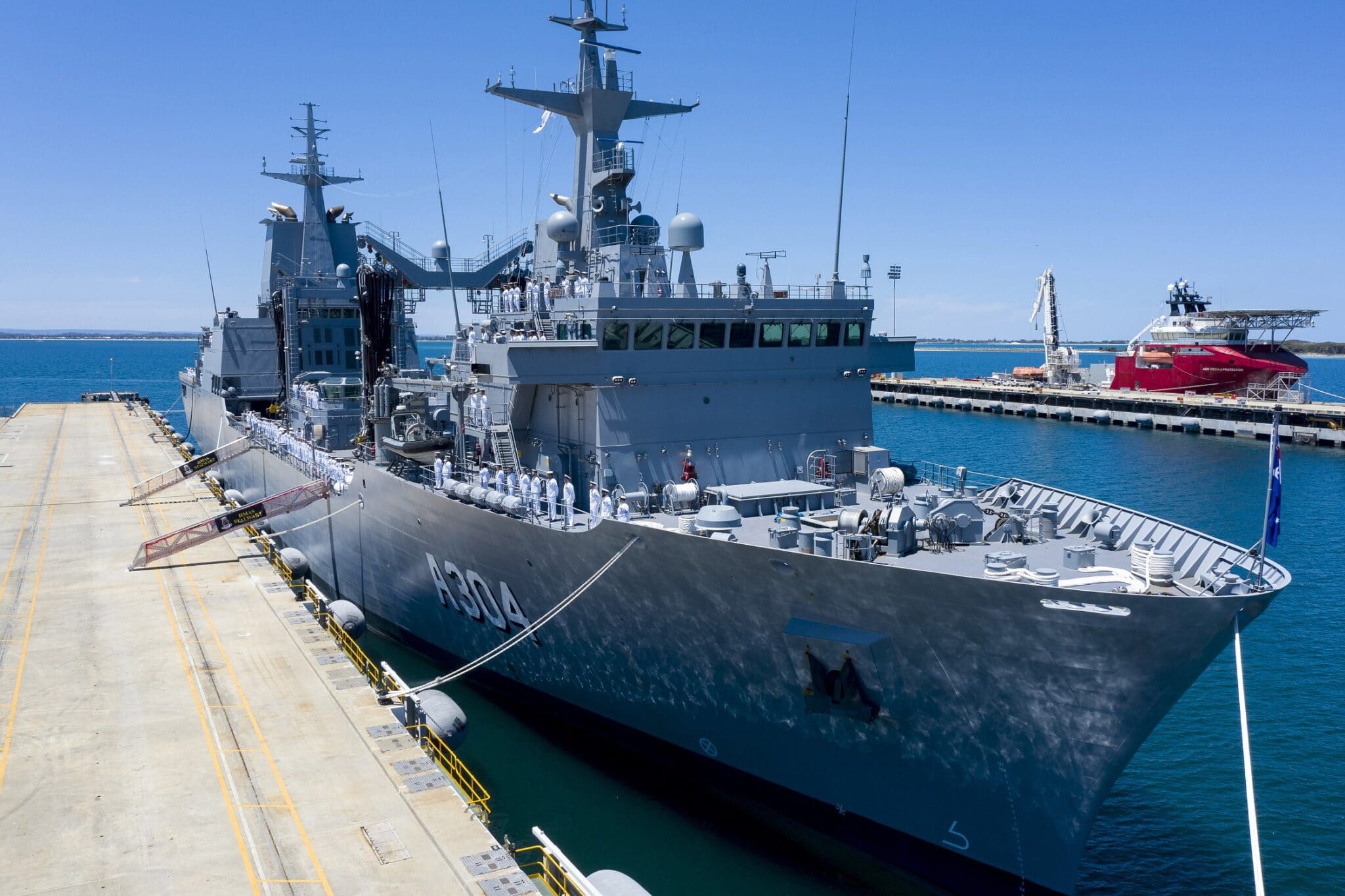
Chief of Navy Vice Admiral Michael Noonan said the auxiliary oiler replenishment ships bring a significant capability to Navy and Australia’s regional partners in terms of providing at-sea support.
“These ships represent a generational shift from the capability provided by previous support ships in that they are equipped with a combat management system that improves information sharing with other ADF and allied assets,” Vice Admiral Noonan said.
“Both Stalwart and Supply represent cutting-edge maritime technology and can seamlessly integrate into both national and multinational task groups, which is paramount in the challenging strategic environment.”
Stalwart Commanding Officer Commander Steve McCracken said November 13 marked a significant day in the careers of the entire ship’s company.
“To be part of a commissioning crew is a defining moment in the lives of all mariners and often represents the pinnacle of a naval career,” Commander McCracken said.
“The entire ship’s company has worked extremely hard to prepare for today and will continue to do so as we undertake the various sea trials that will allow us to integrate our ship into the fleet.”
Able Seaman Rachel Lynch said the day represented a milestone in her career.
“I’m a proud Western Australian and couldn’t be more excited to be a member of the commissioning crew for the Navy’s newest WA-based ship,” she said.
“I joined the Navy in 2018 and I’ve already experienced so many amazing things in such a short period of time.
“Being part of a commissioning crew is rare – I feel very fortunate to be able to add this experience to my already exciting naval journey.”
Stalwart is the third Royal Australian Navy vessel to carry the name, with the first being an S-class destroyer in the early 20th century, and the second an escort maintenance ship that was decommissioned in 1990.
“The name Stalwart has a proud history in our Navy and I am confident that the men and women of this new ship will maintain that tradition as Stalwart (III) enters service,” Vice Admiral Noonan said.
The new auxiliary oiler replenishment ships were built in Spain by Navantia, with Australian industry playing a key role in both the development and ongoing support of the vessels.
-End-
About Supply-class AORs
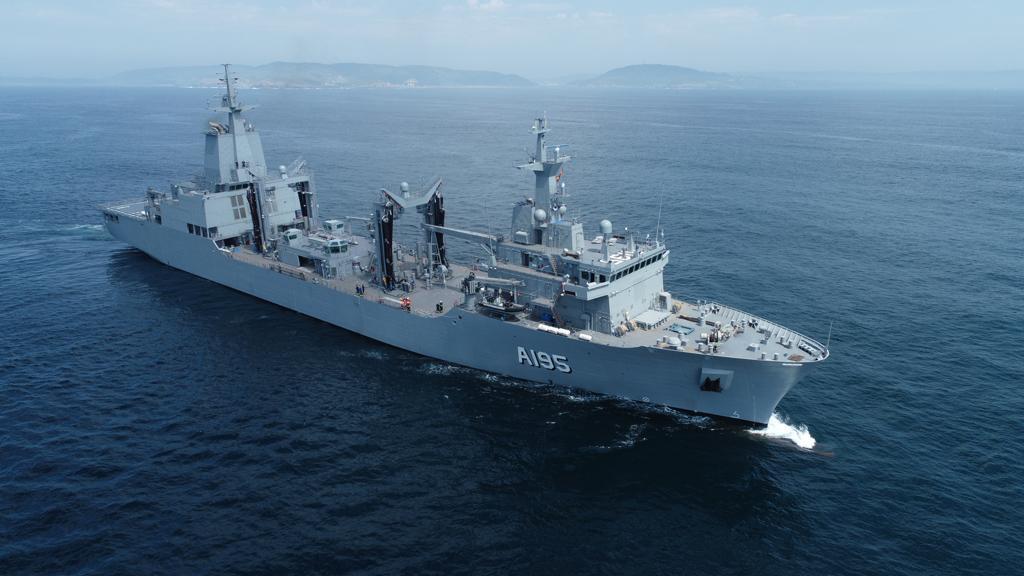
The Australian Government signed contracts with Navantia S.A to build Australia’s two replacement auxiliary oiler replenishment ships in May 2016.
NUSHIP Supply was laid down on 18 November 2017, launched in Ferrol, Spain, in November 2018. The vessel arrived at HMAS Stirling, Garden Island Fleet Base West, Western Australia, on 2 October 2020 for final fit out and testing activities.
The ships are intended to carry fuel, dry cargo, water, food, ammunition, equipment and spare parts to provide operational support for the deployed naval or combat forces operating far from the port on the high seas for longer periods. In addition to replenishment, the vessels can be used to combat against environmental pollution at sea, provide logistics support for the armed forces, and to support humanitarian and disaster relief (HADR) operations following a natural disaster.
| Specifications | |
|---|---|
| Displacement | 19,500 tonnes |
| Length | 173.9 metres |
| Beam | 23 metres |
| Draught | 8 metres |
| Performance | |
| Speed | 20 knots (maximum) |
| Range | 11,000 kilometres at 13 knots |
| Capacity | 8200 cubic metres of marine diesel fuel, 1400 cubic metres of fresh water, 270 tonnes of ammunition, 470 tonnes of provisions, 1450 cubic metres of JP5 jet fuel |
| Propulsion | |
| Machinery | 2 x MAN 18V 32/40 main engines4 x MAN 7L21/31 generator sets |
| Armament | |
| Helicopters | 1 x helicopter |