The French Navy (Marine Nationale) is maximising frigate availability through developing its approach to maintenance and operations, the service has told Naval News.
The details expand upon remarks by Admiral Nicolas Vaujour, the French Navy’s Chief of Staff, that the navy has built up the availability of its ‘first rank’ destroyer and frigate force to 80 percent. Speaking at the 2025 Paris Naval Conference, Adm Vaujour said:
“Availability is one of my motivations because I have by law – [France’s] military planning law – 15 destroyers and frigates …. So, the way to have more ships is not to build another one …. The question for me is to increase the level of availability of the ships.”
Admiral Nicolas Vaujour, the French Navy’s Chief of Staff
The two primary routes to expanding such availability have been to enhance in-service maintenance support ashore, and to ‘dual crew’ some ships to increase days at sea. The combined effect, Adm Vaujour explained, is generating an output similar to having more than 15 ships.
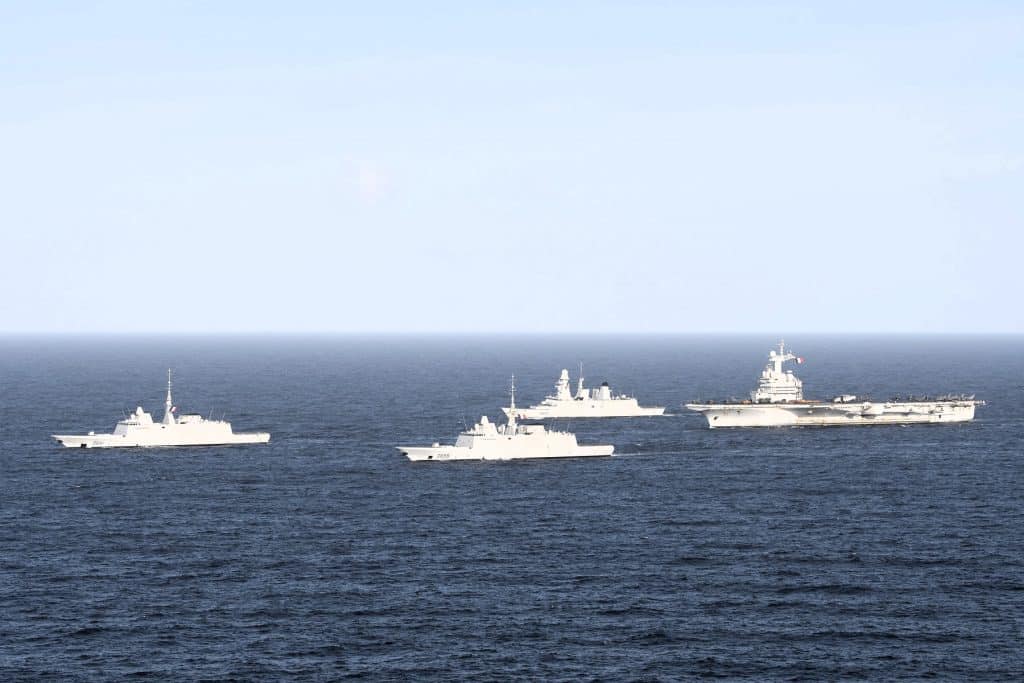
Doubling up
The navy has dual-crewing concepts in place for different vessel types, including: the PSP/Flamant-class patrol boats; the Batiment de Soutien et d’Assistance Métropolitains (BSAM) Loire-class and Batiment de Soutien et d’Assistance Outre-Mer (BSAOM) D’Entrecasteaux-class auxiliary ships; the hydrographic and oceanographic survey vessel FS Beautemps-Beaupré; and the survey and research vessel FS Dupuy de Lôme. The submarine service also uses a dual-crewing model.
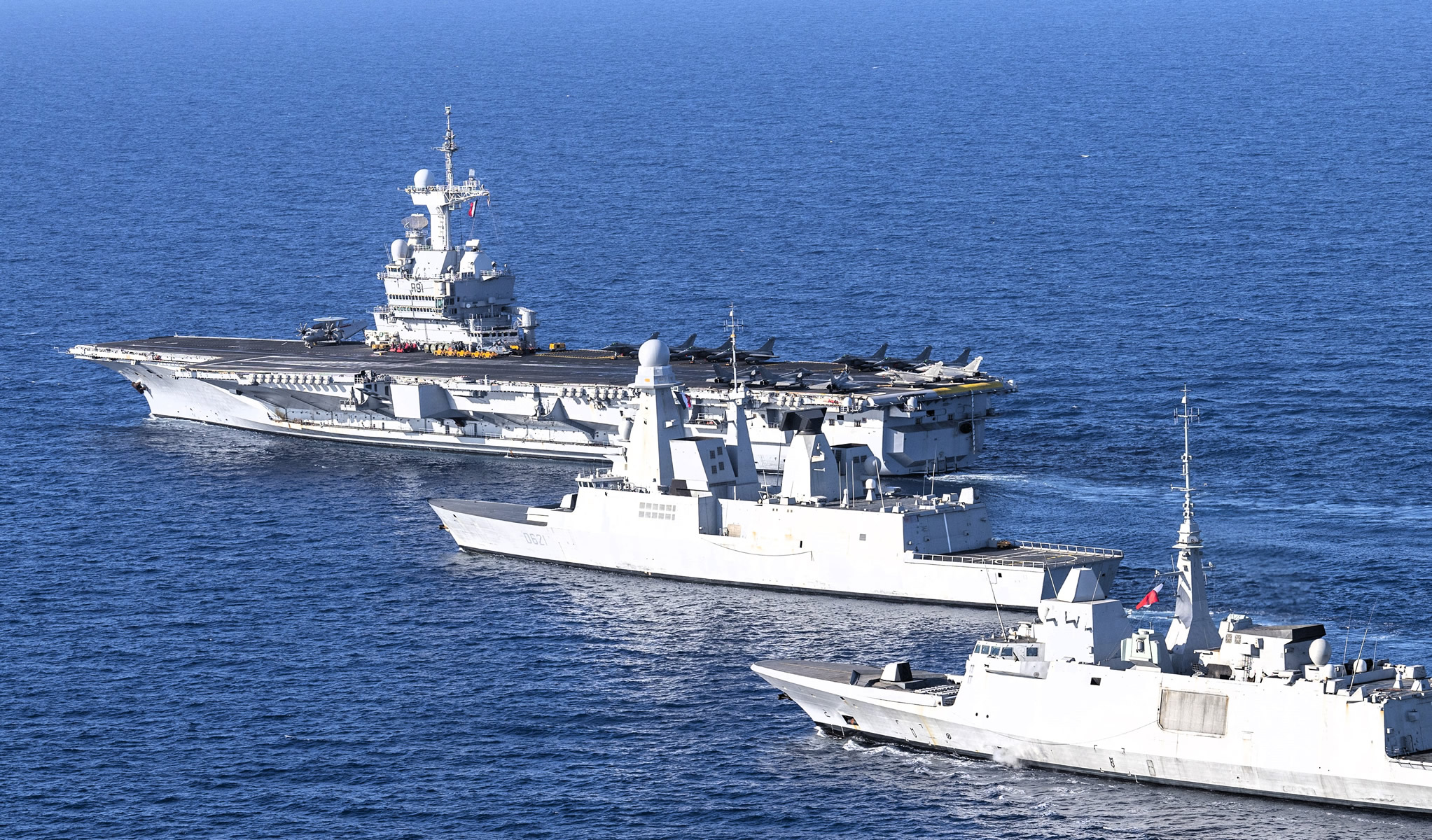
However, the navy’s requirement to use dual-crewing concepts to generate enhanced surface fleet presence reflects the desire across European navies to grow operational ship numbers at sea to counter deterioration in Euro-Atlantic security. Central to its surface ship dual-crewing concepts are the Aquitaine-class FREMM frigates.
Seeking to optimize the eight FREMM frigates’ outputs, lead ship FS Aquitaine, commissioned in 2015, first took onboard a dual-crewing structure in 2019. Four FREMMs now use dual crews.
The frigates’ dual-crewing construct is built around dedicating two complete ship’s companies to one specific ship, the Deputy Head of the Surface Action/Strike Force personnel department told Naval News.
“Each crew, for the same hull, divides the life of the boat into cycles, which are divided into four months. Each crew’s commanding officer is independent in terms of administration and management of the entire crew,” said Lieutenant Commander Gregory (whose surname was not supplied, under Marine Nationale media engagement rules).
The two crews operate a four-months-on/four-months-off rotation. The crew onboard the ship is responsible for its operations and maintenance periods; the crew not onboard conducts specific planning for the next deployment (including logistics preparations), along with generic activities such as simulator training and gaining qualifications. Handover between crews takes around three days, and can be done alongside in operational areas like Abu Dhabi or Djibouti (where the navy has facilities), Lt Cdr Gregory explained.

Having two crews per ship enables those ships’ sea days to increase from 120 days per year up to between 170-180 days. This factor is a key part of the equation generating the 80 percent availability.
Having four FREMMs each in single- and dual-crew modes gives the navy flexibility to meet its various operational requirements, Lt Cdr Gregory continued. Single-crew platforms provide the optimal model for meeting tasks like: securing the nuclear deterrent ballistic missile submarines operating out of Brest; conducting deployments to support NATO commitments; or delivering at-sea air-defence capability, for which the two FREMM air-defence (FREMM Défense Aérienne, FREMM DA/FREDA) variants embark a dedicated anti-air warfare staff.
Yet the navy is continuing to evolve the dual-crewing model, with one of the single-crew FREMMs (FS Auvergne) set to receive a second crew by 2026, and with dual-crewed ships also being prepared for supporting the deterrent security tasking, said Lt Cdr Gregory.
The navy is yet to decide whether the incoming Amiral Ronarc’h-class FDI (Frégate de Défense et d’Intervention) frigates will be single or dual crewed. This decision will be determined by budgets and personnel levels, Lt Cdr Gregory explained.
A Marine Nationale spokesperson told Naval News that personnel capacity to underpin the dual-crewing concept is built using existing resources, including sailors from ships being taken out of service or freed up by transformation in the navy’s organisational structure. While the navy is increasing its total personnel numbers, new sailors generally are being recruited for new professional requirements within the service, filling the personnel capability requirements for artificial intelligence, cyber, data, and digital technology expertise.
Maintaining readiness
As regards improving maintenance outputs to support the enhanced readiness requirements, the Marine Nationale told Naval News it is meeting these targets by combining established processes with emerging technologies.
The navy said the well-established but evolving processes are based around maintenance in operational conditions (MCO) requirements. “There has not really been a game changer in the French naval MCO: the strategy set for several years has created a maturation in the organization,” a spokesperson said. This maturation is centred on integrated co-operation involving three main stakeholders: the Fleet Support Service (Service de Soutien de la Flotte [SSF]), the navy itself, and industry. With the navy’s ships constantly at sea around the world, the mutual knowledge, trust, and cross-checking focus inherent in this co-operation means the three stakeholders work with the same direction to improve results, the spokesperson added.
“[The] permanent presence of all MCO actors … under SSF leadership … ensures a continuous, flexible, and evolving MCO, and allows teams to be quickly deployed in case of [ship] failure, even offshore or abroad,” the spokesperson said.
With a strategy focused on preventive maintenance, there are three pillars to the maintenance approach.
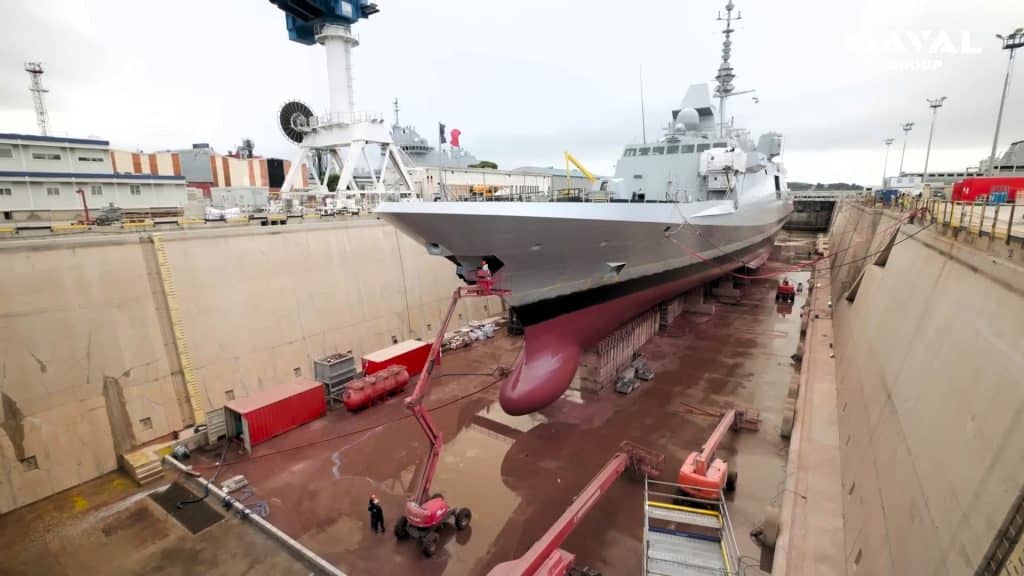
First, technical stops – some of which are major (arrêt technique/major, [AT/ATM]) – are pre-planned maintenance periods. Planning for such stops is a long-term process, designed to accommodate the pace of ship employment and optimisation of infrastructure management. One interesting SSF approach highlighted here by the spokesperson is the navy’s “maintenance of major equipment by carousel”. To optimise the duration of AT/ATM work, major equipment can be taken off the ship and maintained ashore, before being reinstalled on the next ship entering AT/ATM.
Second, continuous MCO is planned for clearly identified periods in port amid at-sea operations, but between AT/ATM maintenance. These periods are executed while ships are alongside, and are designed not to impact readiness requirements set by the fleet’s operational controller, even if a work period includes more significant maintenance. The spokesperson said such work increases the crew’s expertise in providing maintenance support from both operational and technical perspectives. This approach also ‘mobilises’ industry skills and expertise by preparing industry to follow ship maintenance requirements continuously and not just around AT/ATM periods.
Third, corrective maintenance is carried out, depending on the equipment concerned or mission requirements.
It is worth noting too that France having nationally owned shipyards gives the navy enhanced flexibility in optimizing their use.
Overall, the spokesperson said, “The key words are therefore anticipation, adaptation, and reactivity.”
As regards new technology approaches, the frigates are progressively being fitted with data ‘hubs’, which record, collect, and track data to build databases for analysing equipment behaviour. “[This] will give crews the ability to monitor installations more effectively through ergonomic, configurable, and predictive digital tools,” the spokesperson said.
This is part of a wider scaling-up process towards generating a data-centric MCO approach by 2030, with parallel development of specific software. This approach will encompass data acquisition, digitisation of technical documents, and integration of industry standards into the logistics system. It reflects SSF’s focus on continuous innovation in the MCO field, drawing on all available means, tools, and benefits from new technologies, the spokesperson said.