U.S. forces surged missiles across the Philippines over the course of Balikatan 2026 at key locations for simulated and live-fire exercises in some of the most intensive demonstrations of American long-range strike capabilities in the Western Pacific to date.
From April 20 to May 8, U.S. Army and Marine Corps formations specially created to combat China’s area-denial networks and maritime forces were deployed missile launchers across the Western and Northern frontiers of the Southeast Asian archipelago for Balikatan. Translating from Tagalog to “shoulder-to-shoulder,” 2026’s iteration saw 17,000 participants from the U.S., Japan, Canada, Australia and the Philippines train together in increasingly relevant coastal defense and maritime defense operations.
Of the participants, the largest contingents were provided by the host nation and its two closest partners, Washington and Tokyo. The three came together to conduct complex drills in the northern reaches of the country near Taiwan, an area of the Philippines that has received much attention in recent exercises hosted by Manila amid anxiety of its role in a potential cross-strait conflict. Philippine political and military leadership have deliberated over the country’s complex position as an American ally, the large number of citizens working in Taiwan and how Beijing may view their strategic territories in the event of a war.
While not explicitly stated, 2026’s activities against notional targets resembling Chinese amphibious assault vehicles and exercise sites near Taiwan indicate the challenges Manila is preparing for with its partners and allies.
The Missile Picture of Balikatan 2026
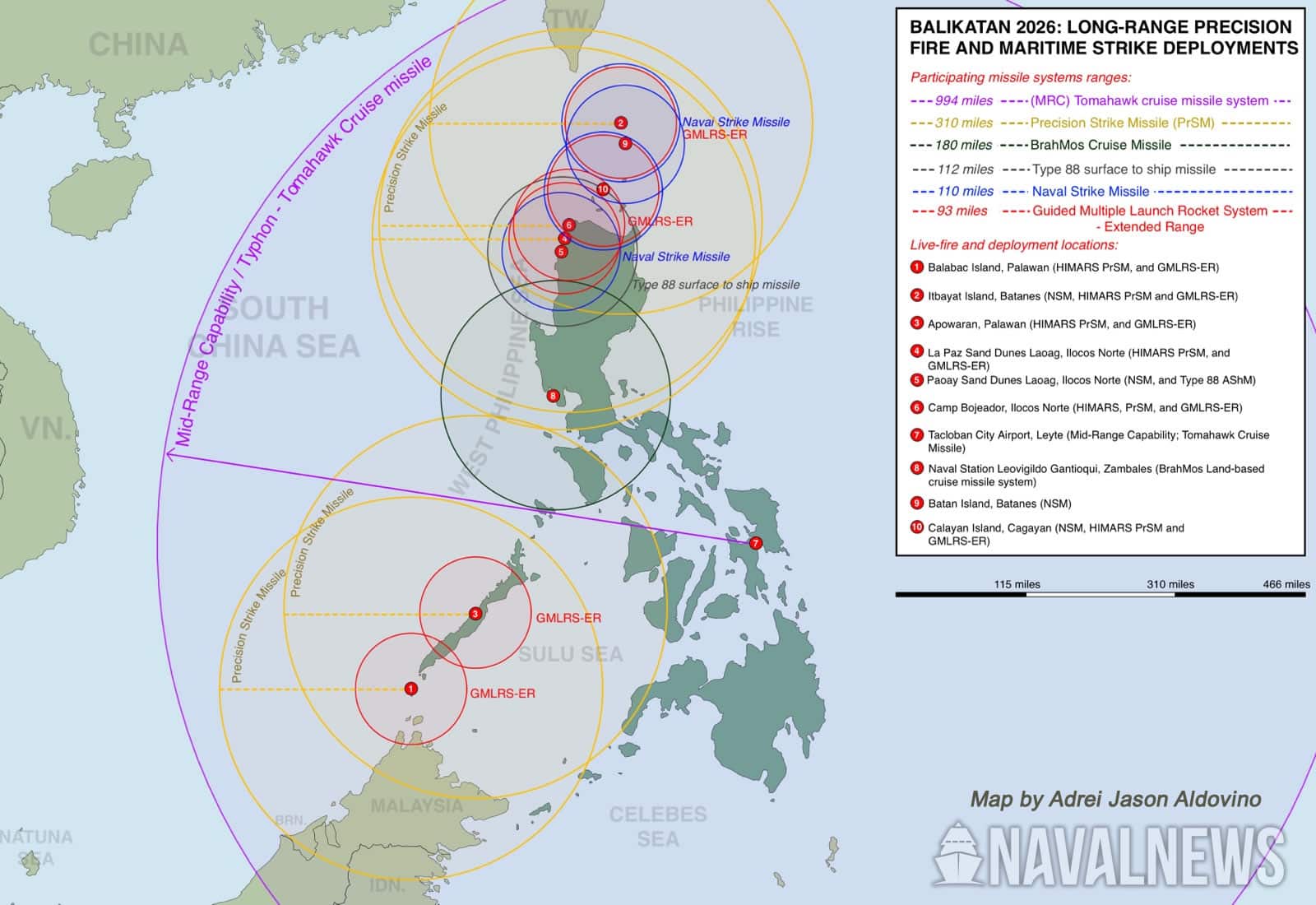
Compared to previous Balikatan drills, this year’s iteration involved a significant deployment of American and partner missile capabilities throughout the Philippines.
Naval News visualized some of the most significant deployments and the capabilities that are currently fielded or planned from these systems. When put together, Balikatan 2026’s missile activities represent an extensive net of long-range fire potential against both fixed and mobile targets at strategic areas across the Philippine archipelago.
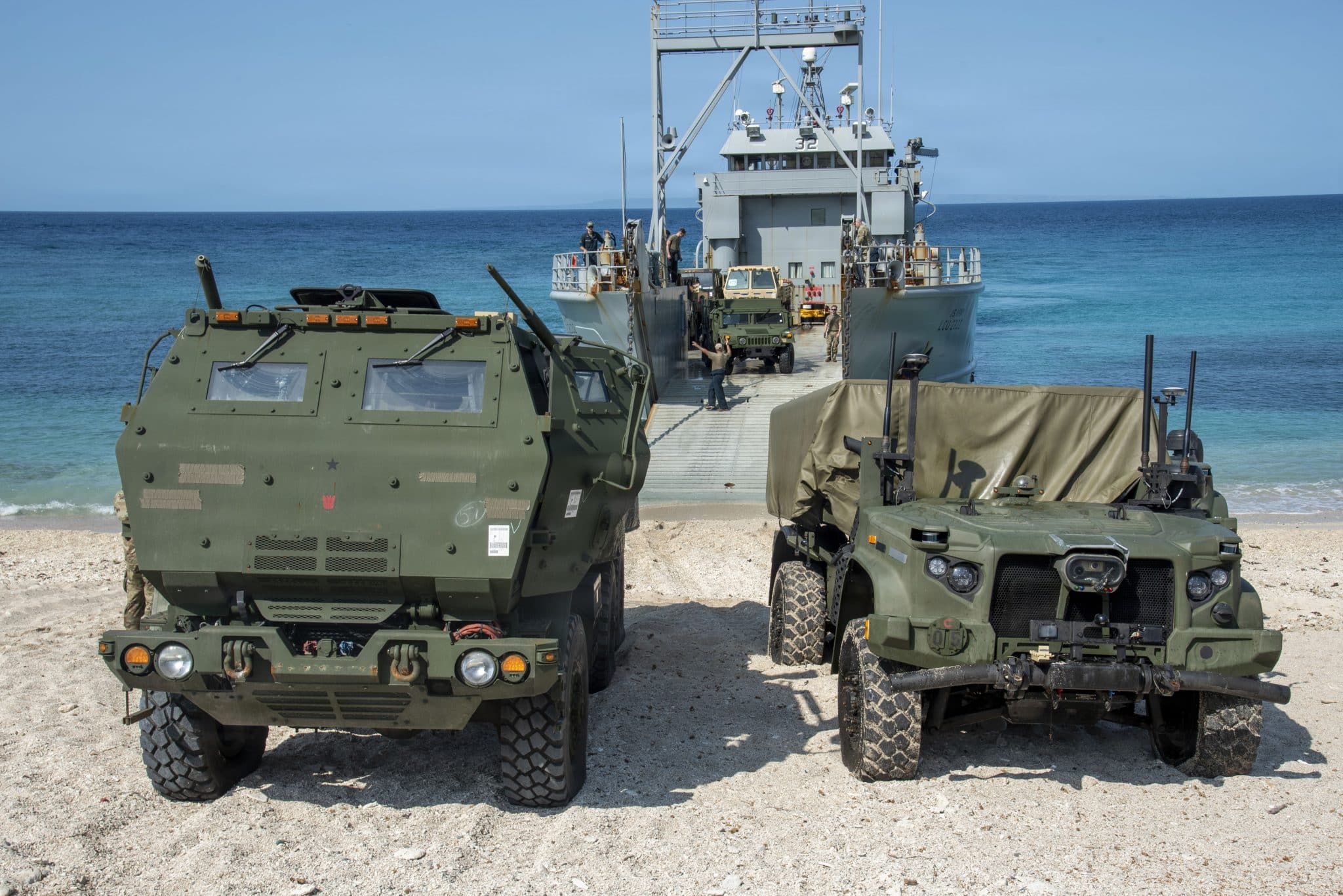
M142 High Mobility Rocket Artillery Systems (HIMARS) from the U.S. Army’s upcoming Multi-Domain Command-Pacific – a formation that combines the 7th Infantry Division with the 1st Multi-Domain Task Force – and the 25th Infantry Division were ferried by watercraft and transport aircraft during the exercise. These deployments often saw HIMARS showcase its rapid insertion capabilities at strategic locations, including within the Luzon Strait and near Chinese artificial island bases in the South China Sea.
HIMARS formations from the two units participated in four live-fire events simulating strikes at enemy maritime targets or defending against amphibious invasions in Palawan and Northern Luzon.
The U.S. Marine Corps 3rd Marine Littoral Regiment, a unit specialized in maritime reconnaissance and maritime strike operations, returned to Balikatan this year with their mainstay Navy/Marine Corps Expeditionary Ship Interdiction Systems (NMESIS). Equipped with two Naval Strike Missiles, these unmanned launchers were first deployed to the Philippines during last year’s drills to demonstrate Washington’s ability to hold vessels transiting the Luzon Strait under threat. Balikatan 2026 saw the unit focus their NMESIS around the same strategic first island chain chokepoint, with American forces deploying the launchers to at least two airfields and beaches in the Batanes Island Group.
Japanese and American Launches Debut Live-Fire of Anti-Ship, Cruise Missiles at Balikatan
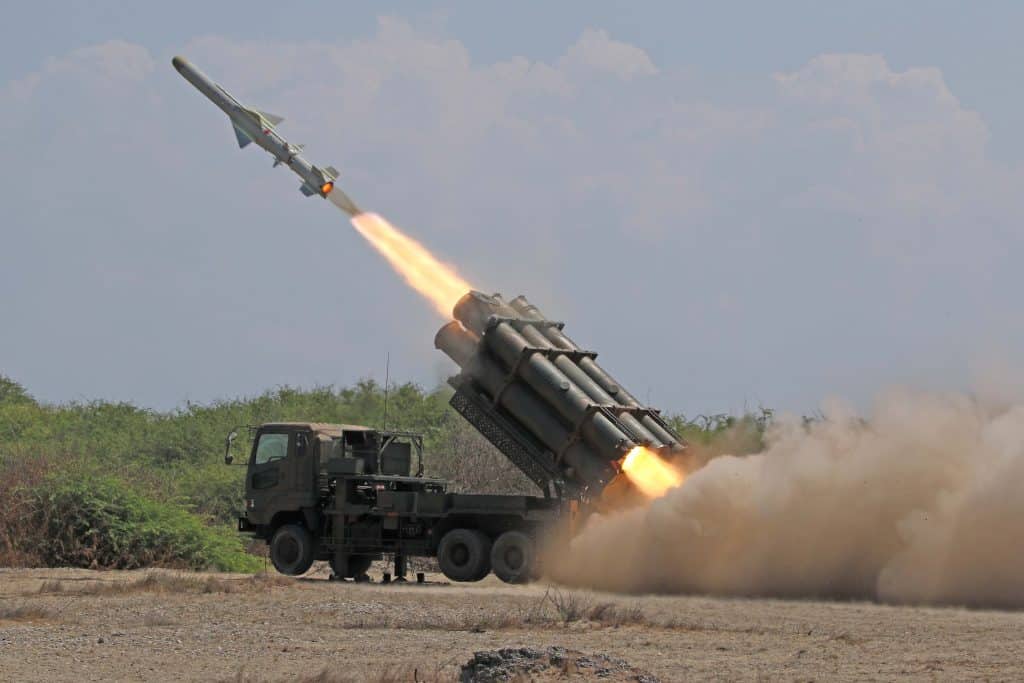
While the Marines did not fire their low-observable anti-ship missiles, they simulated its launch during maritime strike drill in Northern Luzon alongside a live-fire of the Japan Ground Self-Defense Force’s Type 88 Surface-to-Ship Missile (SSM). The 1st SSM Regiment, one of three assigned the service’s Northern Army’s 1st Artillery Brigade, ripple-fired two of the subsonic cruise missiles against a retired Philippine Navy patrol corvette. Tokyo’s maiden participation with its 1,400 contingent debuted the first-ever firing of an anti-ship missile during the almost four-decade-long run of the Balikatan drills.
Balikatan 2026 also saw the first launch of the Mid-Range Capability (MRC), also known as Typhon, during the exercise and within the first island chain. The U.S. Army fired a Tomahawk cruise missile from the ground-based Mark 41 vertical launching system at Tacloban in the Central Philippines to strike a target 390 miles away in Luzon. This system was previously deployed to the Northern Philippines in 2024 for drills that drew protests from China.
The Philippine Marine Corps simulated the deployment of its BrahMos shore-based anti-ship missile systems during Balikatan, although no media of the force’s batteries were released. Stationed at a naval base facing the South China Sea, Manila’s Indian supersonic missiles are the country’s first long-range strike and coastal defense capability. The Coastal Defense Regiment recently stood-up a detachment of troops to be stationed in the northernmost Marine Corps base bordering the Luzon Strait.
Combined, these American, Japanese and Philippine missile deployments showcase a shift toward area-denial, coastal defense and long-range strike missions for the Balikatan series of exercises.