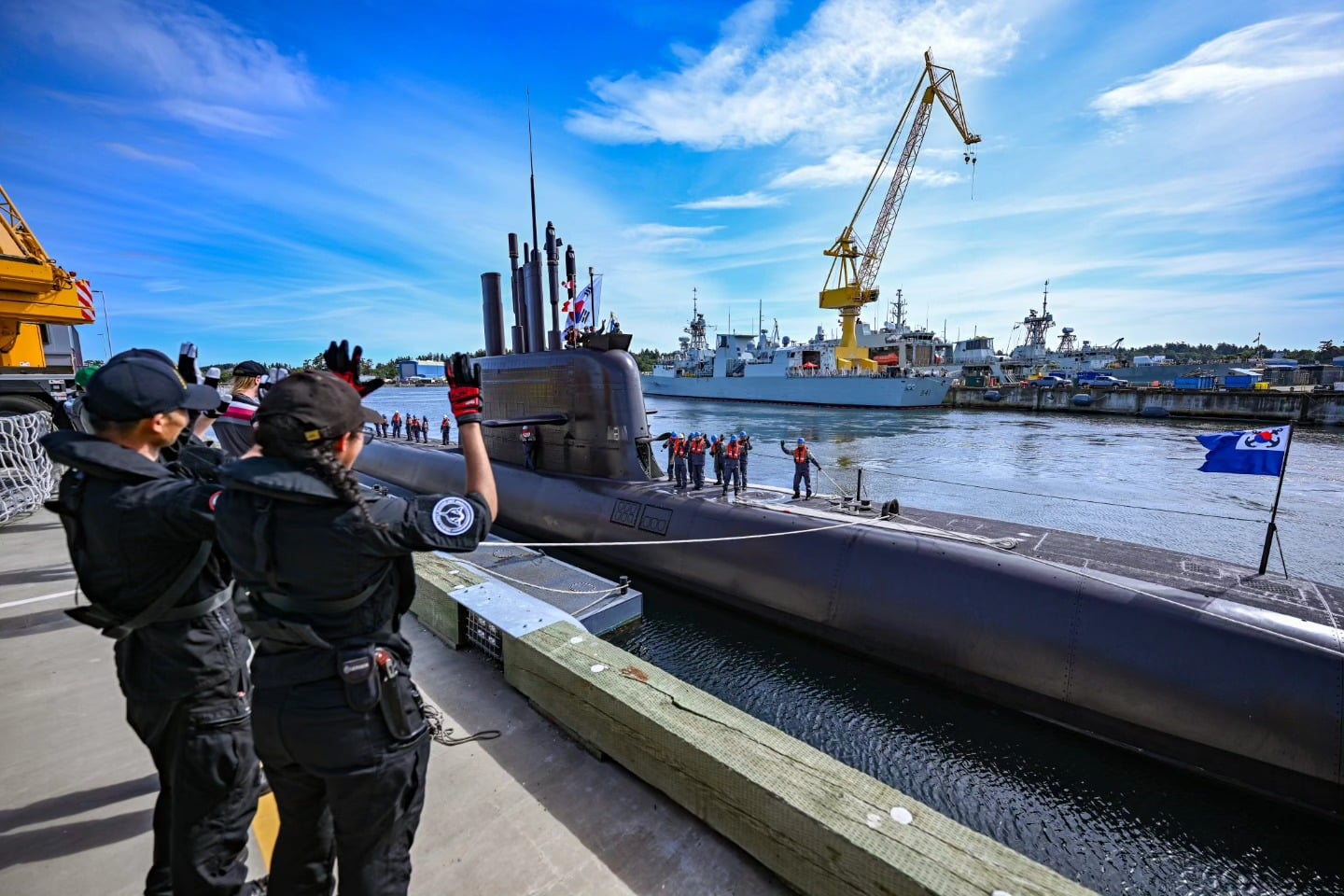
The Republic of Korea Navy’s KSS-III submarine ROKS Dosan Ahn Changho arrived at Canadian Forces Base Esquimalt in Victoria, British Columbia, on May 23, completing the first trans-Pacific voyage by a South Korean submarine.
The milestone deployment marks the longest voyage ever undertaken by a Republic of Korea Navy submarine. The 3,000-ton-class submarine sailed approximately 14,000 kilometers from Jinhae Naval Base in South Korea to Canada’s west coast, passing through Guam and Hawaii before reaching Victoria.
ROKS Dosan Ahn Changho departed Jinhae on March 25 to take part in planned naval cooperation activities and combined training with the Royal Canadian Navy. During the trans-Pacific deployment, the submarine made logistics stops in Guam and Hawaii. From Hawaii, two Royal Canadian Navy submariners embarked on the submarine for the final stretch to Victoria, allowing Canadian personnel to observe KSS-III operations at sea.
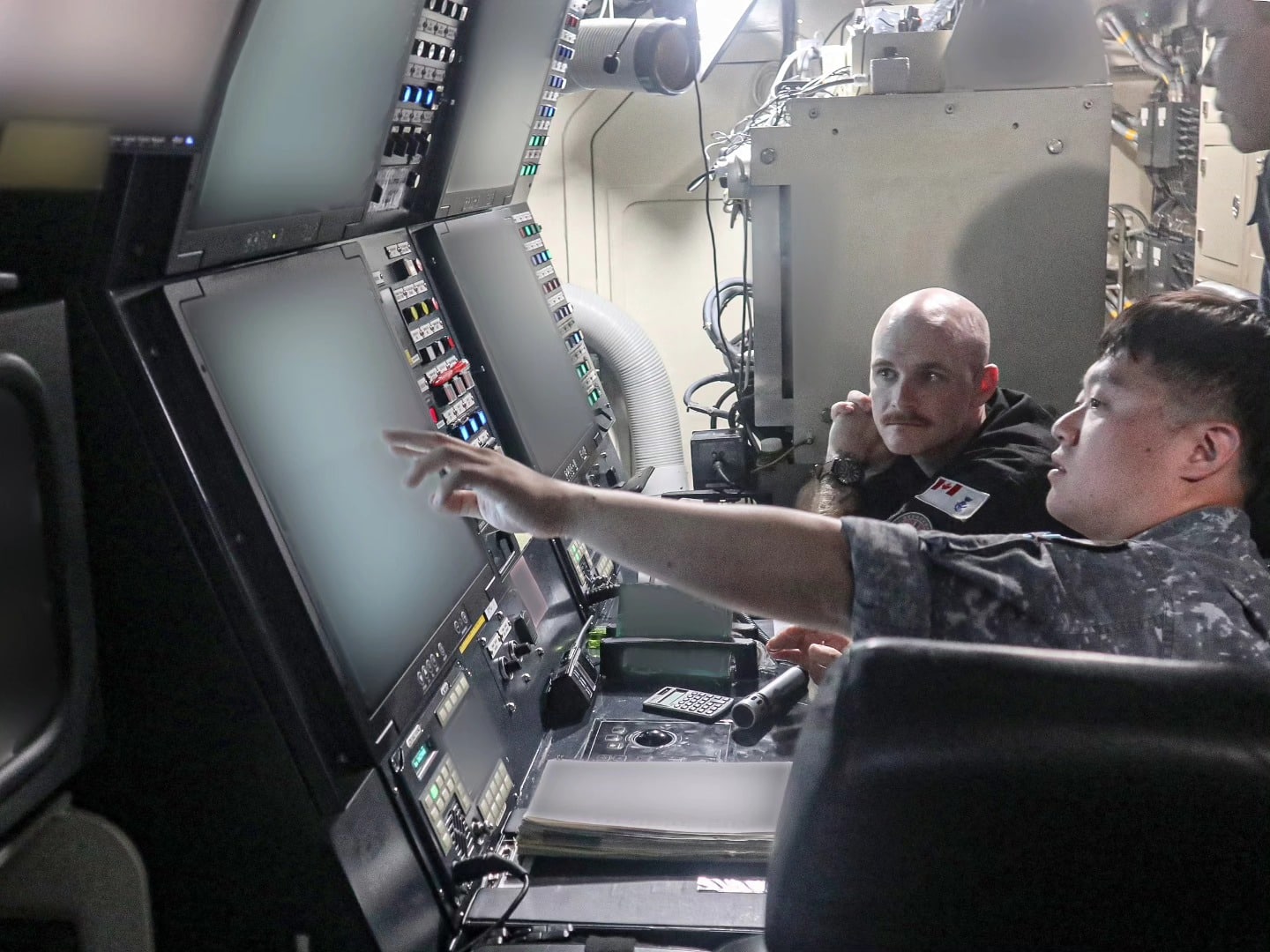
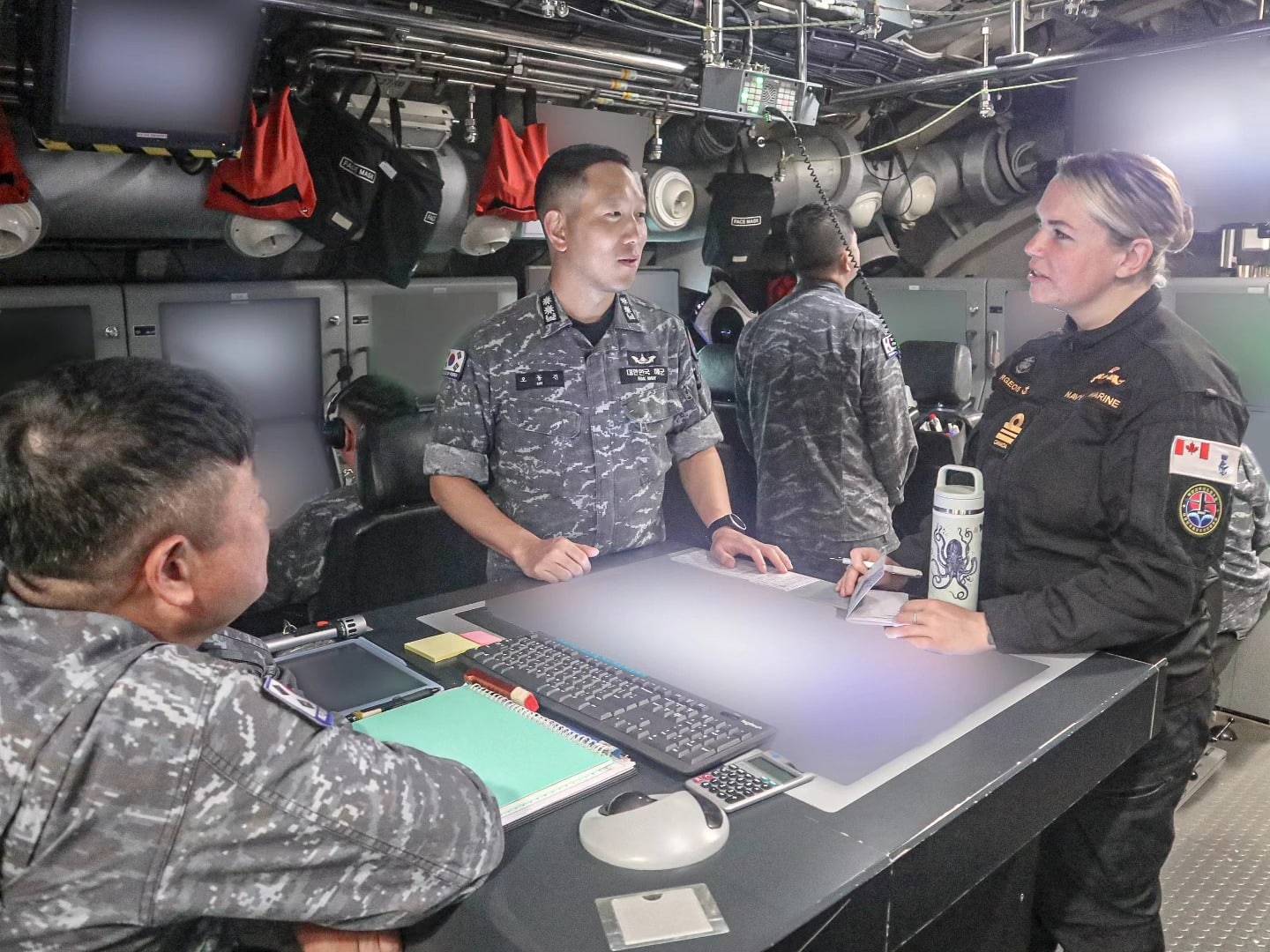
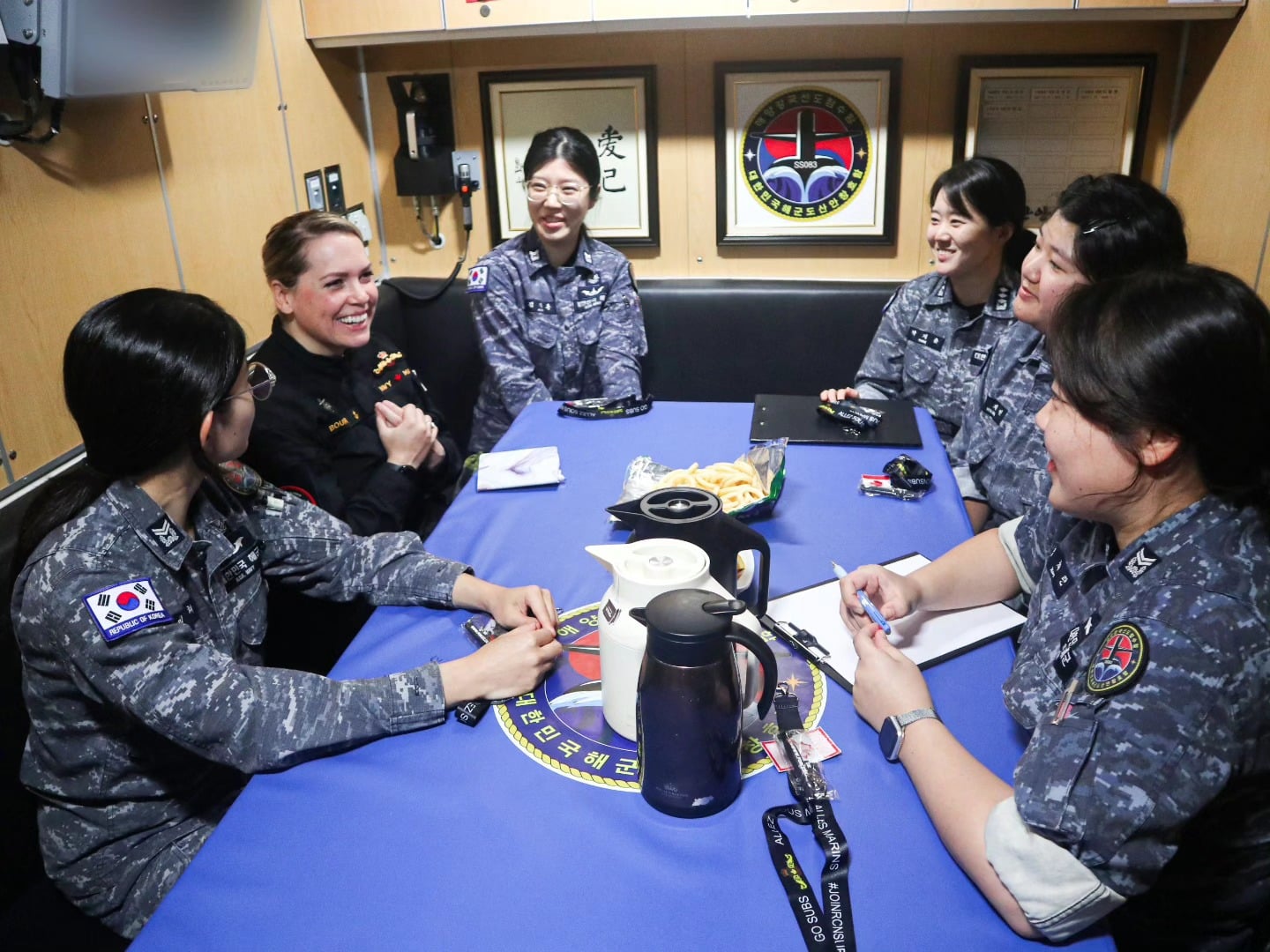
One of the Royal Canadian Navy submariners who embarked on the submarine described the experience in positive terms. “Being on a state-of-the-art submarine like this has really shown us that we have a great future ahead. It’s not going to be a steep learning curve. It’s going to be a very easy transition. Everything felt so familiar.”
On the way to Canada, the submarine also demonstrated communications interoperability with the Royal Canadian Navy. According to the ROK Navy Submarine Force Command, ROKS Dosan Ahn Changho successfully communicated with Maritime Forces Pacific on May 18 using the combined C4I command-and-control system installed on board. It was the first time a South Korean-built submarine had established communications with Canada’s Pacific naval command through a combined C4I system, demonstrating the ROK Navy’s ability to extend command-and-control connectivity beyond its traditional U.S.-centered alliance network to other key partners.
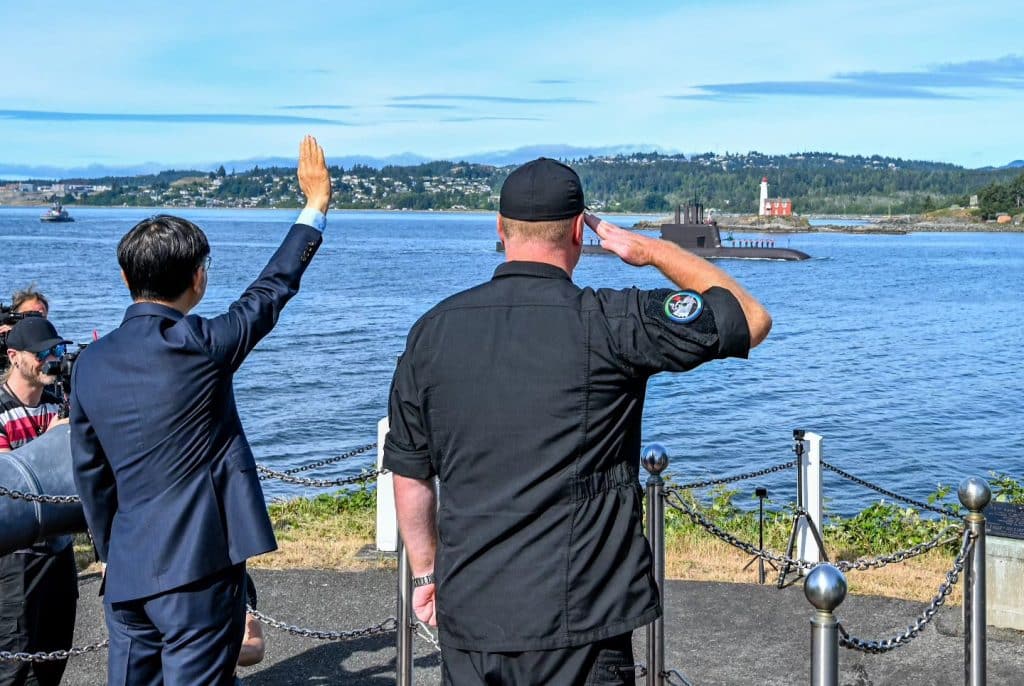
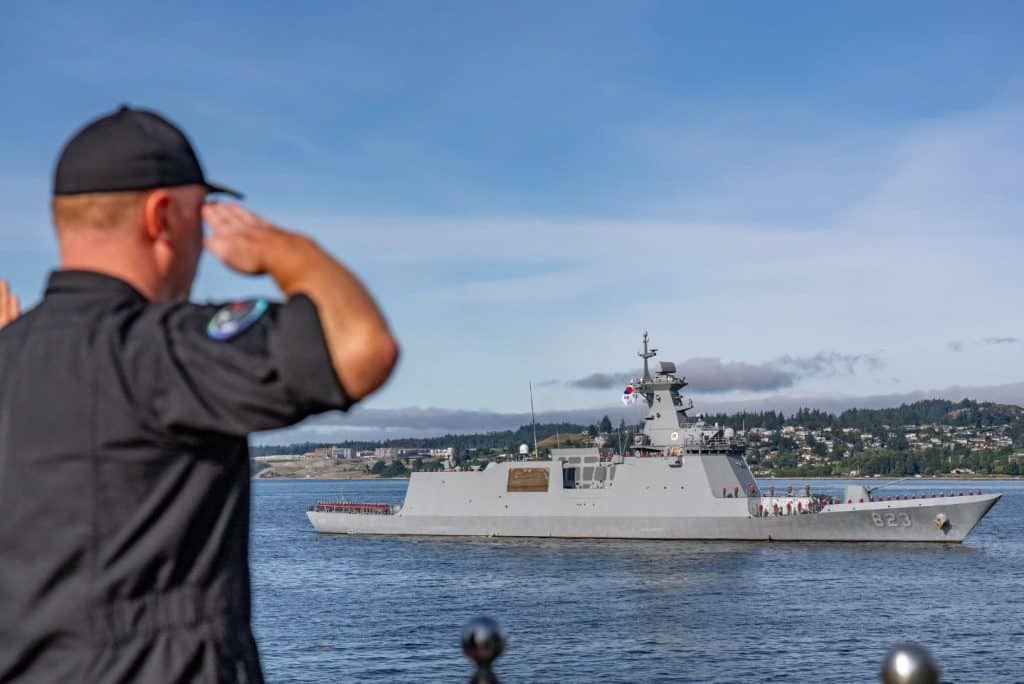
The submarine was accompanied by the ROK Navy frigate ROKS Daejeon, a 3,100-ton-class Daegu-class frigate. Upon arrival at Esquimalt, the crews of ROKS Dosan Ahn Changho (SS-083) and ROKS Daejeon (FFG-823) rendered naval honors to Canadian and South Korean officials at the pier, including the commander of Canada’s Pacific naval forces and South Korea’s ambassador to Canada.
The arrival carries operational and strategic significance. While South Korean submarines have previously sailed as far as Hawaii, this is the first time a ROK Navy submarine has crossed the Pacific Ocean to reach North America. The deployment demonstrates the long-range endurance of South Korea’s domestically built submarine force and provides a showcase of the KSS-III platform in a blue-water operating environment.
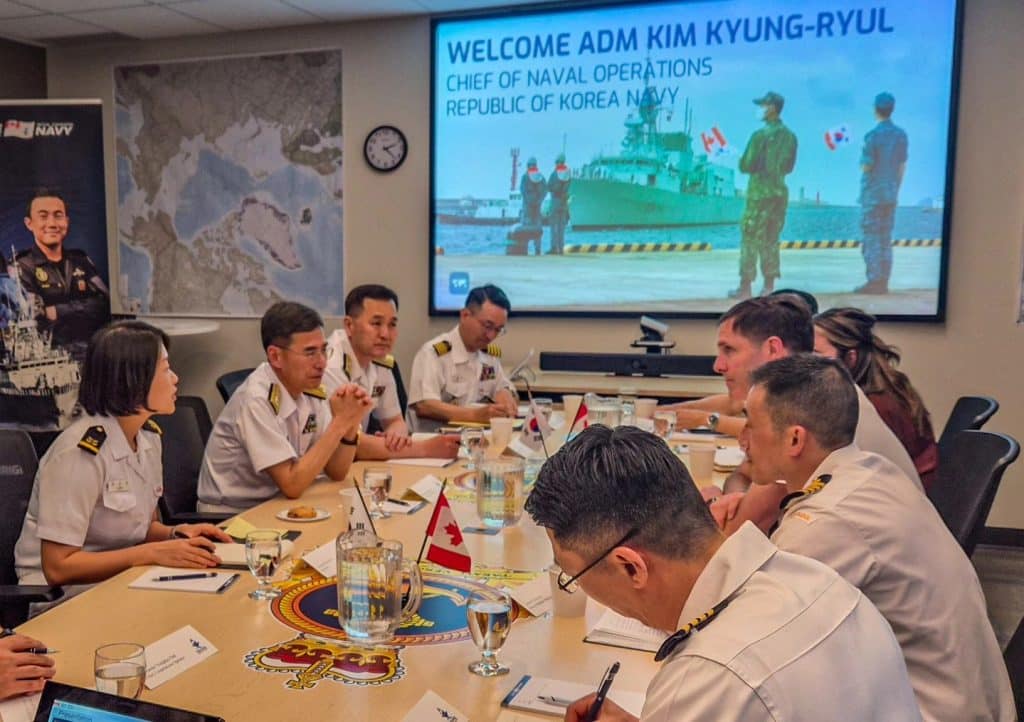
The deployment was accompanied by high-level naval talks in Ottawa. On May 22, ROK Navy Chief of Naval Operations Adm. Kim Kyung-ryul met with Vice-Admiral Angus Topshee, Commander of the Royal Canadian Navy and incoming Vice Chief of the Defence Staff, to discuss ways to strengthen military cooperation and support defense-industrial collaboration between the two countries. According to the ROK Navy, the two sides discussed practical measures such as expanding combined exercises and personnel exchanges.
The visit also comes as Canada is moving forward with the Canadian Patrol Submarine Project (CPSP), a major program to replace the Royal Canadian Navy’s aging Victoria-class submarines. South Korea’s KSS-III design, proposed by Team Korea, Hanwha Ocean and HD Hyundai Heavy Industries, is competing against Germany’s ThyssenKrupp Marine Systems Type 212CD for Canada’s future submarine requirement. The Korean bid is being pursued with government-level support, including proposed industrial and technological cooperation, long-term sustainment support, and broader defense-industrial partnership measures.
Hanwha Ocean has also sought to strengthen the industrial component of Team Korea’s CPSP campaign through partnerships with Canadian shipbuilding, technology and academic institutions. Earlier this year, the company signed agreements with Ontario Shipyards and Mohawk College to support shipbuilding capability and workforce development, and later announced additional teaming agreements and university MOUs aimed at bringing Canadian companies and researchers into its global submarine supply chain.
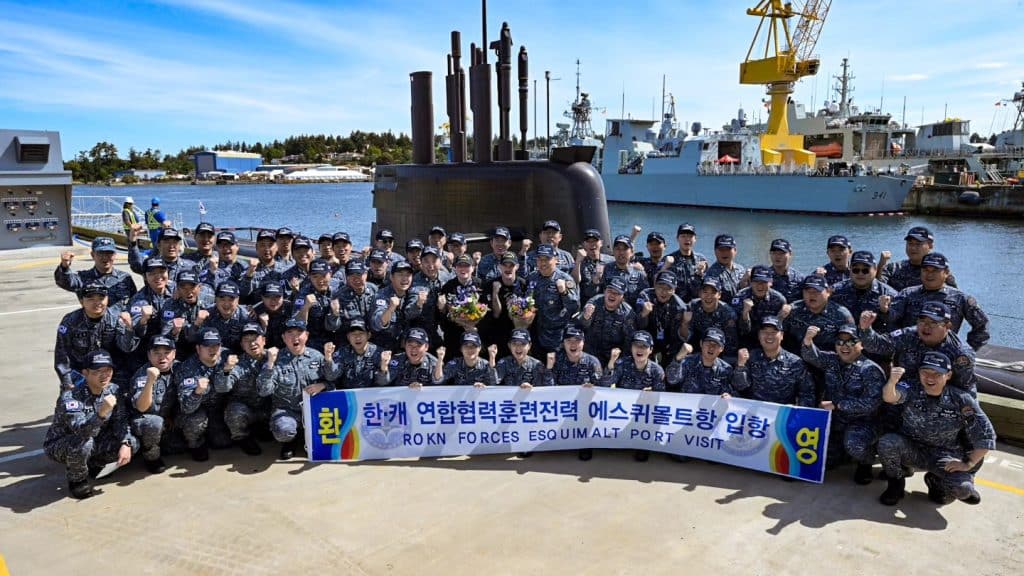
Engagement between the two navies is expected to continue during the ROK Navy’s port visit to Esquimalt, scheduled from May 23 to June 2. During the visit, ROKS Dosan Ahn Changho and ROKS Daejeon are set to take part in professional exchanges and other activities with the Royal Canadian Navy. After completing its activities with the Royal Canadian Navy, ROKS Dosan Ahn Changho is expected to proceed to Hawaii to participate in the U.S. led RIMPAC 2026, before returning to South Korea.