The future Henderson Defence Precinct near Perth in Western Australia is one of two primary shipbuilding and maintenance facilities supporting operations and future growth of the Royal Australian Navy. In this outline Naval News will provide a detailed overview of the present structure at this facility, policy planning for future modernisation and expansion, and finally, some of the most notable challenges in these regards.
As outlined in the Integrated Investment Program published in late April this year, Australia intends to invest approximately A$ 25 billion over a decade to establish the Henderson Defence Precinct for shipbuilding and sustainment. Construction of new surface vessels includes the future general purpose frigates sourced from Japanese shipbuilder MHI. The new facility also provides contingency docking for Australias future nuclear powered attack submarines and sustainment for the Collins-class submarines. Finally, Henderson supplies depot-level maintenance for SSNs of Australia, the United States and the United Kingdom. Work initially includes the provision of a new floating dock. For longer term-service planning includes several graving docks, in addition to a comprehensive overhaul of existing facilities distributed across Henderson.
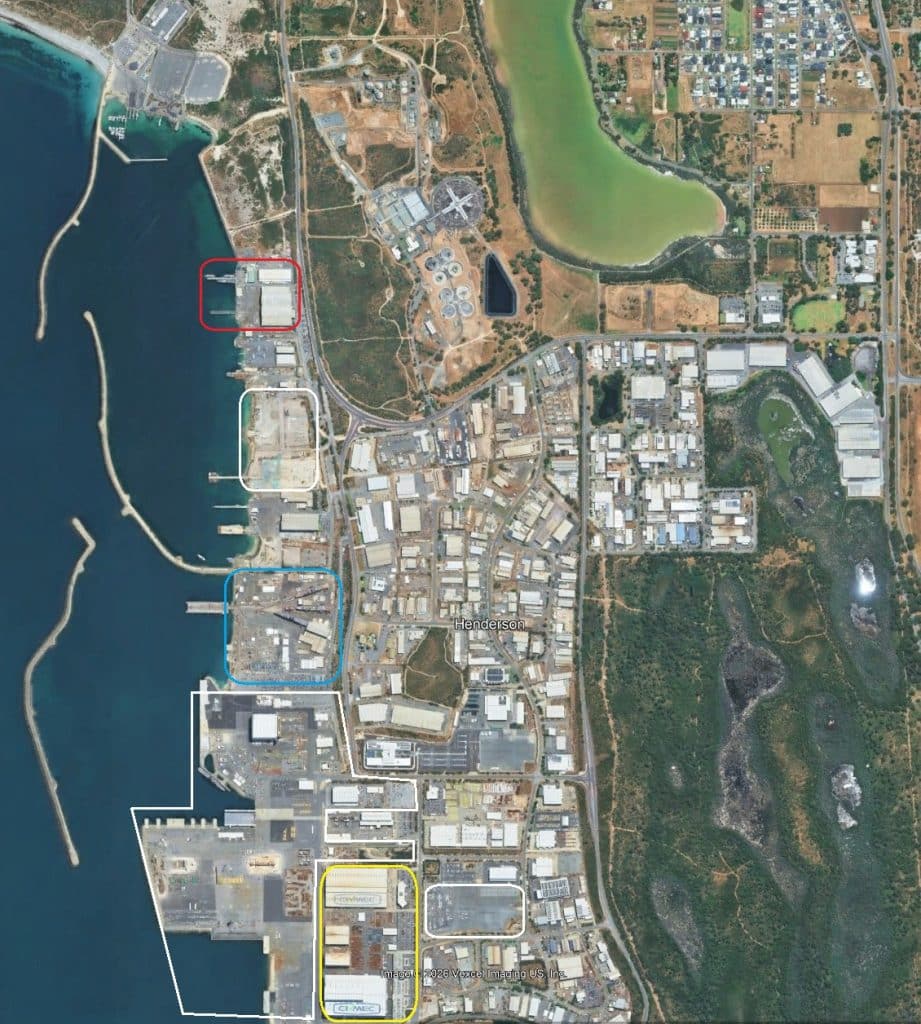
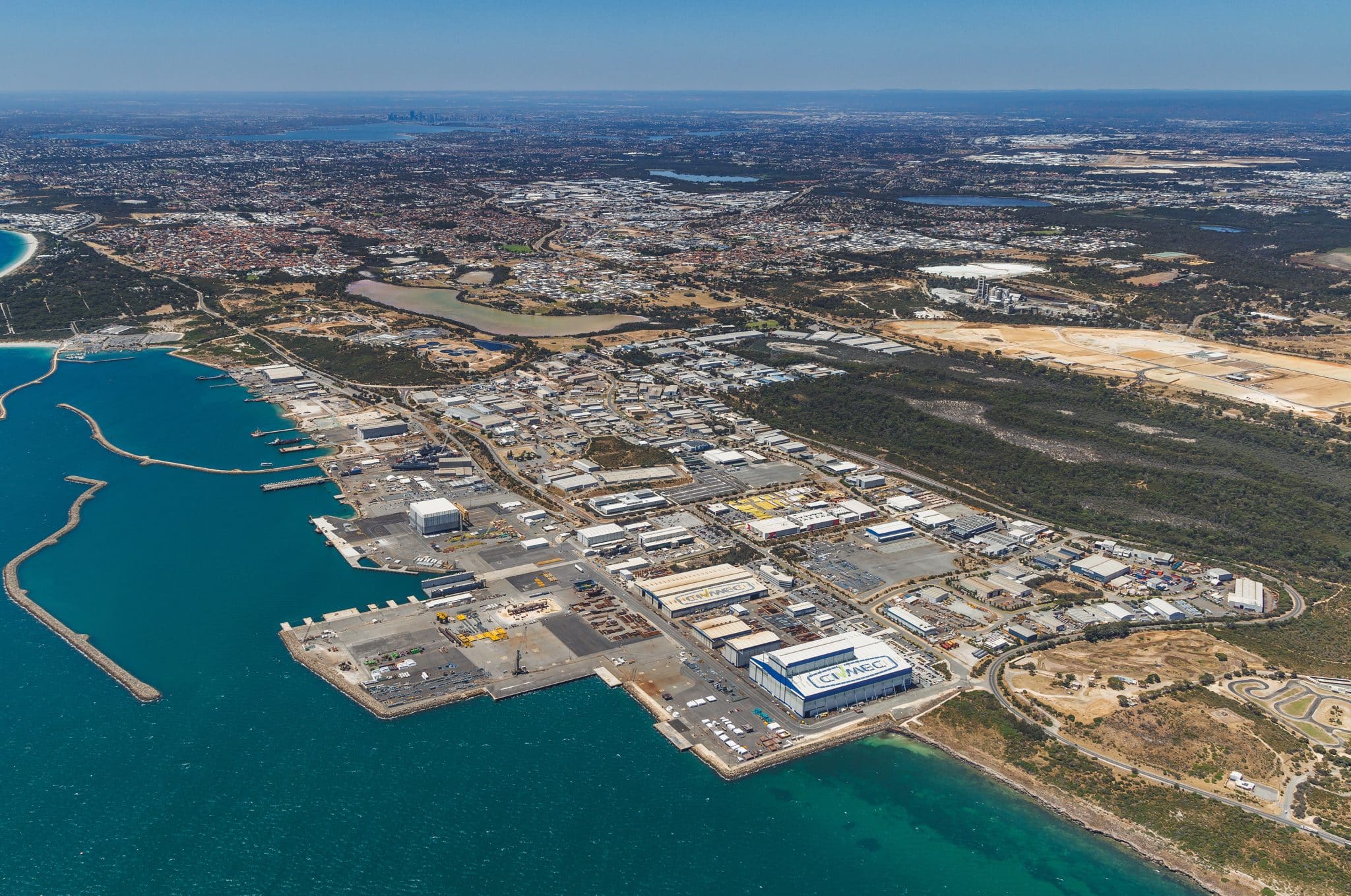
The Henderson Defence Precinct is a new integrated facility located within the larger Australian Marine Complex (AMC). The location derives its name from the Perth suburb of Henderson, approximately 23 km south of the city centre. The AMC commenced operations 2003, centred on the government-owned so called “Common User Facility” (CUF). Since then multiple companies specialising in shipbuilding and the resource industry in Western Australia established themselves around the CUF. The most notable of these are Austal, now the declared “Strategic Shipbuilder” for the Australian government, BAE Systems and Civmec.
Austal – The Strategic Shipbuilder
Austal presently resides at the northern end of the AMC. The company operates a total of six production bays distributed across several buildings. Austal has a renowned focus on aluminum-hulled vessels for civilian and military applications. Notable examples include the Independence-class Littoral Combat Ships produced in Alabama, USA. Austal’s facilities at the AMC focus on aluminium-component manufacturing, sub-assembly, final assembly and fitting out of finished boats and ships. A prominent example of designs produced at Austal’s facilities in Henderson are the Cape- and Evolved Cape-class patrol boats in service with the Royal Australian Navy and Australian Border Force. Austal so far has completed over 20 of these 400 ton-vessels with aluminium hull and superstructure.
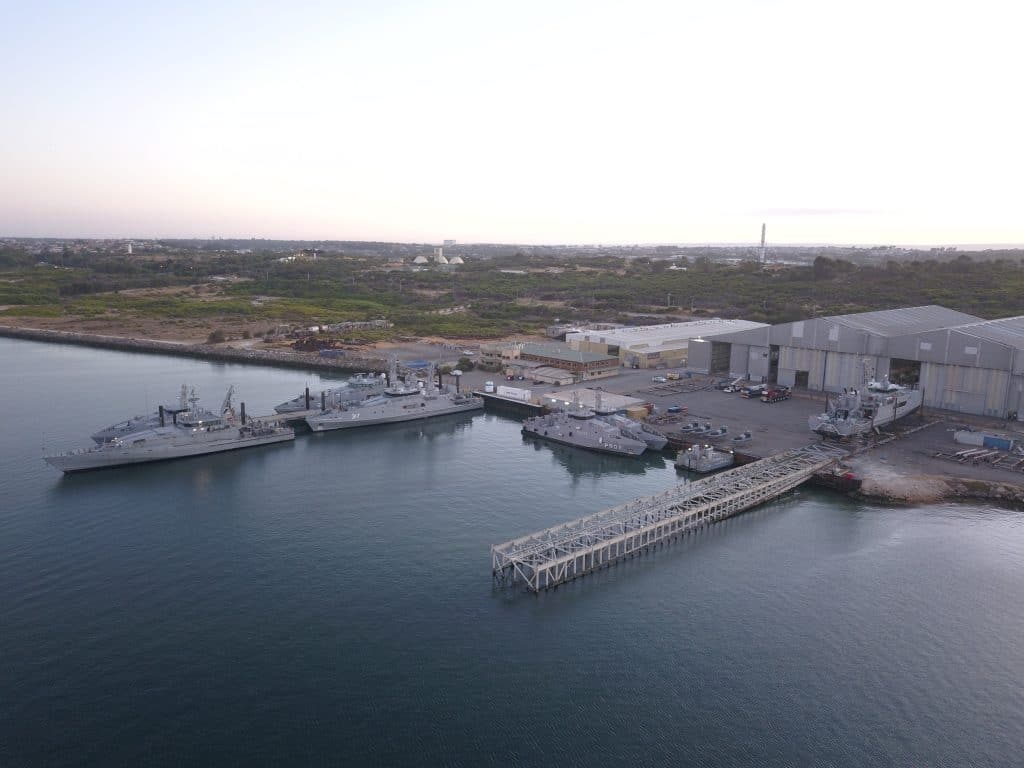
More recently the company has also produced the Guardian-class patrol boats. The Australian government supplies these vessels to various Pacific and Indian Ocean island-nations under the Pacific Maritime Security Program. Guardian notably is a steel-hulled design with aluminium superstructure, in contrast to the preceding Capes. Austal produces steel hulls at a separate facility dubbed the Pacific Patrol Boat Replacement Production Facility on Hope Valley Road about 5 km southwest of Henderson. The yard then moves the hull-segments to Henderson for final assembly and fitting out, including the superstructure.
Two amphibious landing craft-programmes about to commence
Under the Strategic Shipbuilding Agreement (SSA) between the Australian Government and Austal the company will construct 18 Landing Craft Medium (LCM) for the Australian Army. The contract signed in December 2025 is worth A$ 1 billion. LCM is a 50 metre long landing craft. The blue water-capable vessel is capable of moving nearly 100 tons of cargo to a range exceeding 2,000 nautical miles. The Birdon-design is steel-hulled and consequently Austal will assemble LCM in a similar fashion to Guardian-class boats. The company intends to cut first steel on this effort in the near future.

The SSA furthermore covers construction of eight new Landing Craft Heavy (LCH). The Australian government and Austal signed a related contract worth A$ 4 billion on February 20, 2026. LCH is a Damen-designed amphibious landing ship with a displacement of nearly 4,000 tons at a length of 100 metres. Damen previously built the design for the Nigerian Navy at a company-owned shipyard in the United Arab Emirates.
Pressure is on for developing Henderson, while frigates loom large
Unlike LCM and other preceding Austal-build vessels a first batch of LCH will see construction at the Common User Facility, “before the program moves to a permanent location”, as the contract announcement by the Australian government notes. This remark points at the need for a new facility producing larger vessels like LCH and the new frigates. The concurrency further illustrates the scale of the challenge in executing several ambitious shipbuilding programs. After some delays on LCM the two efforts are now occuring nearly at the same time. Austal expects to start construction on LCH before the end of 2026.

Once Austal can satisfy government expectations on the landing craft-efforts, the yard will proceed to construct eight of 11 general purpose frigates (GPF) the Royal Australian Navy is to receive under SEA 3000. What the construction arrangement will look like for the new frigates is contingent on progress establishing the Henderson Defence Precinct and the related development on LCH. Austal is presently in the initial stages of coordination with MHI on requirements for construction on GPF from the early 2030s.
BAE Australia and the exit of Luerssen Australia
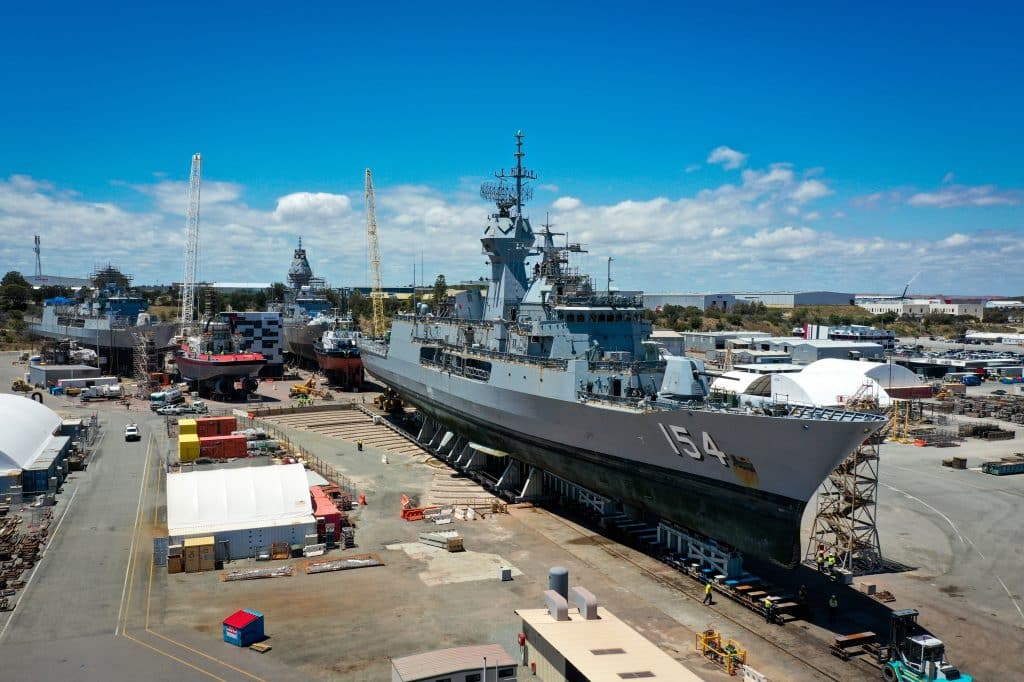
BAE Systems operates the Marine Support Facility located in the centre of Henderson between Austal and Civmec. The MSF features extensive dry-berth support infrastructure and is a prominent landmark due to contracted support work for the remaining ANZAC-class frigates of RAN. It includes a ship-lift capable of moving vessels up to 140 metres in length and 23 metres in beam.
How future planning will impact the BAE facility and contracted workload remains to be determined. As reported in Australian media the company recently cut over 150 jobs at the Henderson-site due to defence work slowing down.
The challenging environment in which companies provide services to Australian defence projects has previously triggered the departure of Luerssen Australia from their facilities in Henderson. Luerssen Australia originally acted as the contractor on SEA 1180 for the construction of twelve Arafura-class OPVs. Luerssen Australia subcontracted ASC at Osborne in South Australia for the construction of two units, followed by assembly of another ten OPVs through Civmec in Henderson. After difficulties executing the effort and conflicts between changing Australian governments and the company SEA 1180 subsequently experienced a cut to six vessels in February 2024. Luerssen Australia ceased operations in 2025, selling its assets to Civmec, which is now executing construction of the remaining four Arafura-class OPVs.
Comprehensive infrastructure footprint at Civmec
Civmec itself commenced operations at Henderson from 2011. The company is heavily invested in production of maritime infrastructure for the resource industry as the economical backbone of Western Australia. Nevertheless Civmec’s senior leadership has developed a remarkable desire to also engage in the defence sector. Sub-contracting work for Luerssen on SEA 1180 represented the most notable recent development in this regard. When Luerssen exited the Arafura-effort, Civmec acquired Luerssen Australia and integrated the operation as Civmec Defence Industries (CDI) into its own corporate structure.
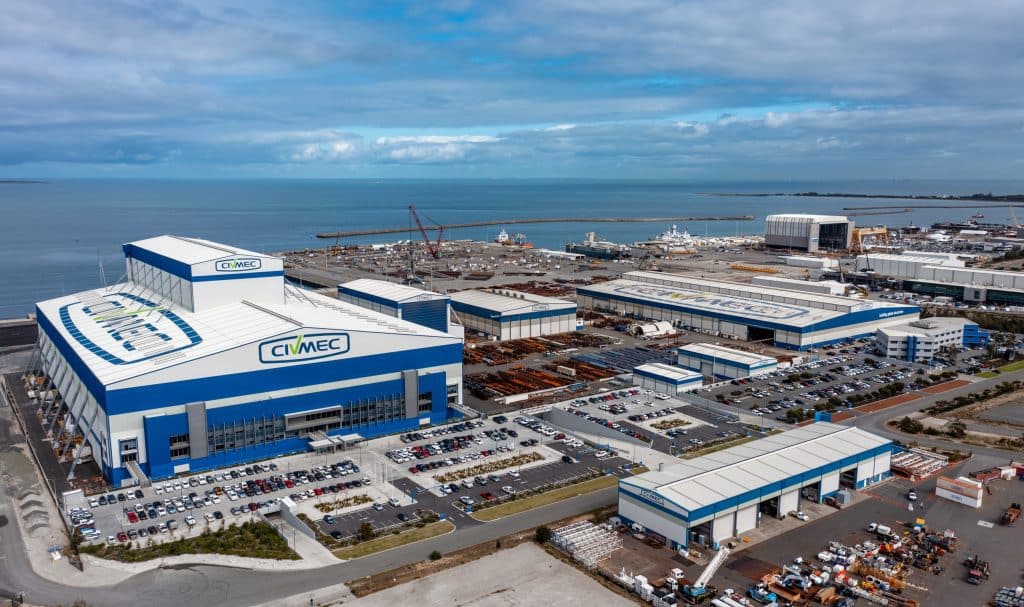
The Civmec-facilities at Henderson are located at the southern end of the precinct. Two prominent large assembly halls bookend an open storage area and smaller buildings supporting construction and painting operations. The southern hall used for final assembly and fitting out can accommodate two frigate- or destroyer-sized vessels side by side due to an elevated ceiling across the centre section. Additonally, the building provides space for up to four OPV-sized vessels in bays on each side, a notable difference to other existing facilities at the AMC, such as BAE’s open air-dry berthing or the smaller halls at Austal.
Uncertain defence contracting prospects despite improved performance
As noted, Civmec is presently in the process of finishing construction on the four remaining Arafura-class OPVs. Naval News understands that the company has gained significant experience from executing this program. One example is the highly modular assembly process, where large modules undergo an extensive degree of subsystem integration before final assembly. The result of these changes has been a gradual speeding up of the construction process on each new OPV. The company is using the large indoor capacity to its advantage after final assembly as well. Instead of the more traditional approach of launching a completed hull and proceeding to further fitting out work berthside, new OPVs now undergo extensive fitting out while still inside the building. The resulting vessel then offers a higher degree of completion at launch, cutting down on time spent in the water at the yard.
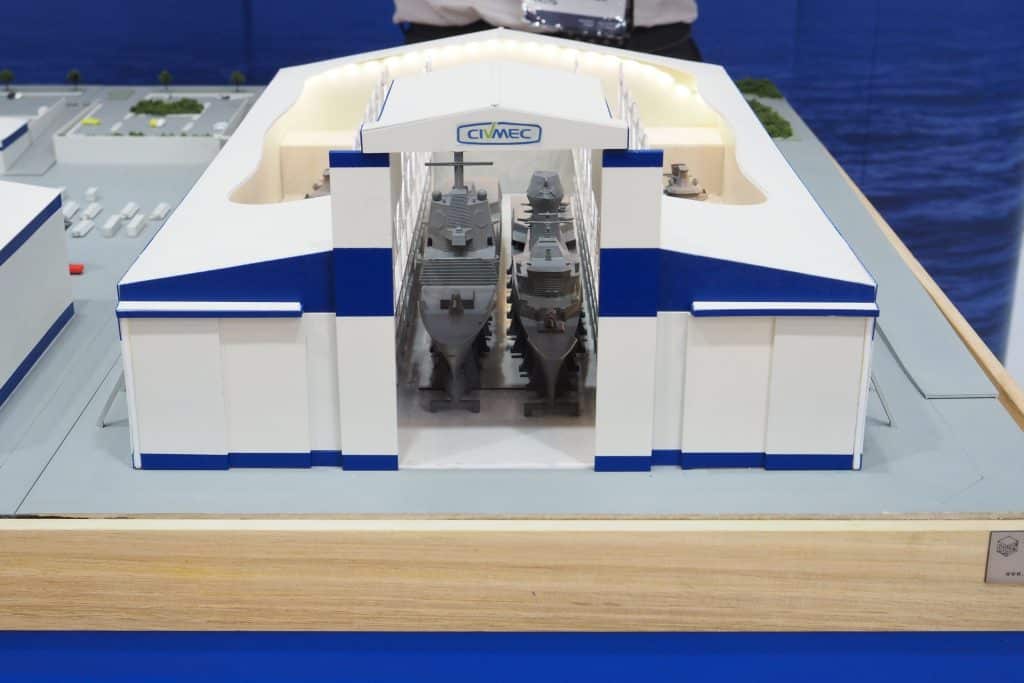
Despite this imposing shipbuilding capacity Civmec’s future share of defence activities at Henderson hangs in the balance. The Australian government so far is focused on Austal as the Strategic Shipbuilder. Canberra has not detailed any notional involvement of Civmec in the future development of the Henderson Defence Precinct. The builder for now remains committed to completing the remaining three Arafura-OPV, having launched the third hull, NUSHIP Pilbara in December 2025. SEA 1180 will likely see completion by 2028, with all units in service by 2029.
Conclusion
As outlined in this analysis, future development of the Henderson Defence Precinct faces multiple challenges within a very short timeframe. Austal will face a significant acceleration in program management and execution due to concurrent work on LCM and LCH. At the same time the builder will also need to prepare for anticipated construction of the GPF from the early 2030s.
Simultaneously, the Australian government with local political and industry stakeholders will have to rapidly produce and implement a detailed development plan for the new precinct. In addition to shipbuilding this effort needs to consider a tight schedule for supporting submarine operations under the Submarine Rotational Force-West out of adjacent HMAS Stirling from 2027, and the arrival of the first Australian Virginia-class submarine from 2032.
Both aspects will create additional urgency for facilities at Henderson coming online and supporting maintenance activities. Finally, the Australian government will need to provide clarification over the extent and distribution of industry engagement at Henderson, regarding both BAE Australia and Civmec.