The future of naval shipbuilding could be described as the ability to transform proven solutions into continuously evolving platforms. Fincantieri’s FCx30 embodies this approach: a mature, flexible and future-ready surface combatant, designed to integrate new sensors, weapons and digital tools in accordance with mission requirements throughout its service life.
Sponsored by

The FCx30 is rooted in a proven operational and industrial heritage, shaped by Fincantieri’s long-standing presence in the Gulf region and history of successful naval programmes delivered to regional customers. This expertise reached new heights in Qatar, where Fincantieri acted as the prime contractor for one of the largest and most complex naval acquisition programmes in the region, demonstrating the Group’s ability to meet high level requirements, managing every aspect, from design and construction to delivery and lifecycle support.
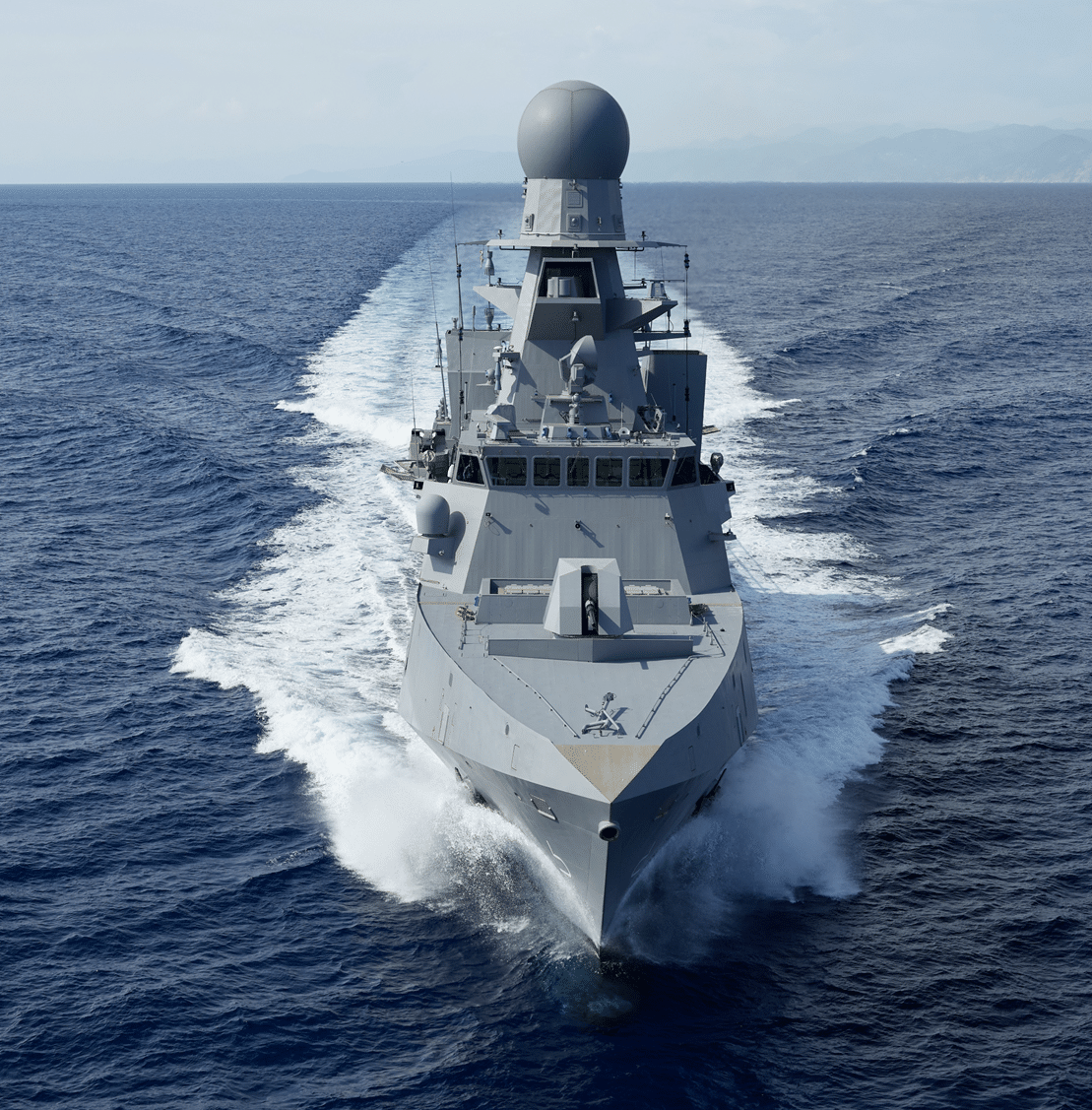
The four Al Zubarah-class Units1, delivered to Qatar between 2021 and 2023, demonstrated Fincantieri’s ability to deliver a series of high-end, heavily armed corvettes. The FCx30 takes this proven foundation and moves it forward, offering a more adaptable, digitally supported and continuously upgradable platform for other customers in the region as well as in Europe.
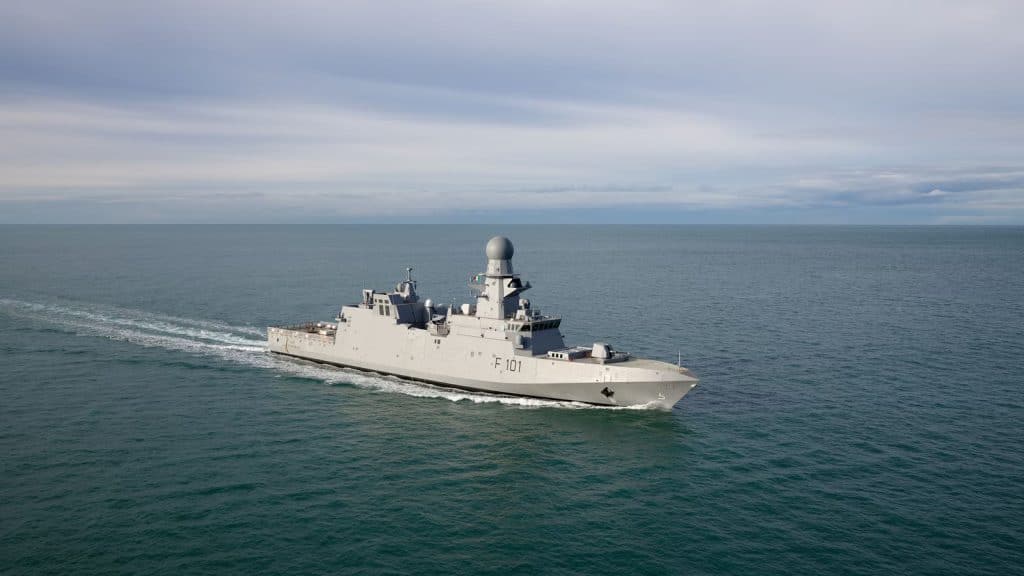
The FCx30’s platform has been developed with adaptability at its core. Different customers may require a variety of different capabilities: anti-air warfare, anti-surface warfare, anti-submarine warfare, maritime security, escort operations, special forces support or a balanced multi-role profile. The FCx30 is designed to meet these needs through flexible combat system architecture and a reconfigurable approach to equipment integration.
With a length of around 107m and a displacement exceeding 3,200t, the platform has been conceived with sufficient margins to integrate a powerful combat system, ranging from a 76mm main gun to surface-to-air and anti-ship missiles, a close-in weapon system, multifunctional radar, electronic warfare capabilities and a fully integrated combat management system. In its most capable configuration, the design can also accommodate heavier effectors, confirming the ability of this compact surface combatant of being configured for diverse mission sets and progressively upgraded as operational requirements evolve.
This approach allows Navies to adapt the platform over time, responding to evolving threats without losing the advantages of a mature baseline. This is particularly relevant in today’s maritime environment where surface combatants must operate against increasingly complex threats, including advanced missiles, submarines, unmanned systems and electronic warfare. As a result, a modern warship must be designed from the outset as an upgradeable asset.
Anti-submarine warfare (ASW) is one example of this flexibility. In previous discussions on naval requirements, Fincantieri has presented an FCx30 configuration with enhanced ASW capabilities, including hull-mounted sonar, variable depth sonar, torpedoes, and low-noise propulsion features. This demonstrates how the same platform can be adapted to specific operational environments and customer priorities.
Survivability is another key element of the design. The FCx30 has been conceived to provide resilience levels usually associated with first-line surface combatants, including the ability to retain a significant share of propulsion and power-generation capability even in damaged conditions. The separation and redundancy of vital subsystems contribute to preserving functional chains after damage, while high automation standards support both operational effectiveness and crew safety.
Digitalization is also central to the platform’s evolution. Fincantieri is applying its digital twin approach to the FCx30 to support maintenance, training and lifecycle management. This enables the ship to be monitored and supported through data-driven tools, improving availability, predictive maintenance, configuration control and crew preparation. The same digital framework also supports design optimization, enabling engineers to refine hardware, software and future specifications on the basis of real data from the physical ship. At the same time, the FCx30 is designed as a cyber-resilient, secure-by-design unit, ensuring that the growing use of digital tools is matched by a high level of protection against cyber threats and by robust architecture for mission-critical systems.
This is where Fincantieri’s broader vision becomes clear: The strategy is to not simply offer platforms, but to develop naval systems that can be modernized continuously. Fincantieri’s objective is to provide customers with naval vessels that remain operationally credible over time, supported by industrial expertise, digital tools and a clear technology insertion path.
The FCx30 also reflects Fincantieri’s ability to innovate the way naval ships are built. The production engineering principle behind the platform extends to the mast concept, where a significant part of the combat system is housed, and can be built and tested in parallel with the hull. This approach reduces delivery times, anticipates combat system integration and simplifies future maintenance and mid-life upgrades. It is a concrete example of how Fincantieri combines ship design, systems integration and production innovation to respond to increasingly demanding naval procurement timelines.
From this perspective, the FCx30 should be seen not only as an advanced corvette design, but as a technological baseline for the future evolution of Fincantieri’s surface combatant portfolio for the FCx Series, in designing light frigates of around 4,000-4,500t, preserving the same design DNA while expanding mission scope, combat-system capabilities and upgrade margins.
Compact but ambitious, well-proven but never static, the FCx30 reflects Fincantieri’s ability to anticipate the evolution of naval warfare and translate proven shipbuilding experience into future-ready capability.