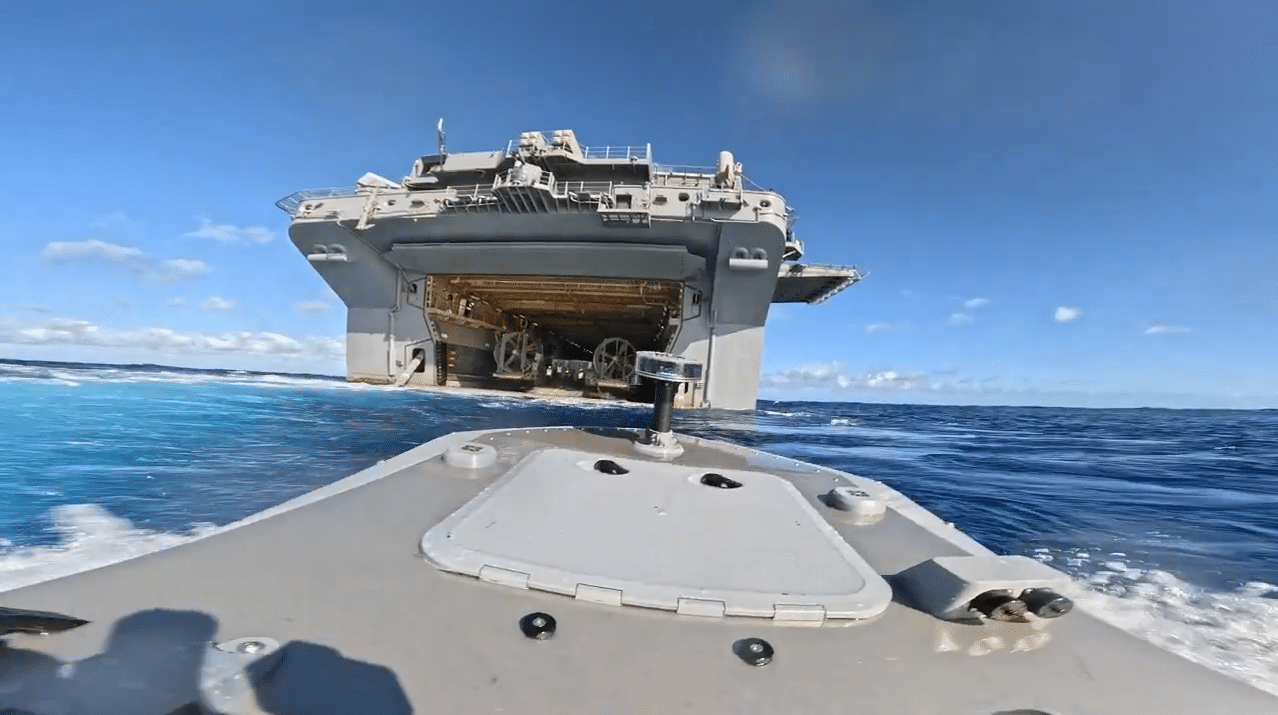
As part of the ongoing Rim of the Pacific (RIMPAC) 2026 naval exercises, a Splash Industries Typhoon Unmanned Surface Vessel (USV) successfully landed in the well deck of the Wasp-class Landing Helicopter Dock USS Essex (LHD-2), marking the first instance of a USV performing an underway replenishment for a larger, crewed vessel.
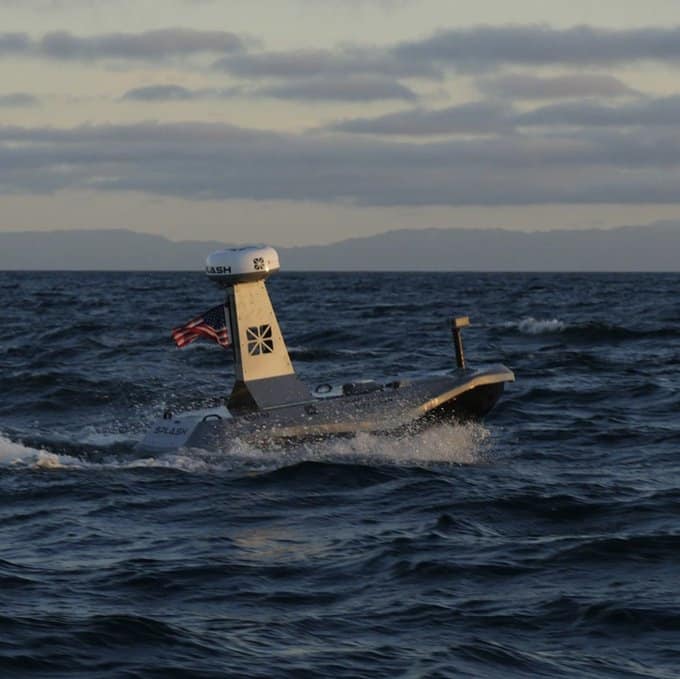
Splash Industries’ CEO Ivan Avanesov posted a short video on X capturing the moment the Typhoon “drone-boat” type USV came aboard the Essex’s well deck as several sailors spectated. The payload of the vessel is unknown, but the Typhoon has the ability to carry several different types of cargo/sensor packages, changing to match what the assigned mission may demand.
The Typhoon itself offers a 600+ nautical mile range with the ability to loiter for extended periods of time, meaning that this resupply could have taken place over several hundred of miles of open ocean. Additionally, the Typhoon navigated and functioned autonomously throughout the mission, presenting the ability to supply cargo to vessels underway without constant operator oversight.
Splash Industries, the manufacturer of the Typhoon also states that the vessel carries a sustained speed of 50+ knots, with Avanesov further stating that the vessel reached and maintained speeds in excess of 70 knots in testing. The Typhoon thus demonstrated a novel capability of resupplying vessels whilst underway, but also proves the fluidity of the small to medium sized USV market as several new players continue to compete for a slew of contracts.
The U.S. Navy’s Focus on Unmanned Craft
Alongside the adoption of USVs in the supply role, the U.S. Navy has begun to experiment with all manner of usages in regards unmanned surface. For instance, on July 13th Naval News reported on the use of three Saronic Corsair USVs laden with explosive packages against an Iranian Submarine at the port of Bandar Abbas, marking the first usage of a USV in a strike role by the U.S. Navy.
Additionally, USVs have also been continually utilized by the Navy, Coast Guard, and other agencies for years performing coastal/river based maritime surveillance. The Navy also used USVs in a search and rescue capacity as another Saronic Corsair USV was used in the rescue of two U.S. army AH-64 Apache attack helicopter pilots after their helicopter went down over the Strait of Hormuz earlier this year.
Whilst not as prominent as the U.S. Navy’s manned assets in force posture, the increasing level of emphasis on the involvement of USVs in operations, exercises, and future force planning signifies the faith that the U.S. Navy has in the utility of USVs. Additionally, examples such as Ukraine’s usage of UUVs/USVs in corralling the Russian Black Sea Fleet have likely provided somewhat of a blueprint regarding Unmanned vessels, which the U.S. Navy now seeks to capitalize on.