Fairbanks Morse Defense and Vestdavit are advancing AutoHook, an automated connector designed to make USV launch and recovery from motherships safer, faster and less reliant on personnel during demanding at-sea operations.
By Fairbanks Morse Defense
The maritime industry is moving towards autonomy. Unmanned surface vessels, or USVs, are relevant to naval, offshore energy, security, survey, and scientific operations. Yet one challenge remains: launching and recovering these craft safely and reliably from a moving mothership when conditions at sea become demanding. Fairbanks Morse Defense and Vestdavit are addressing this through AutoHook, an automated connector developed for Launch and Recovery Systems. By reducing the need for personnel at the critical connection point, AutoHook supports safer operations today while enabling automation of davit-based launch and recovery.
The Operational Challenge
The growth of unmanned maritime technology has highlighted a gap between the capability of the craft and the systems used to handle them. Existing recovery approaches may involve manual hook connections using personnel in the craft or divers, heavy cage systems, stern ramps or complex crane arrangements. These methods can expose people to moving equipment and suspended loads, add weight to the vessel or require costly structural modifications. For many operators, the challenge of safely recovering a USV remains a practical barrier to adopting or expanding unmanned capability.
What AutoHook Is
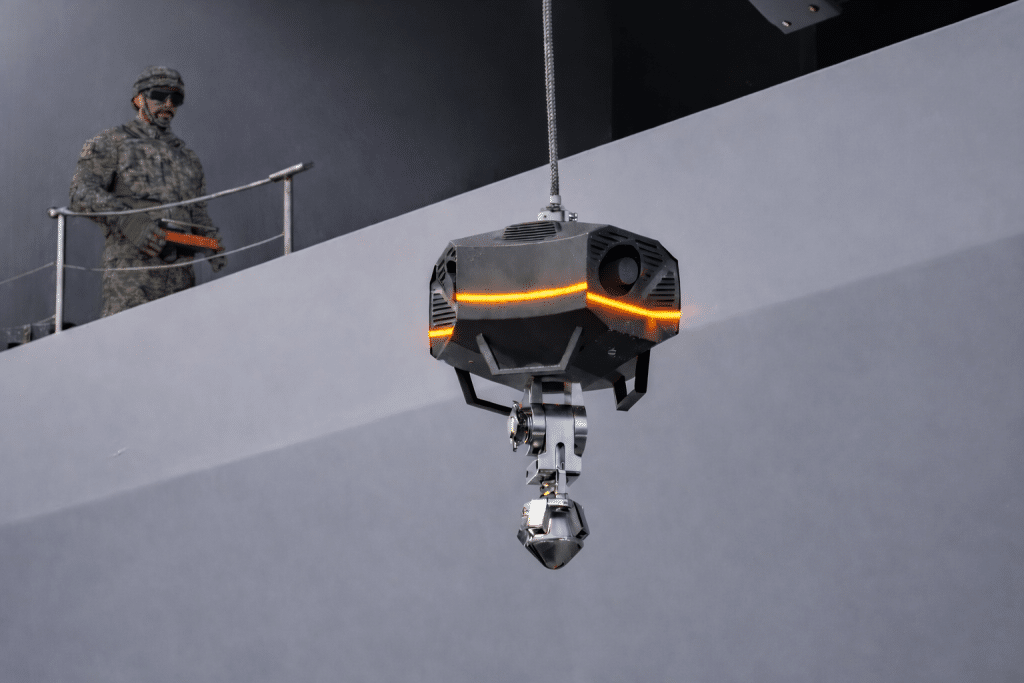
AutoHook is a lightweight automated connector designed to create a ship-to-craft lifting connection with minimal crew involvement. It combines an integrated vision system, controlled tracking and onboard air thrusters to locate, follow and align with the lifting receptacle on a moving craft below. Once positioned, the connector engages with the receptacle and communicates confirmation to the davit operator. This removes the need for a person in the USV to stand at the connection point and manually attach the lifting hook during dynamic recovery.
The system is designed for integration with davit-based launch and recovery arrangements with limited additional weight and installation impact. Its compact, self-contained footprint creates opportunities for newbuild and retrofit projects, including integration with existing davits. Rather than requiring a dedicated stern ramp or extensive redesign, AutoHook offers a route to handle USVs using proven davit-based technology.
How the System Works
During launch, the craft remains secured to the lifting wire and painter line while the davit moves it into position and lowers it towards the sea. After water contact, the craft stabilises while controlled tension is maintained. The davit operator then commands AutoHook to release the lifting connection, followed by the painter line, allowing the USV to transition into autonomous or remotely controlled operation.
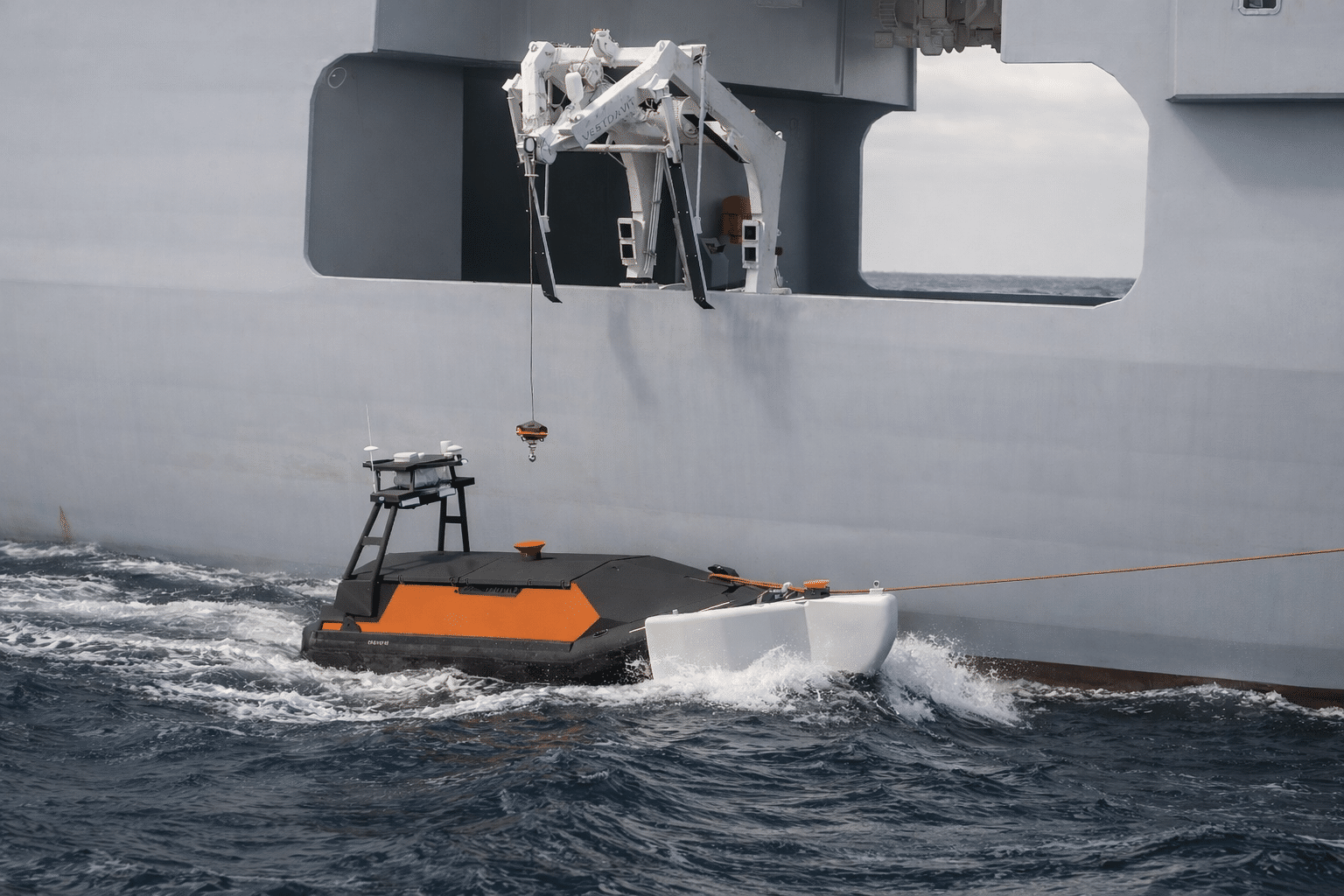
Recovery presents the more complex task. As the USV approaches the mothership, AutoHook activates its vision system and searches for the lifting receptacle. Vestdavit’s Floating Catching Device (FCD) can establish a stabilising painter-line connection between the ship and USV. AutoHook then tracks the moving target and uses its thrusters to align the connector above the lifting point while the wire is lowered. The connector centres and engages with the daughtercraft’s lifting point. AutoHook confirms the connection and displays its status to the operator, who can then hoist the craft and return it to its cradle.
Safety and Operational Value
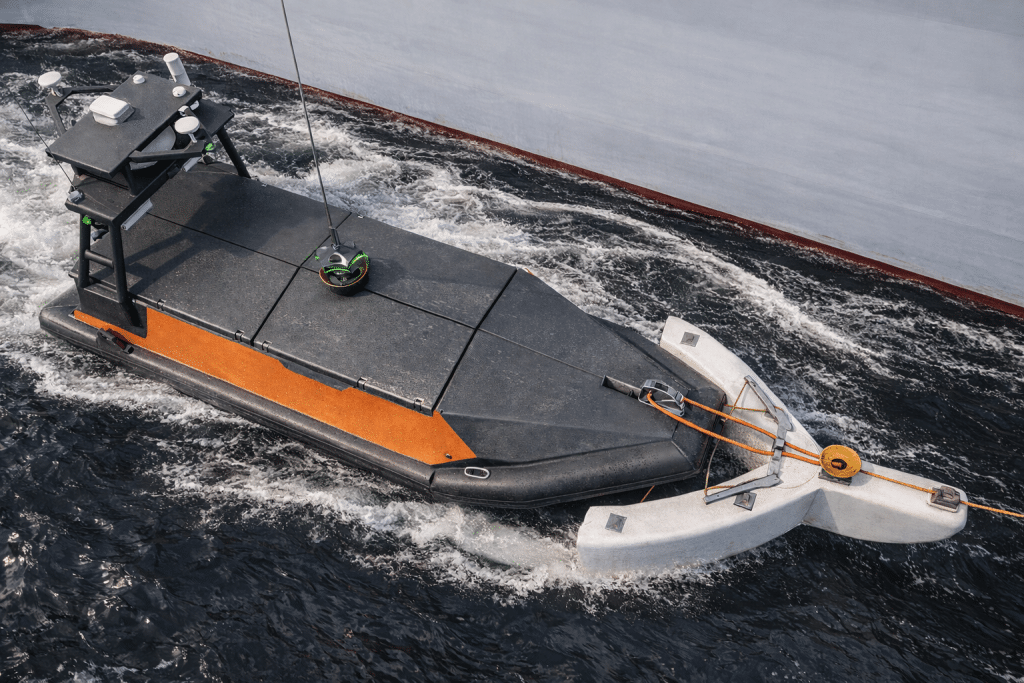
Safety is central to the AutoHook concept. Conventional launch and recovery operations can place personnel near moving vessels, tensioned lines and heavy equipment. Vessel motion increases uncertainty and risk, especially when weather and sea conditions deteriorate. By automating the connection stage, AutoHook reduces workload and personnel exposure while building on proven davit operating principles. It introduces automation where it provides immediate operational value and lays the foundation for increasingly automated launch and recovery.
The result is safer handling, greater mission readiness and a lower threshold for adopting unmanned maritime systems. Automated target acquisition and alignment can support more consistent recovery procedures, while the compact design helps limit additional weight and deck-space requirements. For naval users, AutoHook provides a practical route to recover unmanned assets in demanding or high-risk environments while reducing the need for personnel at the lifting point.
Development and Validation
AutoHook has progressed from proof of concept into industrialisation, testing and operational validation, while the design continues to mature for production. Simulation models are being used to assess combined ship and USV motion, supporting the verification of both hardware and software. Iterative testing, sea trials and simulation have guided the design towards operation through Sea State 4.
Open-water operation of the industrialised prototype from a naval vessel with professional crews is planned for Q4 2026. This represents an important milestone in the programme and will provide further experience in operational acceptance, system integration and procedural compatibility. Beta testing and collaboration with selected customers will continue to inform the product’s development towards production and wider operational use.
A Platform for Future Capability
AutoHook responds to a practical market requirement. Unmanned vessels need launch and recovery systems that support their autonomy. A craft may conduct its mission without people on board, but the value of that capability is reduced if recovery still depends on personnel making a hazardous manual connection. By combining automated vision, controlled tracking, thruster-assisted alignment and compatibility with davit-based handling, AutoHook aims to close that gap.
“This innovation developed by Vestdavit, a leading provider of bespoke davits and lifesaving solutions, strengthens our established position within launch and recovery technology. Its lightweight, adaptable design can support collaboration with ship designers, USV manufacturers, naval organisations and commercial operators. It will also create future opportunities for safer handling of manned craft where reducing manual exposure remains valuable,” says Rolf Andreas Wigand, FMD Managing Director of Davits.
AutoHook is more than a connector. It is an enabling technology for the next generation of maritime operations. By linking advanced unmanned craft with proven davit expertise, it supports safer launch and recovery, more flexible vessel integration and a practical path towards greater automation at sea.