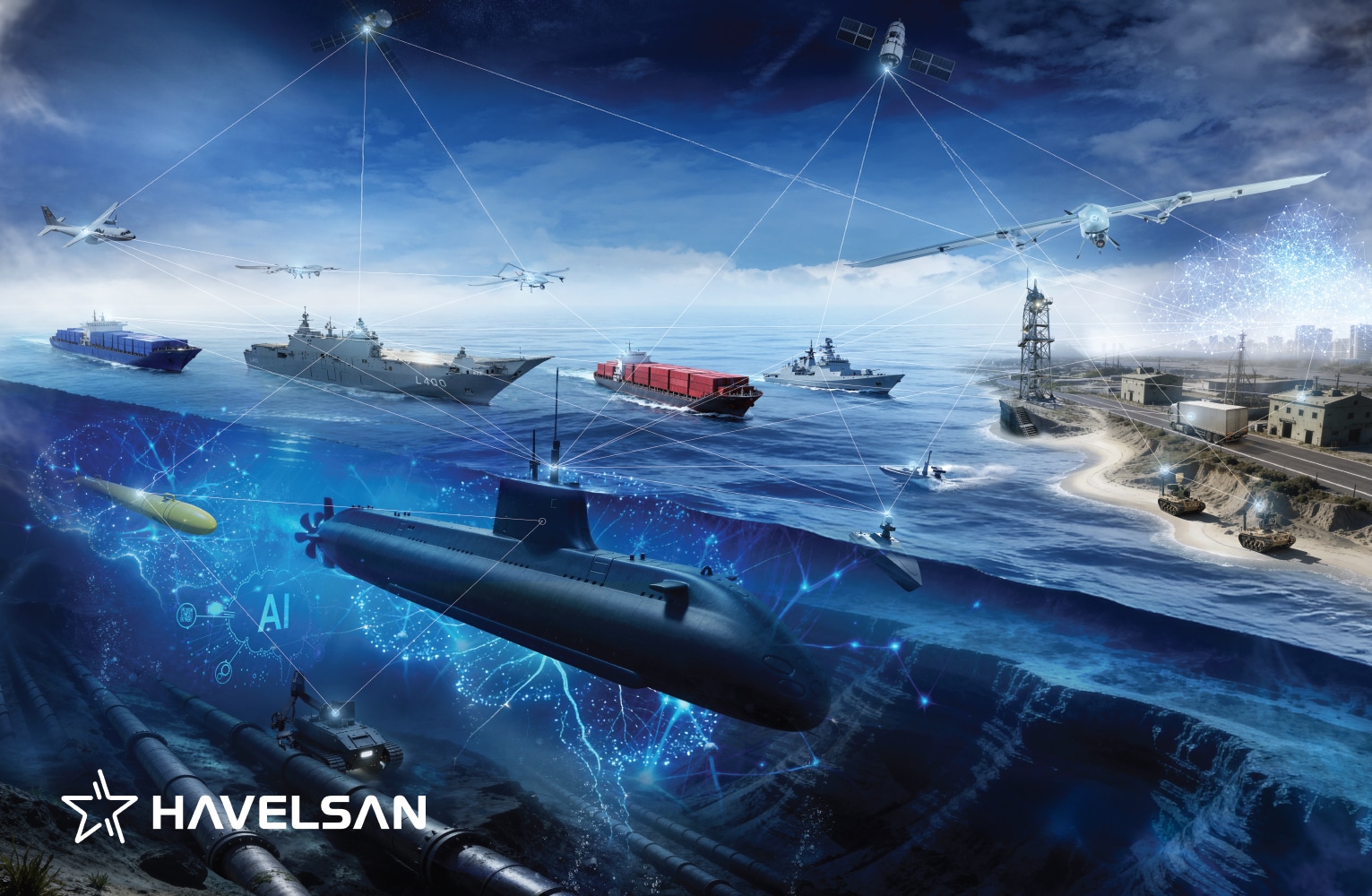
Technological advancements do not alter the fundamental principle underlying the command and control philosophy: “The ability to make the right decision in the shortest possible time.” With the increasing volume and diversity of big data, shrinking decision making timelines and growing cognitive workload on personnel, it has become essential to provide users with new capabilities to perform their duties more effectively and efficiently, and to support their decision making processes. Against this backdrop, HAVELSAN continues to integrate technology into every phase of the command and control cycle for underwater platforms and systems.
Sponsored by

This article opens a three-part HAVELSAN series on command and control for Naval News. We begin underwater, examining submarine combat systems and the integration of sensors, data and weapons. The next two articles will explore command and control for surface naval operations and autonomous systems.
The rapid acceleration of technological development is shaping the Future Operating Environment (FOE), while emerging operational concepts such as Multi-Domain Operations (MDO) and Cross-Domain Command (CDC) are generating new operational requirements. These requirements, in turn, are driving fundamental changes in command and control information systems. Today, “business as usual” is no longer an option.
Having embraced the operational concepts driving this transformation and the fundamental changes they entail, HAVELSAN continues to lead the development of information systems supporting command and control at the operational and tactical levels, both for manned submarines and for unmanned underwater platforms and systems.
Command and Control of Submarines
Combat Management Systems (CMS), whose primary function is to enable submarines to fire torpedoes and guided missiles, continue to evolve through integration with increasingly long-range sensors—particularly sonar—and weapons. They provide target tracking, target motion analysis solutions, weapon engagement and control, and a tactical picture of the surrounding surface and subsurface environment, enabling the detection of more targets at greater ranges.
Drawing on nearly two decades of experience in CMS for conventional submarines, HAVELSAN closely follows these developments and continues to contribute to the enhancing of various CMS types, including those developed by HAVELSAN and other manufacturers, such as the integration of the encapsulated ATMACA missile and the AKYA torpedo.
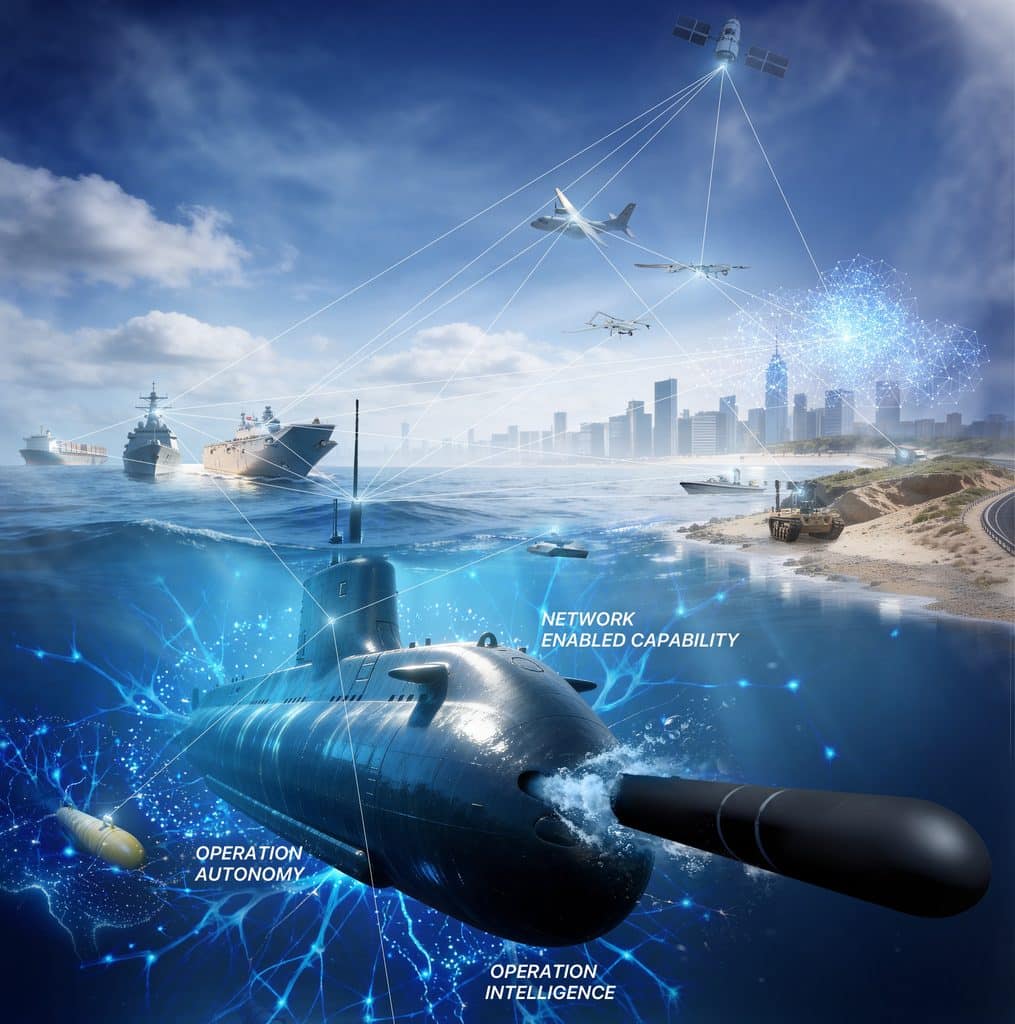
In addition, HAVELSAN has intensified its efforts on the ADVENT MÜREN CMS to equip submarines with a range of capabilities reflecting technological advances, foremost among them Network Enabled Capability (NEC).
On the other hand, however advanced a CMS may be, its definition and scope limit its ability to support many activities throughout a submarine’s mission cycle.
Adopting an innovative approach to tactical-level submarine command and control, HAVELSAN integrates the submarine’s command center—the Control Room, which operates 24/7—into the common information architecture of the command-and-control cycle, starting from the port phase. Thus, the Control Room serves as a multi-purpose “Tactical Operations Center” where data required for the submarine’s mission cycle is displayed, evaluated, interpreted, and decision support is provided.
This innovative approach, which addresses submarine command and control through “Combat System Integration,” is based on the premise that the entire submarine constitutes a single “Combat System” and aims to ensure holistic command and control of the submarine, starting from its operations in port phase.
HAVELSAN’s “Submarine Combat System Integration” goes beyond merely installing monitors or consoles for individual systems within the Control Room. Instead, it creates a physical, functional, and ergonomic environment that maximizes the utility of the data these systems generate, accommodates the growing volume and diversity of information in the Control Room, and enhances the submarine’s operational effectiveness. Combat System Integration in submarines, where space constraints are critical, stands as the culmination of expertise and capabilities in this field.
Aiming to meet the full range of command and control requirements for submarine operations, this approach can be applied to both new-construction submarines and comprehensive mid-life modernization programs.
HAVELSAN’s holistic command and control approach also underpins the “Compact Mission System” developed for mini, or midget/light submarines, which have substantially smaller crews and more limited physical space than conventional submarines.
Command and Control of Unmanned Underwater Vehicles

The use of Unmanned Underwater Vehicles (UUVs) is expanding rapidly, not only in civilian applications such as acoustic and hydrographic data collection and the security of critical underwater infrastructure, but also in military use including mine laying, mine countermeasures, anti-surface warfare and anti-submarine warfare.
The use of Unmanned Underwater Vehicles (UUVs) within the framework of concepts such as “Swarm Operations” and “Manned-Unmanned Teaming” introduces new dimensions to their command and control.
Beyond the constraints of physical space, the absence of personnel on board UUVs makes a holistic approach to the combat system a necessity rather than an option. Autonomous UUVs must possess artificial intelligence capabilities to generate alternative solutions in response to operational changes and on-platform situations, identify anomalies and relationships between processes, and support decision-making.
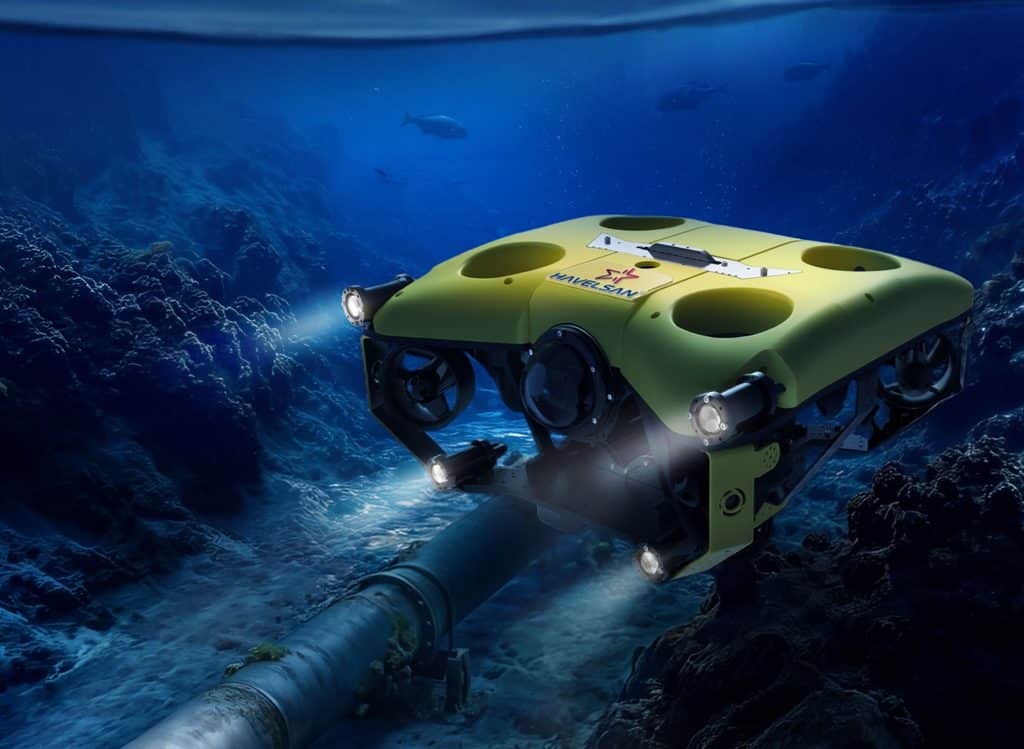
Recognising the distinctive advantages of UUVs, HAVELSAN has initiated the development of “Compact Mission Systems” that, as with mini submarines, encompass holistic tactical-level command and control of the platform. Compact Mission Systems adopt an integrated command and control approach that treats the entire UUV—including machinery control, steering, navigation and communications systems—as the combat system. Construction of the ÇAKA Hybrid Unmanned Maritime Vehicle and development of the AVISTA ROV are continuing in accordance with this approach.
Operational-Level Command and Control of Underwater Platforms
In the Future Operating Environment, the rapid increase in the number and diversity of missions of UUVs, alongside submarines, will necessitate a fundamental transformation, particularly in operational level command and control. Critical operation processes at this level include “Waterspace Management (WSM)”, covering the positioning of platforms at the right place and time and the allocation of operating areas for effective weapon employment; “Prevention of Mutual Interference (PMI)” to ensure underwater navigational safety; coordination between platforms within “Support Operations”; and “Communications Management” to transmit mission orders to platforms and manage the data received from them.
HAVELSAN has focused on command and control systems capable of mission planning, locationing, and control of large numbers of UUVs, including Extra-Large Autonomous Unmanned Underwater Vehicles (XLUUVs), alongside submarines, and of coordinating their activities with manned platforms, taking into account the underwater environment’s unique physical and stealth constraints and limited communications opportunities.
The operational-level command and control system developed by HAVELSAN—designed to enable one or more “Unmanned Underwater Vehicle (UUV) Operations Centers” to manage the centralized and holistic command and control of UUVs—will also evaluate the data and information transmitted by the UUVs. By processing this data, it will also facilitate transmission to relevant units to establish a “Common Operational Picture (COP).” These centers are positioned not merely as platform control points, but as decision, command, and control nodes that serve as the underwater component of the Cross Domain Command (CDC).
Protection of Critical Underwater Infrastructure
Critical Underwater Infrastructure (CUI) includes underwater energy transmission lines, natural gas and oil pipelines, communications and fibre-optic cables, port and naval base infrastructure, and offshore energy installations. These assets are vital to states’ economic continuity and national security. In the Future Operating Environment (FOE), protecting them requires an integrated approach combining physical security measures, such as barriers and metal nets, with acoustic sensors, unmanned systems and network-centric command and control architectures.
Recent attacks targeting CUIs, associated with “Seabed Warfare”, have clearly demonstrated the vulnerability of these assets and the need for continuous surveillance and protection.
In CUI Protection, UUVs act as force multipliers in patrol, reconnaissance, surveillance, detection, and identification missions. Protection is also supported by defensive measures that employ weapons at various levels, such as fire-control systems jointly developed by HAVELSAN and ROKETSAN that enable mobile shore-launched AKYA torpedoes.
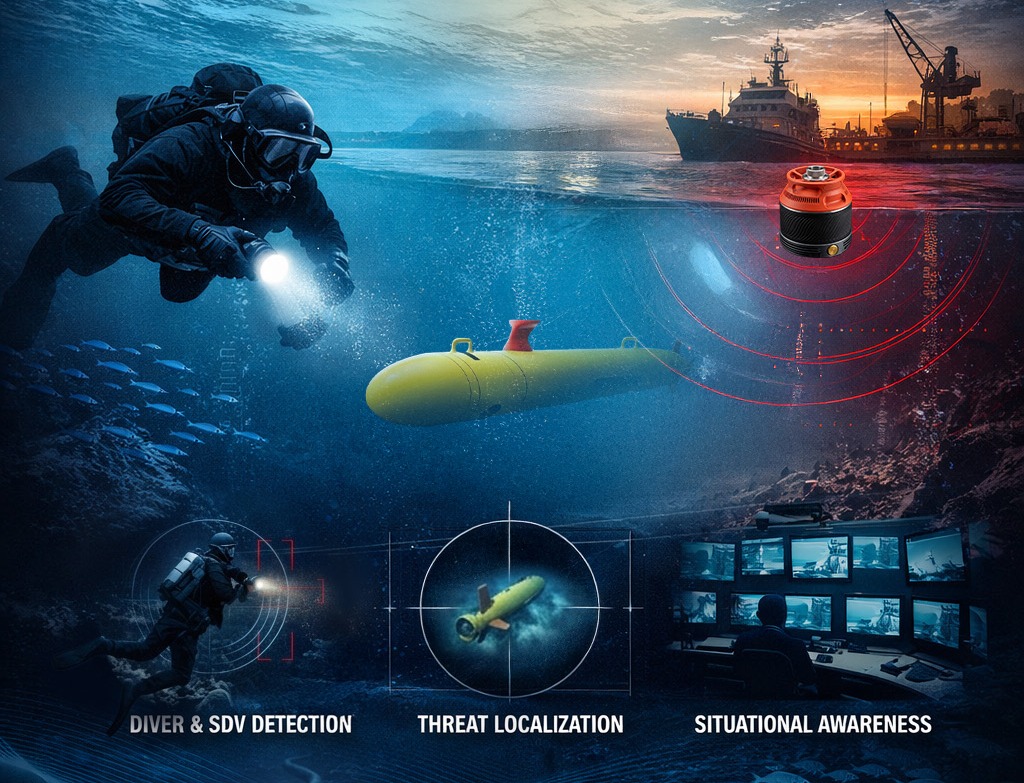
HAVELSAN continues to develop MATRA DEEP, a “Critical Underwater Infrastructure Protection System” requiring an integrated command and control architecture that synchronises acoustic detection, manned and unmanned underwater systems, and network-centric command and control capabilities, while integrating them with the surface, land and air security and defence systems protecting the critical facility. To deliver holistic security, this solution also draws on products and capabilities from HAVELSAN’s land/joint and air portfolios.
HAVELSAN Operation Intelligence and Operation Autonomy: Big Data and Decision-Support-Enabled Command and Control
The volume of data generated and transmitted by command and control systems at both operational and tactical levels continues to grow day by day. This big data spans a broad spectrum, from the critical infrastructure condition on the seabed to satellite imagery in space. It is not only the volume of data that is increasing; its variety and velocity are also rising.
The scale of data generated by sensors, operations centers, and platforms, as well as data exchanged with other platforms, open sources, and command-and-control centers at different levels, underscores the critical need for AI-enabled decision-support systems, especially under time constraints.
HAVELSAN has identified the need for an architecture supporting command and control of underwater platforms and systems in the Multi-Domain Operations (MDO) and Cross-Domain Command (CDC) that encompasses all business processes, reduces personnel’s physical and cognitive workload, and transforms available data—often underutilised because of the limits of human perception and comprehension—into actionable decision support.
On this basis, HAVELSAN has defined two core capabilities employing optimisation, big data and artificial intelligence. These capabilities are founded on the use of data generated by command and control systems and received through mission networks within a common information structure, the provision of data-driven support throughout every phase of the command and control cycle, and the execution of appropriate activities through automated or autonomous methods under human supervision:
Operation Intelligence: The ability to detect relationships, patterns, and anomalies of the data processed by Information Systems with a holistic view of business processes on board and to determine the impact of the obtained results on the “overall operation.”
Operation Autonomy: The ability to use operation intelligence for decision support in manned systems and management of the “operation” in unmanned platforms within the assigned mission, commander’s intent and established constraints.
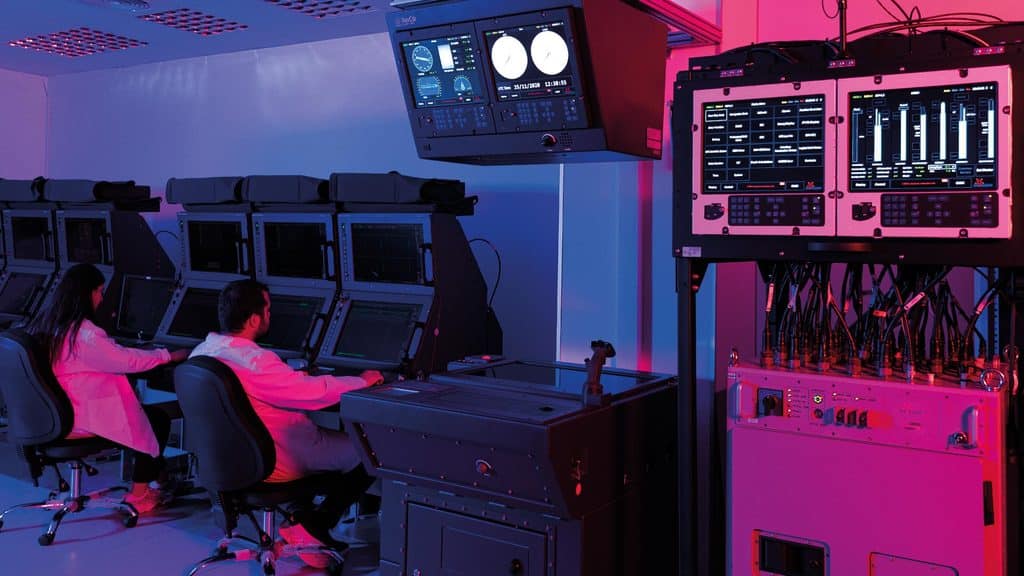
Operation Intelligence and Operation Autonomy are conceived not as a single closed system replacing existing systems, but as a system-of-systems capability that acquires data from independent constituent systems on an ontology-based foundation. HAVELSAN’s extensive experience gained through development of the SUBSTAR Submarine Data Distribution System provides a significant advantage in this field.
Operation Intelligence and Operation Autonomy can be employed flexibly as individual capabilities across operational or higher level command and control systems, the ADVENT MÜREN Combat Management System, Compact Mission Systems for mini subs and UUVs, and other systems such as navigation, communications, and periscopes. Their primary application, however, is to provide holistic decision support covering the entire operation by using data obtained from these systems.
Conclusion
HAVELSAN is pioneering adaptable, holistic underwater command-and-control systems at the operational and tactical levels that not only display data and information to provide situational awareness but also interpret it to support commanders’ and operators’ decisions, reduce personnel’s physical and cognitive workload, and maximize the use of legacy systems. These systems are designed to adapt to missions and future operational requirements, while the core capabilities developed, such as “Operation Intelligence” and “Operation Autonomy” are employed in other command and control systems.
With its vision and experience in holistic command and control, HAVELSAN stands ready to serve as a Combat System Integrator for newly built submarines, foremost among them the National Submarine (MİLDEN), submarines undergoing mid-life modernization, unmanned underwater vehicles, and shore-based underwater systems.
– End –