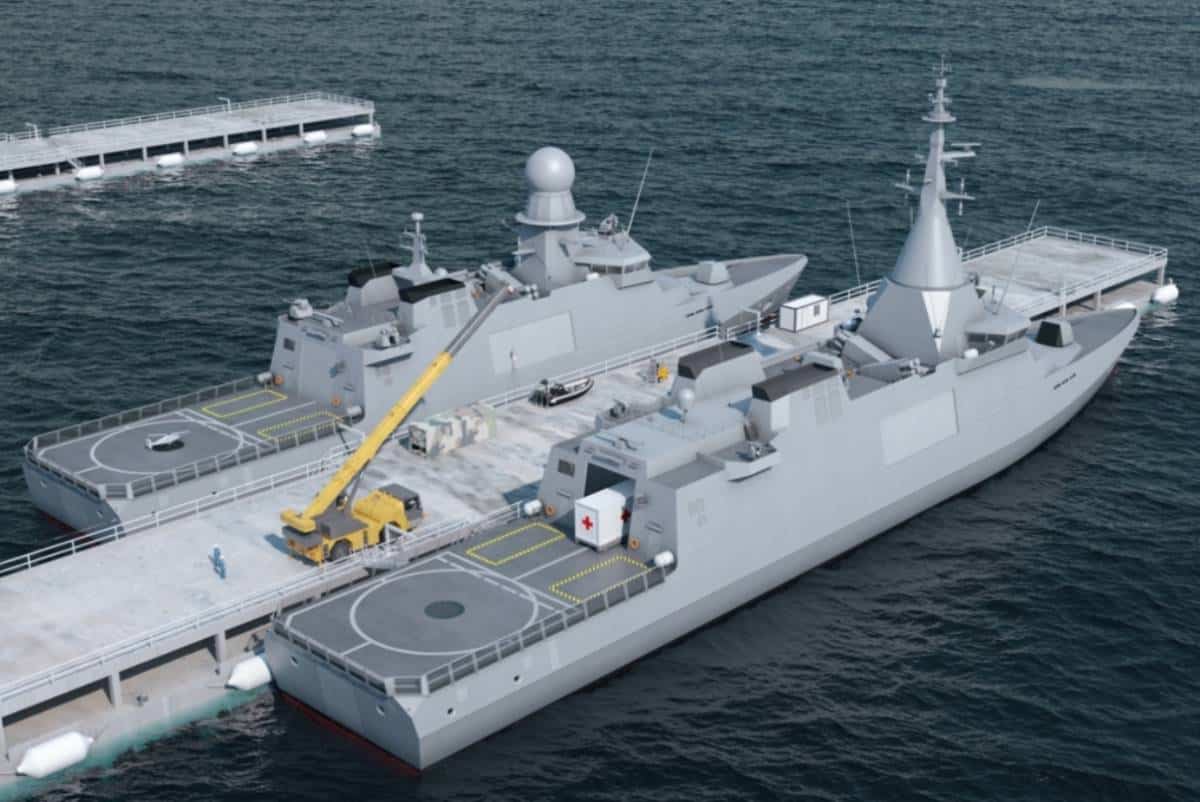
The Spanish government approved the pre-financing for Spain’s participation in the European Patrol Corvette programme to develop and build six corvettes. This is a step forward that deserves recognition, but several questions remain unanswered.
By Jorge Estévez-Bujez / Defensa y Seguridad
If there are decisions that allow us to look towards the future of the Spanish Navy with somewhat greater confidence, while keeping our enthusiasm in check and exercising the caution warranted by past experience, this is certainly one of them. Yesterday’s approval of €1.786 billion in loans to Navantia to support Spain’s participation in the European Patrol Corvette (EPC) programme, the multinational corvette initiative by now widely known by its acronym, is undoubtedly one of the most significant naval shipbuilding developments in recent years. In time, we will be able to appreciate the full depth and far-reaching implications of this milestone. The scale of the funding, the size of the future combat fleet it will provide the Spanish Navy, and, more concretely, the fact that it brings us closer to an industrial reality rather than a speculative proposition are all significant. It also begins to dispel the uncertainty surrounding a project that, for too long, we have had to assess through declarations of intent, cooperation agreements and ship designs still awaiting the political will needed to translate them into actual production capabilities.
According to the statement issued by the Council of Ministers on 27 October, the funding is intended to support the development and construction of six next-generation corvettes under the European programme managed by OCCAR. In financial terms, the repayable advances will be disbursed under a multi-year scheme running from 2026 to 2031, at zero interest, and linked to milestones certified by the Ministry of Defence. At last, a financing decision has been taken that gives the programme a firmer foundation. It also deserves closer scrutiny.
We are looking at an industrial pre-financing mechanism. This means that the announced figure, in itself, represents only a fraction of the total acquisition cost.
At DYS, we have closely followed developments surrounding what may ultimately become the EPC programme. We have done so in the hope of being able to report the government’s formal commitment to it, and have published a number of articles examining the questions that have shaped the debate over this future class of warship.
In July, in the article “EPC: A European Corvette in Need of a Lesson in Cost Transparency”, we raised questions about the €6 billion to €7 billion range that had circulated at the time for Spain’s programme. We explicitly cautioned against drawing firm conclusions from that estimate without a clearer understanding of its scope, and called for a breakdown that would allow it to be properly assessed. Yesterday’s decision does not, of course, confirm that estimate, nor does it rule it out. We are dealing with different financial figures, and the relationship between them has yet to be established. The full programme budget remains unknown, as do its constituent elements and, crucially, the capabilities the Spanish Navy will receive in return. We hope those capabilities will be extensive and diverse.
In any case, it would be desirable for that explanation to arrive before the figures take on a life of their own, something that happens remarkably easily in defence reporting. Once that occurs, it becomes much harder to put each amount in its proper context, distinguish loans from contractual commitments, and separate shipbuilding costs from the other expenditure associated with the programme. These are familiar pitfalls in defence coverage, and they can be avoided through early and transparent communication. Such clarity would prevent entirely unnecessary controversies and allow attention to focus on the questions that genuinely deserve it. There are plenty of those.
The First Question Remains: What Kind of Corvette Does Spain Need?
In “Understanding the EPC Corvette”, we argued that the programme offers an opportunity to restore the combat-capability tier left vacant when the Descubierta-class ships ceased to serve as corvettes. This may be one of the strongest arguments in its favour, perhaps even the most obvious and publicly accessible one. Yet it is also the most consequential: the need to fill the gap between offshore patrol vessels and frigates.
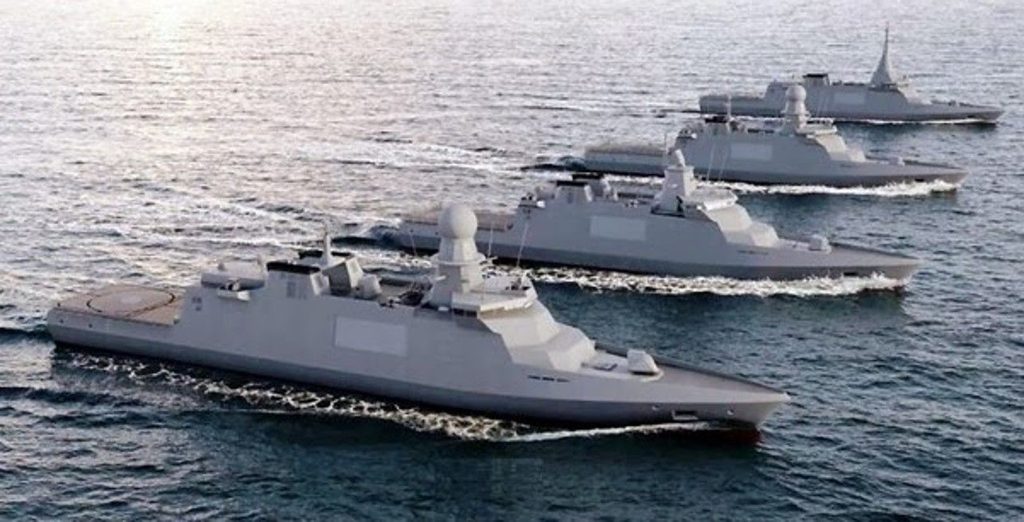
The usefulness of that intermediate tier will depend on the sensors, weapons and operational concept ultimately selected. An EPC with sufficient military capability, in a Full Combat configuration, could undertake a number of important missions and thereby ease the burden on larger surface combatants. A configuration leaning too heavily towards patrol duties, by contrast, would leave much of the requirement that justifies this class of ship unresolved.
For this reason, the number of vessels, while important, does not in itself explain the increase in naval combat power. Six ships would allow the Navy to organise rotations, distribute operational activity and sustain a presence that a much smaller class could scarcely provide. But their true contribution to combat capability will depend on what they can do when a mission is no longer conducted in permissive conditions. Their value will rest on the range and performance of their sensors, their ability to respond to threats, and the means available to them to continue fighting after the initial engagement.
These capabilities will have to be defined and, of course, paid for. They will also require personnel, ammunition, maintenance and training.
The understanding reached between Navantia and Fincantieri provides an important point of reference for assessing the programme as it develops. As we reported in February, the two companies announced their cooperation on the design of the Full Combat Multipurpose variant. That industrial commitment helped steer the debate towards a combat-oriented version of the ship. It did not, however, amount to confirmation of Spain’s final configuration.
Yesterday’s funding announcement still leaves us without the details of that choice, including whether Spain will adopt the Full Combat configuration and which systems will be fitted. Those decisions will come later.
An investment of this scale, particularly within a multinational programme, requires a sufficiently clear explanation of the operational ambitions of the participating navies, primarily those of Spain and Italy, although other countries may also become involved. European cooperation, industrial workload for shipyards and export opportunities are all legitimate and understandable arguments. But, for Spain, the decisive criterion must be what the Navy actually gains in terms of capability, operational availability and the resources required to sustain a substantial fleet of these vessels over several decades. That is where, although not exclusively, the success of this decision will ultimately have to be demonstrated.
Then there is time, the variable that tends to receive less attention than the millions announced in funding decisions, only to dominate every discussion once difficulties emerge.
The 2026–2031 period refers to the announced loan scheme. It should not be hastily interpreted as a delivery schedule or a timeline for entry into service. Assessing when these six ships will begin to contribute to the Navy’s operational strength will require clarity on several milestones, from the relevant implementation commitments and the start of construction through to trials and final operational acceptance into service.
Yesterday’s decision by the Council of Ministers will certainly not bring an end to a debate that has been present since the first reports about the programme emerged. We have framed the question here in what I believe is the clearest and most reasonable way: Does Navantia need Fincantieri to design and build corvettes? No. Does Fincantieri need Navantia to do the same? No.
This programme is not driven simply by a lack of basic technical expertise on either side. Its rationale lies elsewhere: European funding, risk-sharing, standardisation, industrial economies of scale and access to a common programme that could open doors in export markets beyond the participating countries.
Spain and Italy are seeking to structure the programme, accelerate its most demanding elements and turn a European initiative, still heavily dependent on national commitments, into a credible naval offering for international customers. Despite legitimate objections, this approach makes sense.
The Council of Ministers’ decision has now provided financial backing for an initiative that could expand the Spanish Navy’s options. It therefore deserves close scrutiny, sustained attention and clear explanations from those responsible. A programme gains credibility when its sponsors specify what is being purchased, how much it will cost and when it will be available. Those are the milestones we should expect to see next.
The EPC programme offers Spain an opportunity to restore a category of combat vessel that disappeared from its fleet years ago. The €1.786 billion in loans helps set that process in motion. Its success, however, will have to be measured when the six corvettes are armed, equipped and ready to carry out the missions that justify their funding today.
To reach that point, we must look beyond headline financial figures, steel and displacement. Ultimately, we must address the most serious outstanding constraint of all: personnel.
This article by Jorge Estévez-Bujez was originally published in Spanish language at Defensa y Seguridad. It has been translated and republished with authorization.