During the Naval Submarine League’s Annual Symposium and Industry Update, Vice Admiral Rob Gaucher, Director of Submarine Programs, offered insight into recent progress within the Columbia-class program ahead of the lead boat’s, USS District of Columbia (SSBN-826), eventual commissioning.
The U.S. at-sea nuclear deterrent has faced a precarious schedule as construction delays pushed the delivery target for the first of America’s next-generation nuclear ballistic missile submarines from 2027 to 2028. Gaucher noted that as recently as April 2026, the program risked another major slip that threatened to delay SSBN-826’s delivery beyond 2030, further straining efforts to retire the aging Ohio-class SSBN fleet.
Gaucher stated that upon his entry into his position as Director, Submarine Programs, prospects for meeting the goal of 2028 left him lacking confidence. In early 2026, the rate of work (in work hours per week) combined with the time left until the commissioning date likely would’ve left the Columbia in an unfinished state by her scheduled commissioning date.
“Frankly, when I looked back at the weekly [earned hours] in February, March, and April, the straight [math] of hours left divided by hours per week ended up taking about four years”
– VADM Rob Gaucher, USN, Director, Submarine Program.
Return to Form
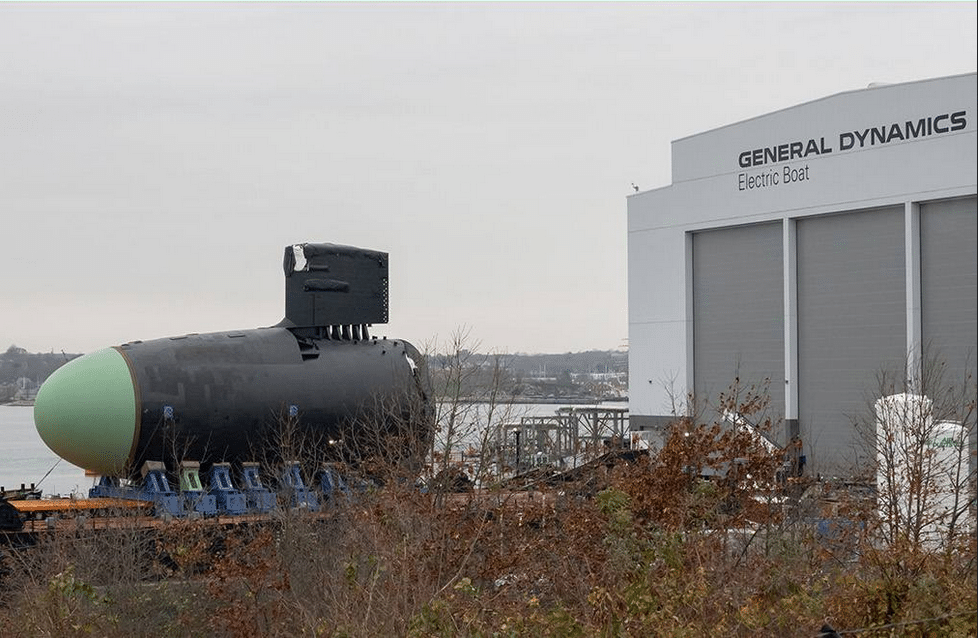
By the summer of 2026, however, the program stabilized under Gaucher’s team working closely with prime contractor General Dynamics Electric Boat. The team met its goal of doubling the weekly work rate on District of Columbia on July 20, narrowly missing an initial July 1 target. Weekly construction output has continued to climb since then, reaching nearly 2.5 times the early-2026 pace. Even so, Gaucher cautioned that the remaining workload requires sustained focus to hit the 2028 delivery goal.
Additional reforms outlined during the Direct Reporting Portfolio Manager briefing have also helped compress the timeline enough to make 2028 viable again. Those measures include 24-hour shift operations, wage increases, shipyard infrastructure upgrades, and closer coordination with both the shipyard and suppliers to secure the timely procurement and delivery of critical components.
If those reforms hold, the accelerated pace puts SSBN-826 back on track to complete pressure-hull welding—joining its separate hull modules into a single watertight structure—in 2027, ahead of its revised 2028 delivery date. That schedule will allow the U.S. Navy to begin retiring its Ohio-class submarines after nearly 45 years of service per hull.
About the Columbia-class
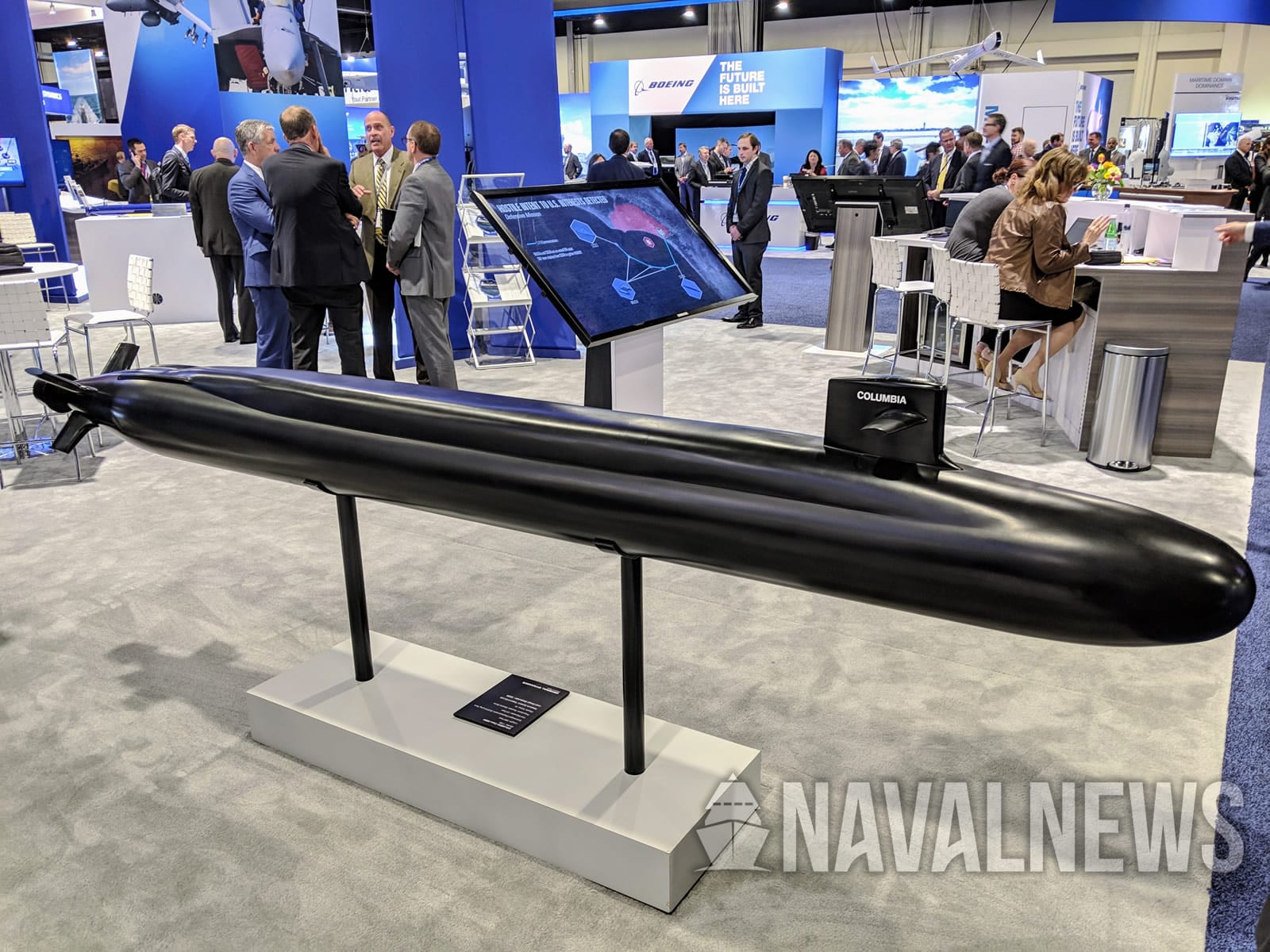
The Columbia class will comprise 12 submarines designed to fulfill the sea-based leg of the U.S. nuclear triad, succeeding the Ohio class. Each submarine displaces approximately 20,800 long tons (21,130 metric tons) submerged, measures 560 feet (171 meters) in length with a 43-foot (13-meter) hull diameter, and carries a crew of roughly 155. Publicly released specifications list a test depth exceeding 800 feet (244 meters), a top speed of more than 20 knots, and a 42-year service life without the need for a midlife nuclear refueling.
Each boat will carry 16 UGM-133 Trident II D5 Life Extension (D5LE) submarine-launched ballistic missiles. A single Trident missile can carry up to 12 Multiple Independently Targetable Reentry Vehicles (MIRVs)—including W76 and 475-kiloton W88 warheads—to ranges well in excess of 4,000 nautical miles (7,408 kilometers). The Columbia class also shares a common missile compartment design, as well as Trident D5LE and future D5LE2 missiles, with the United Kingdom’s Dreadnought-class SSBNs.
Lead boat District of Columbia is projected to cost approximately $15 billion, with follow-on hulls expected to drop to roughly $10 billion apiece. The Columbia-class boats will be the first U.S. nuclear submarines designed with X-shaped stern planes and the first clean-sheet submarine design to enter U.S. Navy service in roughly 24 years (since the Virginia class), though several subsystems—including the pump-jet propulsor and bow sonar array—are scaled-up derivatives of designs developed for the Virginia-class SSNs.