Australia’s latest National Defence Strategy (NDS) has underlined the country’s need to secure critical undersea infrastructure (CUI). To meet this seabed warfare mission quickly, the Royal Australian Navy (RAN) is looking to the commercial underwater industry to provide the required capability.
Discussing how foreign interference is posing intensified threats to Australian security and sovereignty, the NDS said “Critical seabed infrastructure, the backbone of Australia’s digital communications, remains vulnerable to sabotage by hostile nations.”
Indeed, the NDS listed ‘supporting critical infrastructure’ as the third (of six) capability effects priorities for the Australian Defence Force (ADF).
Highlighting Australia’s growing focus on the CUI risk, the new NDS had mentioned the threat for the first time, Commodore Michael Turner, the RAN’s Director General for Maritime Integrated Capabilities, told the recent Combined Naval Event 2026 (CNE 2026) conference in the UK.
“When you look from an Australian perspective ..,Australia is an island, so CUI is vital for our national prosperity,” said Cdre Turner. In data terms, Australia is connected to the rest of the world via 16 cables that send and receive 98% of Australia’s internet traffic. “The protection of that infrastructure is vital to our economic wellbeing and our ability to fight,” Cdre Turner added.
Additionally, Australia has extensive offshore resource-related CUI on its north-west shelf. The RAN is required to secure CUI here, too.
Although CUI is vulnerable to environmental and accidental damage, the risk from deliberate actions is growing for Australia. “Increasingly, we [the West] are seeing [developments in] that grey area between what’s accidental and what’s deliberate,” said Cdre Turner.
Within the wider context of seabed and underwater warfare, the RAN is developing its understanding of how to assure and secure its CUI, the Cdre continued.
Australia’s geostrategic disposition is somewhat unique in that, on the country’s southern, eastern, and western shores, the ocean depths dive quickly and steeply from waters up to 200 m deep on the narrow continental shelf down to 3,000 metres or more.
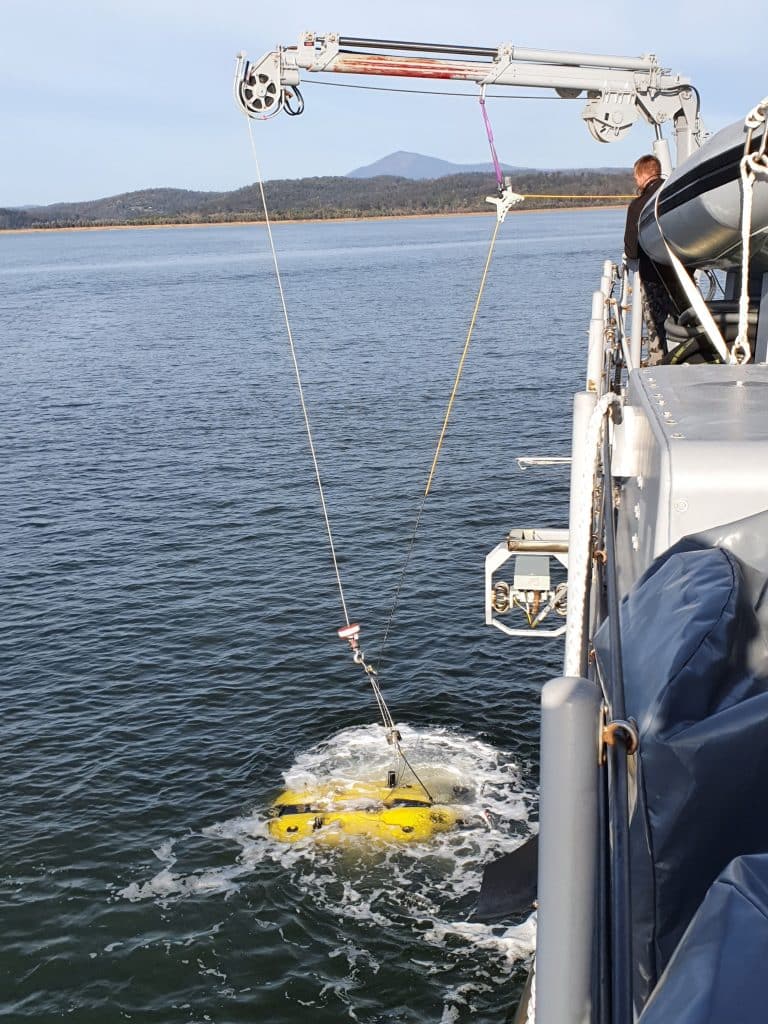
This shapes a particular approach for the RAN. “To do this and to do it well, you need to move beyond the more shallow-water effects we’re generating through, for example, mine countermeasures-type systems, which are normally capabilities measured in hundreds of metres, to being able to find-and-fix down to very deep depths, which requires an entirely different type of capability set and entirely different type of skills,” said Cdre Turner.
Here, the RAN has turned to the commercial offshore oil-and-gas industry to find the technology and expertise it needs. “This is something for which militaries are not the main customers or main drivers,” Cdre Turner explained. “We are leveraging significantly the offshore oil-and-gas industry, not only for the equipment they use but as an industry partner to upskill what we do.”
Capability requirement
As regards equipment, the RAN is looking at industry systems that are already in use.
“This is driven primarily by the need to act – and to act now,” said Cdre Turner. The consequent need for speed in acquisition means the RAN must find equipment that is already working well in the commercial sector, and then adopt and adapt it for military use.
“We are trying to form a collage of … capabilities as quickly as we possibly can, to give ourselves the most comprehensive ability to protect our CUI,” the Cdre continued. “A big part of our effort has been determining what the right mix of equipment is, and the right price point, which best suits the military applications we’re developing.”
This work is being done nationally, and within the Pillar 2 maritime uncrewed systems and underwater warfare work within the Australia-UK-US (AUKUS) strategic collaboration.
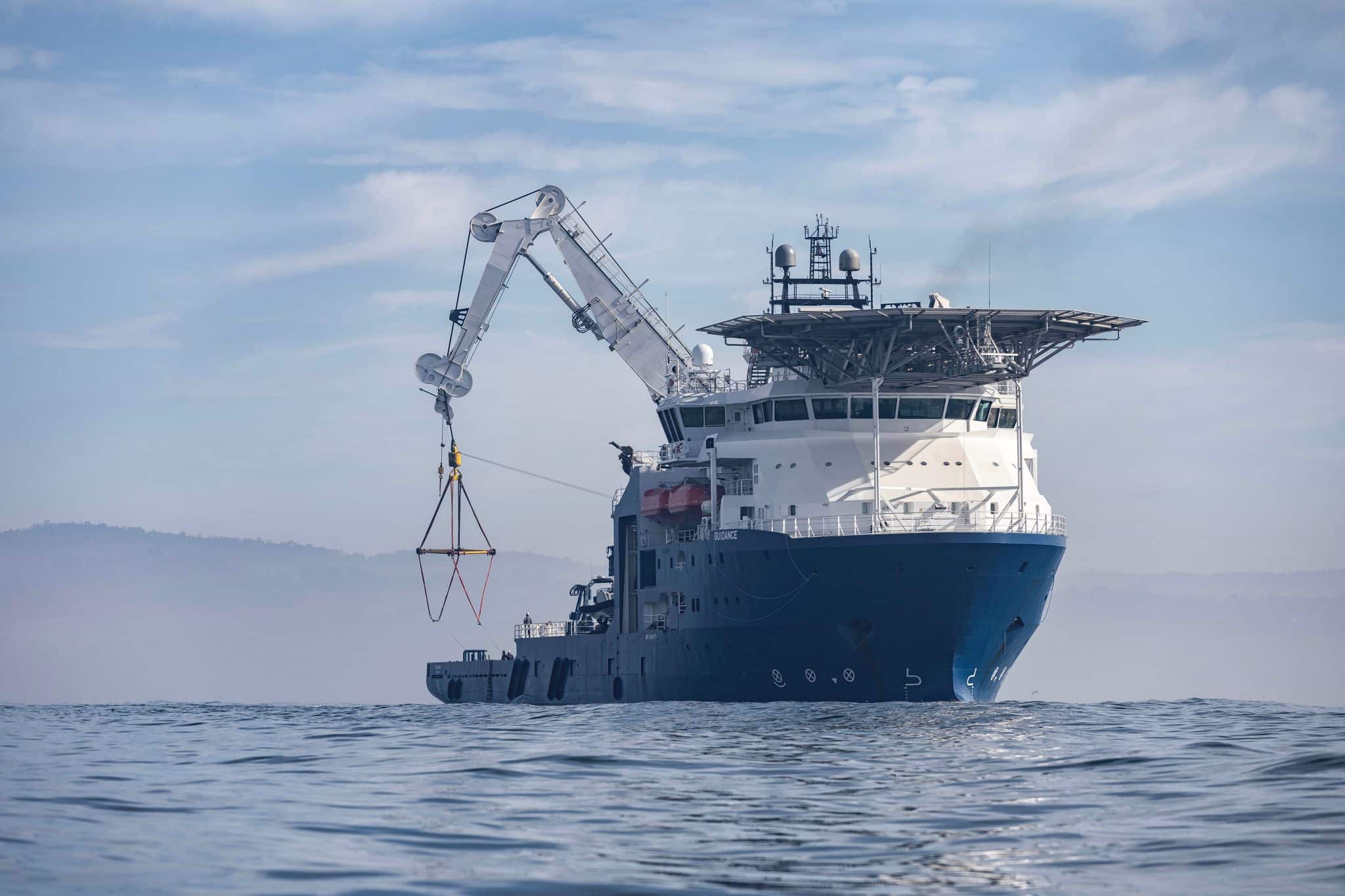
To enable use of its CUI systems, in late 2023 Australia purchased (also from the commercial market) an undersea support vessel, ADV Guidance. The ship is civilian-crewed, with military teams and equipment embarked as needed.
Again, the RAN is working to develop its operational experience with the vessel and its embarked capabilities. For example, in 2025 Guidance deployed off northwest Australia on ‘Talisman Sabre’, the ADF’s major biennial, multidomain exercise. CUI-related activities were conducted in an AUKUS context, with RAN, UK Royal Navy (RN), and US Navy (USN) personnel deployed onboard. RN and USN equipment was also embarked. “It was a very successful activity,” said Cdre Turner. “We learned a lot .., and we continue to learn every time we put this ship to sea, especially because we upgrade it with more equipment almost every time it goes to sea.”
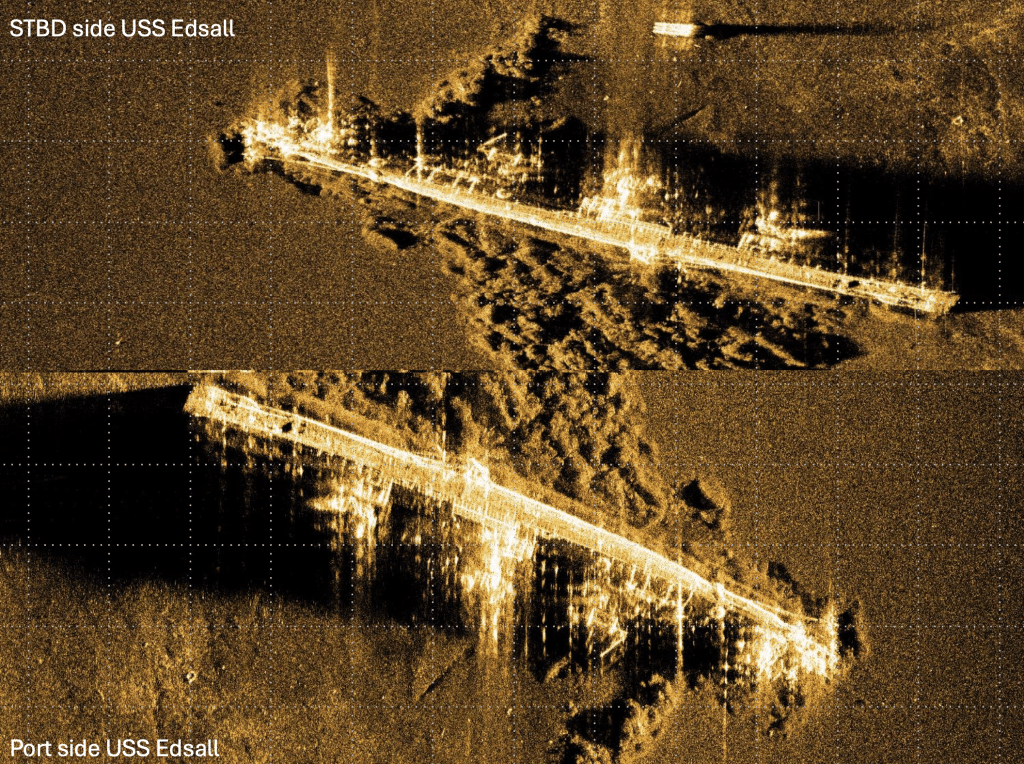
The RAN has demonstrated its CUI equipment capability in other contexts. For example, deep-sea surveillance equipment was employed in 2023 in the discovery of USS Edsall,a USN World War II destroyer sunk in March 1942 around 200 n miles southwest of Christmas Island. When the wreck was discovered, then-RAN Chief of Navy Admiral Mark Hammond said RAN and USN vessels (including the RAN’s submarine rescue ship ADV Stoker) that weredeployed on a separate mission employed cutting-edge robotic and autonomous systems (RAS) usually used for hydrographic work to locate and survey Edsall on the seabed.
The ship lay in remote, deep waters (reaching 3,000 m or more). However, the RAN was able to conduct a clear scan of the vessel. “It gives you an indication of the type of equipment we have, what it can do, and certainly what type of fidelity it provides at very, very deep depths,” said Cdre Turner.
These developments highlight a clear trend in the RAN’s capability progression. Alongside recapitalising its crewed platform force structure, the RAN is introducing RAS at scale. This scale is underpinned by high-level approval within the government and ADF to deliver such uncrewed capability – at pace, too. Cdre Turner explained that RAS capability is seen as a significant tool for delivering effect.
Consequently, it is an area of investment priority for the RAN. Cdre Turner pointed to the NDS’s listing of underwater warfare and RAS as the government’s top two (of six) capability investment priorities.